
 Siti Muinah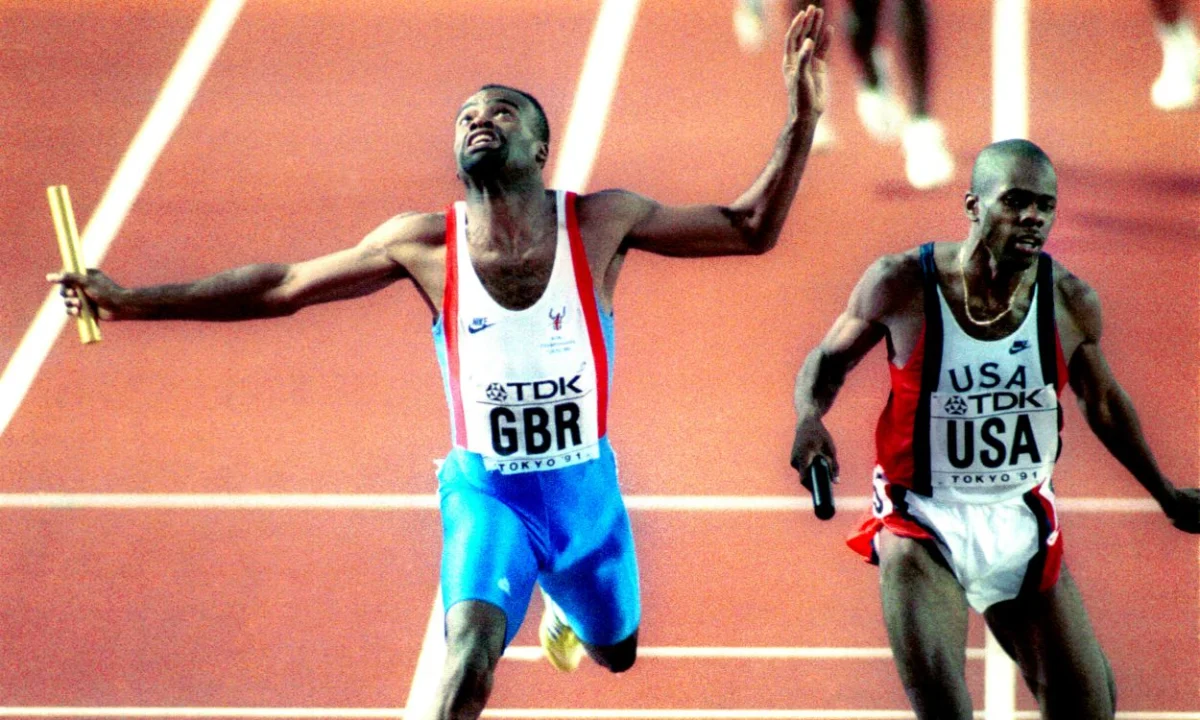
Published: September 21, 2026
Updated: September 21, 2026
Main Facts
In a compelling and deeply personal exclusive interview, esteemed athletics broadcaster and commentator Tim Hutchings sits down with British track and field royalty, Kriss Akabusi. Known worldwide for his infectious laugh, boundless energy, and fierce competitive spirit on the track, Akabusi remains one of the most recognizable and beloved figures in British sporting history.
This comprehensive, in-depth conversation spans the breadth of Akabusi’s extraordinary life—from a challenging and turbulent childhood spent navigating the British foster care system to his rise as an Olympic medalist, European champion, and trailblazer in television entertainment.
Key topics explored in the interview include:
- The Olympic Peak: A detailed look inside the British 4x400m relay teams that captivated the nation, culminating in historic performances on the global stage, most notably at the 1991 World Championships in Tokyo and the 1984 and 1992 Olympic Games.
- Overcoming Adversity: Akabusi speaks candidly about how growing up in foster care shaped his psychological resilience, discipline, and relentless drive to succeed against the odds.
- Life After the Track: A transition into media, where his charismatic personality made him a natural fit for television screens across the United Kingdom, cementing his status as a national treasure.
Chronology: The Making of a Legend
To understand the magnitude of Kriss Akabusi’s impact on British sport, one must trace a timeline defined by unlikely beginnings, military discipline, athletic brilliance, and reinvention.
Early Life and Formative Years (1958–1975)
Born Kriss Kehinde Akabusi in Paddington, London, in November 1958, his early life was far from the glamorous podiums of international athletics. Due to family circumstances, Akabusi spent a significant portion of his youth growing up in the British foster care system. This period, characterized by instability and emotional challenge, forced a young Akabusi to develop fierce independence and resilience—traits that would later define his running career under extreme pressure.
The Military Catalyst and Entering the Sport (1975–1983)
Akabusi’s athletic talents were not immediately obvious in his youth. It was during his service in the British Army with the Royal Corps of Signals that his physical potential was truly unlocked. Recognizing his exceptional raw speed and cardiovascular capacity, the military provided a structured environment that nurtured his athletic ambitions. He transitioned from recreational runner to serious competitor, eventually focusing on the 400m flat and the grueling 400m hurdles.
International Breakthrough and Olympic Glory (1984–1988)
By the mid-1980s, Akabusi had established himself as a cornerstone of British relay and individual sprinting events.
- 1984 Los Angeles Olympics: Akabusi cemented his place on the world stage by winning a silver medal as part of the British 4x400m relay team, running alongside legends like Ade Mafe, Garry Cook, and Todd Bennett.
- The Switch to Hurdles: Seeking a new challenge and recognizing an opening in individual events, Akabusi made the tactical decision to transition to the 400m hurdles—a notoriously punishing event that demands both blistering speed and flawless technical execution.
The Golden Era: European Triumph and Tokyo 1991 (1990–1992)
The early 1990s represented the absolute zenith of Akabusi’s athletic career.
- 1990 Split, Croatia (European Championships): Akabusi claimed the European 400m hurdles title, showcasing tactical brilliance and sheer willpower to take the gold medal for Great Britain.
- 1991 Tokyo World Championships: Arguably the most iconic moment of his career. As the anchor leg runner for the British men’s 4x400m relay team (alongside Roger Black, Derek Redmond, and John Regis), Akabusi held off the heavily favored American team to secure a legendary gold medal in a European record time, electrifying fans worldwide.
- 1992 Barcelona Olympics: Akabusi added an Olympic bronze medal in the 400m hurdles to his glowing resume, alongside another bronze in the 4x400m relay, before gracefully stepping away from elite competition.
Transition to Television and Public Persona (1993–Present)
Retiring from athletics did not mean disappearing from the public eye. Akabusi successfully transitioned into television, leveraging his natural charisma and trademark booming laugh. He became a familiar face on mainstream British TV programs, reality shows, educational series, and motivational speaking engagements, inspiring a new generation with his unwavering optimism.
Supporting Data and Athletic Statistics
To quantify Kriss Akabusi’s legacy, it is essential to look at the numbers behind his illustrious career. His personal bests and championship medals reflect an athlete who consistently performed at the world-class level.
Major Championship Medals
- Olympic Games:
- Silver: 1984 Los Angeles (4x400m Relay)
- Bronze: 1992 Barcelona (400m Hurdles)
- Bronze: 1992 Barcelona (4x400m Relay)
- World Championships:
- Gold: 1991 Tokyo (4x400m Relay)
- Bronze: 1987 Rome (4x400m Relay)
- European Championships:
- Gold: 1990 Split (400m Hurdles)
- Silver: 1990 Split (4x400m Relay)
- Commonwealth Games:
- Gold: 1990 Auckland (400m Hurdles)
- Silver: 1986 Edinburgh (400m Hurdles)
Personal Bests
- 400m Hurdles: 47.82 seconds (set in 1992), which stood for many years as a benchmark of British hurdling excellence.
- 400m Flat: 44.59 seconds, demonstrating his blistering speed between and off the barriers.
Official Responses and Interview Insights
In his conversation with Tim Hutchings, Akabusi offers rare, unfiltered reflections on the psychological architecture required to reach the pinnacle of sport, as well as the realities of life after competition.
On the Pressure of the 4x400m Relay
Reflecting on the legendary 1991 Tokyo World Championships, Akabusi discussed the intense weight of expectation resting on his shoulders as the anchor leg runner against the United States.
"When you take that baton, you aren’t just running for yourself," Akabusi shares with Hutchings. "You are carrying the hopes of your teammates, your coaches, and millions watching back home. But in that moment, fear is a luxury you cannot afford. You channel every ounce of hardship, every session of pain on the track, and you run."
On Overcoming Early Hardships
Addressing his time in foster care, Akabusi opened up about how early instability forged his mental toughness. Rather than viewing his difficult upbringing as a disadvantage, he credits it with building the emotional armor necessary to withstand the brutal demands of elite international competition.
"People look at my smile and think life has always been a party," Akabusi notes. "The truth is, resilience isn’t something you are born with; it’s forged in the fire of adversity. The care system taught me how to stand on my own two feet when the ground beneath me felt entirely unstable."
On Media and Public Life
Transitioning from the disciplined, high-stakes environment of professional sport to the unpredictable world of television can be jarring for many athletes. Akabusi, however, embraced the change with the same enthusiasm he brought to the starting blocks. He discusses how his genuine love for people and storytelling allowed him to carve out a unique space in British media, proving that an athlete’s life post-retirement can be just as impactful as their competitive years.
Implications: The Enduring Legacy of Kriss Akabusi
The exclusive interview between Tim Hutchings and Kriss Akabusi is more than a nostalgic trip down memory lane; it serves as a powerful case study in perseverance, reinvention, and sports psychology.
1. Redefining Mental Health and Resilience in Athletics
In an era where athlete welfare and mental health are rightfully at the forefront of sports discourse, Akabusi’s journey offers profound lessons. His ability to channel childhood trauma and institutional displacement into elite athletic drive highlights the complex relationship between personal hardship and high performance. While modern sports science places heavy emphasis on psychological support, Akabusi’s story underscores the raw, self-taught grit that defined a generation of 1980s and 1990s British athletes.
2. Inspiring Future Generations of British Track Stars
As British athletics continues to seek out gold-standard performances on the global stage—particularly in relay events—the blueprint laid down by Akabusi, Redmond, Black, and Regis remains relevant. Their fierce competitiveness, team-first mentality, and tactical execution in high-pressure scenarios set a standard that modern relay squads strive to emulate.
3. The Power of Post-Sport Reinvention
Athletes often face an identity crisis upon retirement. Akabusi’s seamless pivot into television, public speaking, and community engagement demonstrates the value of authenticity. By remaining true to his vibrant personality, he bridged the gap between elite sports fanbases and mainstream entertainment, proving that a sports career can be the launchpad for an even wider societal impact.
To watch the full, in-depth exclusive interview between Tim Hutchings and Kriss Akabusi, visit the official Athletics Weekly (AW) website, and make sure to subscribe to the free AW newsletter to stay updated on all things track and field.

 Nila Kartika Wati
 Azzam Bilal Chamdy
 Iffa Jayyana
 Ali Ikhwan
 Jia Lissa
 Neng Nana
 Dwi Wanna