
 Jia Lissa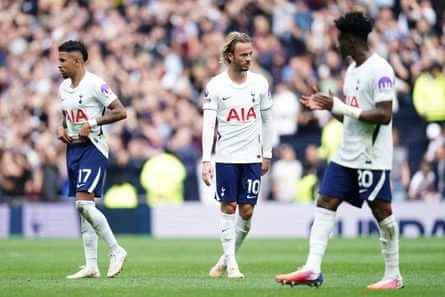
The dopamine-fueled rush of the opening month of the Premier League season has abruptly stalled. As the international break descends, fans and pundits alike are left to navigate the "cold turkey" period of 19 blank days. Over the preceding 17 days, the league delivered a staggering 30 matches and 79 goals—a statistical deluge that masked a deeper, perhaps more unsettling, sense of structural stasis.
While the goals keep coming, the narrative arcs of the Premier League are beginning to feel like a high-definition, high-budget, yet profoundly familiar television drama that has run for too many seasons. As we step back from the frantic pace of the opening fixtures, it is time for the traditional "state-of-the-nation" audit to determine where the league stands, what it represents, and where it is heading.
The Illusion of Change: Chronology and Context
Five rounds into the 2026/27 campaign, the overarching theme is one of remarkable consistency. To the casual observer, the Premier League is a chaotic, unpredictable beast; to the analyst, it is a machine operating with a terrifying, repeatable efficiency.
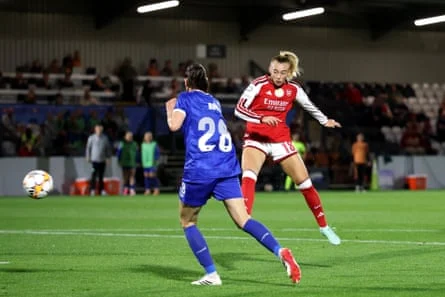
If one were to retroactively apply this year’s opening month to last season, the result would be a near-perfect mirror image. We see a powerful, dominant side—reminiscent of the Pep Guardiola era—steamrolling early opponents while harboring subtle, lingering defensive fragility. We see the primary title challenger, Arsenal, sitting in the second-place position, defined by high-intensity tactical rigidity.
The Mid-Table "Brightonmouth" Phenomenon
The most compelling narrative has not been the title race, but the emergence of the "middle classes"—a collective of functional, well-drilled entities that occupy the space between the elite and the abyss. Teams like Brighton, which have transcended their status as mere "challengers," are now testing the boundaries of the top four. Their recent demolition of Arsenal was not merely a shock result; it was a tactical masterclass in out-muscling and out-thinking the status quo.
However, the question remains: is this a genuine disruption of the established order, or a temporary surge? History suggests the latter. As these clubs find success, their personnel—from managers like Fabian Hürzeler to their high-performing stars—inevitably become the subjects of transfer speculation. The "middle class" of the Premier League functions as an audition hall for the elite, a cycle of individual ambition that arguably prevents the long-term, sustained growth required to produce another "Leicester City" moment.

Supporting Data: The "Omniball" Template
The tactical landscape of the league has become increasingly homogenized. There is only one true "elite" style: the Omniball template, a descendant of the Cruyff-Michels-Guardiola-Gegenpressing lineage. This tactical framework, while undeniably sophisticated, has led to a standardization of the product.
Modern Premier League matches often feel like two highly advanced, robotic systems clashing against one another. The game has become a contest of "baiting the press," a strategic dance that, while technically impressive, is beginning to lose its human element.
Key Statistical Trends:
- Physicality over Possession: As technical levels across the league have plateaued, the primary differentiator has shifted back toward raw, unadulterated physicality. Matches are increasingly decided by "duels"—the grit, the collision, and the sustained competitive will of the players.
- The "Goal Rush": 79 goals in 30 games signals a league that is incentivizing attacking output, yet the underlying metrics suggest this is often the result of high-risk defensive transitions rather than superior offensive craft.
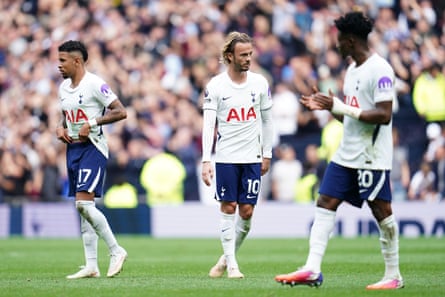
- Tottenham’s Decline: The data on Spurs is particularly damning. Once a vibrant, competitive force, they have regressed into a state of "post-goal" existence—a club disconnected from the traditional metrics of footballing success, holding onto 17th place with a squad that appears increasingly checked out.
The Manchester United Metaphor: A Club in Stasis
Perhaps no team better encapsulates the current malaise of the English game than Manchester United. The discourse surrounding the club has become circular. Is Michael Carrick the man to elevate the squad? The consensus is a resounding "no." But the more pertinent question is: does it matter?
Manchester United has evolved—or devolved—into a grand, angst-ridden metaphor for modern-day Britain. It is a commercial juggernaut that functions as a "mobile waxwork museum," trading on its own heritage and historical prestige while managed by a revolving door of opportunists. The frustration felt by the United fanbase is not merely about results; it is the realization that the club has reached a permanent, lower-tier "level" where the goal is no longer winning titles, but maintaining the brand’s relevance in a global tourism market.
Official Responses and Tactical Implications
The international break brings with it the usual cycle of post-match scrutiny, focusing heavily on Thomas Tuchel and his influence on the English game. Tuchel finds himself the target of a paradoxical range of criticisms. He is simultaneously blamed for the "inherited cultural weaknesses" of English players and for his inability to immediately rectify those issues in the limited hours of training available to him.
Furthermore, the discourse has descended into the trivial, with criticism directed at his demeanor—a "scurvy-ridden Napoleonic naval commander" figure who has become the scapegoat for a league struggling to find a new identity. This cycle of rage and analysis is the Premier League’s way of filling the void. It is a necessary ritual, yet one that highlights the lack of substantive change at the top of the game.
Future Outlook: Can the "Middle Class" Sustain the Pressure?
The most exciting question for the remainder of the 87% of the season is whether the likes of Brighton can maintain their current intensity. The reality is that the demands of the modern calendar—midweek European fixtures, the increased scrutiny of the media, and the tactical adjustments of opposing managers—make this an uphill battle.
Fabian Hürzeler, at 33, represents the new wave of management: young, adaptive, and under immense pressure to prove that his success is not a statistical anomaly. His challenge is to manage a squad that is effectively playing for their next big-money move. This "collective individualism" is what drives the league’s strength, but it is also its Achilles’ heel. It creates a league that is "brutally strong" and "endlessly moreish," yet one that struggles to build long-term, legacy-defining teams outside of the traditional powerhouses.
Conclusion: The Comedown is Real
As we stare down the barrel of three weeks without Premier League football, the sense of loss is palpable. We have become addicted to a product that is perfectly designed to be consumed in high-octane bursts. It is a "mega-product" that provides the illusion of total engagement, even when the underlying story arcs—the Manchester United decline, the Spurs stagnation, the tactical homogenization—are repeating themselves like a glitching video loop.
When the league returns in October, the intensity will reset, the players will return from their national duties, and the machine will begin to grind again. For now, we are left to contemplate a competition that has become so efficient, so professional, and so standardized that it risks losing the very soul that once made it the most unpredictable league in the world. The comedown is already hitting, and the wait for the next kick-off is a stark reminder of our collective dependence on the Premier League’s recurring, polished chaos.

 Ali Ikhwan
 Raul Delapena Setiawan

 Neng Nana
 Iffa Jayyana
 Dwi Wanna
 Evan Lee Salim