
 Lina Irawan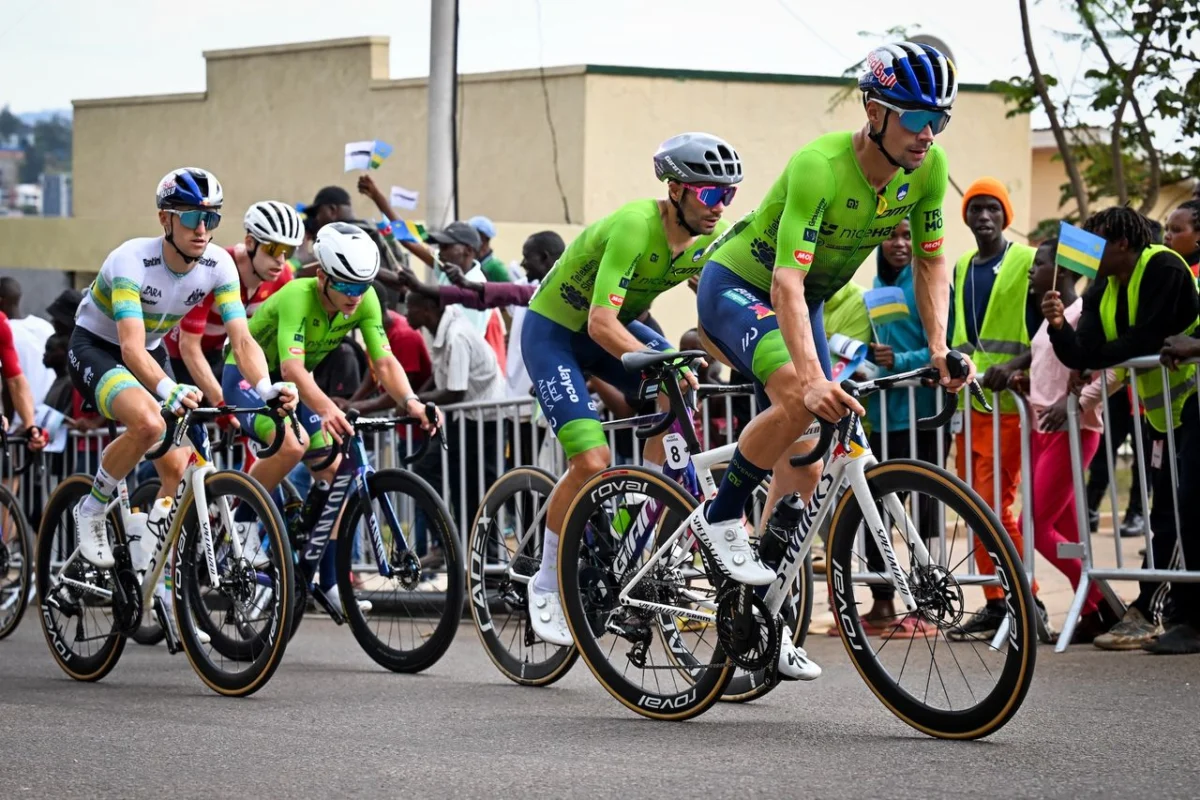
By Cycling News Editorial Desk
Published: October 2023
Main Facts: The Shock Wave of a Champion’s Absence
The announcement that Tadej Pogačar—the dominant force of modern professional cycling and the proud wearer of multiple rainbow jerseys—would not be participating in the upcoming UCI Road World Championships sent immediate shock waves through the peloton. While international federations and rival squads quickly scrambled to adjust their tactical playbooks for a race stripped of its most explosive favorite, no nation faces a more radical operational overhaul than Slovenia.
For years, the Slovenian national team has been built as a precision instrument designed to maximize Pogačar’s unique capabilities across varied terrain. His exceptional climbing, devastating acceleration, and tactical versatility meant that Slovenia entered nearly every major one-day championship as the team to beat. With Pogačar watching from the sidelines, the entire framework of Slovenian team strategy has dissolved, forcing directors, coaches, and riders back to the drawing board.
The repercussions are immediate and profound. Teammates who once operated as dedicated domestiques within a unified, superstar-led hierarchy must now pivot toward individual ambition, open-race opportunistic tactics, or, in some cases, choose to sit the event out entirely. As the elite men’s peloton prepares for the grueling test of the Road World Championships—historically staged across demanding circuits like those in Kigali and the tactical battlegrounds of North America—Slovenia’s tactical metamorphosis highlights just how heavily a single generational talent can define a nation’s entire cycling identity.
Chronology: The Buildup to a Tactical Crisis
Phase 1: The Apex of Slovenian Dominance
The timeline of Slovenia’s tactical reliance on Pogačar stretches back across several seasons of unprecedented success. Following Primož Roglič’s foundational Grand Tour victories and Olympic gold, Pogačar emerged as an unstoppable force in one-day classics and World Championships alike. By 2023 and 2024, the Slovenian national team had perfected a blueprint: harness the collective strength of a world-class domestic engine room, control the tempo of the race, and unleash Pogačar at the decisive tactical moment.
Phase 2: The Fatigue and Scheduling Reality
As the demanding 2023–2024 racing calendar reached its crescendo, the physical toll of Grand Tours, Spring Classics, and Monument victories caught up with the heavy hitters of Slovenian cycling. Pogačar’s exhaustive racing schedule—highlighted by historic multi-class domination—necessitated a strategic reset. Rumors of his potential absence began to circulate among team circles late in the season, driven by the need for adequate physical recovery and preparation for subsequent target campaigns.
Phase 3: The Official Withdrawal and Panic in the Camp
When Pogačar’s official non-participation was confirmed, it triggered an immediate crisis management phase for the Slovenian Cycling Federation. The realization that the anchor of their national strategy was missing forced an instant reassessment of team rosters, support staff allocations, and tactical formations. Rival nations, once preoccupied with neutralizing the Pogačar threat, suddenly found themselves recalibrating their own race-day calculus, realizing that a Slovenian team without its talisman becomes an unpredictable, dangerous wildcard.
Supporting Data: The Anatomy of a Roster in Flux
To understand the magnitude of Pogačar’s absence, one must examine the composition and historical performance of the Slovenian national squad at the World Championships.
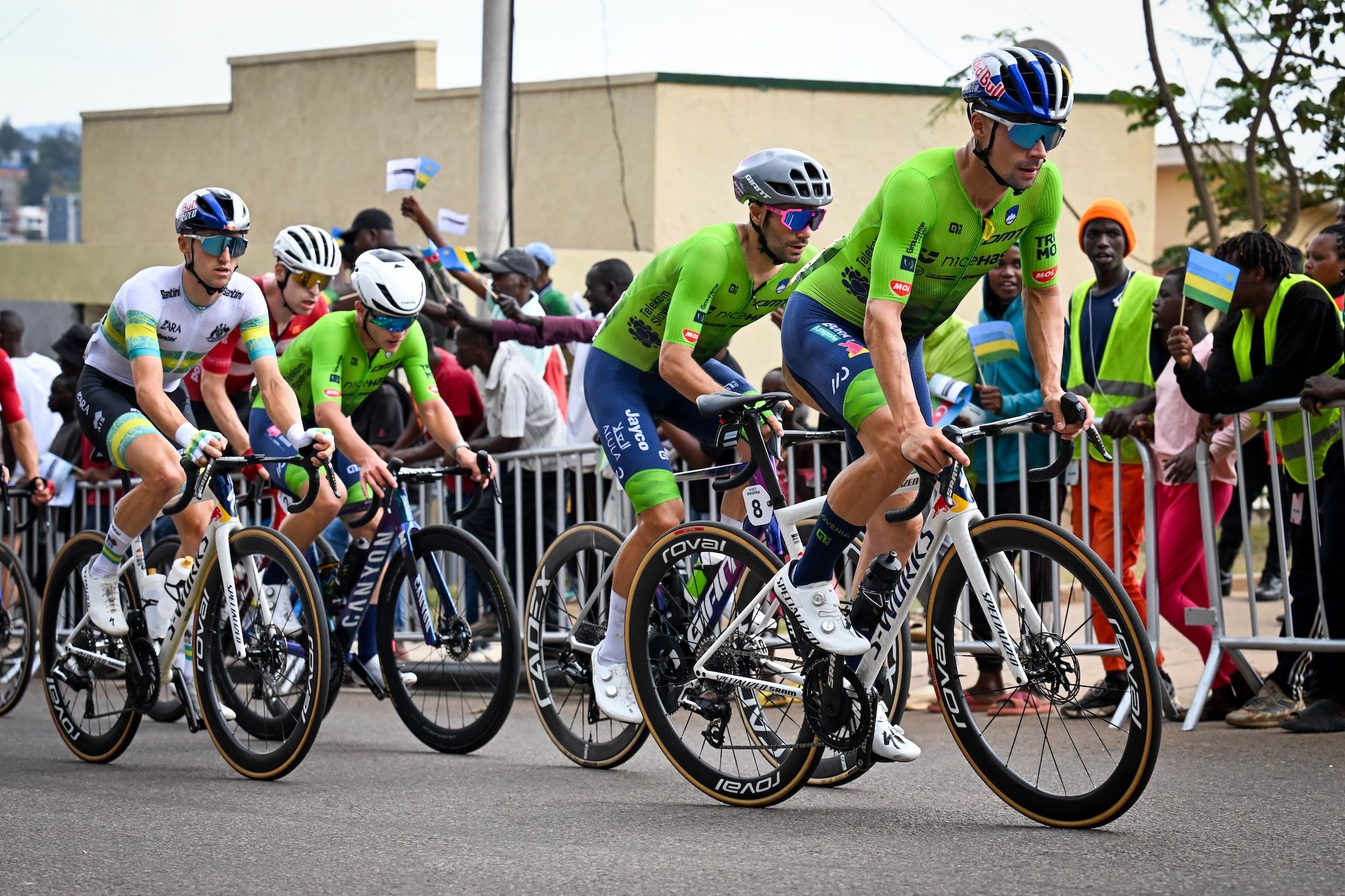
- The Roglič Factor: With Pogačar out, veteran Grand Tour winner Primož Roglič steps back into the undisputed leadership role. Roglič, whose style relies on diesel-engine climbing power and explosive late-race sprints, requires a vastly different supporting cast than the all-terrain, long-range attacking style of Pogačar.
- The Domestique Dilemma: Riders who spent years mastering the art of shielding Pogačar from crosswinds, pacing breakaways, and controlling the front of the peloton find their traditional roles obsolete.
- Attrition Rates: The psychological and physical shift is highlighted by riders like Domen Novak—a loyal teammate to Pogačar at UAE Team Emirates-XRG and a fixture of Slovenia’s World Championship squads since 2020. Novak’s candid admission to Cyclingnews—that tactics will change so fundamentally that he will not even be participating in the upcoming event—underscores the deep structural disruption caused by the absence of their leader. Novak noted bluntly: "Our tactics will change a lot."
- The Supporting Cast: Beyond Roglič, riders such as Matej Mohorič—known for his tactical brilliance, daredevil descending, and opportunistic one-day racing skills—must now step into co-leadership or free-agent roles. Instead of playing a foil to Pogačar, Mohorič and other Slovenian puncheurs have the tactical green light to hunt for early breaks or anticipate the race-winning moves.
Official Responses: Inside the Slovenian Camp
The reaction from within the Slovenian setup has been a mixture of pragmatic acceptance and a recognition of a historic opportunity. While losing a guaranteed podium contender is a bitter pill to swallow, the shift in narrative has breathed new energy into veterans who previously operated entirely in the shadow of cycling’s biggest star.
Team management and coaching staff have emphasized that cycling is a team sport built on adaptability. Without a designated "super-fav," Slovenia can no longer afford to sit back and control the race from the front. Doing so would effectively burn through their limited squad depth while doing the work for rival powerhouses like Belgium, the Netherlands, or France.
Instead, the official directive has shifted toward guerrilla tactics: infiltrating dangerous early breakaways, forcing opposing nations to take up the burden of the chase, and relying on Primož Roglič’s tactical savvy to navigate the final kilometers of the race. It is a style of racing that suits Roglič well, allowing him to lurk in the wheels and capitalize on the tactical hesitation of his rivals.
Implications: How the World Championships Are Rewritten
The ripple effects of Pogačar’s absence extend far beyond the borders of Slovenia, fundamentally altering the competitive landscape of the World Championships.
1. The Tactical Vacuum in the Peloton
When a rider of Pogačar’s caliber exits a start list, a tactical vacuum is created. Teams that built elaborate, multi-layered defensive structures specifically to mark his acceleration must now decide how to deploy those resources. Nations like Belgium—anchored by their own superstars—can no longer rely on a shadow-marking strategy against Slovenia. The race opens up, inviting chaotic, aggressive, and unpredictable racing from the gun.
2. A Golden Opportunity for Roglič and Mohorič
For Primož Roglič, this represents a rare, uncompromised bid for world championship glory. While Roglič has enjoyed a glittering career filled with Grand Tour titles (including multiple Vuelta a España victories and a Giro d’Italia triumph) and Olympic gold, the coveted rainbow jersey has thus far eluded him. With a Slovenian squad riding entirely for his strengths, the stage is set for a potential career-defining victory. Similarly, Matej Mohorič’s tactical acumen makes him a lethal dark horse who can exploit the tactical marking between heavier favorites.
3. The Evolution of National Team Dynamics
Ultimately, this episode serves as a case study in modern cycling management. As the sport becomes increasingly dominated by hyper-specialized, multi-million-dollar superstars, national federations are forced to confront their vulnerability to single-point-of-failure strategies. Slovenia’s forced adaptation proves that even the most dominant cycling nations must possess tactical elasticity, proving that depth, versatility, and mental resilience are just as vital as raw wattage when the rainbow jersey is on the line.

 Siti Muinah
 Ammar Sabilarrohman
 Dwi Wanna
 Nana Wu
 Lina Hope
 Jia Lissa
 Reynand Wu
 Basiran