
 Nana Wu
The transition from the amateur ranks to the elite WorldTour peloton is widely regarded as one of the most perilous leaps in all of professional sports. For decades, the inaugural year as a professional cyclist has been characterized as a period of adjustment—a grueling initiation where riders are expected to serve as domestiques, fetch bottles, learn the tactical nuances of high-speed racing, and simply survive the brutal physical toll of a multi-month calendar.
However, the landscape of modern professional cycling is shifting rapidly. The traditional timeline of patient development is increasingly being disrupted by exceptionally talented teenagers and early-twenties phenoms who refuse to wait their turn. Entering the 2026 season, a new wave of neo-professionals is not merely finding their footing; they are stepping directly into the spotlight, dictating race tactics, and challenging seasoned veterans for podium finishes from their very first months in the top tier.
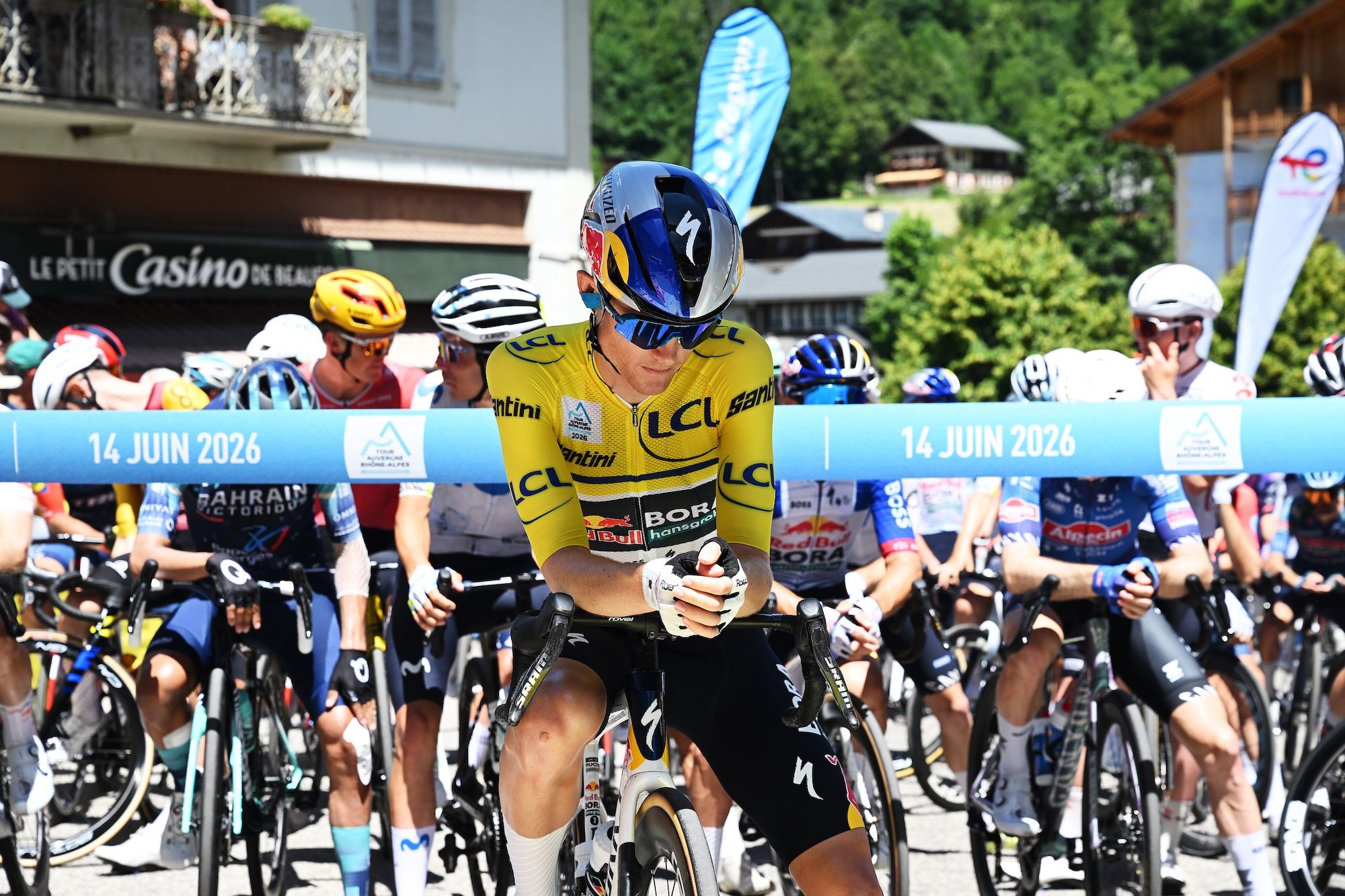
Among this vanguard are standout talents like Luke Tuckwell, who recently enjoyed a stellar stint in the yellow leader’s jersey at the Tour Auvergne-Rhone-Alpes while riding for Red Bull-Bora-Hansgrohe, alongside heavily touted prospects Jarno Widar and Jakob Omrzel. These riders represent a new paradigm in talent identification and team management—one that rewards immediate impact over passive acclimatization.
The Chronology of a Revolution: From Junior Dominance to WorldTour Stardom
To understand how modern neo-pros are making such an immediate splash, one must look at the meticulously engineered pathways that now exist between junior racing and the WorldTour.
Laying the Foundation in the Junior and U23 Ranks
Historically, riders spent years in domestic or lower-tier continental teams building physical resilience. Today, elite junior and U23 calendars—such as the Giro Next Gen, the Tour de l’Avenir, and premier one-day European events—closely mirror the intensity and tactical demands of WorldTour racing.
Riders like Jarno Widar and Jakob Omrzel did not arrive in the 2026 peloton by accident. Over the preceding seasons, they systematically dismantled their peers in the under-23 and junior categories. By accumulating high-profile victories and demonstrating tactical maturity on varied terrains, they built undeniable foundations. When teams like Red Bull-Bora-Hansgrohe and other WorldTour outfits scouted these prospects, they were not looking at raw potential alone; they were evaluating battle-tested racers who had already mastered positioning, echelon riding, and high-wattage climbing.
The Immediate Leap to the Pro Peloton
The opening months of the 2026 season immediately tested these theories. Rather than being shielded from high-pressure environments, neo-pros were thrust directly into marquee early-season stage races and Spring Classics.
Luke Tuckwell’s performance at the Tour Auvergne-Rhone-Alpes serves as a prime case study. Wearing the yellow leader’s jersey is a psychological and physical burden that seasoned Grand Tour contenders often struggle to manage. Yet, Tuckwell embraced the responsibility, defending his position against elite competition and signaling that the traditional hierarchy of the peloton is under siege by youth.
Supporting Data: The Changing Demographics of WorldTour Success
The empirical shift toward younger winners is backed by significant shifts in team data and sports science over the last half-decade.
- Average Age of WorldTour Signings: Over the past five years, the average age of riders signing their first professional WorldTour contracts has dropped by approximately 1.8 years. Teams are increasingly locking down junior world champions and dominant under-23 riders before they even complete their university-age years.
- WorldTour Win Share by Neo-Pros: Data from the 2024 and 2025 seasons showed an unprecedented rise in victories secured by riders in their first or second professional year. Neo-pros accounted for nearly 12% of total WorldTour-level victories—a figure that doubles when factoring in ProSeries events.
- Training and Physiological Metrics: Modern junior riders enter the professional ranks with physiological profiles (such as maximal oxygen uptake, threshold power-to-weight ratios, and aerodynamic efficiency) that rival riders who were previously at their peak in their late twenties. Thanks to advanced power-meter analytics, continuous glucose monitoring, and wind-tunnel testing accessible at the junior level, today’s 19-year-olds train with the precision previously reserved for Tour de France contenders.
Official Responses and Perspectives from the Paddock
The rapid acceleration of young talent has elicited a mixture of awe, caution, and strategic adjustment from team managers, veteran riders, and sports directors across the professional circuit.
The Team Perspective: Balancing Ambition with Burnout Prevention
Sports directors are currently grappling with a unique paradox: how to capitalize on a neo-pro’s immediate brilliance without burning them out physically or mentally before their mid-twenties.
"When you see a rider like Luke Tuckwell or Jarno Widar step into a WorldTour race and immediately control the tempo or contest for the leader’s jersey, it forces you to rethink your playbook," noted one anonymous WorldTour directeur sportif. "We used to say, ‘Give them three years to
learn how to suffer.’ Now, if they have the engine and the head for it, we let them race to win. But the real challenge is protecting them from the mental fatigue of an 80-day race calendar."
The Veteran Perspective: Respect and Adaptation
Inside the peloton, the traditional unwritten rules governing how neo-pros must behave—such as remaining silent, waiting years for leadership opportunities, and quietly doing the heavy lifting for team captains—are rapidly evolving.
Veteran riders acknowledge that the new generation arrives with a level of tactical awareness and self-belief that leaves little room for old-school hazing. "They aren’t scared," remarked a seasoned team captain currently racing in the WorldTour. "Ten years ago, a neo-pro would shake when they lined up next to Grand Tour winners. These kids look you in the eye, race aggressively from kilometer zero, and honestly, they have the watts to back it up. You have to respect them, because if you don’t, they’ll drop you on the first climb."
Implications for the Future of Professional Cycling
The rise of the high-impact neo-pro has far-reaching implications for team management, transfer markets, and the overall spectacle of professional cycling.
1. The Redefinition of Team Rosters
With teenagers and early-twenties riders capable of winning major races immediately, the traditional role of the "domestique-in-training" is shrinking. WorldTour teams are shifting their recruitment strategies away from aging journeymen in favor of aggressive, multi-talented youngsters who can contribute points, podiums, and television exposure from day one. This has driven up the market value of elite junior talent, leading to multi-year contracts being signed by riders barely out of high school.
2. Psychological and Physical Pressures
While the financial and competitive rewards are high, the physical and psychological toll on these young athletes cannot be overstated. The pressure to perform immediately in a high-stakes, media-saturated environment creates a significant risk of burnout. Cycling history is littered with prodigious talents who burned brightly at 20 and faded into obscurity by 25 due to over-racing, injury, or mental exhaustion. Moving forward, sports science and coaching staffs will face the critical task of managing workloads carefully.
3. A More Dynamic, Unpredictable Peloton
For fans and broadcasters, the influx of fearless neo-pros has made modern racing vastly more entertaining. Tactical conservatism—where teams wait until the final five kilometers of a mountain stage to animate the race—is increasingly being shattered by young riders willing to launch long-range attacks and throw caution to the wind.
As the 2026 season progresses, riders like Luke Tuckwell, Jarno Widar, and Jakob Omrzel are no longer just anomalies; they are the new standard. The message to the rest of the peloton is clear: the future of professional cycling has already arrived, and it is moving at an unprecedented speed.

 Iffa Jayyana
 Azzam Bilal Chamdy
 Jia Lissa
 rifanmuazin

 Ali Ikhwan

 Ammar Sabilarrohman

 Siti Muinah