
 Azzam Bilal Chamdy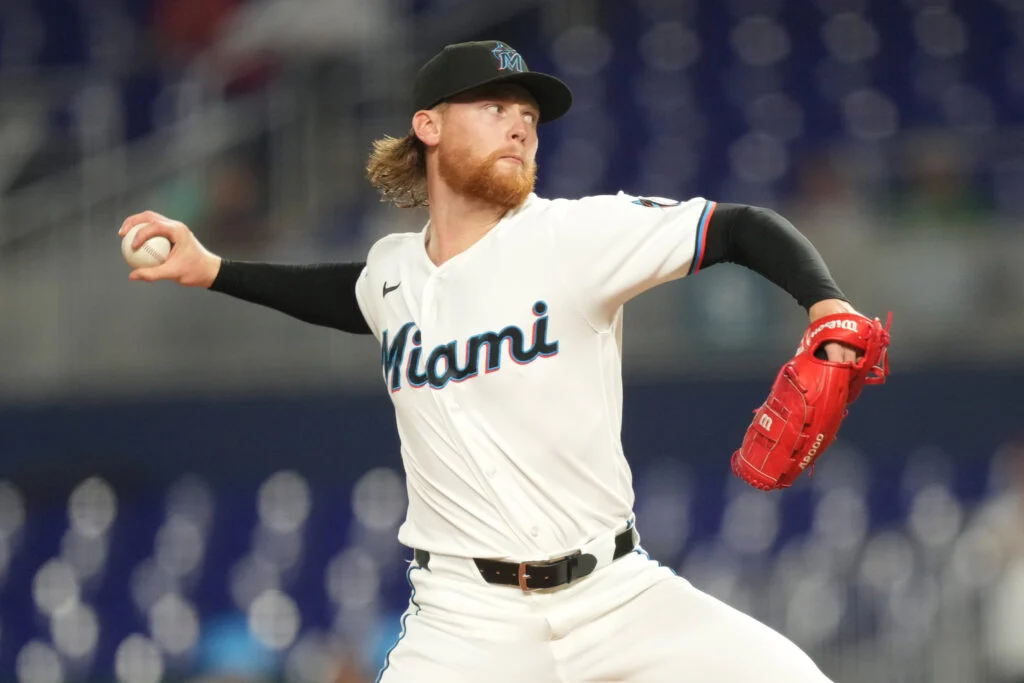
The Miami Marlins’ 2026 postseason aspirations suffered a significant blow this weekend as the club officially announced that right-handed starter Max Meyer has been placed on the 15-day injured list, retroactive to July 19. The diagnosis—a neck strain—comes at the most precarious juncture of the season, forcing the Fish to navigate a high-stakes playoff race without one of their most consistent performers on the mound.
In a corresponding roster move to provide immediate reinforcements for a taxed pitching staff, the Marlins have recalled right-handed pitcher Zach Brzykcy from the minor leagues. While the front office scrambles to manage the immediate aftermath of the news, the organization now faces an uncomfortable reality: their rotation depth, once viewed as a strength, is currently hanging by a thread.
The Chronology of a Lingering Issue
The timeline surrounding Meyer’s injury suggests a recurring frustration that dates back to the days leading up to the Major League Baseball All-Star Break. According to comments provided by manager Clayton McCullough, as captured by Kevin Barral of Fish on First, the discomfort in Meyer’s neck was not a sudden onset event.
Meyer first alerted the training staff to the tightness prior to the mid-summer classic. The break provided a four-day window of inactivity, which appeared, at least initially, to be the perfect remedy. The right-hander reported feeling rejuvenated and symptom-free following the mandated rest period. However, the optimism proved short-lived. Upon taking the mound for his first start following the break, the discomfort returned with increased severity, rendering the ailment impossible to ignore.
Following the recurrence, the club has opted for caution. Meyer is scheduled to undergo a comprehensive evaluation by a medical specialist to determine the precise nature of the strain and, more importantly, to establish a realistic timeline for his return to the rotation. Until that consultation occurs, the Marlins are left in a state of suspended animation regarding their starter’s availability.
A Statistical Pillar of the Rotation
To understand the magnitude of this loss, one must look at the production Meyer has provided throughout the 2026 campaign. In a season characterized by volatility for many young arms, Meyer has been a stabilizing force for manager Clayton McCullough.
Through 20 starts and 111 innings of work, Meyer has maintained a respectable 2.68 earned run average. His underlying metrics further validate his performance: he has demonstrated an impressive ability to miss bats, boasting a 26.2% strikeout rate. Perhaps most encouraging for the long-term outlook is his efficiency; he has maintained a walk rate of 8.9% and a ground ball rate of 41.2%, both of which hover around league-average marks, suggesting that his success is built on a sustainable foundation rather than statistical anomalies.
His absence leaves a gaping void in the starting five. In the modern game, where innings-eaters are becoming an endangered species, Meyer’s ability to consistently provide length while suppressing runs has been instrumental in keeping the Marlins within striking distance of the postseason.
The Collapsing Playoff Picture
The injury could not have occurred at a worse time. Not long ago, the Marlins were surging, playing some of the most inspired baseball in the National League. However, a recent, agonizing six-game losing streak has evaporated much of that momentum, dropping the club’s record to 52-48.
The timing is critical. Miami is currently locked in a statistical deadlock with the St. Louis Cardinals and the Pittsburgh Pirates for the third and final National League Wild Card berth. With the margin for error effectively reduced to zero, the loss of a top-of-the-rotation arm is more than just an inconvenience; it is a potential season-defining hurdle. If the Marlins fail to stabilize their rotation over the next two weeks, they risk sliding out of the playoff conversation entirely before Meyer even has the chance to return.
Precarious Depth: A History of Short-Term Solutions
The Marlins’ current rotation crisis is the culmination of a series of unfortunate events regarding their pitching depth. The front office’s strategy throughout the year has been to lean on internal development, but that plan has been battered by injury.
Earlier this year, the club made the difficult decision to release veteran Chris Paddack. The logic was clear: the Marlins wanted to carve out significant opportunities for high-ceiling prospects like Robby Snelling and Thomas White. Unfortunately, the "youth movement" has been hit by a wave of medical misfortune. Snelling, the crown jewel of the transition, required season-ending internal brace surgery after a single big-league appearance. Thomas White, while highly touted, remains sidelined with a capsular sprain in his throwing shoulder, effectively ending his chances of contributing to the 2026 push.
With the top prospects unavailable and the veteran safety net removed, the current rotation—consisting of Sandy Alcantara, Eury Pérez, Tyler Phillips, and Janson Junk—is now forced to carry a heavier load. The pressure on these four to work deeper into games is immense, and the lack of a reliable "next man up" leaves the coaching staff with limited tactical flexibility.
The Search for Replacements
With Meyer on the shelf, the internal options for filling the fifth spot are less than ideal. Ryan Gusto, currently operating as a long-relief option in the bullpen, is the most logical internal candidate to step into a starting or "bulk-inning" role behind an opener. However, Gusto’s transition to a high-leverage starter role remains unproven at the big-league level.
Dax Fulton, who was recalled last week after being stretched out in the minors, remains an enigma. Having not appeared in a game for over two weeks, his rustiness is a concern for a team that needs immediate, high-quality output. The organization also faces a confidence gap regarding Braxton Garrett; despite pitching well in the minor leagues, the front office has consistently bypassed him for call-ups throughout the season, suggesting a lack of faith in his ability to execute at the Major League level.
Deeper options, such as Bradley Blalock and prospect Karson Milbrandt, have struggled with consistency on the farm, making them risky gambles for a team fighting for their playoff lives.
Strategic Implications and the Trade Deadline
As the July 31 trade deadline approaches, the narrative surrounding the Marlins has shifted. While reports indicate that the front office intends to "buy" at the deadline—and is committed to retaining star pitcher Sandy Alcantara—the Meyer injury drastically changes the calculus of their shopping list.
Even prior to the news of the neck strain, the rotation was widely considered an area in need of external bolstering. Now, that need has evolved from a luxury to an absolute necessity. The Marlins’ front office must decide within the next ten days if they are willing to part with significant prospect capital to acquire a reliable starter who can anchor the rotation alongside Alcantara and Pérez.
The urgency is twofold: the team must survive the next two weeks without Meyer to stay relevant, and they must demonstrate to the clubhouse that they are willing to invest in the roster’s success. If the Marlins remain in the Wild Card hunt by the end of the month, expect them to be aggressive on the trade market. If they continue to stumble, the injury to Meyer may serve as the tragic footnote to a season that promised much more.
For now, the clubhouse must look to the veterans. The leadership of Sandy Alcantara will be tested as never before, and the resilience of the young core will be the deciding factor in whether the 2026 season ends in October or early September. The road ahead is steep, the margin is thin, and for the Marlins, the wait for news on Max Meyer feels like the longest countdown of the year.

 Nana Wu
 Siti Muinah
 Neng Nana

 Lina Hope

 Sagoh
Sagoh
 Iffa Jayyana