
 rifanmuazin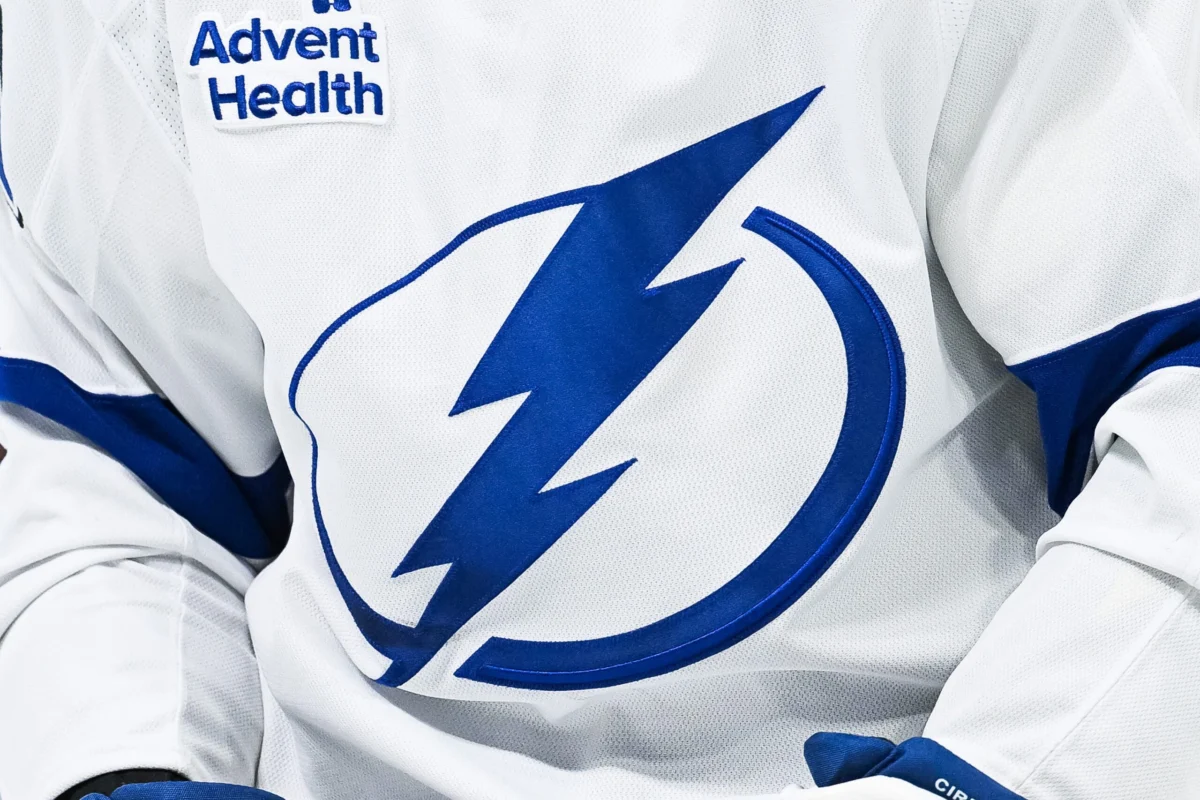
TAMPA, Fla. — In the high-stakes, multi-billion-dollar ecosystem of the National Hockey League, romance and unpredictability have always coexisted at the margins. For years, the Emergency Backup Goaltender (EBUG)—the mythical local hero plucked from the glass or the concourse to guard the net when both rostered goaltenders go down—has provided some of the sport’s most unforgettable folklore.
However, as the league ushers in a transformative era defined by a newly minted collective bargaining agreement (CBA), the era of the casual, impromptu fan-in-the-stands EBUG is officially drawing to a close.
According to Lightning Insider’s Erik Erlendsson, the Tampa Bay Lightning are moving swiftly to adapt to the league’s modern mandates, reportedly locking in a familiar face for a vastly expanded role. Kyle Konin, a well-traveled local fixture who has spent the last half-decade on speed dial for NHL organizations in the region, is slated to become the Lightning’s full-time emergency backup goaltender for the 2026–27 NHL season.
This appointment is far more than a simple roster housekeeping note. It represents a paradigm shift in how NHL franchises approach player safety, regulatory compliance, and contingency planning under a radically rewritten league rulebook.
Main Facts: The Evolution of the Modern EBUG
The foundational realities of Konin’s appointment point to a sweeping modernization of NHL operational standards. Under the terms of the newly ratified CBA, NHL franchises are no longer permitted to rely on the traditional, highly romanticized model of finding a willing, medically cleared goaltender sitting in the arena seats on game nights.
Instead, the league now requires all 32 member clubs to retain a full-time, officially vetted emergency backup on staff. This structural overhaul is designed to eliminate the logistical chaos and liability concerns that previously accompanied scramble drills when a starting goaltender was injured during pre-game warmups or mid-game action.
Under the updated league regulations, full-time EBUGs like Konin are subject to strict operational guidelines, including a mandated uniform specification. Per official NHL rules stemming from the new CBA, all designated EBUGs must take the ice wearing the iconic, unconventional sweater number 00.
For the Tampa Bay Lightning, turning to Konin is a natural extension of a multi-year professional relationship. The 28-year-old West Kingston, Rhode Island native is uniquely positioned to step into this unprecedented full-time role due to his geographic permanence in the Tampa Bay area, his extensive prior experience donning NHL equipment, and his deep familiarity with the Lightning’s coaching and training staff.
While Konin has never played an official minute of regular-season or postseason hockey at the NHL level—meaning his career goals-against-average remains a pristine 0.00—he is far from an unproven commodity within the league’s inner sanctum. Over the past four years, his local residency has made him an indispensable emergency asset, resulting in five separate formal EBUG call-ups and three active game day dressings for the Lightning alone.
Chronology: Building a Unlikely Path to the NHL Credential Holder’s Circle
To understand how Kyle Konin arrived at the doorstep of a full-time NHL staff position, one must trace a winding, non-traditional hockey odyssey that spans junior circuits, club college hockey, and years of waiting quietly in the wings of major league arenas.
Junior Hockey and the Foundation (2016–2019)
Long before his name was whispered in NHL press boxes, Konin was grinding through the developmental tiers of North American junior hockey. A dedicated crease-guardian determined to maximize his potential, Konin logged valuable minutes across multiple organizations.
His journey included stints in the Eastern Hockey League (EHL), where he suited up for the Vermont Lumberjacks and the New Hampshire Avalanche. These developmental leagues tested his resilience and technical foundations against high-volume shooters. Additionally, Konin spent time in the North American Tier-III Hockey League (NA3HL) with the Atlanta Capitals. While these stops did not immediately yield Division I NCAA scholarships or major major-junior paths, they forged the competitive stamina required to survive high-pressure environments.
The ACHA Chapter at Grand Valley State (2019–2020)
In the 2019–20 season, Konin transitioned to the academic and athletic environment of Grand Valley State University. Playing at the club college level within the American Collegiate Hockey Association (ACHA), Konin showcased his abilities across both the DII and DIII programs for the Lakers.
While ACHA hockey operates outside the umbrella of NCAA varsity athletics, it is renowned for producing fiercely competitive players who often maintain a lifelong passion for the game. For Konin, his single season at Grand Valley State would mark his final chapter of competitive, organized team play before pivoting toward the corporate and local working world—a pivot that, ironically, positioned him perfectly for his future NHL calling.
Relocation to Florida and the EBUG Breakthrough (2022–2025)
Following his relocation to the Tampa Bay area, Konin’s life intersected with professional hockey purely by chance and geographic convenience. The NHL’s long-standing rule requiring a home-team EBUG to be available in every arena created a sudden demand for local goaltenders with competitive backgrounds who could pass rigorous background checks and concussion protocols.
Konin stepped into that void. Over the last four seasons, he became a fixture of the Lightning’s emergency protocol. His readiness was tested repeatedly. Across his tenure, Konin has been activated five times. He has officially dressed in full uniform for three games on the Lightning bench, absorbing the sights, sounds, and nervous energy of an NHL regular-season environment from inches away from the action.
His most recent high-profile active appearance came last April, when veteran Lightning netminder Jonas Johansson was a late scratch during the regular season due to an unexpected injury.
Remarkably, Konin’s reputation for reliability has transcended the borders of Amalie Arena. Due to scheduling overlap, travel anomalies, and cross-conference emergencies, Konin’s "career" stat sheet includes dressing not only for his hometown Lightning but also pinch-hitting as an emergency backup for visiting or regional opponents, including the Philadelphia Flyers and the St. Louis Blues.
Supporting Data: The Anatomy of the Modern EBUG System
The transition from a spontaneous fan-in-the-stands model to a full-time professionalized EBUG staff position is supported by a growing body of data regarding goaltender workloads, injury rates, and the financial complexities of the NHL’s hard salary cap.
| Season Metric / Data Point | Historical Standard (Pre-CBA) | Modern Standard (2026–27 CBA) |
|---|---|---|
| Selection Method | Spectator in stands / local beer league goalie | Vetted, contracted full-time staff member |
| Uniform Number | Various (often 00, 31, or 35) | Strictly mandated 00 |
| Medical/Insurance Clearance | Cleared ad-hoc on game day | Full organizational medical onboarding |
| Compensation | Standard $500 per game (if dressed) | Retainer/Full-time staff compensation |
| Readiness Time | Arrives from lower bowl at stoppage | Present at morning skate, meetings, and bench |
The financial implications of the new CBA are profound. Under the previous collective bargaining agreement, teams were hesitant to burn a standard player contract (SPC) or manipulate their 23-man active roster and long-term injured reserve (LTIR) pool simply because a backup goaltender pulled a groin during pre-game stretches.
By creating a full-time, non-roster EBUG staff designation, the NHL and the NHL Players’ Association (NHLPA) have struck a balance. Franchises can now ensure absolute continuity and competitive integrity without violating the newly introduced playoff and regular-season salary caps. Furthermore, standardizing the role mitigates the catastrophic insurance and liability risks associated with throwing an unvetted amateur onto the ice against the world’s most lethal shooters.
Official Responses and Perspectives
While the NHL league office and individual club general managers are still ironing out the broader operational nuances of the new CBA, early reactions from hockey executives, players, and media insiders underscore the gravity of the change.
League analysts have universally praised the move toward professionalization. For years, the EBUG phenomenon produced incredible viral moments—such as accountant Scott Foster stopping all seven shots he faced for the Chicago Blackhawks in 2018, or Zamboni driver David Ayres defeating the Toronto Maple Leafs in 2020 while working for the Carolina Hurricanes. However, general managers behind closed doors frequently voiced anxiety over the competitive fairness and safety hazards of relying on amateurs.
"The game is simply too fast, the players shoot too hard, and the stakes are too high to leave the backup goaltender position to a coin flip in the concourse," noted one Eastern Conference hockey operations executive speaking on condition of anonymity. "Establishing full-time professionals like Kyle Konin ensures that our standard of play remains uncompromised, even in the worst-case medical scenario."
Within the Lightning organization, players have long embraced Konin as an honorary member of the brotherhood. Despite spending his days away from the ice navigating a normal civilian career in Florida, Konin’s professionalism during his emergency call-ups earned the quiet respect of Lightning leadership, including franchise cornerstones and coaching staff alike.
"Kyle handles himself with absolute poise," a team source shared following his emergency stint last April. "When you look down the bench and see a guy who hasn’t played a professional game, but he’s calm, locked in, and ready to absorb 100-mile-per-hour claps from opposing power plays, you respect the sheer nerve of it."
Implications: What a Full-Time EBUG Means for the Future of Hockey
The appointment of Kyle Konin as the Tampa Bay Lightning’s full-time EBUG for the 2026–27 season carries significant implications that ripple across the entire National Hockey League.
1. Elevated Standards of Player Safety
With NHL shots routinely exceeding 100 miles per hour and players conditioning year-round to maximize velocity and release deception, the physical toll of stepping into an NHL net unprepared is immense. By mandating full-time, vetted EBUGs, the league protects both the integrity of the game and the physical well-being of the emergency caretakers themselves. Konin’s familiarity with elite-level shooters through his years of proximity ensures he possesses the spatial awareness and mental fortitude required to survive in the crease.
2. The Professionalization of the Local Hero
While the romantic narrative of the "fan in row 12 who happens to be a beer league goalie" provided incredible television narratives, it belonged to a bygone era of sports entertainment. The modern NHL is an ultra-precise, data-driven enterprise where every variable must be accounted for. Konin’s elevation signals that even the most quirky, whimsical traditions of the sport are being folded into structured, corporate sporting management.
3. A Blueprint for Other Franchises
As the Tampa Bay Lightning formalize Konin’s status under the guidelines of the new CBA, they are effectively setting a blueprint for how other major-market and regional franchises will manage their emergency goaltending needs moving forward. Expect other teams to follow suit, identifying former college or junior goaltenders residing within their local metropolitan areas to fill permanent, insured staff positions.
Conclusion
As the calendar turns toward the 2026–27 NHL season, the image of Kyle Konin pulling on a custom Lightning sweater emblazoned with the number 00 will serve as the physical manifestation of a changing league.
For Konin, a kid from West Kingston who grinded through the EHL, NA3HL, and ACHA before finding a home in the Sunshine State, the journey is nothing short of extraordinary. He may never log a career save in the official regular-season record books, but as the designated guardian of the Tampa Bay Lightning’s net under the strict new tenets of the collective bargaining agreement, Kyle Konin is no longer just a footnote in hockey lore. He is an essential part of the machine.

 Suro Senen
 Laily UPN
 Pevita Pearce

 Nana
Nana
 Asro
Asro
 Muslim