
 Neng Nana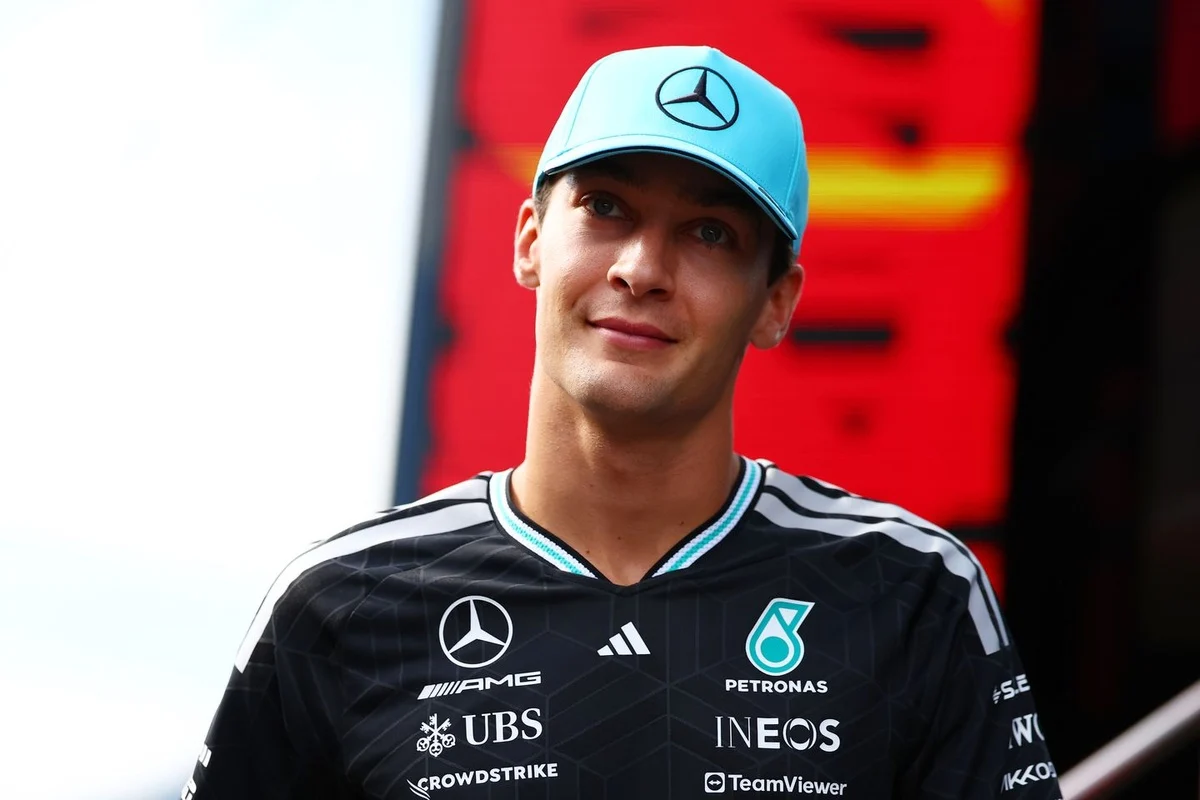
LONDON — In the high-stakes, ego-driven ecosystem of Formula 1, admitting defeat to a teammate is often treated as the ultimate taboo. Yet, as the 2026 world championship battle enters its decisive phase, Mercedes charger George Russell has drawn widespread acclaim for breaking the mold. Former F1 race winner David Coulthard has publicly lauded the British driver for his remarkable transparency, openly conceding that teammate Kimi Antonelli is simply outperforming him in the Silver Arrows’ garage.
Russell’s championship aspirations have taken a severe dent in recent weeks, culminating in the inaugural Spanish Grand Prix at the brand-new Madring circuit. While Antonelli stormed to his eighth victory of the season, extending his commanding drivers’ championship lead to 81 points, Russell was left to salvage a meager fifth-place finish.
For a driver who entered the season as a clear title favorite, the sudden shift in intra-team momentum has been stark. However, rather than resorting to the paddock’s traditional playbook of excuses, aero-balance complaints, or veiled grievances, Russell has chosen a path of brutal, refreshing honesty—earning the respect of veterans and pundits alike.
Main Facts: The Turning Tide at Mercedes
The core narrative of the current F1 season centers on the meteoric rise of Kimi Antonelli within the Mercedes works team, contrasted against the unexpected struggles of George Russell.
- The Championship Standings: Antonelli sits comfortably at the summit of the Formula 1 World Drivers’ Championship, boasting eight Grand Prix victories. His latest masterclass at the Madring circuit pushed his championship lead over second-placed Russell to an imposing 81 points.
- The Early-Season Promise: Russell’s campaign began on an exceptionally high note. He arrived at the season-opening Australian Grand Prix in Melbourne as a primary favorite for the crown, converting that status into a race win, which he followed up with victory in the subsequent sprint race in China.
- The Momentum Shift: Since those early spring highs, the tide has turned dramatically. Antonelli has found an extraordinary groove, stringing together a dominant sequence of wins that has left Russell scrambling to match his pace.
- The Public Concession: In a candid weekend interview with F1 broadcast veteran Martin Brundle, Russell unreservedly admitted: "Look, Kimi is just doing a better job than me right now."
- The Coulthard Endorsement: Speaking on the Up To Speed podcast, 13-time Grand Prix winner David Coulthard praised Russell’s rare vulnerability, contrasting his maturity with the defensive postures frequently seen in the F1 paddock.
Chronology of a Title Challenge Unraveling
To understand the weight of Russell’s current situation, one must trace the timeline of the 2026 season from its optimistic beginnings to its current competitive reality.
Phase 1: The Australian Highs (March)
As the Formula 1 circus touched down in Melbourne for the season opener, expectations around George Russell were at an all-time high. Benefiting from a well-balanced Mercedes W17 and his status as the de facto team leader following years of development work, Russell delivered a flawless weekend. He secured pole position and converted it into a commanding victory, instantly stamping his authority on the championship.
Phase 2: The Chinese Sprint and Early Dominance (April)
The momentum continued into the early spring rounds. At the Chinese Grand Prix weekend, Russell doubled down on his title credentials by mastering the sprint format to take another victory. At this juncture, he looked every bit the championship material Mercedes had envisioned. Antonelli, meanwhile, was showing flashes of raw speed but was still ironing out the consistency required for a sustained title charge.
Phase 3: Antonelli’s Ascendancy (Late Spring – Summer)
The turning point of the season arrived as the European leg took shape. Antonelli unlocked a deeper understanding of the Mercedes machinery, extracting performance that left the engineering staff and his teammate searching for answers. Win after win began to stack up for the young Italian prodigy. Circuit by circuit, Antonelli chipped away at Russell’s early points buffer before decisively overtaking him at the top of the standings.
Phase 4: Madring and Reality (Recent Weeks)
The inaugural Spanish Grand Prix at the new Madring circuit served as a microcosm of the season’s second act. Antonelli was untouchable at the front, cruising to his eighth victory of the year. Russell, fighting handling imbalances and lacking the supreme confidence of his teammate, could manage no better than fifth place. It was here, facing an 81-point deficit, that Russell’s candid interview with Martin Brundle laid bare the psychological reality of his current predicament.
Supporting Data: The 2026 Intra-Team Dynamic
In modern Formula 1, telemetry is open, data is shared, and there are virtually nowhere for a driver to hide. When a teammate finds an edge, it quickly manifests on the timing screens.
According to David Coulthard, the current state of affairs at Mercedes is part of a broader macroeconomic trend across the 2026 grid, where subtle regulation nuances and chassis characteristics heavily favor one driving style over another.
"I think what we’re just seeing is, in the same way that this year’s formula has suited Lewis [Hamilton] more relative to Charles [Leclerc], there’s been a swing in their performance from last year to this year," Coulthard explained on the Up To Speed podcast.
Drawing comparisons elsewhere on the grid, Coulthard pointed to McLaren: "Oscar [Piastri] has dropped off form relative to Lando [Norris], where he was leading the world championship up until Baku last year. So, it’s swings and roundabouts of this formula."

These shifts highlight how razor-thin the margins are in contemporary F1. A matter of millimeters in ride-height setup or minor shifts in power-unit software deployment can instantly transform a front-running driver into a defensive midfielder. For Russell, the current technical iteration of the sport appears to have tilted away from his preferred steering and braking characteristics, playing instead directly into Antonelli’s natural rhythm.
Official Responses and Paddock Reactions
The reaction to Russell’s public self-assessment has been overwhelmingly positive within the motorsport community. F1 drivers are notoriously protective of their self-belief; any admission of weakness is historically viewed as ammunition for rivals and a potential breach of psychological armor.
However, Coulthard believes Russell’s transparency is a sign of true strength, not frailty.
"We’ve got Kimi coming alive and George is on the ropes," Coulthard remarked. "But in fairness to George, I think he’s come to terms with it. He’s fronting up to the media. He’s answering the questions.
"He did an interview with Martin Brundle over the weekend where he said, ‘Look, Kimi is just doing a better job than me right now.’ I think that’s a big man who can admit that publicly.
"We would all be thinking it, but sometimes racing drivers bury their heads in the sand, and it’s just one excuse after another. But I believe in George. I feel for him. It’s a championship that’s slipping away, but he’s still young enough in his career that he’ll have his moment."
Mercedes team management has similarly praised both drivers, maintaining a neutral stance publicly while privately marveling at Antonelli’s steep developmental curve. Insiders suggest that the engineering debriefs at Brackley have been transparent, with Russell actively working alongside engineers to understand where Antonelli is finding his time—particularly in high-speed entries and apex rotation.
Broader Implications for George Russell’s Career
As the 2026 season moves past its halfway mark, the long-term implications for George Russell’s career trajectory warrant close examination.
1. Psychological Resilience
By acknowledging Antonelli’s superiority rather than fighting ghosts or blaming the team, Russell has inoculated himself against toxic internal politics. In elite sport, denial prolongs slumps, whereas acceptance is the first step toward recovery. By owning his current deficit, Russell frees up mental bandwidth to focus purely on engineering solutions and data analysis.
2. Market Value and Reputation
Paradoxically, a driver admitting they are beaten by an exceptional teammate often enhances their reputation for maturity. F1 team principals—watching closely from the pit wall—value emotional intelligence and honesty just as much as raw speed. Russell remains one of the most complete and intelligent racers on the grid; his ability to handle adversity with dignity reinforces his status as a premier long-term prospect.
3. The Road Ahead
With an 81-point gap to bridge and only a handful of rounds remaining, a maiden world title for Russell in 2026 appears increasingly unlikely barring a dramatic shift in reliability or performance. However, as Coulthard noted, Russell remains young in racing terms. The experience of fighting a generational talent from within the same garage will undoubtedly forge him into a sharper, more adaptable competitor.
For now, the Silver Arrows belong to Kimi Antonelli. But in the theater of Formula 1, fortunes turn quickly—and George Russell’s grace in defeat may well lay the foundation for his ultimate triumph tomorrow.

 Nila Kartika Wati
 Laily UPN
 Layla Zulfa
 Asro
Asro
 Nana Wu
 Ali Ikhwan