Laily UPN
By Braden Keith
The storied legacy of the Indian River State College (IRSC) swimming and diving program—a dynasty that serves as a cornerstone of collegiate athletics—has been granted a temporary lifeline. In a high-stakes meeting held this past Tuesday, the school’s Board of Trustees voted to table a controversial recommendation from college president Dr. Timothy E. Moore to dissolve the institution’s swimming and diving teams.
For the student-athletes, alumni, and supporters who have rallied behind the program, the decision marks a significant, albeit narrow, victory. However, the shadow of uncertainty remains. The Board has formally requested that the administration prepare a comprehensive report on the program’s future, setting the stage for a decisive showdown on November 17.
The Current Landscape: A Dynasty Under Siege
The proposed elimination of the swimming and diving program sent shockwaves through the aquatics community last week when the agenda for the Board of Trustees Governance & Legislative Affairs Committee meeting was made public. The administration’s proposal, which sought to restructure the college’s athletic department by shifting all sports to NJCAA Division II, would have effectively ended the reign of one of the most successful athletic programs in the history of American college sports.
Under the proposed plan, sports such as baseball, softball, and men’s basketball would have transitioned to join the women’s volleyball team in Division II. Amidst this sweeping reorganization, the swimming and diving program—a program defined by nearly half a century of unbroken dominance—was slated for the chopping block.
"We’ve won the battle, but not yet the war," said freshman swimmer Tessa Sims, who has emerged as a vocal leader in the grassroots effort to save the program. Her sentiment reflects the cautious optimism currently felt by the 43 student-athletes—22 women and 21 men—who currently occupy the team rosters.
Chronology of a Crisis
The timeline of this crisis has been remarkably compressed, creating a pressure cooker environment for the athletes involved.
- Mid-October: Rumors of administrative restructuring began to circulate, culminating in the official publication of the Board’s meeting agenda. The document explicitly included a vote on the elimination of the swimming and diving program, alongside a proposal to potentially reinstate the women’s basketball team.
- Tuesday, October 22: The Board of Trustees convened. Faced with a surge of public pressure and a wave of advocacy from the swimming community, the Board chose to table the motion. This procedural maneuver successfully delayed the elimination vote, moving the matter to the November 17 meeting.
- The Path Forward: Between now and mid-November, the college administration is tasked with drafting a formal report. This report is expected to detail the financial and logistical justifications for the proposed cuts, which advocates will surely scrutinize with intense rigor.
The Magnitude of the Legacy
To understand why the potential dissolution of the IRSC program has caused such an uproar, one must look at the numbers. The Indian River State College swimming and diving program is not merely a regional team; it is an institution.
This past March, the men’s team captured its 52nd consecutive NJCAA national title, a staggering achievement that holds the record for the longest active championship streak in all of college athletics. The women’s team is not far behind, having secured 48 consecutive championship titles. These figures represent an unprecedented level of consistency and excellence that has cemented IRSC’s reputation as a "factory" for elite swimming talent.
The program is currently under the stewardship of head coach Sion Brinn. A former Pioneer himself—having swum for the college from 1991 to 1993—Brinn brings a deep, personal connection to the program. His pedigree is world-class; a two-time Olympian, Brinn represented Jamaica in the 1996 Atlanta Games and Great Britain in the 2000 Sydney Games. Since taking the helm in 2013, Brinn has maintained the high standards established by his predecessors, ensuring that the Pioneers remain a dominant force in the pool.
The team’s performance this season further underscores their viability and competitive fire. The men’s team is currently 2-0, having secured a victory against Division I Florida Atlantic in September and a win against NAIA St. Thomas last weekend. The women’s team sits at 1-1, rebounding from an early loss to FAU with a convincing win against the Bobcats.
Infrastructure and Facilities: The "Anne Wilder" Factor
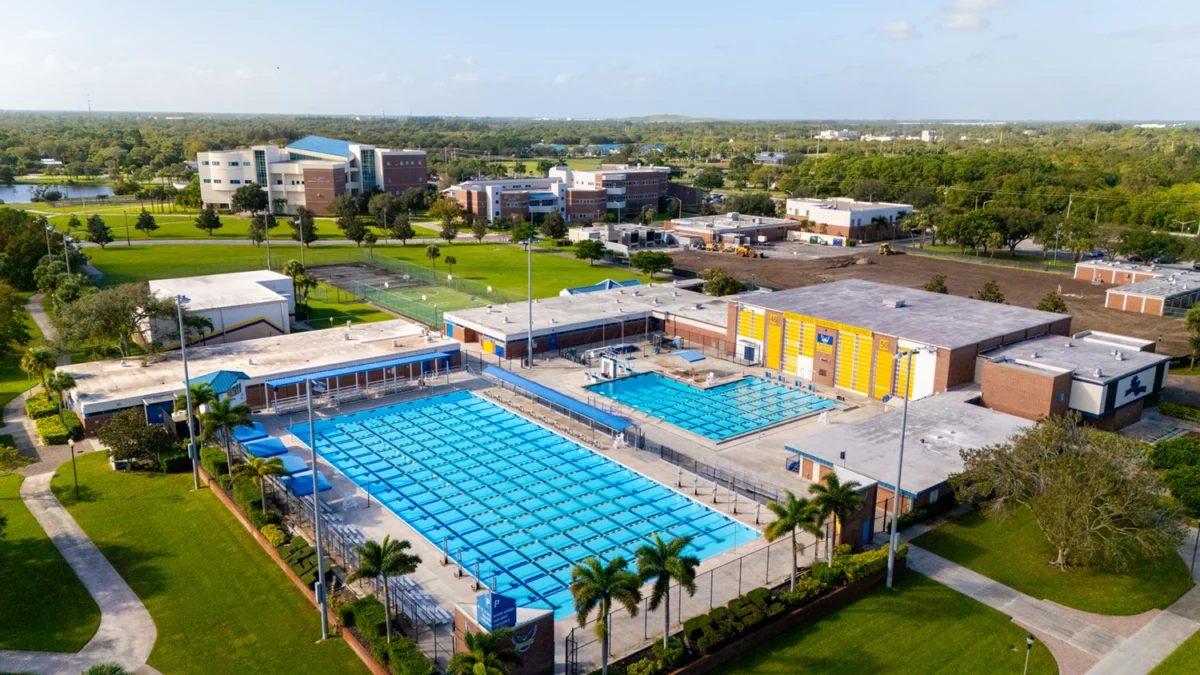
One of the primary arguments fueling the opposition to the cuts is the existence of the Anne Wilder Aquatic Complex. The facility is a premier training ground, featuring a 50-meter by 25-yard pool and a separate 25-meter by 25-yard diving well.
Advocates argue that the facility is an asset, not a liability. In an era where many institutions struggle to maintain specialized sports infrastructure, IRSC possesses a world-class venue that serves as a draw for top-tier student-athletes from across the country and around the globe. To eliminate the program while sitting on such a facility seems, to many observers, to be a counter-intuitive management decision that would leave a significant campus resource underutilized.
Official Responses and Administrative Rationale
While Dr. Timothy E. Moore and the college administration have been the architects of the proposed shift, they have faced increasing demands for transparency. The rationale for shifting to NJCAA Division II across the board, according to early reports, centers on budgetary sustainability and a desire for a more uniform competitive landscape for the college’s various athletic programs.
However, the administration has yet to release a detailed financial breakdown that specifically justifies the termination of the swimming and diving program. The upcoming November 17 report is expected to serve as the administration’s formal "defense" of their position. For the swimming community, the burden of proof will be on the college to demonstrate why a program that brings such immense prestige and recruitment value is being targeted for removal.
Broader Implications for College Athletics
The situation at Indian River State College is a microcosm of a larger, systemic issue facing collegiate athletics today: the tension between institutional budget-cutting and the preservation of long-standing, tradition-heavy athletic programs.
Small-college athletics often face the dual pressures of rising operational costs and shifting administrative priorities. When a program as historic as IRSC’s is placed on the chopping block, it raises a fundamental question for the academic community: what is the value of a dynasty?
For the Pioneers, the value is not just in the hardware—the 100+ combined championship trophies—but in the culture of excellence that the program fosters. Student-athletes in these programs often carry the discipline, work ethic, and leadership skills they learn in the pool into their professional lives long after they hang up their caps and goggles.
Looking Toward November 17
As the college community enters this month-long waiting period, the pressure on the Board of Trustees will only intensify. The "reprieve" granted on Tuesday is a significant development, but it is not a resolution.
The task for the advocates—led by voices like Tessa Sims—will be to maintain the momentum. They must ensure that the Board of Trustees understands that the national swimming community is watching. The outcome on November 17 will not only determine the fate of the current roster of 43 athletes and the coaching staff, but it will also serve as a definitive statement on how the college values its own history.
For now, the water remains calm in the Anne Wilder Aquatic Complex, but the intensity of the struggle continues behind the scenes. Whether the Pioneers will secure their 53rd and 49th titles, respectively, or whether the program will become a victim of administrative restructuring, will be decided in less than a month. Until then, the dynasty remains, standing on the edge of the blocks, waiting for the signal to either continue its historic race or accept an abrupt, controversial end.

 Neng Nana
 Asro
 Dwi Wanna

 Reynand Wu

 Ali Ikhwan