
 Neng Nana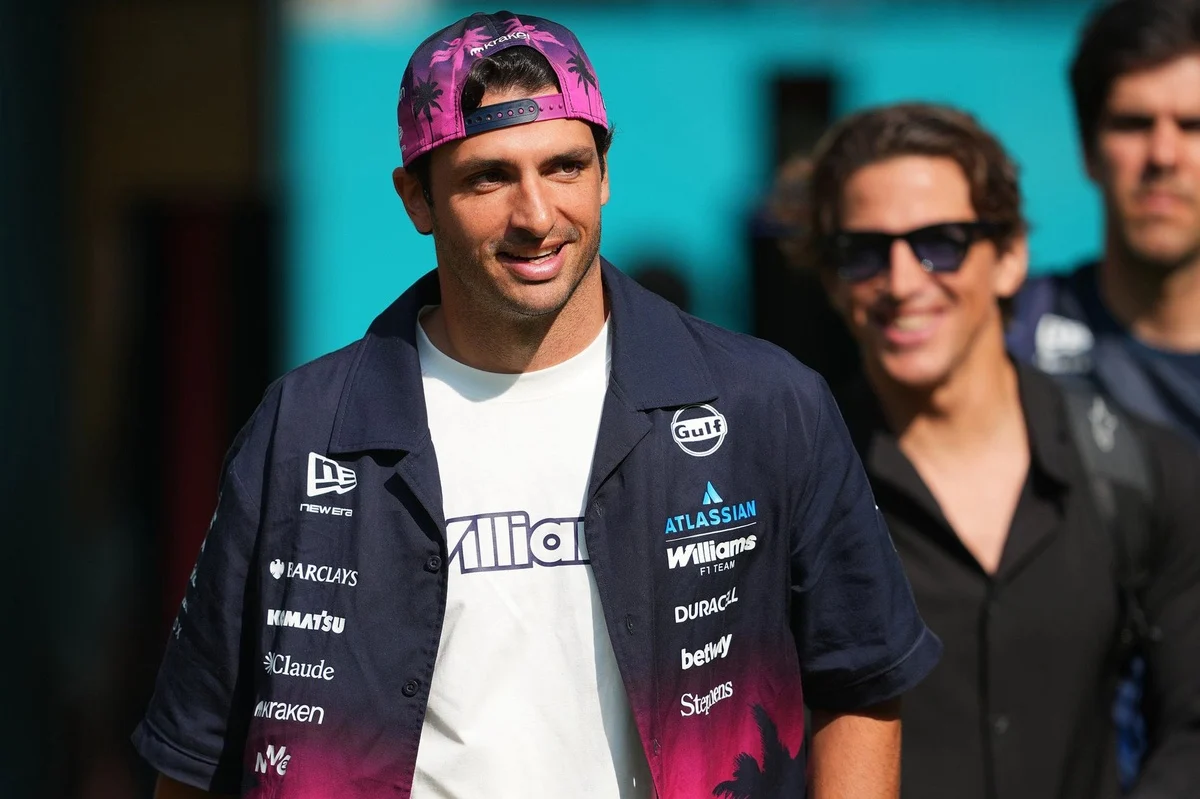
The Formula 1 paddock is a place where optimism is often the primary currency, but as the 2024 season progresses, the atmosphere surrounding the Williams Racing team has shifted from hopeful anticipation to palpable frustration. At the center of this narrative is Carlos Sainz, a race-winning driver whose decision to commit his future to the Grove-based outfit was framed as a visionary act of faith. However, according to former F1 driver and pundit Jolyon Palmer, that faith is currently being tested by a machine that refuses to deliver on its theoretical promises.
The Reality of the FW48: A Performance Crisis
For a team with the historical pedigree of Williams, the current state of the FW48 is, by all accounts, unacceptable. Despite having access to the Mercedes power unit—the same championship-winning machinery that powers other competitive entries—the team finds itself languishing in the lower echelons of the constructors’ championship.
Jolyon Palmer, speaking on the F1 Nation podcast, did not mince words regarding the team’s ongoing struggles. "They’re underperforming," Palmer stated bluntly. "They have the power unit that’s winning the championship. Everyone else is doing an all-right job with that power unit. Alpine has risen to the front in their first year with that. Williams has had an old partnership with Mercedes. That is no excuse."
The frustration stems from the disconnect between the team’s engineering simulations and their on-track output. After the British Grand Prix, where a series of highly anticipated aerodynamic upgrades—including a new front wing—failed to produce the expected performance gains, the mood within the garage reached a new low. For a driver like Sainz, who is widely considered one of the most intelligent and technically astute operators on the grid, the lack of progress is a bitter pill to swallow.
A Chronology of Disillusionment
To understand why this situation is so critical, one must look at the timeline of events leading up to this point.
The Catalyst: The Ferrari Shake-up
The saga began in early 2024 with the seismic announcement that seven-time world champion Lewis Hamilton would depart Mercedes to join Ferrari in 2025. This move left Carlos Sainz, the only non-Red Bull driver to win a race in the 2023 season, without a seat. Suddenly, one of the most coveted free agents in the sport was on the market.
The Decision-Making Process
Throughout the first half of the season, speculation swirled around Sainz’s future. He was courted by multiple outfits, including Alpine, which was undergoing a major restructure, and the prospective Audi project (currently operating as Stake/Sauber). Ultimately, Sainz chose Williams. He described it as a long-term project, buying into the vision of Team Principal James Vowles, who has been tasked with rebuilding the team from the ground up.
The Promises of Miami
The disconnect between promise and delivery can be traced back to the Miami Grand Prix. At the time, James Vowles was vocal about the team’s internal trajectory. "We’ve basically fixed the car on paper," Vowles had remarked, suggesting that the team had solved their weight issues and aerodynamic deficiencies in their simulation models. The logic was sound: bring the parts to the car, and the performance would follow. However, as the summer months approached, those parts arrived, but the expected jump in the competitive hierarchy did not.
Supporting Data: The Statistics of Struggle
The numbers tell a sobering story. As of the end of the first nine rounds of the season, Williams sits in eighth place in the Constructors’ Championship, holding a mere 11 points.
When compared to the rest of the field, the data suggests that Williams has failed to capitalize on the development race. In modern Formula 1, the "cost cap era" dictates that every update must be surgically effective. While teams like McLaren and Mercedes have found massive gains by unlocking the potential of their chassis, Williams has struggled to maintain momentum.
"I’m just so disappointed in Williams," Palmer added. "You’d have thought they’d at least be able to upgrade it quickly and by the summer they’d be back towards the midfield, but they’re actually not really getting much closer on the whole."

The data highlights a recurring issue: the team is capable of "wrangling a point or two" on the odd weekend, usually through clever strategy or attrition from others, but they lack the consistent raw pace to challenge for the points-paying positions on merit. For a driver of Sainz’s caliber—who spent years fighting for podiums at Ferrari—this represents a significant regression in his career trajectory.
The Leadership Dilemma: James Vowles vs. The Factory
James Vowles, the former Mercedes strategist who took the helm at Williams, has been the face of the team’s cultural and technical transformation. His transparency, particularly regarding the team’s historical lack of investment in infrastructure, has earned him praise. However, patience is a finite resource in the high-stakes world of F1.
Palmer notes that while Vowles is a "seriously intelligent guy," the gap between the team’s aspirations and their reality is widening. "He’s trying to be a leader in the team, and he’s just getting nowhere with them," Palmer observed.
The issue may not be one of leadership or driver talent, but rather one of internal execution. If the car is fast "on paper" but slow on the asphalt, the problem lies in the correlation between the factory’s digital wind tunnel and the physical track conditions. This is a technical hurdle that has plagued many teams in the past, but for a team that has already spent years at the back of the grid, the margin for error has evaporated.
Implications for the Future
The implications of this performance slump are twofold:
1. The Sainz Factor
Carlos Sainz is a driver in his prime. By choosing Williams, he effectively bet his career on the idea that he could be the centerpiece of a renaissance. If the team fails to provide a competitive car by the start of the 2025 season, the narrative will shift from "Sainz the leader" to "Sainz the misplaced talent." It could potentially force the Spaniard to look for an exit clause or reconsider his long-term future, damaging the stability he sought to build at Grove.
2. The Credibility of the Rebuild
For Williams, the stakes are existential. If they cannot convert their Mercedes power unit and their engineering upgrades into tangible results, they risk losing the confidence of sponsors, fans, and the wider F1 community. A "long-term project" is only valid if there is clear, measurable progress. Currently, the trajectory is flatlining.
Conclusion: A Critical Juncture
As the season progresses toward its climax, all eyes will be on the Williams technical department. The upcoming rounds will serve as a litmus test for the team’s ability to rectify their correlation issues. Can they prove that the "paper gains" mentioned by Vowles in Miami are real, or is the team fundamentally missing the mark on their chassis development?
For Carlos Sainz, the task is clear: he must continue to extract the absolute maximum from a car that is clearly not doing him justice. But as Jolyon Palmer rightly points out, even the most talented drivers have a limit to their patience. "If you’re Sainz and if you’re [teammate Alex] Albon, you’re miffed with this because everything should be in place to put this together, and it’s just not coming for them."
The road ahead for Williams is steep. To regain their footing, they must move past the excuses and the simulations and start delivering on the track. Anything less risks turning a promising chapter for the Grove team into another footnote in their long, arduous battle back to the front of the grid.

 Nana Wu
 Lina Hope

 Sagoh
Sagoh
 Iffa Jayyana