
 Basiran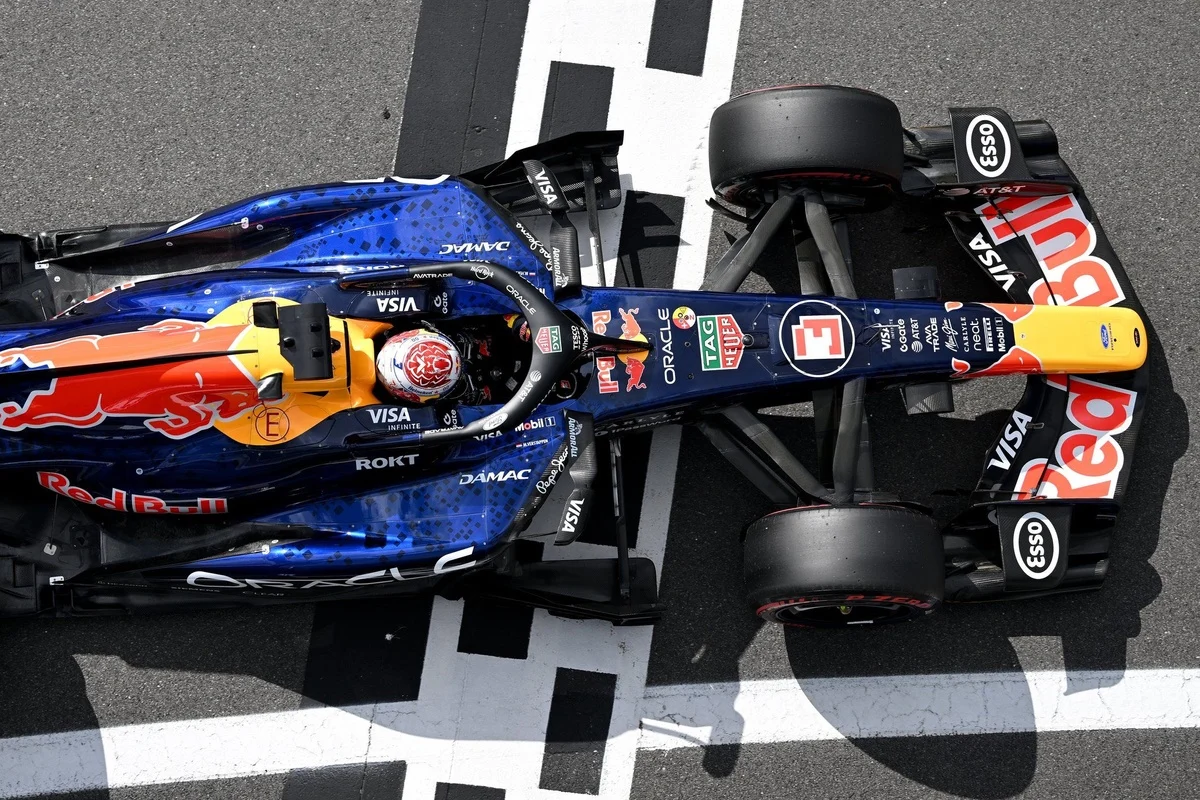
The 2026 Formula 1 season has ushered in a radical shift in technical regulations, moving the sport into a new era of high-efficiency, hybrid-focused power units. While Red Bull Powertrains—the newcomer to the engine manufacturing landscape—initially garnered praise for topping the internal combustion engine (ICE) performance rankings, the luster is beginning to fade. As the season progresses, a glaring disparity has emerged: while their combustion efficiency is elite, their electrical deployment and energy management systems are struggling to keep pace. For a team of Red Bull’s pedigree, this is not merely a technical hurdle; it is a fundamental design conflict that threatens to derail their campaign at the most demanding circuits on the calendar.
The Anatomy of an Energy-Starved Campaign
The struggles faced by the Milton Keynes-based squad are not entirely new; they are the result of a delicate balancing act that hasn’t quite settled. While early-season issues in Japan were masked by chassis development and weight distribution concerns, the return of those same gremlins at the British Grand Prix at Silverstone has confirmed a worrying trend.
Max Verstappen, the reigning four-time world champion, has been characteristically blunt regarding the team’s current trajectory. Following a challenging weekend at Silverstone, where he appeared to be chasing a podium finish only to be hampered by reliability and performance caps, he offered a scathing assessment of the team’s standing. "Even if we had finished third, it wouldn’t have been deserved at all," Verstappen admitted. His frustration was palpable, stemming from a car that lacked the energy reserves to defend or attack effectively.
The issue lies in the track-specific demands of the 2026 regulations. Energy-starved circuits—tracks that require high-speed endurance and sustained deployment—are exposing the limitations of the Red Bull power unit’s electrical architecture.
A Chronology of Struggles: From Japan to Silverstone
To understand the scope of the problem, one must look at the progression of the 2026 season:
- The Early Season (Japan): Red Bull debuted with a strong ICE, but the car’s lack of electrical efficiency became apparent in the technical sectors of Suzuka. Weight management issues exacerbated the problem, leading to a race where the team felt "under-powered" in the hybrid deployment phase.
- The Mid-Season Pivot (Barcelona): A brief respite occurred at the Spanish Grand Prix. The team showed competitive pace, leading some to believe the energy management issues were solved. However, this proved to be a track-specific outlier rather than a systemic fix.
- The Silverstone Reality Check: The British Grand Prix, with its high-speed cornering profile and heavy reliance on sustained power, acted as a mirror for the team’s fundamental flaws. Verstappen’s inability to maintain a competitive pace throughout the stint highlighted that when the track layout demands peak electrical output, the Red Bull package enters "limp mode" compared to its rivals.
Supporting Data: Why High-Speed Corners Expose the Flaw
The technical reality is that Red Bull’s current power unit is optimized for a different operating window. In Formula 1, "energy management" refers to the delicate interplay between the MGU-K (Motor Generator Unit-Kinetic) and the battery store. If a manufacturer is inefficient in this area, the car essentially "runs out of juice" before the end of a long straight or a high-speed sequence.

Silverstone is the ultimate litmus test for this. With iconic corners like Copse, Maggots, and Becketts, the driver is constantly demanding maximum energy extraction. Because Red Bull is currently less efficient than its competitors in managing the electrical discharge, they are forced to lift earlier or sacrifice corner exit speed to preserve the battery for the following sector. This creates a compounding effect: the driver has to drive "around" the engine, forcing a balance shift that upsets the car’s aerodynamic platform.
Official Perspectives: The Team Principal’s View
Laurent Mekies, the Red Bull team principal, has been transparent about the challenge. He acknowledges that the team’s performance is oscillating based on the track’s energy profile.
"A week ago [in Austria], we were fighting for the win," Mekies noted in a post-race debrief. "A few days later, here in Silverstone, we were hitting some pretty strong limitations that stopped us from extracting everything out of our package. We think it is compounding with a track like Silverstone. When it’s energy starving, we seem to be struggling more."
Mekies remains cautiously optimistic but pragmatic. He understands that while the data is being crunched at the factory, there is no "magic bullet" to fix electrical hardware deficiencies overnight. "It doesn’t mean that we give up and we turn the page," he added. "It means that we will need to improve, sooner or later. It is about improving at 360 degrees."
The ADUO Dilemma: A Regulatory Checkmate?
Perhaps the most significant hurdle for Red Bull is the regulatory framework surrounding engine development, specifically the ADUO (Automotive Deployment and Utilization Optimization) tokens.
In the 2026 regulations, performance adjustments are managed via these tokens. However, there is a catch: because Red Bull currently leads the ICE performance ranking, they are penalized in their ability to pivot their development resources toward the electrical side. They are effectively "checkmated" by their own success in the combustion department.

If they wish to improve their electrical deployment, they require tokens, but those tokens are often tied to the total power unit ranking. As long as their ICE remains the class of the field, they are locked out of the necessary development hardware to fix their hybrid deficit. This creates a paradoxical situation: they must sacrifice their strongest area (the combustion engine) to have the regulatory freedom to fix their weakest (the electrical system).
Implications for Spa and Monza: The Looming Crisis
The immediate future looks bleak for the team as the calendar turns toward the high-speed temples of Spa-Francorchamps and Monza. Both tracks are notoriously brutal on energy management systems.
Fernando Alonso and Oliver Bearman have already signaled that Spa, in particular, will be a nightmare for any team struggling with battery deployment. The long climbs and sustained full-throttle sections at the Belgian circuit require a level of electrical efficiency that Red Bull currently lacks.
Verstappen’s sarcasm about the upcoming rounds—“Spa and Monza are going to be great, yeah… But this year it’s going to feel very different”—is a clear indication that the driver knows he is in for a defensive, rather than an offensive, battle.
Searching for the Light: The Budapest Hope
While the next two races represent a significant hurdle, there is a glimmer of hope on the horizon: the Hungaroring.
Budapest is a low-speed, high-downforce circuit. It is less dependent on sustained electrical deployment and more reliant on mechanical grip and low-speed acceleration. Within the team, there is a quiet confidence that the Hungarian Grand Prix will offer a reprieve from the "energy-starving" nature of Silverstone and Spa.

Mekies and his engineering team are banking on this. "I hope we can be in a slightly better shape in Spa, but you are right in saying that from a characteristic perspective, it should be quite similar [to Silverstone]," he admitted. "And then, hopefully, Budapest will give a different picture."
Conclusion: A Learning Curve of Immense Proportions
Red Bull’s 2026 campaign is proving to be the ultimate test of their transition into an engine manufacturer. They have successfully built a powerful internal combustion engine, but they have learned the hard way that in the modern era of Formula 1, a power unit is only as strong as its weakest electrical link.
The path forward requires a twofold strategy: immediate damage limitation at power-sensitive tracks and a long-term regulatory lobbying effort to allow for the hardware adjustments necessary to balance the engine’s hybrid output. For now, the team is forced to rely on their legendary ability to innovate under pressure. Whether that is enough to save their championship hopes remains one of the most compelling storylines of the 2026 season. They are not giving up, but they are clearly on the back foot, waiting for a track that finally plays to their strengths rather than exposing their greatest weakness.


 Neng Nana
 Nana Wu

 Lina Hope

 Sagoh
Sagoh
 Iffa Jayyana