
 Ammar Sabilarrohman
As the peloton prepares to hit the high mountains of the Tour de France, all eyes are fixed on Remco Evenepoel. The Soudal-QuickStep leader has arrived at the Grand Départ not merely in peak physical condition, but in a state of physiological refinement that has caught the attention of the entire professional cycling circuit. With long-term sports director Klaas Lodewyck observing that the Belgian star is the "lightest he has been in a long time," the narrative surrounding Evenepoel has shifted from his potential as a classics specialist to his legitimacy as a serious contender for the yellow jersey.
This transformation is not accidental. It is the result of a rigorous, data-driven off-season and a deliberate strategy aimed at conquering the gravity-defying ascents that define the final two weeks of the Tour.
The Foundation of Change: A Four-Kilogram Evolution
The most striking statistic to emerge from Evenepoel’s camp is his significant body composition shift. Ahead of the race, the 24-year-old confirmed that he had shed nearly four kilograms of body mass. In the world of professional cycling, where every gram is scrutinized, a four-kilogram reduction—while maintaining the same wattage output—is an astronomical gain in power-to-weight ratio.
For a rider who has previously been criticized for struggling on the most grueling, high-altitude climbs against pure climbers like Tadej Pogačar or Jonas Vingegaard, this weight loss serves as a direct answer to his skeptics. Evenepoel has been quick to manage expectations regarding his raw strength, insisting that "the power has remained." This is the "Holy Grail" of cycling performance: shedding ballast without sacrificing the absolute aerobic capacity required to drive the bike forward on the flats and descents.
Chronology of a Preparation Strategy
Evenepoel’s journey to this refined physique began long before the Tour’s opening stage in Florence. Following a challenging start to his 2024 season, which included a heavy crash at Itzulia Basque Country, the Soudal-QuickStep management team pivoted toward a methodical, altitude-focused training block.
- Post-Crash Recovery (April): After recovering from his injuries, the focus shifted from rehabilitation to structural base-building.
- Altitude Training Camps (May–June): Evenepoel spent extended periods at high altitude. These camps were not merely about mileage; they were about metabolic adaptation. Working under the guidance of new performance staff, the team utilized metabolic testing to pinpoint the exact caloric and nutritional intake needed to drop fat mass while fueling high-intensity intervals.
- The Dauphiné Benchmark (June): The Critérium du Dauphiné served as the final litmus test. While he didn’t secure the overall win, the data gathered by the team confirmed that his climbing efficiency had improved compared to his performance in previous Grand Tours.
- Final Taper (July): Entering the Tour, the focus moved to maintenance. By the time the peloton rolled out in Florence, the transition was complete. Evenepoel appeared visibly leaner, a change that was noted by both race commentators and rival team directors.
The Science of the Watt: Why Weight Matters
To understand the implications of Evenepoel’s transformation, one must look at the physics of the Tour de France. On a climb with an average gradient of 8%, a rider of Evenepoel’s previous build would have to exert significantly more energy to overcome gravity compared to a lighter climber. By reducing his weight, he effectively "buys" seconds on every kilometer of vertical gain without having to pedal any harder.
The Power-to-Weight Ratio
In modern cycling, the power-to-weight ratio (measured in Watts per kilogram) is the primary metric for climbing performance. If Evenepoel maintains his previous power output of approximately 420-430 watts for a 30-minute climb, a four-kilogram reduction in body mass results in a performance increase of roughly 5-6%. In a race that is often decided by mere seconds over three weeks, this is a game-changing advantage.
However, the risk remains: extreme leanness can lead to fatigue or illness if not managed with surgical precision. The team’s nutritionists have been tasked with the delicate balance of keeping him in a slight deficit for power-to-weight gains while ensuring he has enough glycogen stores to avoid "bonking" during the final hour of mountain stages.
Official Responses and Team Confidence
The confidence radiating from the Red Bull-Bora-Hansgrohe and Soudal-QuickStep orbits is palpable. Klaas Lodewyck, who has navigated the highs and lows of Evenepoel’s career, has been vocal about the mental impact of this physical change.
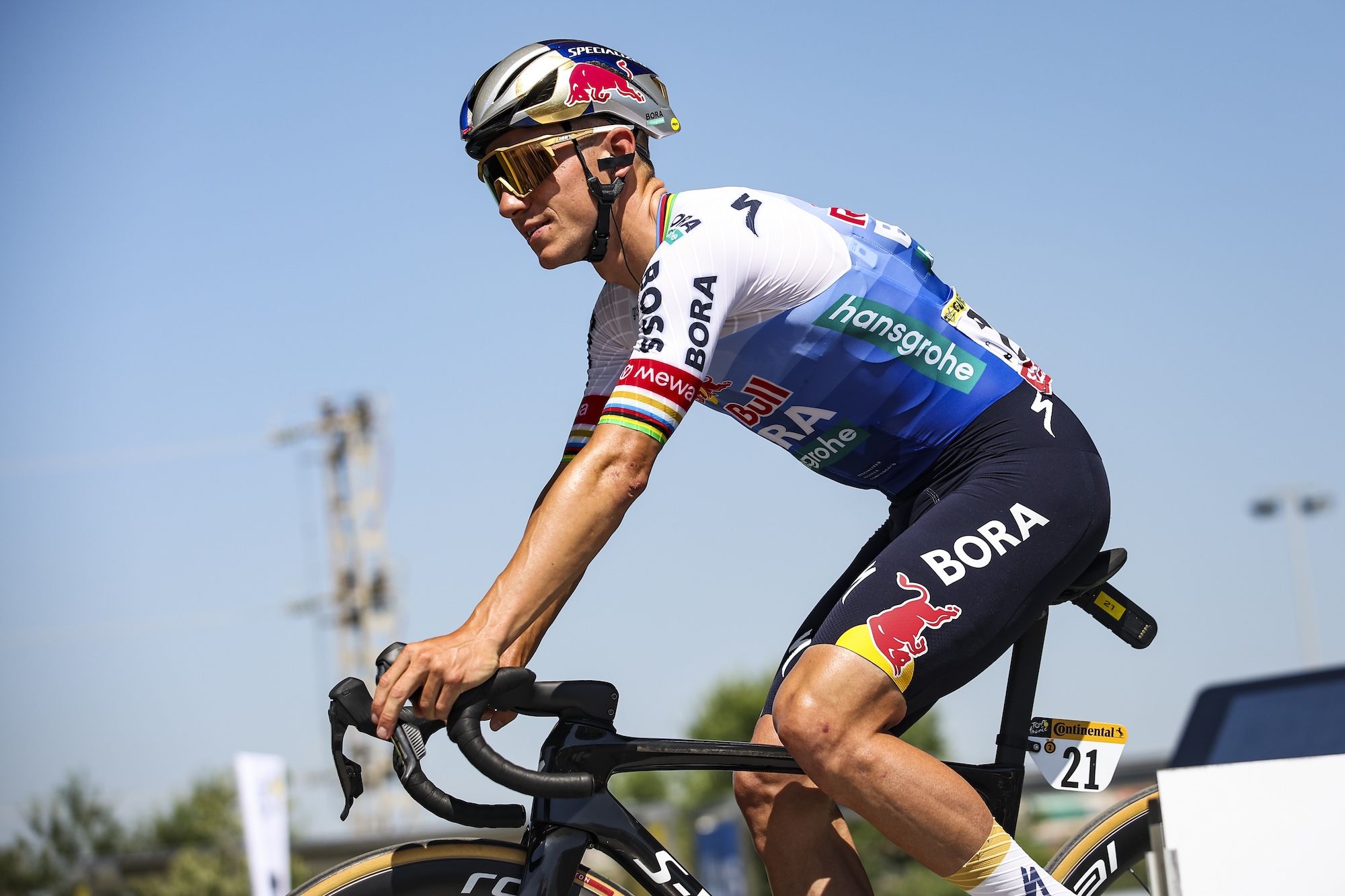
"It’s not just about the numbers," Lodewyck noted in a recent briefing. "It’s about the way he carries himself on the bike. He looks comfortable when the road tilts upward, and that’s a direct result of the discipline he has shown over the last six months."
The rider himself, while typically reserved, has echoed this sentiment. Evenepoel recognizes that the 2024 Tour de France route is one of the most punishing in recent history, featuring high-mountain passes in the Alps and the Pyrenees. He has stated publicly that his primary goal is to remain competitive until the very end, and he views his new weight profile as his best insurance policy against the fatigue that has plagued him in past three-week races.
Implications for the General Classification
What does this mean for the yellow jersey battle? Historically, the Tour de France has been a two-man show between Tadej Pogačar and Jonas Vingegaard. Evenepoel, by leaning down, has effectively inserted himself as the third pillar of this rivalry.
1. Tactical Versatility
Evenepoel is arguably the best time-trialist of the group. If he can stay within touching distance of the pure climbers on the mountains, he can potentially seize the lead or reclaim time in the individual time trials. His new weight profile makes this scenario much more plausible, as he no longer has to "survive" the climbs—he can now contest them.
2. The Pressure of Expectations
The physical transformation brings a new kind of pressure. With a lighter frame comes the expectation that he will perform like a GC specialist in the high mountains. If he fades on the Col du Galibier or the Tourmalet, the scrutiny will be intense. The team is aware of this and has focused on shielding him from the media whirlwind to allow him to focus solely on his recovery and nutrition.
3. A New Paradigm for the Peloton
Evenepoel’s approach may force other teams to re-evaluate their own riders’ conditioning. The trend in the peloton is clearly moving toward extreme optimization. If Evenepoel succeeds in mounting a podium challenge, we may see a wider adoption of this "lean-and-mean" approach across the pro ranks, potentially altering the physical profile of the modern Grand Tour contender.
Conclusion: The Ultimate Test Awaits
As the Tour de France heads toward its decisive mountain stages, the world is watching to see if Remco Evenepoel’s winter of sacrifice will pay off in the summer heat. He has done the work, he has adjusted his physiology, and he has the full backing of a team that believes he is ready to take the next step.
Whether this newfound lightness will provide the extra seconds needed to unseat the defending champions remains to be seen. But one thing is certain: the version of Remco Evenepoel currently racing through the French countryside is the most dangerous one we have ever seen. He is no longer just a rider with immense talent; he is a finely-tuned instrument of speed, designed specifically to tackle the most formidable mountains in the world. As the road tilts upward, the true test of his transformation begins.

 Reynand Wu
 Nana
Nana
 Neng Nana
 Nana Wu
 Lina Hope
 Sagoh
Sagoh
 Iffa Jayyana