 Asro
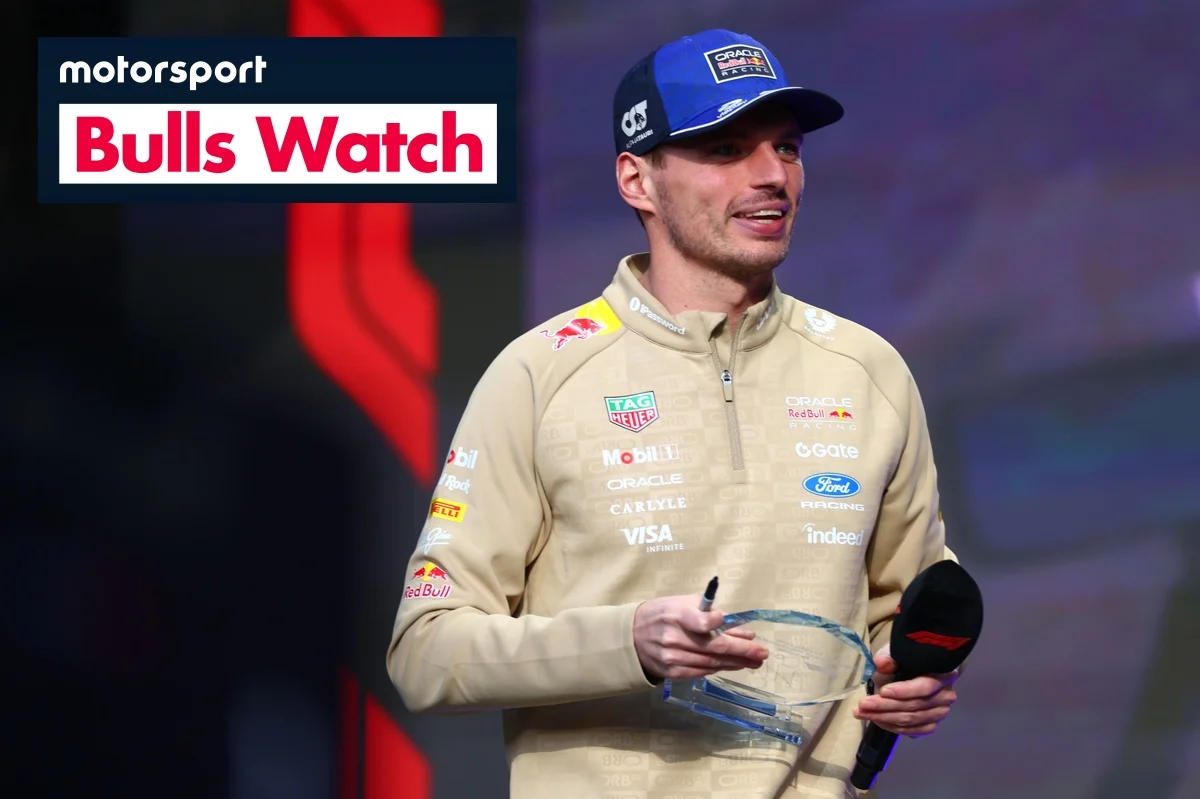
: Max Verstappen Compares Wild Las Vegas Grand Prix to Mario Kart After 75th Career Win
Main Facts: A Neon-Lit Thriller on the Vegas Strip
Formula 1 returned to the glittering neon canyons of the Las Vegas Strip for a high-speed spectacle that defied conventional racing logic, culminating in a landmark victory for Red Bull Racing’s Max Verstappen. Converting his pole position into a masterclass of defensive and tactical driving, the four-time world champion secured his 75th career grand prix victory and his third consecutive win on the streets of Sin City.
Yet, despite the historic milestone, the reigning powerhouse of modern motorsport described the chaotic, slipstream-heavy contest in terms more commonly associated with a living room video game console than elite motorsport engineering.
The race itself was an unprecedented statistical anomaly. Over the course of the grueling night grand prix, spectators witnessed a staggering 352 overtakes and a relentless 35 lead changes. Verstappen found himself repeatedly embroiled in a high-stakes chess match with Mercedes driver George Russell, trading the lead back and forth as the long straightaways and heavy braking zones dictated a volatile aerodynamic battle.
Despite crossing the line first, Verstappen’s post-race analysis struck a pragmatic and surprisingly detached chord. Torn between his identity as a pure racer and his perspective on the sport as global entertainment, the Dutchman revealed that the relentless cat-and-mouse dynamics on the Strip felt less like a traditional Grand Prix and more like a session of Mario Kart—complete with rubber-banding mechanics, powerful drafting, and energy-deployment games.
Chronology: The Anatomy of a Chaos-Filled Grand Prix
The weekend in Las Vegas began with high expectations, but nobody—neither engineers, strategists, nor the drivers themselves—could have predicted the strategic mayhem that unfolded once the lights went out.
Qualifying and the Early Stages
Max Verstappen laid down the gauntlet during Saturday’s qualifying sessions, extracting every ounce of performance from his Red Bull RB series machine to secure pole position. As the field roared off the grid under the artificial illumination of the Las Vegas Strip, Verstappen initially maintained his composure, controlling the pace into the tight first-corner complex.
The Mid-Race Duel with George Russell
However, the unique aerodynamic characteristics of the Las Vegas circuit—dominated by massive straightaways where the slipstream provides an overwhelming advantage—quickly turned the race upside down. Mercedes’ George Russell emerged as Verstappen’s primary antagonist. Utilizing strategic deployment modes and massive aerodynamic tows, Russell repeatedly hunted down the Red Bull racer, launching bold lunges down the inside to snatch the lead.
Far from panicking, Verstappen absorbed the pressure, immediately striking back whenever an opportunity arose to retake the front spot. Yet, the physics of the circuit prevented him from escaping. Every time Verstappen managed to claw out a temporary buffer, the combination of the slipstream and the mandatory overtake mode within the one-second DRS window meant that the pursuers were instantly sucked right back onto his gearbox.
The Closing Laps and the Checkered Flag
As the race entered its final phase, the battle transformed into a war of attrition and energy management. Verstappen had to balance defending his position against aggressively deploying his battery power at precisely calibrated moments. Managing tires, brakes, and tactical positioning to perfection, the Dutchman fended off every challenge, ultimately holding his nerve to cross the finish line first and cement another legendary chapter in his illustrious career.
Supporting Data: The Numbers Behind the Madness
To truly understand why Max Verstappen drew comparisons to a cartoon kart racer, one must look at the astonishing telemetry and race statistics generated on the Las Vegas circuit:
- 75th Career Victory: With this win, Verstappen further solidifies his status among the most successful drivers in Formula 1 history, edging ever closer to the all-time win records.
- 352 Overtakes: A monumental figure that highlights how difficult it was to defend a lead on the power-sensitive, low-downforce layout of the Vegas street circuit.
- 35 Lead Changes: A dizzying statistic that demonstrates the fluid, volatile nature of the race, where positions at the front changed almost constantly from lap to lap.
- Drivers’ Championship Standing: Verstappen currently sits firmly in second place in the 2025 drivers’ standings. While Mercedes prodigy Kimi Antonelli secured the world title earlier at the Mexican Grand Prix, the battle for the remaining podium positions in the championship is raging fiercely.
- The Chase for Second: Verstappen holds a fragile 37-point advantage over legendary Ferrari-bound (or rival) veteran Lewis Hamilton, who sits in third. Meanwhile, George Russell and Lando Norris are locked in a dead heat directly behind them, both tied on 264 points as the circus heads toward the Qatar Grand Prix.
Official Responses: Inside the Driver’s Mind
Speaking during the official post-race FIA press conference, Verstappen initially hesitated before sharing his candid, unfiltered thoughts on the nature of his victory.

"I probably shouldn’t say it. I probably should not," Verstappen laughed, before offering a remarkably colorful analogy. "I remember winning one like this when I was playing Mario Kart."
Elaborating on the tactical absurdity of the race, the Red Bull driver pointed to the artificial nature of the racing pack: "Sometimes you drop back and you get drafts, and there’s like a catch-up, you know? Always when you’re dropping back, you go faster. So that’s the last time that I felt something like this."
The Dutchman explained that the technical regulations and energy-recovery systems created a dynamic where breaking away was nearly impossible. "It was just the tow combination with the deployment. Of course, when you are within a second, you have the overtake mode as well, and around here that is powerful. So, yeah, you could not pull away."
When pressed on whether he genuinely enjoyed the frantic, wheel-to-wheel warfare on the streets of Nevada, Verstappen drew a distinct philosophical line between his internal racer persona and his appreciation for the sport’s commercial entertainment value.
"When I look at it from my racer heart, no. When you look at it as a show, spectacle, yes," he admitted. "I’ve enjoyed my repassing and everything, but I prefer to look at it with my racing heart."
In a testament to his supreme confidence and the surreal nature of the event, Verstappen revealed that the race did not even trigger a physical adrenaline spike. "Even my heart rate, I was not nervous at all because, I don’t know, it just felt kind of cruising out there, just trying to press the battery whenever it was correct or defend. But for the show, when you look at it from the outside, probably yes, you like it."
Implications: What This Means for the Rest of the Season
As the Formula 1 paddock packs its bags and shifts its focus toward the final rounds of the 2025 world championship, the Las Vegas Grand Prix serves as both a thrilling outlier and a fascinating case study in modern circuit racing.
The Entertainment vs. Sport Debate
Verstappen’s comments reignite a simmering debate within the motorsport community: where is the fine line between engineered spectacle and pure, unadulterated sport? While circuits like Las Vegas are designed specifically to maximize overtaking, fan engagement, and cinematic racing through long straights and DRS zones, traditionalists and elite competitors often find themselves grappling with the artificiality of "rubber-banding" effects and energy-management processions. For drivers whose entire lives are dedicated to the mastery of precise vehicle dynamics, being forced to manage a race where leading is often a tactical disadvantage can feel jarringly unnatural.
The Championship Battle Intensifies
Beyond the philosophical discussions, the immediate implications for the track are intensely competitive. With Kimi Antonelli having already secured the drivers’ crown in Mexico, the narrative of the 2025 season’s final stretch is all about the fierce battle for the runner-up spot.
Verstappen’s victory in Las Vegas was a vital masterstroke in his defense of second place in the standings. By holding off a resurgent George Russell and extending his buffer over Lewis Hamilton to 37 points, the Red Bull talisman has put himself in a commanding position. However, with Russell and Lando Norris tied on 264 points just behind the leaders, and with high-speed challenges like the Qatar Grand Prix looming large on the horizon, every single point, overtake, and battery deployment will carry championship-defining weight.
As the neon lights of Las Vegas fade into memory, the Formula 1 world is left with a vivid image: a four-time world champion playing real-world Mario Kart at 200 miles per hour, masterfully navigating a digital age of motorsport where the only thing more unpredictable than the cars is the game itself.

 Lina Hope
 Dwi Wanna

 Nila Kartika Wati

 Jia Lissa


 Layla Zulfa