
 Siti Muinah
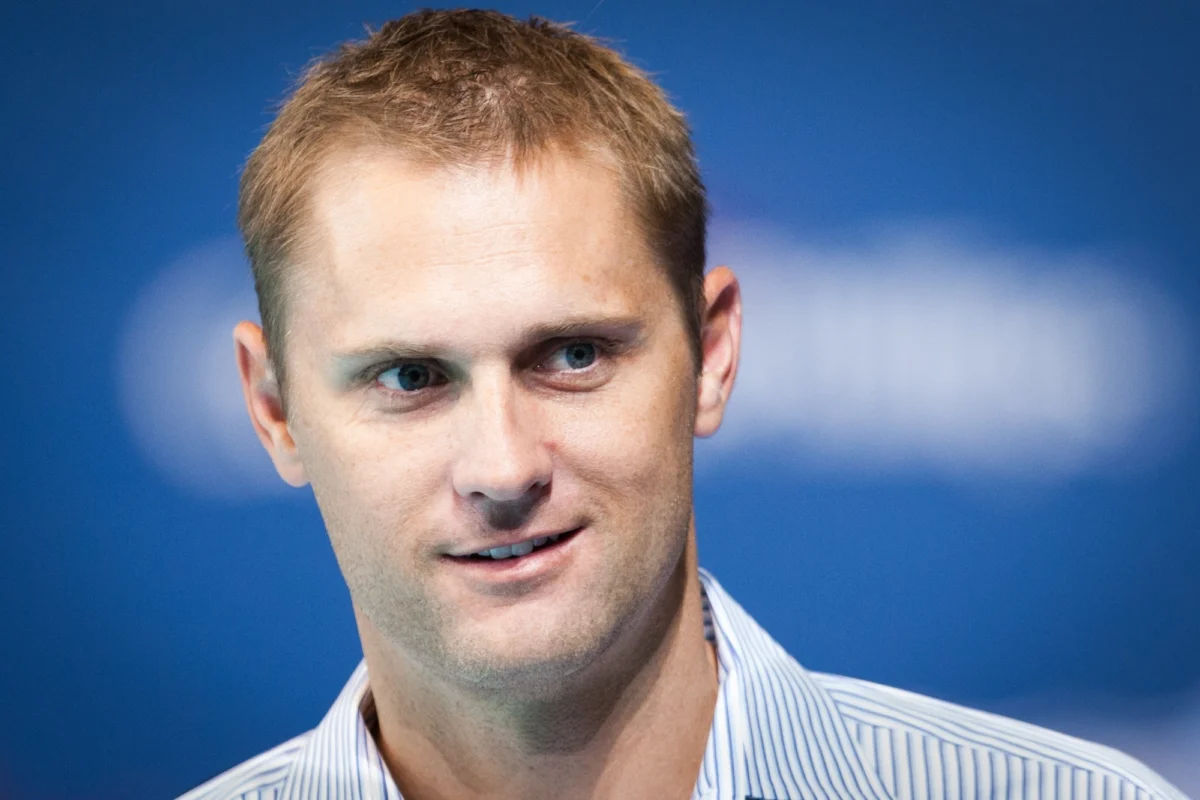
The world of competitive swimming is currently grappling with a high-stakes ethical dilemma that pits the fundamental principles of clean sport against the emerging, provocative landscape of the "Enhanced Games." At the center of this controversy is Brett Hawke, a prominent figure in the swimming community and the current head coach of the Enhanced Games—a proposed athletic competition that openly embraces the use of performance-enhancing drugs (PEDs).
Hawke’s recent entry into an upcoming U.S. Masters Swimming (USMS) sanctioned event has ignited a firestorm of protest. Critics argue that his public advocacy for a platform that encourages doping is fundamentally incompatible with the governing body’s commitment to fair play. As USMS leadership reviews the matter, the sport finds itself at a crossroads, forced to decide whether its institutional integrity is defined by an individual’s personal compliance or by their public-facing association with the subversion of anti-doping norms.
The Catalyst: A Controversial Entry
The controversy emerged when it was discovered that 51-year-old Brett Hawke had registered as a relay swimmer for the Spartans Masters team. The group is slated to compete at the Aqua Knuckles SCM Swim Meet, scheduled for November 15 in La Canada Flintridge, California.
The meet, sanctioned by Southern Pacific Masters Swimming and U.S. Masters Swimming, is governed by the rules and codes of conduct that define the organization’s mission. Shortly after the entry became public, a formal protest was filed by a collective of concerned Masters swimmers. The protest characterizes Hawke’s leadership role within the Enhanced Games as a "profound and irreconcilable conflict of interest" with the core values of USMS, which prioritizes clean, regulated, and equitable competition.
Chronology of the Conflict
To understand the severity of the current situation, it is necessary to examine the evolution of the Enhanced Games and the precedent set by USMS in previous years.
The Rise of the Enhanced Games
The Enhanced Games have positioned themselves as a disruptor to the Olympic model, explicitly inviting athletes to use substances that are currently prohibited by the World Anti-Doping Agency (WADA). By rebranding the use of PEDs as a form of "bio-hacking" and bodily autonomy, the organization has attracted significant media attention—and substantial condemnation from the traditional sporting world. Brett Hawke’s appointment as head coach served as a lightning rod, lending professional credibility to an enterprise that many governing bodies view as an existential threat to the safety and fairness of sport.
The Lance Armstrong Precedent
The protest against Hawke is heavily modeled after the 2013 intervention involving disgraced cyclist Lance Armstrong. In that instance, Armstrong, following the stripping of his Tour de France titles and his lifetime ban from professional cycling, attempted to compete in the Masters South Central Zone Swimming Championships.
The backlash was immediate. USMS, after consulting with FINA (now World Aquatics) and United States Aquatic Sports, determined that despite Armstrong holding a valid membership, his status as a WADA-banned athlete rendered him ineligible to compete. The ruling solidified the stance that USMS is not a vacuum; it is part of an interconnected ecosystem that respects the adjudications of international anti-doping authorities.
The Current Standoff
Following the filing of the formal protest regarding Hawke, the situation has moved into an administrative review phase. Unlike the Armstrong case, where a direct doping ban was already in place, the case against Hawke rests on "association" and "ideological conflict." The protestants argue that if USMS moved to block a high-profile promoter of doping culture in 2013, the organization must logically apply the same standard to an "active architect" of the modern pro-doping movement.
Supporting Data: Rules, Ethics, and Governance
The tension between Hawke’s participation and USMS’s mission centers on the interpretation of "fair competition." While Masters swimming is a recreational endeavor, it operates under the umbrella of USMS, which maintains a rigorous code of conduct.
The WADA Connection
USMS members are technically bound by the anti-doping rules under the broader WADA Code. While it is true that routine, widespread drug testing is not a standard feature of every local Masters meet, the regulatory framework remains the bedrock of the sport’s legitimacy. By participating in an event under the USMS banner, an athlete implicitly agrees to uphold the values of the WADA Code.
The Argument for Ineligibility
The protestors contend that Hawke’s role is not merely an opinion, but a professional affiliation that actively undermines the integrity of the sport. Their argument rests on three pillars:
- Normalization: By legitimizing the Enhanced Games, Hawke helps normalize the use of PEDs, which creates a coercive environment for younger or amateur athletes.
- Institutional Hypocrisy: Allowing a high-profile figure to profit from and promote an anti-doping-defying enterprise while simultaneously competing in a clean-sport-sanctioned event creates a reputational risk for USMS.
- The "Gateway" Theory: Critics argue that if the "architects" of the doping movement are permitted to compete, it signals to the membership that the organization lacks the moral conviction to enforce its own stated values.
Official Responses and Administrative Stance
U.S. Masters Swimming has issued a measured, formal response, acknowledging the complexity of the situation while emphasizing their commitment to due process.
In a statement provided to SwimSwam, a USMS representative noted:
"U.S. Masters Swimming is aware that Brett Hawke has renewed his membership and entered a sanctioned USMS meet within the past 10 days. We’re reviewing this matter in accordance with our established policies and procedures. USMS is dedicated to fair competition and integrity, and all USMS members are required to comply with applicable rules and regulations."
This response suggests that the organization is conducting a deep-dive legal and ethical review. The challenge for USMS is that they must act within the bounds of their bylaws. If they choose to bar Hawke, they must do so based on a clear violation of policy, not merely on the basis of public sentiment, to avoid potential litigation or claims of arbitrary discrimination.
Broader Implications for the Future of Swimming
The outcome of this case will likely serve as a landmark decision for how sporting organizations handle "ideological conflicts" in the era of specialized, alternative sporting leagues.
Defining "Integrity"
The swimming community is essentially debating the definition of integrity. Does integrity end at the finish line, or does it extend to the professional associations an athlete maintains outside of the pool? If USMS rules in favor of the protestors, it will establish a precedent where personal professional affiliations can be grounds for disqualification. If they rule in favor of Hawke, it may signal that USMS is strictly an event-governing body with no jurisdiction over the private professional lives of its members.
The Reputation of the Sport
The fear among many Masters swimmers is that the association between a sanctioned USMS event and the head of the Enhanced Games will damage the reputation of the sport. They argue that the public may not distinguish between the two entities, potentially conflating the clean, community-focused environment of Masters swimming with the high-risk, medically controversial environment of the Enhanced Games.
Precedent for Other Sports
Other sporting bodies are watching this development closely. As the Enhanced Games attempt to recruit athletes and personnel from traditional sports, organizations like USMS, USA Swimming, and their international counterparts will need to develop clear policies regarding dual-affiliation. The "Hawke Case" may well become the catalyst for a new clause in athlete handbooks—one that clarifies the incompatibility of holding leadership roles in organizations that advocate for the violation of the WADA Code.
Conclusion: A Test of Institutional Values
As the November 15 date approaches, the eyes of the swimming world remain fixed on the administrative offices of U.S. Masters Swimming. Brett Hawke, a veteran of the sport, finds himself at the center of a debate that transcends his own relay entry. It is a debate about what it means to be a "clean" athlete and whether a governing body can remain neutral when the very principles it was built upon are being challenged by its own members.
Whether or not Hawke competes in La Canada Flintridge is only the immediate concern. The lasting impact of this controversy will be the definition of the boundary between personal freedom and institutional integrity. For USMS, the path forward requires a delicate balance: upholding the rigorous standards of clean sport while ensuring that their regulatory actions are as fair and transparent as the competitions they sanction. The decision will undoubtedly shape the discourse around the ethics of sport for years to come.

 Nana
 Jia Lissa

 Asro

 Suro Senen

 Nana Muazin

 Ammar Sabilarrohman

 Iffa Jayyana