
 Suro Senen
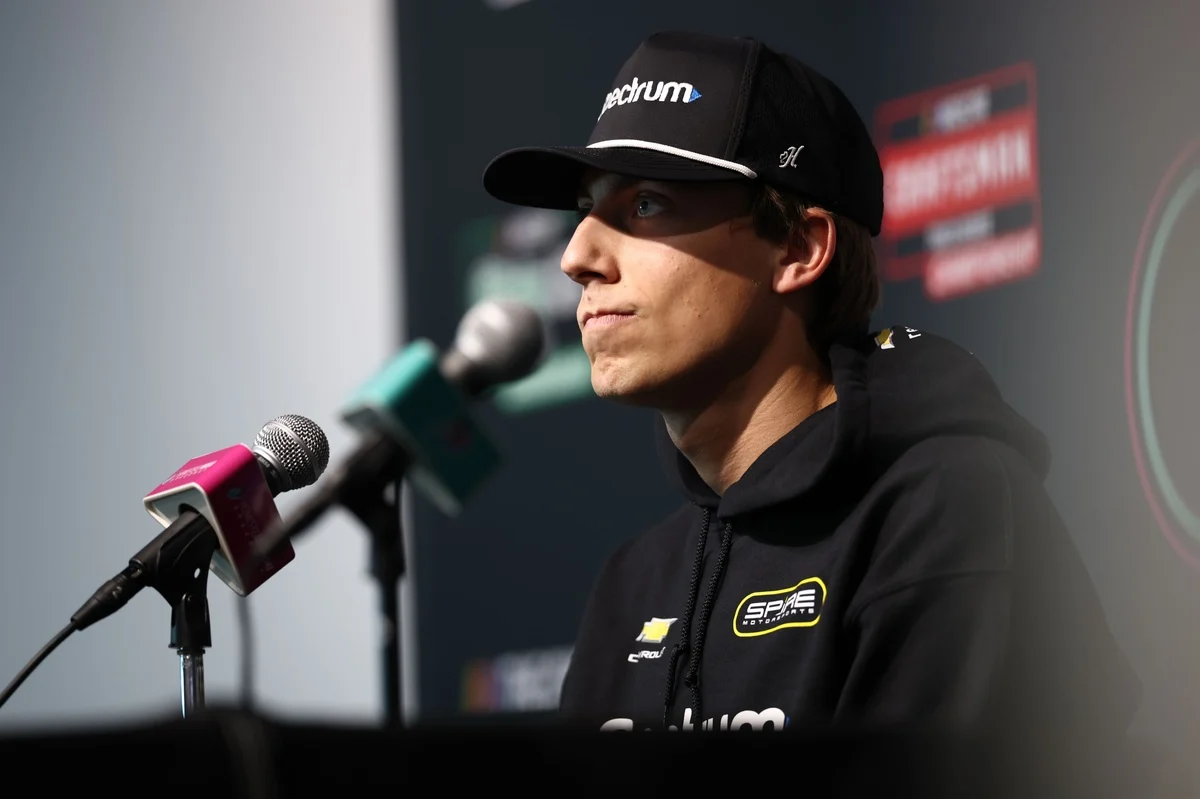
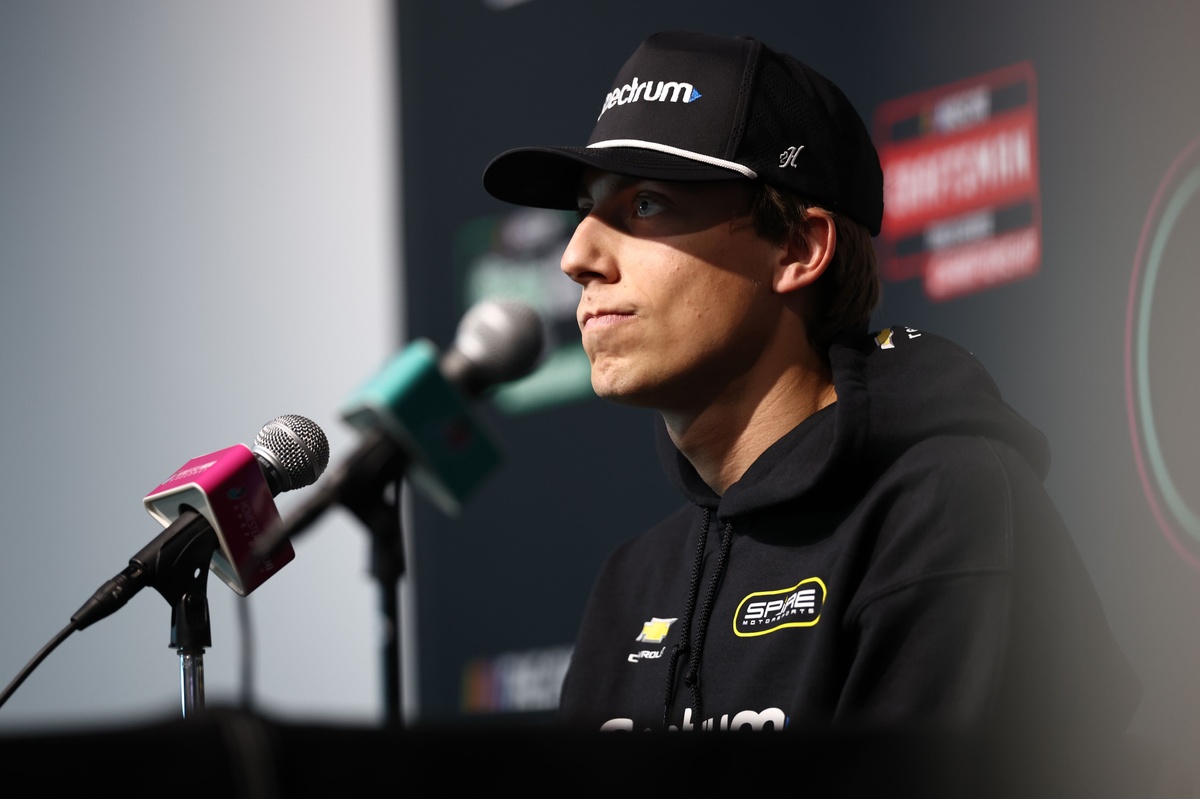
HOMESTEAD, Fla. — Stripped of his usual boyish exuberance and wearing the heavy weight of public accountability, a somber Carson Hocevar stepped up to the podium on Friday at Homestead-Miami Speedway. Gone was the defiant driver who, just days prior, brushed off a dangerous and controversial on-track incident as “just Martinsville.” In his place was a humbled competitor confronting the most severe crisis of his young NASCAR Cup Series career.
The press conference followed a whirlwind week of discipline. Spire Motorsports benched its rising star, a punishment that preceded a hefty $100,000 fine and a 25-point deduction levied by NASCAR. With three total fines amounting to $150,000 and multiple driver suspensions now dotting his resume, Hocevar’s aggressive driving style has finally collided with an immovable wall of regulatory and organizational oversight.
For the racing world, Friday’s media session offered a rare glimpse into the psychological toll of crossing the line from aggressive competition into reckless endangerment.
Main Facts: The Anatomy of a Penalty
The disciplinary hammer fell hard on Hocevar following a chaotic conclusion to last weekend’s race at Martinsville Speedway. During the event, Hocevar engaged in a prolonged, dangerous altercation with Team Penske driver Austin Cindric.
Disregarding frantic radio pleas from spotter Tyler Green—who repeatedly urged him to "stop Carson"—Hocevar brake-checked Cindric four separate times over the span of two laps. SMT data later revealed the severity of the maneuvers, showing sudden deceleration that transferred over 1,000 pounds of pressure from the rear of Hocevar’s Spire No. 77 Chevrolet directly into the front end of Cindric’s No. 2 Ford, ultimately knocking the Penske entry out of the race.
While post-race paddock criticism is nothing new in NASCAR, the sheer flagrancy of the act drew universal condemnation from veterans and analysts alike, including fierce rebukes from champions like Jeff Burton and Dale Jarrett. Recognizing that the line of sportsmanship and integrity had been obliterated, Spire Motorsports and NASCAR took decisive, compounding actions:
- Spire Motorsports Suspension: Hocevar was benched for the Homestead weekend, replaced in the No. 77 entry by Justin Haley.
- NASCAR Sanctions: A $100,000 fine and a 25-point driver penalty, bringing his total fines for the season to $150,000 across three separate infractions.
- The Cost of Compounding Fines: Hocevar’s total disciplinary fines highlight a growing trend of NASCAR attempting to curb reckless driving through heavy financial and statistical penalties.
Chronology of a Crisis: From Defiance to Reflection
To understand the magnitude of Hocevar’s Friday press conference, one must examine the timeline of his responses:
Sunday: The Immediate Aftermath
Immediately following the checkered flag at Martinsville, Hocevar showed no remorse. Interviewed on pit road, he casually dismissed the incident as "just Martinsville," showing little regard for the safety hazard he had created or the damage inflicted on Cindric’s machine. Social media erupted, and the racing community universally denounced the maneuver.
Thursday: The Apology Video
Recognizing the severity of the public backlash and internal team pressure, Hocevar released a formal video apology on Thursday. The statement marked an abrupt pivot from his initial post-race posture, laying the groundwork for the accountability he would display in Florida.
Friday: Facing the Fire at Homestead
Opting against hiding from the media, Hocevar fronted a completely open press conference at Homestead-Miami Speedway. Rather than deflecting blame, he answered every question thrown his way, adopting a stark, reflective demeanor.

When asked why this specific punishment finally broke through to him, Hocevar offered a striking metaphor involving Spire co-owner Jeff Dickerson.
"Maybe the stove wasn’t hot enough, Jeff," Hocevar said. "I wanted to keep my hand on it until it finally burned and I burned my hand."
He elaborated on why the suspension hurt far more than the six-figure financial penalties:
"It’s no different than Jeff says… To a millionaire or a billionaire, what’s a parking ticket? Screw it. I’m just going to park here no matter what it is because it doesn’t really hurt me. So, I think, ultimately the burn is me not driving."
Supporting Data and Technical Realities
The fallout from Martinsville wasn’t born out of subjective arguments alone; it was rooted in undeniable telemetric data. NASCAR’s SMT (Standardized Motorsports Technology) data provided a concrete, indisputable record of Hocevar’s inputs.
Motorsports analysts pointed out that brake-checking in a stock car traveling at high speeds on a short track introduces catastrophic kinetic forces. Transferring 1,000 pounds of force into the nose of a trailing competitor isn’t a standard "bump-and-run"—it is an intentional escalation that bypasses the unwritten code of stock car racing.
Hocevar himself acknowledged the distinction during his media session, drawing a sharp line between traditional racing contact and his actions:
"Badasses make moves going forward, not backwards," he remarked, noting that highlight reels showcase daring passes for position, not cowardly defensive brakes meant to cripple rivals.
Despite being sidelined, Hocevar remained present at the track. While Justin Haley piloted the No. 77 car—which still bore the "HOCEVAR" nameplate on its windshield—Hocevar spent his weekend signing autographs for fans, keeping a respectful distance from crew chief Luke Lambert and the pit box. He admitted that accepting the punishment without viewing it as "unfair" was the first step toward genuine rehabilitation.
Official Responses and Perspectives
The penalties handed down to Hocevar—and parallel actions involving other drivers—sparked extensive dialogue regarding NASCAR’s officiating philosophy. NASCAR executives, including Vice President of Competition Elton Sawyer, defended the strict rulings, emphasizing that the sanctioning body must protect the integrity of the racing product and the safety of the competitors.
Hocevar, to his credit, did not waste time playing the victim or attempting to excuse his behavior as a product of the pressure-cooker environment at Martinsville.
"I’m not going to sit here and explain every why because all that matters is you do it," Hocevar said. "There’s no explanation for it that would make it make sense or whatnot… How many times have we seen people go wide open in the middle of a corner or brake-check? Maybe not four times. Maybe that’s a little extreme obviously, but I just don’t think it matters for me to sit up here and go through every little detail."
Addressing his critics and fans who found themselves alienated by his driving standards, Hocevar maintained a remarkably pragmatic view. He noted that he has no intention of chasing public opinion or forcing overnight conversions.
"That’s fine," Hocevar said after a lingering silence when asked about skeptics. "I’m not going to go chase everybody’s opinion and I wouldn’t expect that. It’s not going to just change overnight for people… Things take time. And I think sports are great for that, that I think it’s good to be cheered and booed; and have polarizing decisions."
Implications: A Turning Point for a Young Career
As the NASCAR Cup Series barrels through the remainder of the season, the long-term implications of Hocevar’s Homestead benching remain to be seen.

First, there is the question of on-track retaliation. When asked if he expected his peers to target him with payback once he returns to the cockpit, Hocevar did not flinch.
"Then I get dumped," he said simply. "I don’t know really what changes there. I think that would just be racing… I guess I will just restart my engine, probably unspin myself around and see if I have damage or not. I’ll radio my team and say, ‘I might have damage on my left rear.’ That’s how I will react in that moment."
Second, the incident forces a broader introspection regarding the culture of aggression fostered among NASCAR’s youngest generation. In his pursuit of authenticity and relentless track positioning, Hocevar crossed a critical threshold where hard racing bled into unsportsmanlike conduct. By recognizing that he "got greedy" and pushed past the boundaries of integrity, he has taken the vital first step toward maturing into a franchise driver for Spire Motorsports.
Ultimately, Carson Hocevar is gambling that this painful week—spent watching from the sidelines, signing autographs, and listening to the collective disapproval of the racing world—will inoculate him against future lapses in judgment. Whether the "burn" is hot enough to permanently alter his driving DNA will be written lap by lap when he returns to the track.

 rifanmuazin
 Asro

 Basiran
 Ali Ikhwan
 Nana Wu
 Jia Lissa