
 Nana Wu
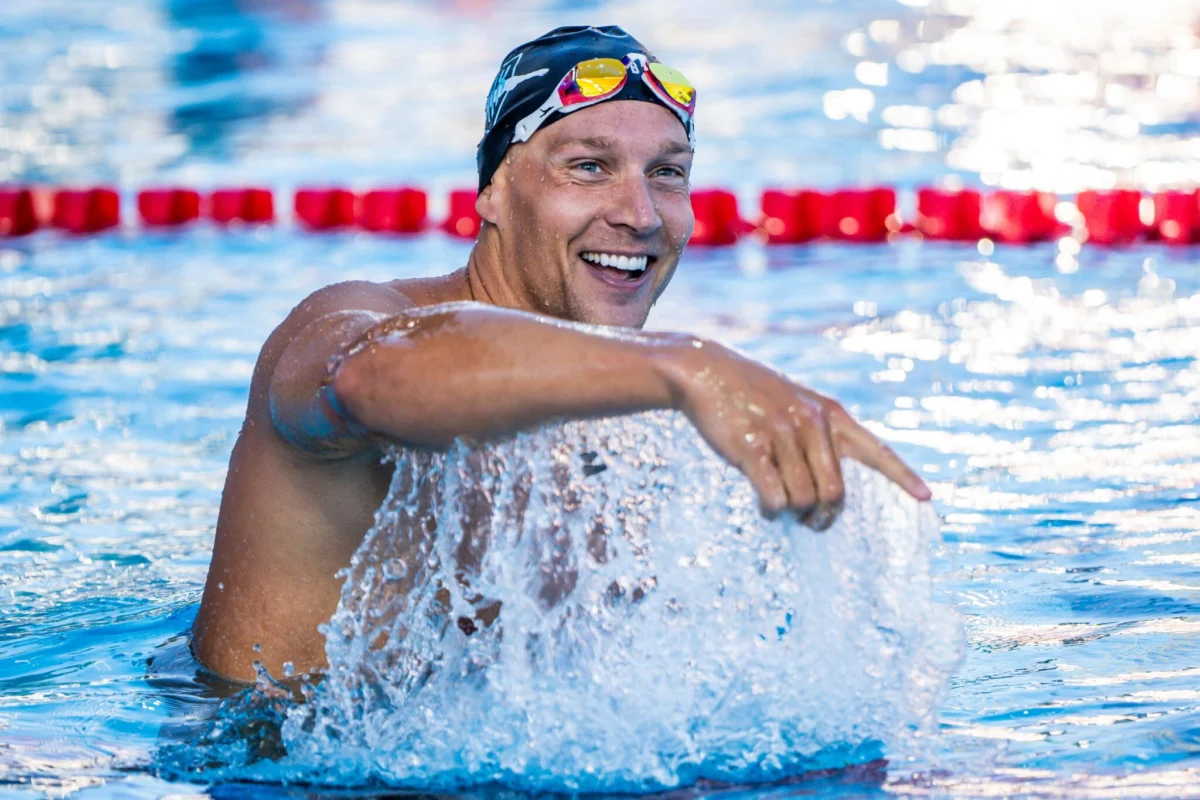
The 2026 U.S. Short Course World Championship Trials have ignited with a level of intensity rarely seen in mid-season qualification meets. Following an opening evening focused on distance freestyle, the first full day of competition transitioned into a high-stakes, 12-event program that showcased both established legends and emerging talent. With spots on the U.S. team for the upcoming World Championships on the line, the atmosphere at the pool was electric, marked by American Records, massive personal bests, and a shifting of the guard across multiple disciplines.
A Day of Records and Rapid Ascents
The narrative of the day was defined by "record-watch" energy. Headliners Kate Douglass and Gretchen Walsh—the two pillars of modern American women’s swimming—were the primary focal points of the morning. While both swimmers navigated a grueling schedule, their ability to perform under pressure was on full display.
The men’s side saw an equally significant shift, particularly in the breaststroke and butterfly events. Van Mathias, who has been quietly building an impressive resume throughout the season, stole the headlines by shattering the American Record in the 100-meter breaststroke. The depth of the field, combined with the technical demands of Short Course Meters (SCM), forced athletes to refine their underwater work and turn efficiency, leading to a cascade of personal bests across the board.
Chronology of Competition: A Session-by-Session Breakdown
The Butterfly and Backstroke Prelims
The morning began with a shock in the men’s 100 butterfly. Tyler Ray opened the session by firing off a 48.47, tying the U.S. Open Record previously held by Noe Ponti. This performance not only marked a massive personal best for Ray—who entered the meet with a 49.56—but also established him as the man to beat. Luca Urlando and Ilya Kharun followed with sub-49-second efforts, signaling that the men’s butterfly is currently one of the deepest events in the United States.
In the women’s 50 backstroke, Katharine Berkoff asserted her dominance. With world record holder Regan Smith opting to focus on the 200 fly, the field opened up for Berkoff, who posted a 25.50. Veteran Olivia Smoliga, a 2018 World Champion, showcased remarkable longevity by setting a personal best at 32 years old, clocking a 25.73 to advance second.
Backstroke and Breaststroke Dominance
Destin Lasco proved why he is a perennial NCAA powerhouse, dominating the 200 backstroke with a 1:48.96. His performance, a first-time foray into the SCM distance, vaulted him into the top seven all-time among Americans.
The breaststroke events were arguably the most thrilling of the session. Kate Douglass cruised through the 200 breaststroke in 2:16.83, maintaining a four-second lead over her closest competitor, Alex Walsh. On the men’s side, Van Mathias’s 55.48 in the 100 breaststroke was the highlight of the morning, effectively taking down Nic Fink’s 2021 American Record and setting a new U.S. Open Record. The sheer speed of the field was evidenced by five other men dipping under the 58-second barrier.
Freestyle Fireworks
The 50 freestyle sprints served as a showcase for pure explosive power. In the women’s event, Kate Douglass clocked a 22.87, the third-fastest performance in history. The depth of the field was staggering, as the top six qualifiers all moved into the top 10 list of all-time American performers.
The men’s 50 freestyle was equally chaotic, with six men finishing under the 21-second mark. Chris Guiliano led the field with a 20.63, while Olympic icon Caeleb Dressel, navigating a challenging triple-event morning, advanced comfortably in 20.84.
The IM and 400 Freestyle Finalists
The session concluded with the 100 IM and 400 freestyle. Maximus Williamson took the honors in the men’s 100 IM with a 51.36, while Gretchen Walsh, fresh off her record-breaking spree, managed the women’s 100 IM field with a controlled 57.84, saving her energy for the evening finals. In the 400 freestyle, Luke Hobson edged out Kieran Smith in a tactical battle, setting the stage for a high-octane showdown in the evening.
Supporting Data and Technical Progression
The technical standards at this year’s Trials reflect a broader trend in U.S. swimming: the migration of long-course speed into short-course efficiency. The data from the session highlights a few key takeaways:
- Emergence of New Talent: Swimmers like Rylee Erisman and Van Mathias are no longer just "up-and-comers"; they are now the benchmarks. Mathias’s evolution from a 56.72 in 2025 to a 55.48 today demonstrates a level of technical refinement in his pull-out and turn cycle that is rare for a first-year national contender.
- The "Dressel Factor": Caeleb Dressel’s decision to tackle a triple (100 fly, 50 free, 100 IM) serves as a litmus test for his current aerobic capacity. While he was not the fastest in any single event, his ability to manage three high-intensity swims in one session shows a return to the form that made him the world’s most versatile sprinter.
- The Depth of the ASU and Cal Programs: The dominance of Sun Devil and Golden Bear swimmers across the freestyle and IM fields indicates that collegiate training environments continue to be the primary incubator for U.S. international success.
Official Perspectives and Coaching Strategy
While post-race interviews were limited, the tactical decisions made by coaching staffs speak volumes. The decision by Regan Smith to drop the 50 backstroke in favor of the 200 fly suggests a strategic shift toward endurance events, likely aimed at reclaiming her standing as the world’s premier butterflyer.
Similarly, Kate Douglass’s scratch from the 100 IM—despite her obvious dominance—indicates that her team is prioritizing her medal potential in the 200 breaststroke. By avoiding the "triple" on Day 1, Douglass is positioning herself to potentially break her own world record in the breaststroke, rather than chasing a volume-based performance.
The coaching emphasis on "swimming the prelims like a final" was evident. With several events featuring small, high-quality fields, swimmers were forced to show their hand early, leaving little room for error or "coasting."
Implications for the World Championships
The primary implication of this morning’s session is that the U.S. team for the 2026 Short Course World Championships will be the most competitive in recent history. The sheer volume of swimmers cracking "all-time" lists suggests that the qualifying standards will be incredibly high.
- Increased Competition: The depth in the men’s 100 breaststroke and butterfly suggests that the U.S. will be heavily favored in the medley relays, provided these swimmers can replicate these times on the international stage.
- Pressure on Veterans: With young guns like Maximus Williamson and Van Mathias setting records, veterans like Michael Andrew and Caeleb Dressel face a new reality. The margin for error is non-existent.
- The "UVA Prep" Effect: Many of the top times today followed performances from the UVA Prep meet just two weeks ago. This suggests that the training blocks leading into this meet were perfectly timed, with swimmers carrying significant momentum from early-season benchmarks.
As the Trials move into the evening finals, the focus will shift from simple qualification to the battle for lane assignments. With the top seeds separated by mere hundredths of a second in events like the men’s 50 free and 400 free, the evening session promises to be even more explosive than the morning.
The 2026 U.S. Short Course World Championship Trials are not just a selection meet; they are a statement of intent. The American squad is clearly signaling that they are not content with merely participating in the upcoming World Championships—they are looking to dominate the podium from the very first heat. As these athletes head into the final blocks of the meet, the endurance of the veterans and the hunger of the newcomers will define the identity of the team that will represent the Stars and Stripes on the world stage.

 Layla Zulfa
 Nila Kartika Wati
 Neng Nana
 Suro Senen
 Basiran
 Lina Hope
 Muslim