
 Neng Nana
The American swimming landscape is set to undergo a historic shift this week as Westmont, Illinois, plays host to the first-ever US Short Course World Championship Trials. As the swimming community descends upon the Midwest for a Halloween week of high-intensity racing, the stakes could not be higher. Athletes are vying for a coveted spot on the U.S. National Team, with the ultimate goal of representing their country on the global stage in Short Course Meters (SCM).
For the first time, USA Swimming has formalized a dedicated trials process for the Short Course World Championships, signaling a renewed commitment to the 25-meter format. This transition reflects a broader global movement toward prioritizing short-course excellence, a discipline that demands unique technical proficiency, explosive underwater work, and precise wall management.
The Titans of the Pool: Athletes to Watch
The entry lists for the Westmont meet are a "who’s who" of American swimming royalty. Among the headliners are Olympic gold medalists and world record holders whose presence underscores the gravity of this qualifying event.
Gretchen Walsh and Kate Douglass, both of whom have fundamentally altered the trajectory of modern swimming, lead the charge. Their dominance in short-course environments—where their stroke efficiency and unparalleled underwater turns are magnified—makes them the heavy favorites in their respective events. Whether in the sprint freestyle or their trademark butterfly and breaststroke events, their performance will set the benchmark for the rest of the field.
Perhaps the most compelling storyline of the week involves Ilya Kharun. After successfully navigating the administrative process to transition his international sporting nationality from Canada to the United States, Kharun is poised to make his debut for Team USA. Known for his lethal butterfly speed and tactical maturity, Kharun’s performance will be scrutinized by fans and competitors alike as he seeks to cement his status as a cornerstone of the American men’s program.
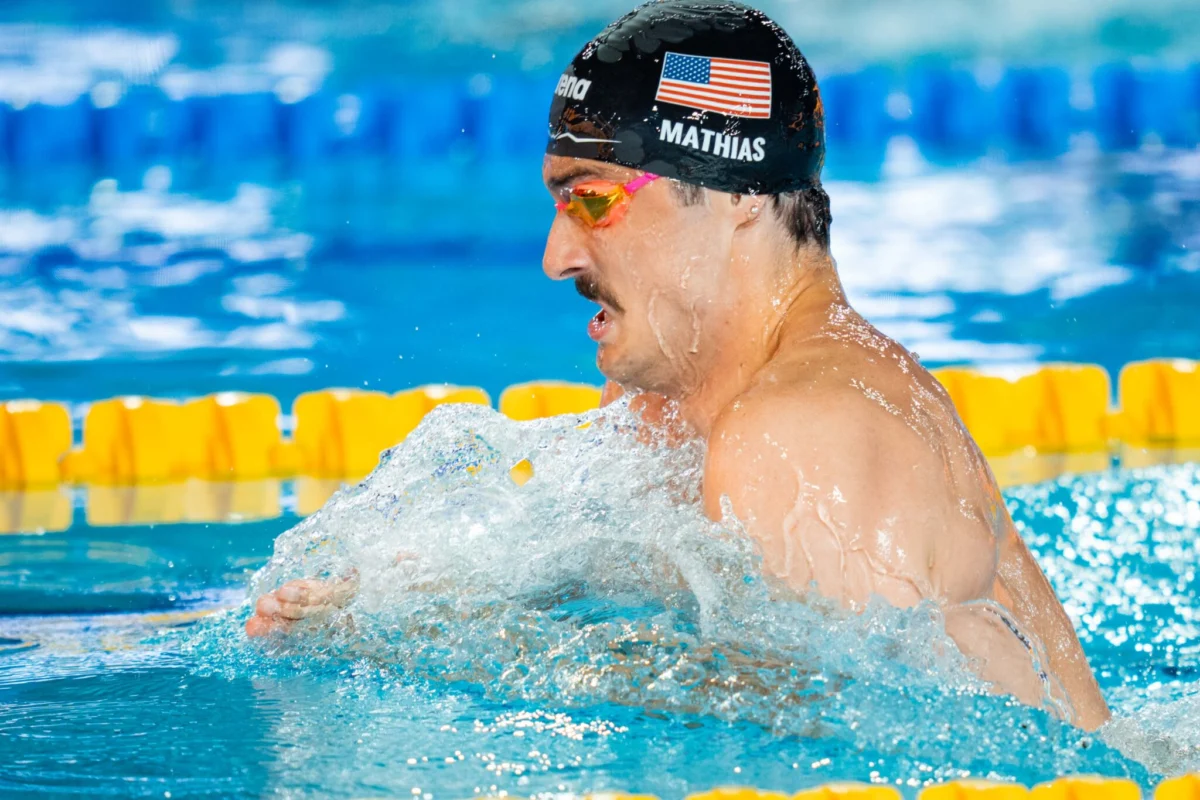
Additionally, veterans like Van Mathias bring depth and experience to the trials. In a meet where margins are measured in hundredths of a second, the veteran composure of athletes like Mathias will be crucial in navigating the high-pressure environment of a trials format.
Chronology of the Meet: A Halloween Week Gauntlet
The competition kicks off with a specialized distance session on Wednesday, October 29, commencing at 5:00 PM local time (6:00 PM ET). This opening night sets the tone for the grueling schedule ahead, requiring endurance athletes to set the pace before the sprint specialists take over in the following days.
The schedule is designed to mimic the intensity of international championship heats and finals. By condensing the qualifying into a high-stakes, multi-day format, USA Swimming is effectively pressure-testing its athletes. The progression from morning preliminaries to evening finals will force swimmers to manage recovery, psychological load, and tactical execution under the watchful eyes of national team coaches.
The structure of the meet—stretching across the Halloween holiday—adds a unique psychological layer to the competition. While the atmosphere in Westmont will be focused and sterile, the calendar reminder serves as a testament to the dedication required of elite athletes who forgo traditional holidays in favor of the pursuit of international glory.
Supporting Data and Technical Nuances
To understand why this trial is so significant, one must appreciate the technical divergence between Long Course (50m pool) and Short Course (25m pool) swimming. In the Short Course format, the race is essentially a game of "underwater chess."

Athletes are required to execute significantly more turns and underwater push-offs than in a 50-meter Olympic-sized pool. This rewards swimmers with exceptional core strength, high-frequency kick counts, and the ability to maintain speed while transitioning from the wall.
The psych sheets indicate a deep field, not just in terms of top-tier talent, but in terms of the "up-and-comers" who are specialized in SCM. Coaches and analysts will be monitoring the "turn-count efficiency" of the field. Data suggests that in 25-meter competition, the outcome of a race is often decided within the 15 meters following each turn. Consequently, the Westmont trials will serve as a massive data-collection event for USA Swimming, allowing the coaching staff to identify which athletes are best suited for the technical demands of international SCM championships.
Official Perspectives and Coaching Philosophy
USA Swimming officials have emphasized that the decision to host these trials is a long-term strategic investment. By formalizing the selection process, the governing body is providing a clear pathway for athletes to gain international experience in the SCM format, which has historically been dominated by European and Australian programs.
"We aren’t just looking for the fastest swimmers in a 50-meter pool," said one high-performance consultant associated with the event. "We are looking for athletes who can adapt to the constraints of the 25-meter environment. The Westmont trials are the proving ground where we determine if an athlete has the tactical discipline to translate their talent into the shorter format."
For the athletes, the feedback from coaching staffs is clear: complacency is the enemy. With the international field in the SCM arena becoming increasingly competitive, the Americans cannot afford to rely on their traditional Long Course dominance. The trials are a reminder that the world is closing the gap, and the U.S. must evolve its training methodologies to remain at the pinnacle of the sport.
The Implications: What Happens After Westmont?
The conclusion of the trials in Westmont is merely the beginning of the journey. The swimmers who secure their spots on the U.S. team will head into a specialized training block focused on refining their SCM-specific skills.
For many, this is a transitional year. The lessons learned in Westmont will likely inform how these swimmers approach their collegiate or professional training for the remainder of the quadrennium. If an athlete like Kharun or a rising star discovers a new technical edge during this meet, it could spark a cascade of tactical changes across the wider U.S. swimming community.
Furthermore, the success of this inaugural trial format will determine its longevity. If viewership, attendance, and performance levels remain high, USA Swimming is expected to institutionalize this event as a permanent fixture on the calendar. This would provide a much-needed boost to the domestic swimming economy and offer younger, collegiate-level swimmers a legitimate opportunity to break into the senior national team rankings.
As the lights go down in the Westmont facility on Wednesday evening, the swimming world will be watching. Whether it is the seasoned superstars looking to add another accolade to their resumes or the hungry newcomers hoping to shock the establishment, the 2026 Short Course World Trials represent the next great evolution of American swimming.
For those unable to attend in person, comprehensive coverage, including live stream links, real-time results, and daily analysis, is available through official swimming media channels. The records may be set in a 25-meter pool, but the impact of this week will be felt across the entire sport for years to come. The countdown to the first splash has begun; the path to the World Championship team starts here.

 Asro
 Muslim

 Evan Lee Salim

 Reynand Wu

 Siti Muinah