
 Neng Nana
Published: October 21, 2026
Author: Industry Reporting Desk
As the first crisp autumn cold fronts sweep across the high country and the mercury finally dips below freezing, the race to opening day is officially underway. Across North America, ski resorts are wasting no time firing up their snow guns, capitalising on every precious hour of sub-freezing temperatures. While winter sports enthusiasts outside of Vermont and select pockets of the East Coast are crossing their fingers for a more generous winter than the last, a darker backdrop looms. The persistent dry winters and scorching summer heatwaves endured by many Western states in recent years underscore the severe, long-term drought gripping the region.
This ongoing environmental strain inevitably brings difficult questions to the forefront. When water is scarce and municipal restrictions limit residential use, is artificial snowmaking a responsible deployment of a vital resource? Furthermore, as climate patterns shift unpredictably, is there even enough water available to sustain the tradition of opening ski hills on schedule?
To address these concerns, industry experts and resort operators are stepping forward to demystify the multi-million-dollar science of snowmaking, explaining its mechanics, addressing widespread public misconceptions, and outlining its evolution into the literal lifeblood of modern mountain operations.
1. Main Facts: The Reality of Modern Snowmaking
To understand the intersection of winter recreation and environmental conservation, one must first understand what artificial snow actually is and how it interacts with the ecosystem.
A common point of public friction involves optics: skiers and residents may scratch their heads when local municipalities urge water conservation—such as banning lawn watering—while nearby ski resorts pump millions of gallons of water onto mountainsides. However, industry insiders point out a fundamental distinction that often gets lost in the public debate.
Water rights laws are notoriously complex and vary heavily by state, but on a foundational level, ski resorts hold specific legal allocations allowing them to draw a set volume of water for designated purposes. Crucially, snowmaking is classified as a "non-consumptive" use. Unlike agriculture or industrial manufacturing, where water is absorbed, permanently diverted, or chemically altered, snowmaking simply relocates water temporarily.
"It all eventually ends up back in the environment," explains Austin Irby, Slope Maintenance Director at Jackson Hole Mountain Resort. "Instead of using it and introducing heavy metals or pollutants—the way some other industries do—ours is good, clean water when it goes back into the watershed."
When the spring thaw arrives, the artificial snow melts and flows naturally back into the local streams, rivers, and aquifers from which it was drawn. According to Courtney LaBrie, Director of Sustainability for the National Ski Areas Association (NSAA), this cycle can even make spring runoff patterns more predictable. In certain emergency scenarios, resort water storage systems and snowmaking infrastructure can even be mobilized by local authorities as wildfire suppression tools.
Nevertheless, access is not universal or guaranteed. LaBrie notes that a resort’s capacity to make snow depends heavily on localized conditions: "Impacts depend heavily on local water rights seniority, on-site storage capacity, regional water sources, and overall snowmaking efficiency."
2. Chronology: From Augmentation Tool to Operational Necessity
The role of snowmaking within the ski industry has undergone a radical transformation over the past several decades. Historically, artificial snow was viewed primarily as an "augmentation tool"—a luxury used to patch up thin spots, ensure a white ribbon of death down a single beginner run, or bail out a resort during a particularly poor natural snowfall year.
Today, that paradigm has shifted entirely. Snowmaking is now the central architectural pillar of ski resort business models and operational timelines.
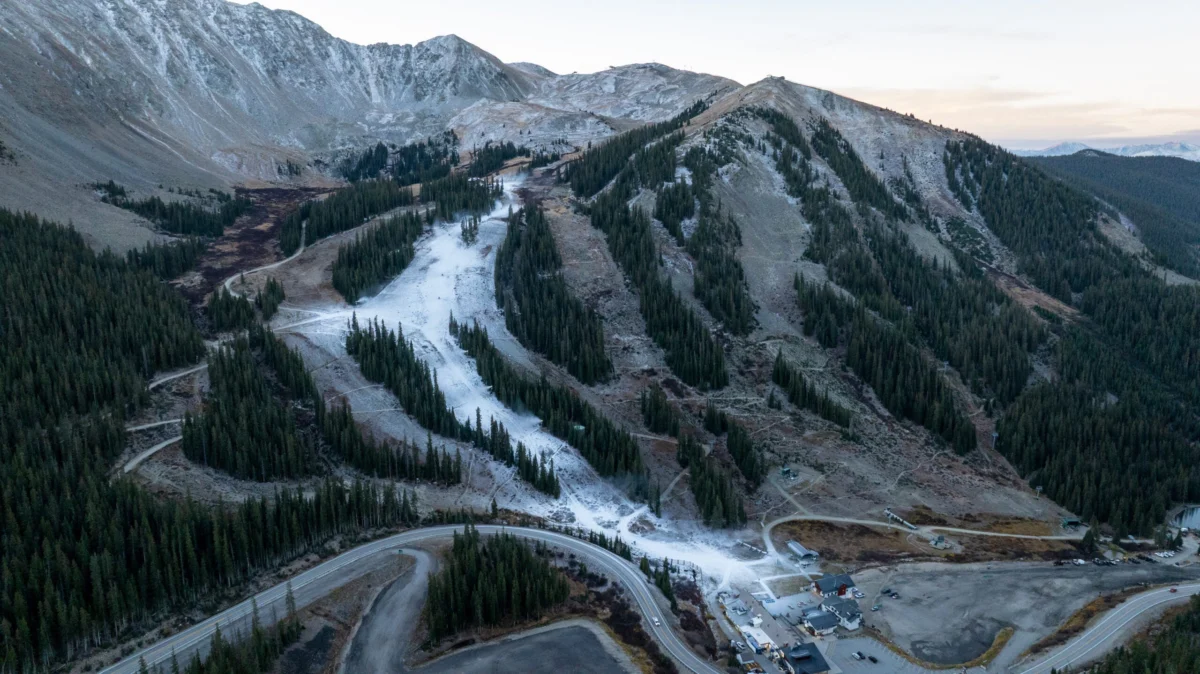
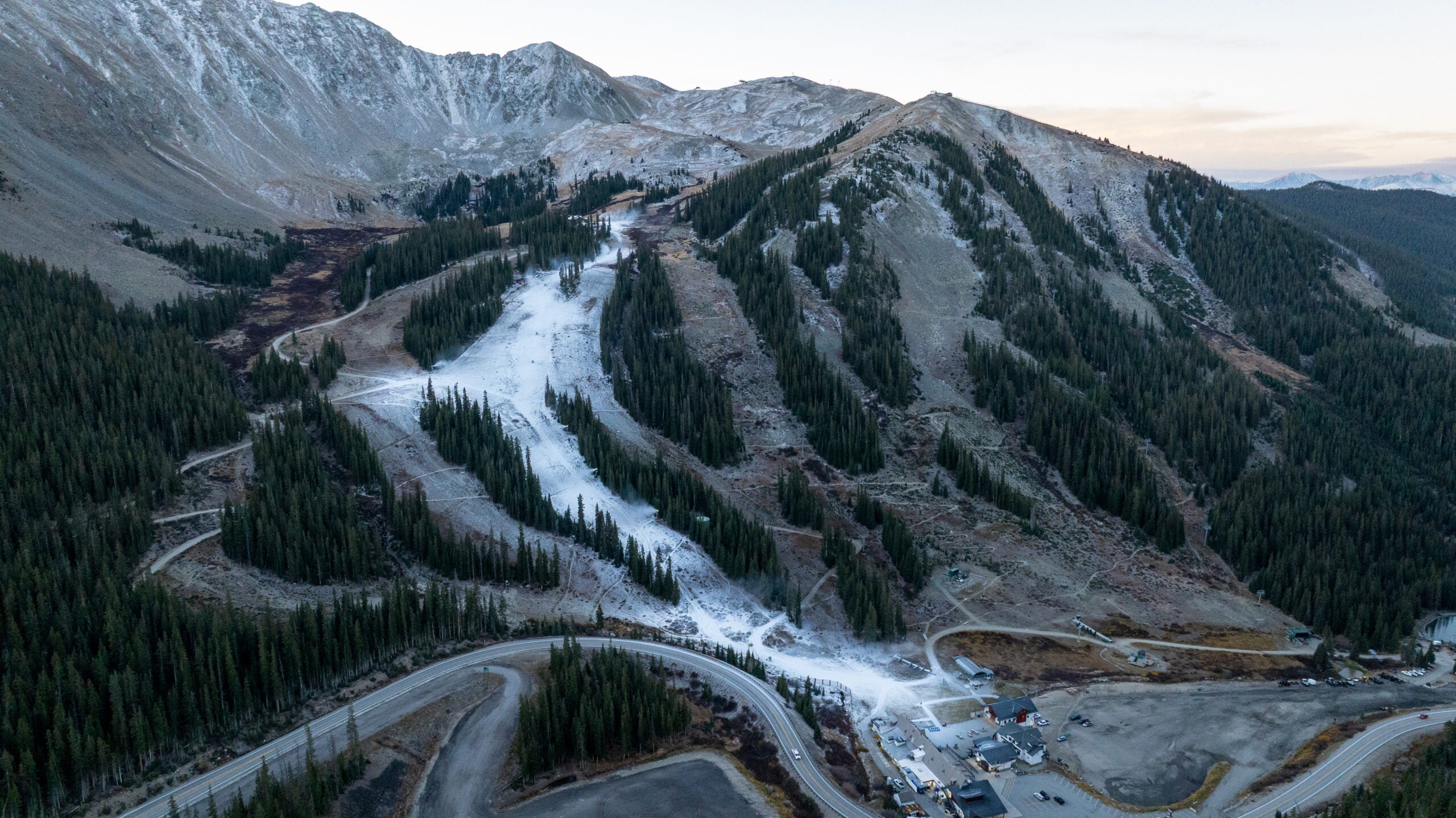
- Early October: High-elevation resorts like Colorado’s Arapahoe Basin (A-Basin) typically lead the charge. Capitalizing on early-season inversions and bitter alpine lows, their snowmaking crews work around the clock to secure a vital early-season toehold.
- Late Fall: Resorts across the country test their systems, integrating high-tech efficiency metrics to balance water consumption with the race to open terrain ahead of the Thanksgiving and Christmas holiday rushes.
- Mid-Winter: Snowmaking pivots from opening terrain to building resilience. Crews use it to reinforce high-traffic zones, wind-scoured ridges, and lower-elevation egress trails.
- Spring: As natural snow packs recede under warming solar radiation, artificial bases on lower-mountain trails ensure that resorts can honour their closing-day commitments, protecting seasonal economies in mountain towns.
This evolution is perhaps best exemplified by Willamette Pass in Oregon. This winter, the resort is introducing top-to-bottom snowmaking across major portions of its terrain for the very first time. General Manager Mindy Ingebretson-Wolowicz emphasizes that this is not a knee-jerk reaction to a single bad winter, but a calculated, long-term structural investment.
"We all realize how important it is and how it can help fortify our seasons," Ingebretson-Wolowicz says. Implementing projects of this scale requires years of careful planning, capital expenditure, and collaboration with government and environmental regulatory bodies to ensure minimal ecological disruption.
3. Supporting Data and Economic Realities
While the environmental mechanics of snowmaking are widely misunderstood, the financial realities are starkly clear: making snow is extraordinarily expensive.
At New Mexico’s family-owned Red River Ski Area, approximately 85 percent of the terrain relies on artificial snow. Reed Weimer, the resort’s Sales and Marketing and Revenue Manager, notes that last season required snow guns to run for a full month longer than the historical average.
"It’s a significant expense, but many times it’s a needed expense," Weimer explains. To absorb these mounting operational costs without passing exorbitant price hikes directly onto consumers, resorts are investing heavily in efficiency-boosting technologies.
A primary game-changer in this arena has been the adoption of LiDAR (Light Detection and Ranging) and precision mapping technology. By scanning the mountain with lasers, resorts like Red River can measure snowpack depths down to the inch. This allows snowmakers to target only the specific areas that require replenishment, eliminating waste, conserving water, and drastically reducing the electricity needed to run pump houses and air compressors.
Scale also varies wildly across the industry. Major destination resorts like Jackson Hole make artificial snow on only about 5 percent of their total terrain. Yet, as Irby points out, that modest 5 percent is strategically invaluable. It covers critical lower-elevation choke points and egress trails that allow skiers to safely navigate off the mountain, particularly during the shoulder seasons when natural snow at the base is sparse.
4. Official Responses and Industry Insights
Behind every pristine corduroy groomer and deep powder stash stands an army of dedicated mountain operations staff working under punishing conditions.
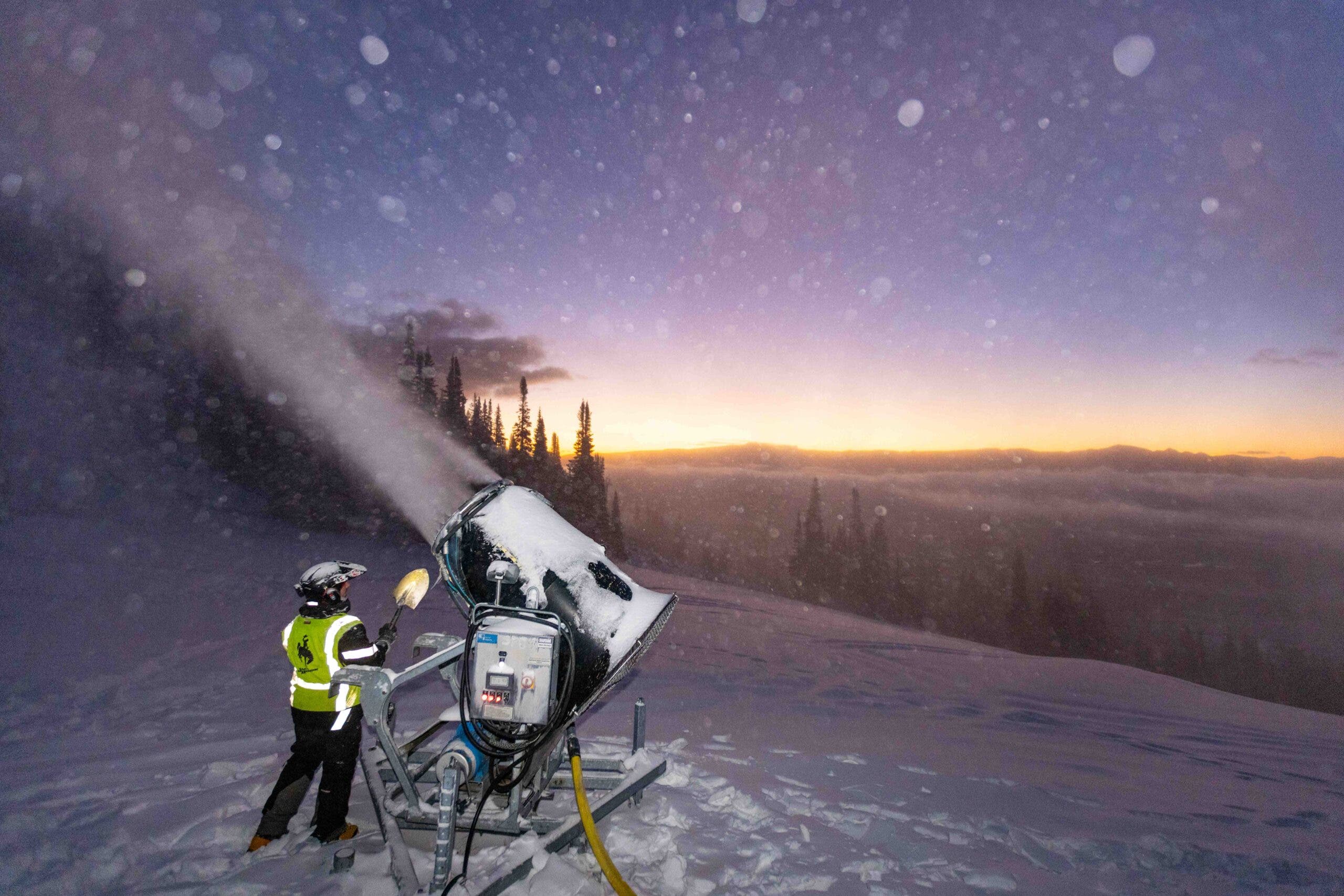
"None of it happens without the people behind it," reminds Ingebretson-Wolowicz. "The people who are out there at 2 o’clock in the morning in the dark with their headlamps on, monitoring wet-bulb temperatures and adjusting guns."
Leadership across the ski industry stresses that resilience requires a multi-pronged approach that goes beyond simply upgrading snow guns. According to Chad Sokol, Public Relations Manager at Whitefish Mountain Resort in Montana, comprehensive risk mitigation is now standard operating procedure. "We definitely plan for the worst-case scenario," Sokol says.
Furthermore, resorts are increasingly diversifying their snow-preservation toolkits:
- Snow Farming and Blanketing: Earlier this autumn, Aspen Snowmass successfully hosted a park session utilizing snow that was "farmed" during the previous winter and preserved beneath thick, high-tech insulated thermal blankets through the summer heat.
- Natural Drift Capture: At A-Basin—noted as one of the country’s first carbon-neutral ski areas—specialized high-altitude snow fencing is deployed to capture natural wind-blown drifts, banking massive quantities of snow to reinforce high-traffic spring runs.
- Operational Adaptations: At Jackson Hole, management is evaluating infrastructural strategies that would allow skiers to access high-elevation terrain via lifts, while utilizing download protocols on gondolas if lower-elevation trails lose their base.
5. Implications for the Future of Skiing
As the industry looks toward the coming decades, climate change remains the ultimate wildcard. A landmark 2023 study published by the NSAA painted a sobering picture: if global greenhouse gas emissions continue on their current high trajectory, North American ski areas will face escalating challenges, including rising ambient temperatures, shorter operational windows, and increased water source vulnerability.
Industry veterans acknowledge that technology has its limits. As Jackson Hole’s Austin Irby bluntly puts it, "Even if you have the nicest, biggest snowmaking system on the planet, it still needs to get cold."
Water temperature, humidity (wet-bulb temperature), and ambient air temperature are non-negotiable chemical requirements for snow creation. If winter temperatures continue to climb past historical averages, the window of viable snowmaking weather shrinks, placing unprecedented strain on mountain reservoirs and energy grids.
Despite these hurdles, the prevailing mood among ski area operators is one of calculated adaptation rather than resignation. Snowmaking is no longer viewed merely as an insurance policy against a bad week; it is the technological foundation upon which the multi-billion-dollar mountain tourism economy survives.
As the mercury drops and the season’s first artificial flakes mix with the real thing, skiers strapping into their bindings this winter are participating in a complex, highly engineered dance between human ingenuity, environmental stewardship, and the raw, unyielding forces of nature.

 Lina Hope
 Pevita Pearce

 Reynand Wu


 Siti Muinah

 Ali Ikhwan

 Ammar Sabilarrohman