
 Jia Lissa
By Nick Piastowski
September 26, 2026
MEDINAH, Ill. — Xander Schauffele, ever the pragmatist, has a proposal. If the critics and the armchair tacticians want to understand why the United States continues to stumble in the high-stakes, high-pressure crucible of alternate-shot golf, they need a larger sample size. Give him 200 matches, he suggests with a dry, weary smile, and then—perhaps—we can draw some definitive conclusions.
But Schauffele is also a realist. "I’m going to die before that happens," he says. "So, unfortunately, we’re not going to get that look."
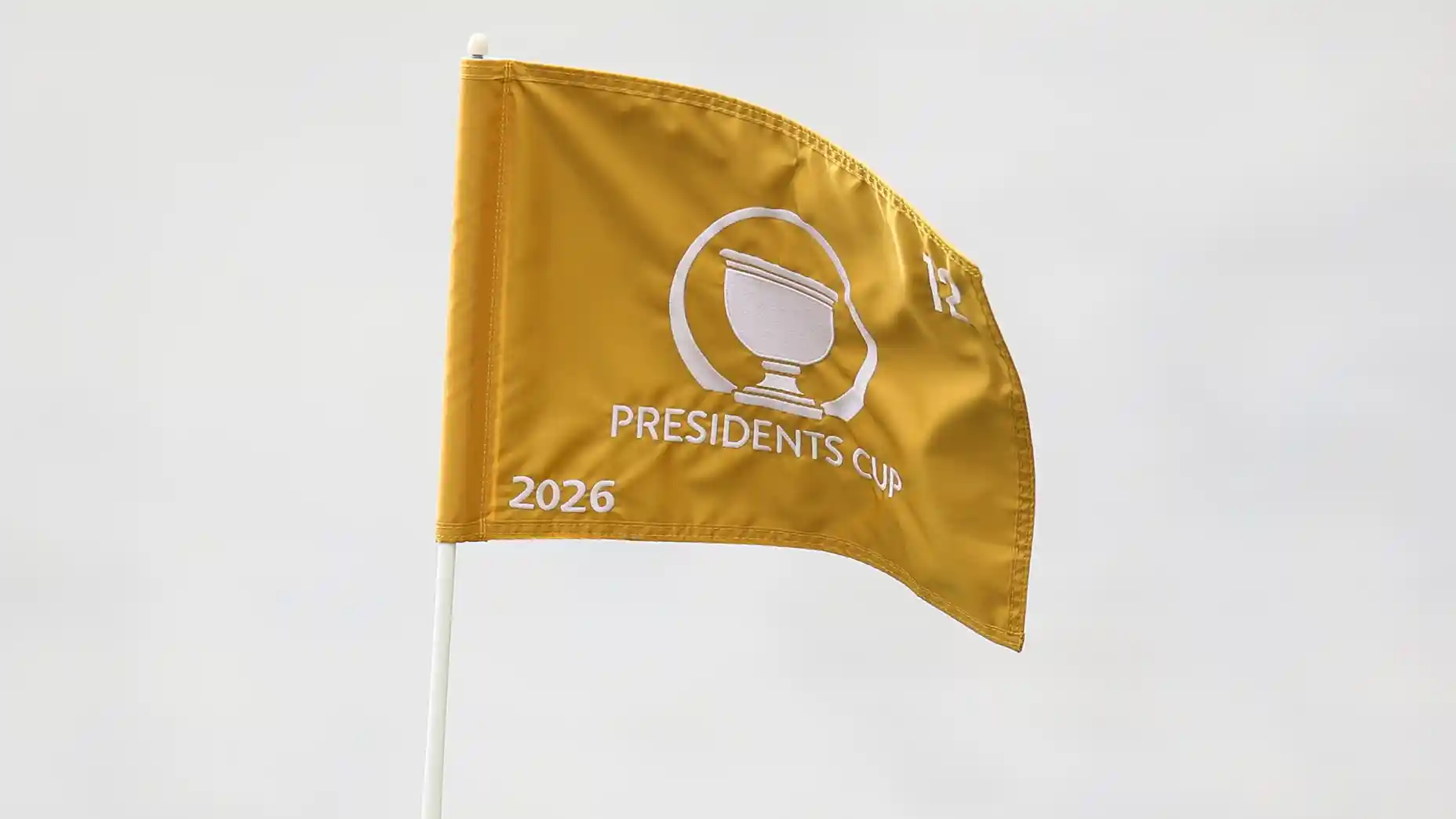
Instead, the reality facing the U.S. team at Medinah Country Club is far more immediate and significantly more alarming. As the 2026 Presidents Cup hurtles toward its conclusion, the American squad finds itself staring at a 10.5–7.5 deficit. While the math alone is jarring for a nation that has surrendered the Cup only once in 15 previous iterations, it is the manner of the collapse that has the U.S. camp reeling.
Of the nine foursomes (alternate-shot) matches contested this week, the International Team has secured seven points. The Americans have claimed just two. It is a recurring nightmare, a systemic failure that has persisted through multiple iterations of the Ryder Cup and Presidents Cup, leaving players, captains, and analysts searching for answers in a sport that suddenly feels unrecognizable to the U.S. stars.
The Chronology of a Crisis
To understand the depth of the current malaise, one must look at the recent historical record. The "foursomes fever" that has infected the American team is not a localized event; it is a multi-year contagion.
At the 2026 Presidents Cup, the narrative was established early. The Internationals, playing with a collective chip on their shoulder, dismantled the Americans in the alternate-shot format, turning Medinah into a fortress of frustration for the visitors.
This follows a grim trend. At the previous Ryder Cup, the U.S. managed only two points out of a possible eight in foursomes. Two years ago, at the Presidents Cup, they posted a 3-6 record in the format. Looking back three years to the Ryder Cup, the mark was a dismal 1-7. By the numbers, that equates to eight wins against 26 defeats—a staggering ratio for a team whose average world ranking consistently dwarfs that of their opponents.
The weekend at Medinah has offered flashes of hope, such as the impressive 6-and-4 victory by Chris Gotterup and Cameron Young over veterans Adam Scott and Sungjae Im. Yet, for every success, there is a counter-narrative: Wyndham Clark and Sam Burns faltering after an early lead, or the heartbreak of Russell Henley and Jacob Bridgeman, who, despite winning their first three holes, ultimately succumbed to the International duo of Corey Conners and Nick Taylor.
The Data Dilemma: Talent vs. Chemistry
On paper, the American dominance should be absolute. Since 2018, the average world ranking for a U.S. team member has sat at approximately 12.75. In that same timeframe, the European teams have averaged 26.8, and the International teams a much higher 42.5.
If talent were the sole determinant of success, the U.S. would have retired the trophy years ago. Yet, as U.S. Captain Brandt Snedeker admitted when pressed on the "million-dollar question," the talent gap is not translating to the scorecard.
"I don’t know," Snedeker said, his voice reflecting the bewilderment of a man who has implemented the standard preparation protocols—practice rounds, team bonding, and simulated scenarios—only to watch them evaporate under the pressure of the first tee.
The Pairings Problem
Critics have pointed to the pairings themselves. The decision to field Russell Henley and Jacob Bridgeman—statistically the two shortest hitters on the U.S. squad—in two separate foursomes matches has raised eyebrows. While the logic might have been to place them in familiar, short-game-heavy environments, the result was two losses.

Kelan McDonagh, a GOLF Top 100 Teacher to Watch, suggests the issue is more psychological than physical. "It’s a weird one because on paper, they are some of the best players in the world when playing their own ball," McDonagh notes. "Once paired up, that changes. A lot of it comes down to the partnerships and the relationships within those partnerships. I always did well at foursomes when my partner was a close friend. If you don’t know the person well, that lack of comfort plays a part."
However, even the "friendship" factor is failing. The established, high-chemistry pair of Xander Schauffele and Patrick Cantlay, along with the tight-knit Scottie Scheffler and Sam Burns, have both suffered losses in this format. Even the legendary partnership of Schauffele and Cantlay, which holds a 5-2 record since 2019, is not immune to the current slump.
Expert Insight: Why the U.S. Struggles
The consensus among sports psychologists and veteran coaches is that the U.S. failure is not just about execution—it is about philosophy.
Dr. Bob Rotella, a world-renowned sports psychologist who has worked with hundreds of the game’s elite, offers a blunt assessment: "My guess is we just do not spend much time playing or practicing it. You can still win without being great at it, so it is not prioritized because it is not how most high-level golf is played."
The Institutional Vacuum
Rotella points to the lack of infrastructure in American golf for the foursomes format. In the United States, the developmental pipeline—from junior golf to NCAA powerhouse programs and onto the PGA Tour—is built entirely around stroke play. A player’s individual score is the alpha and the omega.
"If it was viewed as crucial," Rotella adds, "we would have college tournaments that are foursomes, we would have pro tournaments on all tours that are foursomes. We don’t. Most people would rather just play their own ball."
This creates a structural disadvantage. While international players, particularly those from the DP World Tour or who have experience in European amateur circuits, are frequently exposed to team-based alternate-shot play, American stars are often encountering it only twice a year in the Presidents or Ryder Cup. They are effectively being asked to master a language they haven’t spoken since their amateur days.
Implications: The Road to the Ryder Cup
As the final day at Medinah approaches, the U.S. team is left with only the singles format to save their campaign. While the team remains optimistic—Schauffele noted the "satisfaction from clawing your way back"—the broader implications for American golf are severe.
If the U.S. fails to rectify its foursomes performance, the pressure will mount on the next Ryder Cup team to fundamentally shift its training model. Rotella believes that only a continued string of losses will force the necessary change. "My guess is if the USA does not start winning the Ryder Cup more frequently by getting better at foursomes, it might change," he suggests. "But only if the perception by team leaders is that foursomes is the primary hurdle, rather than just relying on the assumption that they can dominate in fourball and singles."
The "One-Ball" Mentality
There is also the nuanced issue of equipment. In alternate-shot, golfers must navigate the challenge of playing with their partner’s ball. While teams make accommodations, the mental friction of not playing one’s own equipment—combined with the pressure of a teammate watching—creates a unique brand of anxiety that is absent in standard PGA Tour play.
The visual of Russell Henley chunking a shot on the 15th hole is perhaps the perfect metaphor for the American experience this week. It wasn’t a lack of talent, nor a lack of desire. It was a lapse in the delicate, rhythmic synchronization that foursomes demands.
As the sun sets on Medinah, the U.S. team faces a crossroads. They can continue to lean on the individual brilliance that makes them the envy of the world, or they can begin the difficult, unglamorous work of rebuilding their identity from the ground up.
For now, the Americans have 12 holes, 12 matches, and a mountain to climb. The question is no longer whether they can hit the ball farther or straighter; it is whether they can learn to share the weight of the moment. Until then, the "foursomes fiasco" will remain the defining narrative of American team golf, a puzzle they have yet to solve, and a secret they have yet to master.

 Pevita Pearce
 Ali Ikhwan
 Sagoh
Sagoh
 Raul Delapena Setiawan
 Asro
Asro
 Basiran