
 Basiran
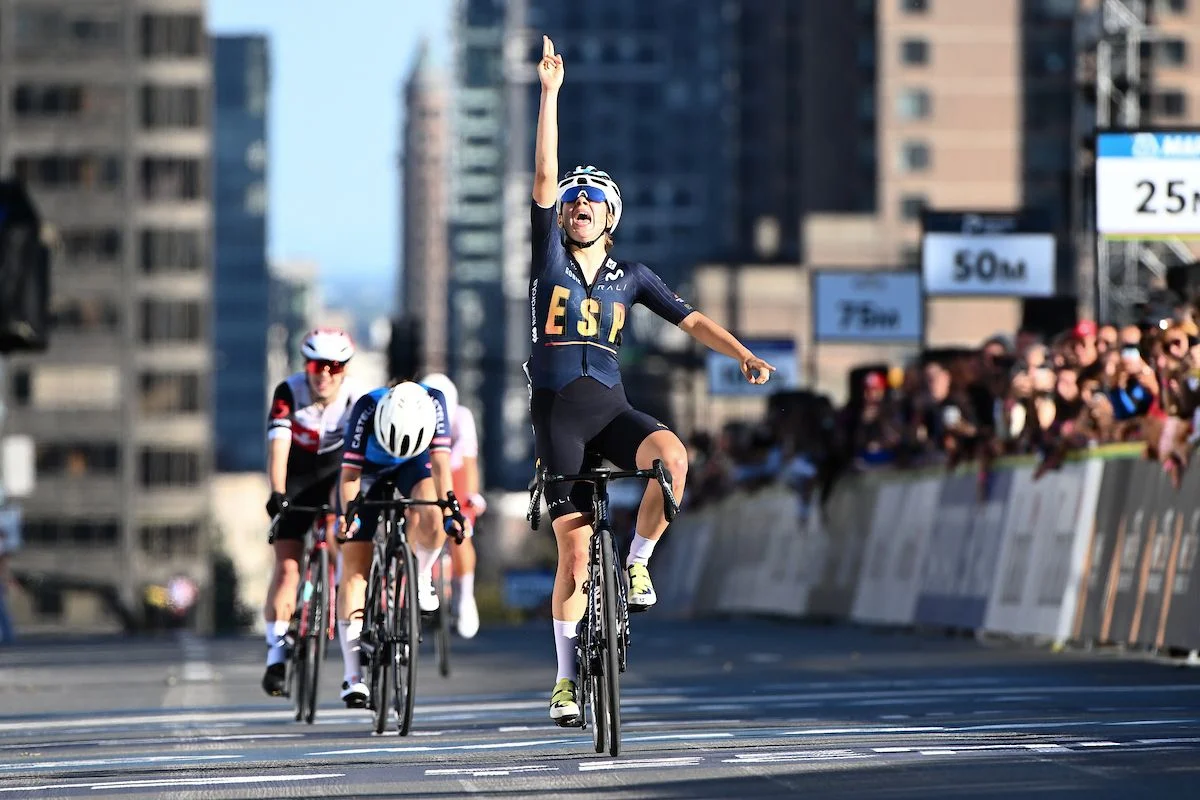
MONTREAL, Canada — In a thrilling display of tactical brilliance and raw acceleration, Spain’s Alejandra Neira delivered a masterclass in the closing kilometers of the junior women’s road race at the UCI Road World Championships. Surging past her competitors in a tense, five-rider dash to the finish line on the iconic circuits of Montreal, Neira captured the gold medal, sealing Spain’s third world title of the prestigious championship event.
The victory marks a monumental milestone in the young Spaniard’s burgeoning career. It highlights a stellar campaign for the Spanish delegation, who once again demonstrated their depth and competitive hunger on the global stage.
Main Facts: A Thrilling Finish on Canadian Soil
The junior women’s road race delivered everything cycling fans hoped for: high speeds, relentless attacks, and a nail-biting tactical finale. As the peloton splintered across the demanding Montreal course, a elite lead group of five riders managed to break away, holding off the chasing pack to contest the medals among themselves.
When the race hit the final straightaway, anticipation reached a fever pitch. Exhibiting exceptional tactical patience, Alejandra Neira bided her time near the front of the group, conserving her energy while her rivals began to eye one another. With precisely 150 meters remaining, Neira unleashed a devastating turn of speed that instantly cracked the leading group.
Italy’s Matilde Rossignoli fought valiantly to match the acceleration but was ultimately left in Neira’s wake, securing the silver medal. Switzerland’s Anja Grossmann rounded out the podium, claiming a hard-earned bronze after a relentless day of racing.
- Gold: Alejandra Neira (Spain)
- Silver: Matilde Rossignoli (Italy)
- Anja Grossmann: (Switzerland)
- Location: Montreal, Canada
- Event: UCI Road World Championships (Junior Women’s Road Race)
Chronology of the Race: How the Victory Was Forged
Early-Race Jitters and the Formation of the Breakaway
From the dropping of the flag, the pace was unrelenting. National federations sought to animate the race early, stringing out the peloton on the technical and rolling terrain of the Montreal circuit. Crosswinds and sharp corners caused minor splits in the main field, though major contenders remained vigilant at the front.
As the race entered its second half, the attrition rate took a heavy toll. Counter-attacks flew off the front of a shrinking peloton as riders tested each other’s limits on the punchy climbs. Sensing a lack of cohesion among the chasers, a select group of five riders—including Neira, Rossignoli, and Grossmann—managed to establish a decisive gap.
The Cat-and-Mouse Game
Entering the final five kilometers, the breakaway’s cooperation was tested. Knowing that a sprint finish favored fast-finishing rouleurs, various riders attempted speculative solo flyers to catch the group off guard. However, strong collaborative efforts and tactical marking shut down every single escape attempt.
As the flamme rouge signaled one kilometer to go, the tension inside the leading quintet was palpable. Riders looked over their shoulders, trading nervous glances. The pace momentarily stalled, a common phenomenon in elite group sprints where nobody wants to lead out their opponents too early.
The Final 150 Meters
The race boiled down to a pure test of positioning and anaerobic power. Matilde Rossignoli looked poised to launch her sprint early, moving to the front to dictate terms. However, Alejandra Neira was glued to her wheel, perfectly sheltered from the headwind.
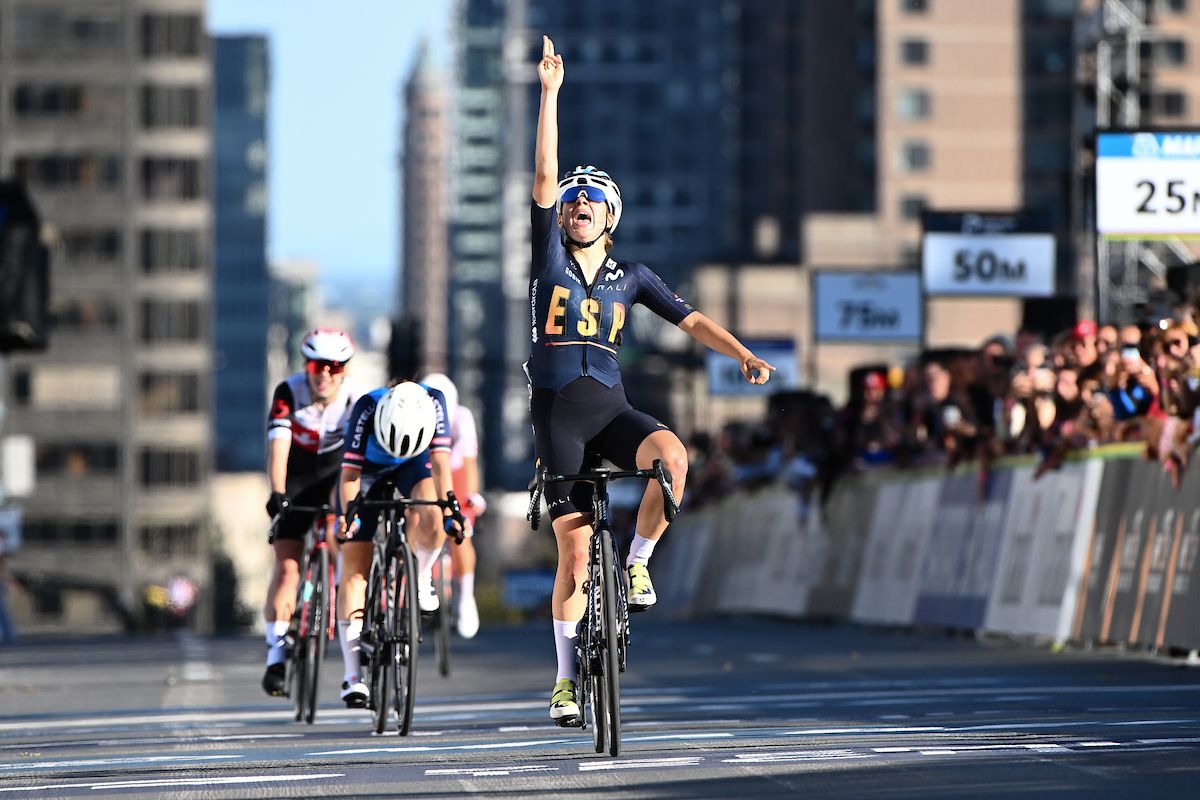
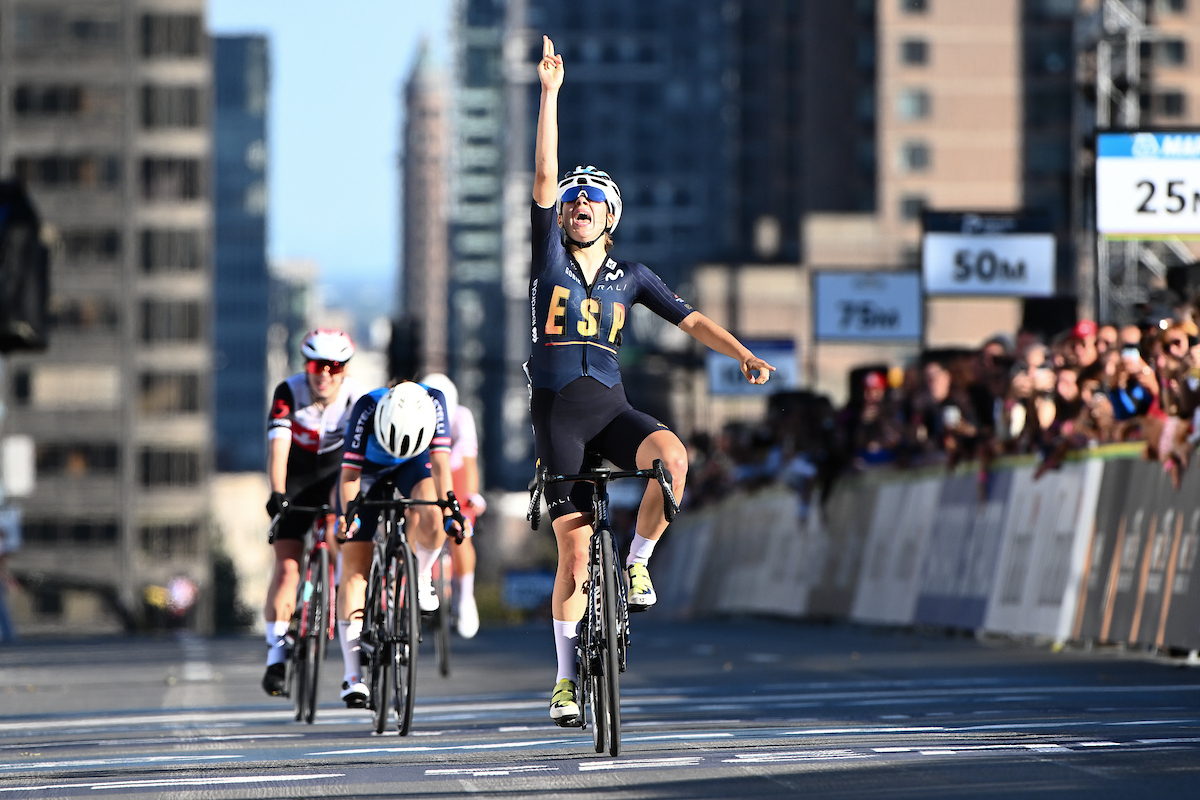
With 150 meters to the line, Neira punched the pedals with explosive force. Her instantaneous jump caught the Italian rider flat-footed. In a matter of pedal strokes, Neira opened up a decisive bike-length advantage. As she crossed the finish line, the young Spanish phenom raised her arms in disbelief and ecstasy, etching her name into cycling history.
Supporting Data and Context: Spain’s Golden Campaign
Alejandra Neira’s triumph is not an isolated success; it underscores an extraordinary week for Spanish cycling in Montreal. With this victory, Spain secured its third gold medal of the 2025 UCI Road World Championships, signaling a resurgence in their development pathways for young talent.
- Junior Success Metrics: The junior women’s category often serves as a crystal ball for the future of the UCI Women’s WorldTour. Past winners of junior world championships frequently transition directly into professional WorldTour contracts within seasons.
- Course Profile: The Montreal circuit is notoriously punishing, featuring sustained power climbs, technical descents, and narrow urban streets that favor aggressive, tactically astute racers rather than pure sprinters.
- Podium Statistics: The winning margin in the final sprint highlighted just how evenly matched the top tier of junior talent is globally, with seconds separating the podium finishers after hours of hard racing.
Official Responses and Reactions
Speaking to reporters shortly after her podium ceremony, an emotional Alejandra Neira reflected on the race strategy that brought her the rainbow jersey.
"I still can’t believe it," Neira said through tears of joy. "The race was brutally hard from the very beginning. The climbs hurt more and more with every lap, but my team gave me absolute confidence. Coming into the final straight, I knew I had to stay calm, watch Matilde [Rossignoli], and wait for the absolute right moment. When I launched, I just gave everything I had left in my legs."
Spanish team coaches praised the young rider’s discipline, noting that executing a flawless sprint after a grueling, selective race requires a maturity well beyond her years.
Silver medalist Matilde Rossignoli graciously acknowledged Neira’s superior finish:
"Of course, you always want the gold when you are this close to the line, but I have no regrets. We raced hard, and Alejandra simply had an incredible kick in those final meters. Winning silver at the World Championships is something I am immensely proud of."
Bronze medalist Anja Grossmann echoed similar sentiments, praising the high level of competition within the junior women’s peloton and expressing excitement for the future of women’s cycling.
Implications for the Future of Women’s Cycling
The conclusion of the junior women’s road race in Montreal leaves a lasting impression on the global cycling landscape.
1. A Flourishing Talent Pipeline
Performances by Neira, Rossignoli, and Grossmann prove that the talent pipeline in international women’s cycling is healthier and more competitive than ever. Junior racing is no longer merely a developmental stepping stone; it is a high-stakes arena where world-class athletes showcase tactical acumen and physical preparedness that rival elite levels.
2. Rising Prominence of Spanish Cycling
For Spain, securing multiple gold medals at these World Championships injects immense momentum into their national federation. Investments in youth development programs, regional racing circuits, and talent identification are paying dividends on the world stage, inspiring a new generation of young Spanish girls to take up the sport.
3. The Path to the WorldTour
As Neira dons the prestigious rainbow jersey for the upcoming season, all eyes will be on her progression. World Championship titles act as a springboard into top-tier development squads and professional WorldTour teams. The cycling world will eagerly watch how the new World Champion handles the responsibilities and expectations that come with wearing the stripes, as she embarks on the next chapter of what promises to be a legendary career.

 Reynand Wu
 Nana
 Neng Nana
 Nana Wu
 Lina Hope
 Sagoh
 Iffa Jayyana