
 Nana
Nana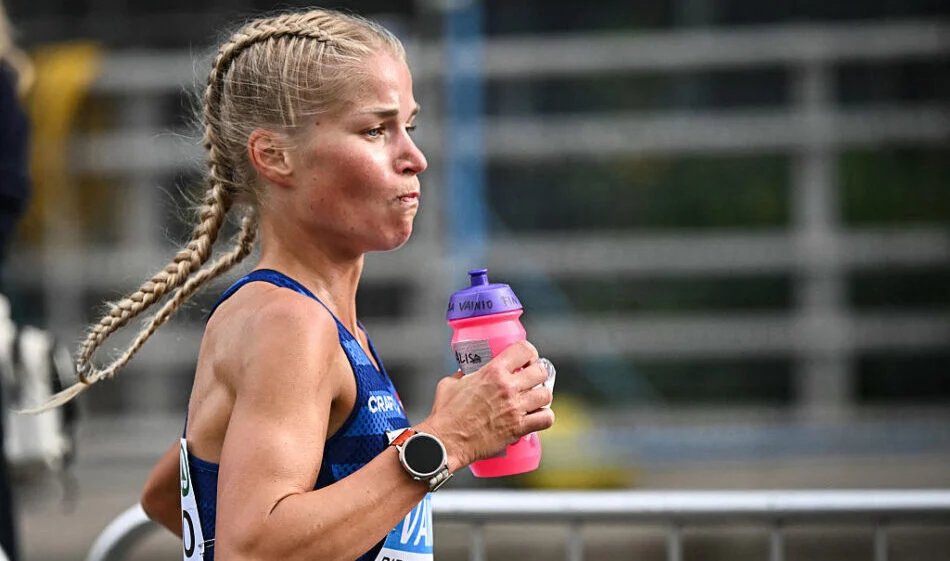
Main Facts
The 2026 BMW Berlin Marathon is shaping up to be one of the most compelling chapters in modern distance-running history. While the German capital is world-renowned for its pancake-flat, hyper-fast course—having previously staged a record 13 world records—this year’s edition is defined as much by a historic defiance of traditional athletic scheduling as it is by elite-tier record hunting.
At the center of the women’s narrative is Finland’s Alisa Vainio. The 28-year-old European champion has turned conventional marathon preparation completely on its head. Elite marathoners typically limit themselves to two, or at most three, races over 26.2 miles per year, meticulously spacing them months apart to allow for proper recovery. Vainio, by contrast, arrived at the starting line in Berlin having completed seven marathons in just over twelve months, treating the most punishing distance in athletics with the frequency of a middle-distance track runner.
Meanwhile, at the sharp end of the elite women’s race, Ethiopia’s Tigist Assefa returns to the scene of her stunning 2023 triumph. Assefa, who famously smashed the world record on this very course with a time of 2:11:53, is targeting the elusive 2:10 barrier. Adding further intrigue to the weekend, the men’s division has experienced massive pre-race disruption, with defending champion and world record-holder Sabastian Sawe withdrawing due to injury, alongside a late scratch from legendary Ethiopian veteran Kenenisa Bekele. This leaves the men’s crown wide open for a new contender to claim glory on the historic streets of Berlin.
Chronology
Vainio’s Relentless Ascent: A Year Like No Other
To understand the magnitude of Alisa Vainio’s presence in Berlin, one must examine the staggering timeline of her past year. Her marathon marathon began in earnest at the World Championships in Tokyo last September, where she placed a commendable fifth in punishing, humid conditions, finishing as the leading European athlete.
Just three weeks later, Vainio shattered Camilla Richardsson’s Finnish national record by clocking 2:23:06 in Vantaa. Refusing to rest, she traveled to the Valencia Marathon in December, lowering her national benchmark further to 2:20:48—a performance that simultaneously erased Ingrid Kristiansen’s legendary Nordic record, which had stood impregnable since 1985.
February brought the crowning achievement of Vainio’s career thus far. Despite navigating what she described as a chaotic start at the Seville Marathon, she triumphed over a world-class East African field, clocking 2:20:39 to become the first European woman to win the race since 2017. Eight weeks later, she secured a hard-fought sixth place in Paris with a time of 2:21:35.
The pinnacle of her domestic and continental dominance arrived in Birmingham at the European Championships. Following a heartbreaking DNF (Did Not Finish) at the Munich Europeans four years prior, Vainio executed a masterclass in front-running. She surged to the front within the first 500 meters, carved out a three-minute lead by the halfway mark, and ran completely alone on the undulating city-centre course to claim gold in 2:22:26.
Even after capturing the European crown, her relentless racing calendar did not pause. In late August, she sharpened her speed by lowering her 10,000m track personal best to 32:30.71 at the traditional Finland-Sweden international match in Helsinki. Two weeks prior to Berlin, she cruised to a dominant victory at the Finnish Marathon Championships in Jyväskylä, winning by more than seven minutes. Rather than a taxing taper, her coach treated the race as a standard weekend long run, with Vainio casually crossing the finish line as a final tune-up for Germany.
Supporting Data
Depth and Statistics at the BMW Berlin Marathon
The depth of the 2026 women’s elite field is unprecedented in the history of the event, transforming the race into an absolute powerhouse of endurance talent.
- The 2:20 Barrier: Alisa Vainio enters Berlin boasting a personal best of 2:20:39. If she dips under the 2:20 mark on Sunday, she will etch her name into history as the first Nordic woman to ever break the barrier.
- Elite Field Depth: A record-breaking seven women on the official start list carry personal bests under 2:20—a concentration of sub-2:20 talent never before seen in Berlin. Furthermore, an astonishing 13 athletes have broken the 2:22 barrier.
- Assefa’s Benchmark: Tigist Assefa’s course record and personal best stands at 2:11:53, a time so extraordinary it would have comfortably won each of the first 11 editions of the Berlin men’s and women’s races combined.
- Historical Margins: Vainio’s European Championship-winning margin of 4 minutes and 55 seconds over Hungary’s Lili Anna Vindics-Tóth (2:27:21) stands as the largest winning margin in the history of the European women’s marathon, shattering Rosa Mota’s 1986 record of 4:14.
- Men’s Field Vitals: In the absence of Sawe and Bekele, Tanzania’s Gabriel Geay steps in as the fastest man on the entry list, armed with a personal best of 2:03:00 from his runner-up finish in Valencia.
Official Responses
Athletes and coaches have been vocal about the unique physical demands and strategic goals driving this year’s elite fields.
Alisa Vainio remains remarkably grounded regarding her physical condition heading into Berlin. Acknowledging the extraordinary frequency of her racing schedule, she explained:
"I’m running Berlin a little on what’s left of my form from the European Championships. There hasn’t really been time for a proper recovery and training block. But I still expect a good run. My aim is to improve my personal best and hopefully run under 2:20."
Her coach, Jarmo Viskari, defended their unorthodox training philosophy—specifically the decision to treat the Jyväskylä national title race as a high-volume training session just a fortnight before Berlin. Viskari noted that the race fit seamlessly into Vainio’s pre-existing endurance requirements, where she maintained a controlled 3:30 to 3:35 per kilometer pace before winding down over the closing stages.
At the sharp end of the elite field, Tigist Assefa expressed palpable excitement about returning to the course where she redefined women’s marathoning.
"I am really looking forward to running on the fast course in Berlin again and hope that I can continue my success story here on Sunday," Assefa stated. "I am very well prepared and want to run a personal best."
In the men’s division, the mood was more somber following late withdrawals. Defending champion Sabastian Sawe released a statement regarding his late August injury:
"It is with a heavy heart that I must inform you I am forced to withdraw. I had been looking forward to achieving something special on the streets of Berlin."
Implications
The outcomes of the 2026 BMW Berlin Marathon carry profound implications for elite distance running, sports science, and the psychological approach to endurance training.
First, Alisa Vainio’s campaign represents a fascinating case study in sports science. For decades, the sports medicine community has preached the gospel of extensive, multi-month recoveries between marathons to mitigate structural damage, bone stress injuries, and central nervous system fatigue. By successfully stringing together elite-level marathons every six to eight weeks—while simultaneously capturing a European title, setting national and continental records, and continuing to peak on the track—Vainio is challenging dogmatic recovery windows. If she successfully breaks 2:20 in Berlin under these conditions, it may prompt coaches worldwide to re-evaluate the physiological limits and adaptation capabilities of elite female endurance athletes.
Second, the women’s race highlights the ongoing revolution in women’s marathon times. With Assefa chasing the 2:10 barrier and a record number of sub-2:20 runners toeing the line, Berlin is solidifying its status as the premier destination for tectonic shifts in global records. The technological and nutritional advancements that have propelled fields deeper into unprecedented territory continue to push the boundaries of what is humanly possible over 26.2 miles.
Finally, the sudden withdrawal of both Sabastian Sawe and Kenenisa Bekele completely alters the competitive landscape of the men’s race. With the heavy favorites sidelined, the door is blown wide open for tactical racing. Athletes like Gabriel Geay, Guye Adola, and Shura Kitata now have a golden, unencumbered pathway to secure a prestigious World Marathon Major victory, injecting an unpredictable element of raw tactical warfare into what was originally anticipated as a pure time-trial exhibition. As the starting gun fires on Sunday morning, the streets of Berlin are once again poised to write an unforgettable chapter in athletics history.

 Nila Kartika Wati
 Azzam Bilal Chamdy
 Sagoh
Sagoh



 Ali Ikhwan
 Dwi Wanna