
 Laily UPN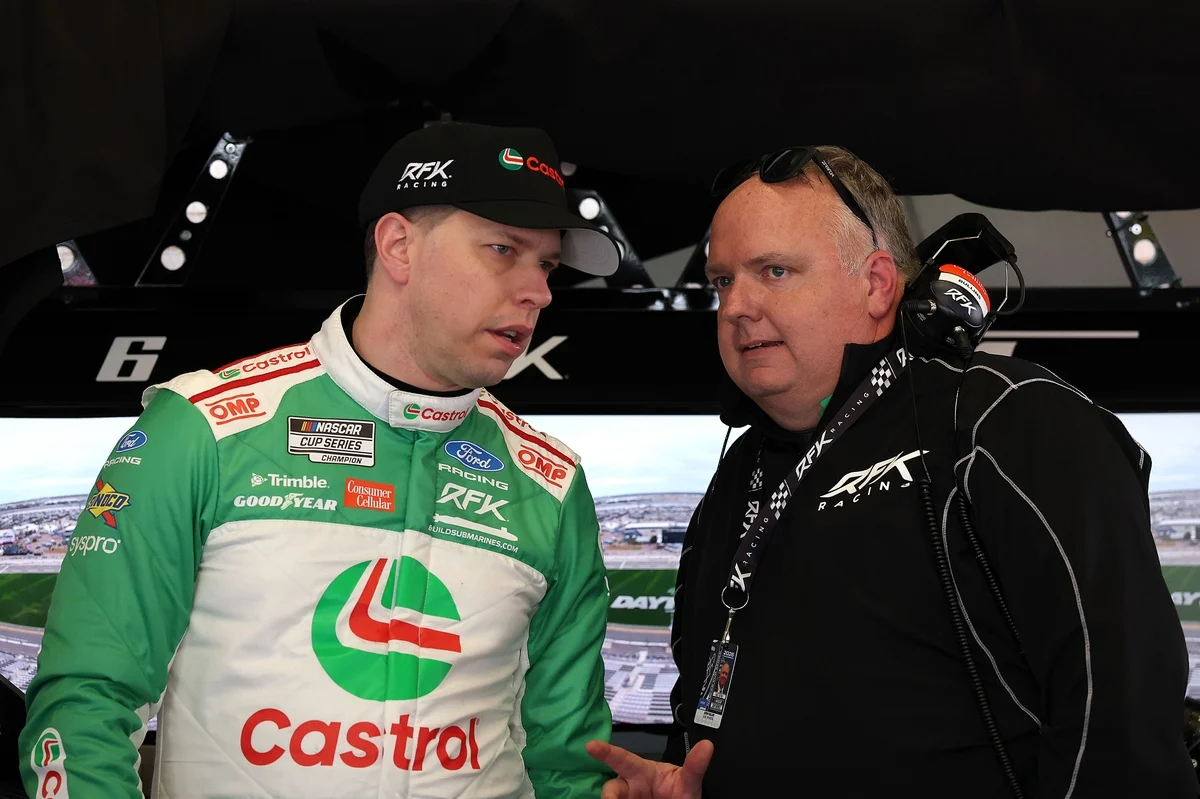
CONCORD, N.C. — In a surprising mid-season personnel shift that underscores the high-stakes, ever-evolving nature of the NASCAR Cup Series garage, RFK Racing announced a major leadership change atop the pit box for driver-owner Brad Keselowski. Jeremy Bullins, a veteran crew chief with a championship-pedigree resume and a storied history alongside Keselowski, is officially parting ways with the organization to pursue a new opportunity elsewhere within the NASCAR landscape.
Stepping into the high-pressure role for the No. 6 Ford Mustang Dark Horse is Mike Skarbowski, who transitions from his duties as RFK’s team manager. Skarbowski will take over the play-calling and strategic oversight starting this weekend at Kansas Speedway, marking his debut as a Cup Series crew chief.
While mid-season crew chief changes are rarely implemented without a degree of turbulence, RFK Racing has framed the departure as an amicable transition, praising Bullins for his instrumental contributions to the team’s ongoing resurgence. Nevertheless, dropping a brand-new crew chief into the fire ahead of a critical stretch of races introduces a fresh dynamic for the No. 6 team as they look to solidify their competitive footing.
Main Facts: The Immediate Shakeup at RFK Racing
The announcement brings an end to a brief but impactful chapter for Bullins at RFK Racing. Bullins, whose career is deeply anchored in years of high-level success at Team Penske, joined the RFK organization ahead of the 2025 season. His arrival was heralded as a major coup for a team striving to reclaim its championship glory under the co-ownership of Keselowski, Jack Roush, and John Henry.
Key details of the transition include:
- The Departed: Jeremy Bullins, veteran NASCAR crew chief with 10 career Cup Series victories.
- The Replacement: Mike Skarbowski, formerly RFK’s team manager and a former engineer at Trackhouse Racing.
- The Driver: Brad Keselowski, 2012 NASCAR Cup Series champion and driver of the No. 6 RFK Racing Ford.
- Effective Date: Immediate, beginning this weekend at Kansas Speedway.
- Bullins’ Next Chapter: Bullins is slated to take on a new, yet-to-be-fully-disclosed opportunity within the NASCAR industry.
For Keselowski, who has worked with a rotating cast of tactical minds over the twilight years of his driving career, the addition of Skarbowski represents another transition period. However, the driver-engineer pairing is designed to maximize speed and analytical precision at a time when small margins dictate the difference between victory lane and the mid-pack.
Chronology: Tracing Bullins’ Path and the Rise of Skarbowski
To understand the weight of this leadership change, it is necessary to examine the professional trajectories of the two central figures orchestrating the No. 6 team’s strategy.

The Bullins Era: From Penske to RFK
Jeremy Bullins has long been regarded as one of the sharpest technical minds in the NASCAR Cup Series garage. The bulk of his career was defined by a lengthy and successful tenure with Team Penske. During his years running the strategy on pit road, Bullins accumulated 10 Cup Series victories.
Crucially, half of those wins—five in total—were achieved alongside Brad Keselowski when Keselowski piloted the iconic No. 2 Penske Ford. Their previous working relationship established a shorthand and a level of mutual trust that made Bullins’ arrival at RFK Racing in 2025 feel like a homecoming of sorts.
Beyond his wins with Keselowski, Bullins demonstrated his versatility by winning races with other top-tier drivers. Most recently, Bullins captured an emotional and dramatic victory with Harrison Burton and the iconic Wood Brothers Racing team at Daytona International Speedway in the summer of 2024—a triumph that highlighted his ability to orchestrate underdog strategies to perfection.
When Bullins moved to RFK Racing, expectations were high that he and Keselowski could recapture the magic of their Penske days. While the No. 6 team showed flashes of brilliance and speed, the evolving demands of the Next Gen car and the relentless pace of development across the garage led to this unexpected parting of ways.
Skarbowski’s Ascent to the Pit Box
While Bullins exits for a new horizon, Mike Skarbowski steps into the spotlight. Skarbowski is not a household name to casual fans in the way veteran crew chiefs like Cliff Daniels or Rodney Childers are, but his reputation within engineering circles is formidable.
Prior to joining RFK Racing, Skarbowski honed his craft as an engineer at Trackhouse Racing—an organization known for its aggressive growth, modern infrastructure, and outside-the-box thinking. Upon transitioning to RFK, Skarbowski served as the team manager, giving him a bird’s-eye view of all operations across the two-car (and part-time third car) organization.
The Kansas Speedway weekend will mark a historic milestone for Skarbowski: his very first race serving as a Cup Series crew chief. Moving from the organizational side of team management directly onto the pit box places immense pressure on his shoulders, but his deep technical background is expected to bridge the gap between driver feedback and race-day setup execution.
Supporting Data: The Statistics of a Decorated Crew Chief
A look at the numbers underscores the caliber of leadership RFK Racing is losing, as well as the magnitude of the shoes Skarbowski has to fill.
| Metric | Jeremy Bullins |
|---|---|
| Total Cup Series Wins as Crew Chief | 10 |
| Wins with Brad Keselowski | 5 (achieved at Team Penske) |
| Notable Recent Win | 2024 Coke Zero Sugar 400 at Daytona (with Harrison Burton & Wood Brothers) |
| Primary Past Organizations | Team Penske, Wood Brothers Racing, RFK Racing |
| Key Career Milestone | Long-standing reputation as an elite mechanical engineer and race strategist. |
Conversely, Mike Skarbowski’s data tells a different story—one defined by technical pedigree rather than checkered flags as a play-caller. His background as an engineer and team manager means he approaches race strategy through a heavily analytical lens. In the era of the Next Gen car, where telemetry, simulator work, and microscopic setup adjustments dictate success, an engineer-turned-crew-chief is becoming an increasingly common—and successful—archetype in the Cup garage.
Official Responses: RFK Racing Bids Farewell
RFK Racing released a formal statement addressing the departure, emphasizing mutual respect and gratitude for the work Bullins put into building the organization’s competitive infrastructure.
"We’re excited for Jeremy and his family as he embarks on a new opportunity," the statement from RFK Racing read.
"Jeremy has been a terrific teammate, leader, and vital member of our competition think tank. Not only has he been a trusted voice with the #6 team, but he’s also brought great value to the garage in sharing strategic insights and historical perspective as we’ve crafted a shared vision for RFK Racing’s on-track success.
"We wish Jeremy nothing but the best."
The tone of the statement clearly reflects an amicable separation. In an industry where mid-season firings are frequently marked by corporate coldness or thinly veiled frustration, RFK’s public send-off acknowledges Bullins’ value not just to the No. 6 car, but to the entire engineering culture of the organization. As RFK continues its multi-year evolution into a race-winning powerhouse capable of contending week-in and week-out with giants like Hendrick Motorsports and Joe Gibbs Racing, the foundational contributions left behind by minds like Bullins remain invaluable.

Implications: What This Means for Brad Keselowski and RFK Racing
The timing of this change—right on the doorstep of the race weekend at Kansas Speedway—raises immediate questions regarding how quickly Skarbowski and Keselowski can find chemistry.
1. The Communication Learning Curve
Driver and crew chief relationships in modern NASCAR function almost like a marriage. The ability to communicate under extreme stress during a split-second pit road decision can make or break a race. While Keselowski and Bullins shared a deep, historical understanding of racing dating back years, Keselowski and Skarbowski will now have to build that rapport on the fly. Skarbowski’s background as a team manager means he is accustomed to managing people and communication channels, which could smooth the transition, but nothing replaces live reps on pit road.
2. A Shift in Technical Philosophy
With an engineer taking over the headset, the No. 6 team may lean even heavier into data-driven setups. Skarbowski’s roots at Trackhouse and his managerial oversight at RFK give him a holistic view of modern NASCAR engineering trends. If the team has struggled to extract maximum single-lap speed or race trim balance from the Ford Mustang Dark Horse, Skarbowski’s analytical approach could unlock new avenues for development.
3. The Broader Landscape at RFK Racing
RFK Racing has made tremendous strides since Brad Keselowski took an ownership stake and moved over from Penske. Alongside teammate Chris Buescher, the organization has proven it can win races and run up front on intermediate tracks, superspeedways, and short tracks alike. However, consistency remains the final frontier for a team striving to consistently place multiple cars deep into the postseason.
By making this move now, RFK is signaling that it is unwilling to settle for stagnation. Whether the gamble on a first-time crew chief pays immediate dividends or requires a brief stabilization period, all eyes in the garage will be fixed on the No. 6 pit box when engines fire at Kansas.
As the NASCAR Cup Series enters a crucial phase of the schedule, the Keselowski-Skarbowski partnership is officially underway—and the racing world will soon learn how quickly this new combination can find victory lane.

 Neng Nana
 Jia Lissa
 Iffa Jayyana
 Ali Ikhwan

 Dwi Wanna