
 Ammar Sabilarrohman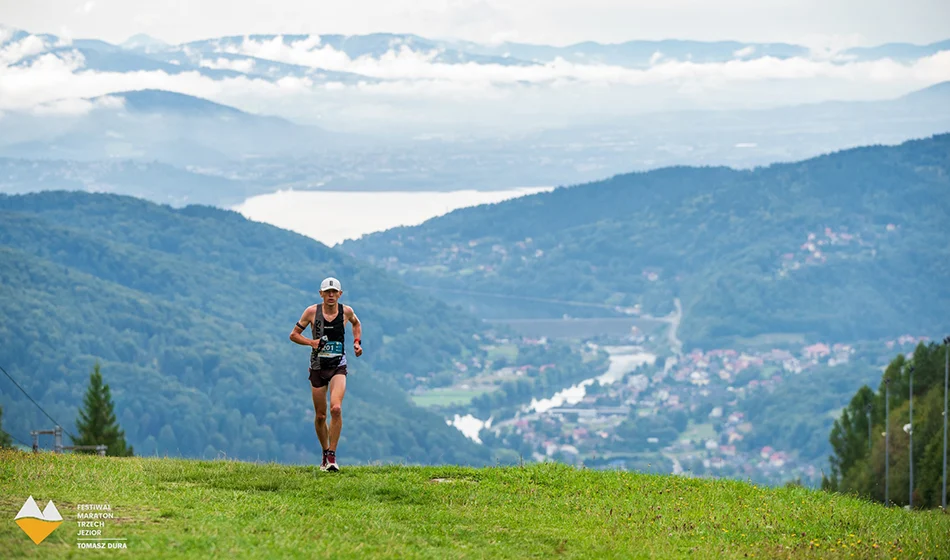
BESKIDS, POLAND — The global elite of mountain running have descended upon the picturesque landscape of the western Beskid Mały mountains for a high-stakes weekend of athletic endurance. On Saturday, September 19, 2026, the prestigious Three Lakes Marathon festival will host the grand finale of the World Mountain Running Association (WMRA) Long Distance category.
Featuring the grueling and aptly named Rollercoaster 21 course, the event serves as the 14th stop of the 2026 World Cup season. After traversing continents—taking athletes through rugged terrain in Portugal, China, Spain, the United States, Austria, France, Switzerland, and Italy—the global circuit touches down in Poland to resolve tense category battles before the overall season finals conclude in Canada later this autumn.
Main Facts: High Stakes on the Polish Frontier
The stage is set for a historic weekend in the Beskids, where the final points for the WMRA Long Distance category will be fiercely contested.
- The Event: Rollercoaster 21, hosted within the Three Lakes Marathon festival.
- Date & Location: Saturday, September 19, 2026, starting in Międzybrodzie Bialskie and concluding at the Porąbka stadium, Poland.
- Course Specifications: 21.6 kilometers in length, boasting a brutal 1,511 meters of ascent and 1,543 meters of descent.
- The WMRA Context: This marks the 14th race of the 2026 World Cup and the definitive conclusion of the Long Distance sub-category, though overall World Cup standings will remain open until October’s Uphill and Up & Down finals in Canada.
- Key Contenders: A star-studded international field featuring top-tier athletes from Great Britain, Italy, Sweden, Spain, Romania, the United States, and host nation Poland.
Chronology of the 2026 Long Distance Season
To understand the weight of Saturday’s race, one must look back at the path carved across the globe over the past several months.
The 2026 WMRA Long Distance calendar has tested athletes across four vastly different, punishing environments:
- The Season Opener (Transvulcania Half Marathon): Testing athletes with volcanic climbs and coastal vistas, this race laid the early foundational points for runners like Great Britain’s Sara Willhoit.
- The High-Altitude Crucible (Broken Arrow): Pushing runners to their absolute limits at high altitudes in the United States, where athletes like Paul Knight solidified their foundational points.
- The Iconic Alpine Classic (Sierre-Zinal): A historic battleground in Switzerland that separated the fast descenders from the pure climbers.
- The Italian Technical Test (Trofeo Nasego): A punishing Italian classic that set the stage for consistency-chasers like Italy’s Arianna Dentis to knock on the door of the podium.
Now, the calendar funnels into the Beskids of Poland. Saturday’s race will instantly freeze the Long Distance standings upon completion, cementing who takes home the season’s ultimate endurance crown for distance specialists.
Supporting Data: Dissecting the "Rollercoaster 21" Course
The name of the course is not a metaphor; it is a literal warning. Spanning 21.6 kilometers, Rollercoaster 21 denies runners any semblance of a sustainable rhythm, forcing constant, agonizing adjustments between explosive climbs and breakneck descents.
[Start: Międzybrodzie Bialskie]
       │
       ▼ (500m+ climb in first 3km)
   [Czupel]
       │
       ▼ (Demanding technical descent)
   [Czernichów & Soła River Suspension Bridge]
       │
       ▼ (250m gain in 1km alongside ski lift)
   [Mount Żar]
       │
       ▼ (Descent via Kozubnik)
   [Porąbka Stadium Finish]
Course Breakdown:
- The Opening Shock: The race begins at 10:00 AM in Międzybrodzie Bialskie. Within the first three kilometers, the course pitches upward, gaining more than 500 meters of elevation directly toward Czupel. Pacing here will make or break a runner’s day; go out too hard, and the lactic acid will cripple them later.
- The Rollercoaster Dips: A steep, technical descent drops the field toward Czernichów. From there, athletes cross the Soła River via a suspension bridge before immediately attacking the slopes of Mount Żar.
- The Ski Lift Crux: One of the most decisive tactical points of the race occurs alongside the Mount Żar ski lift, where runners must conquer roughly 250 meters of vertical gain compressed into a single brutal kilometer.
- The Final Approach: After dropping toward Kozubnik, a final, deceptive short ascent breaks up the stride before the final push into the Porąbka stadium.
Tactically, sports scientists and coaches agree: raw climbing speed will not be enough to win here. Success requires elite pacing and mechanical efficiency on the descents, allowing runners to recover while maintaining momentum, saving enough explosive power for the late-race upward spikes.
Elite Field Analysis: Athletes to Watch
The starting list in Międzybrodzie Bialskie reads like a who’s who of international mountain running, packed with athletes chasing category titles, overall World Cup positioning, and national pride.
Women’s Division Preview
- Arianna Dentis (ITA): Arriving in Poland hungry for her first podium finish of the 2026 season, Dentis has been remarkably consistent, securing two fourth-place finishes at the Vauban Mountain Trail and Trofeo Nasego. Rollercoaster 21 could be the stage where she finally breaks into the top three.
- Sara Willhoit (GBR) & Natalie Beadle (GBR): Willhoit returns to the Long Distance circuit following a strong showing at the Transvulcania Half Marathon. Alongside compatriot Beadle, they form a formidable British contingent sitting securely within the overall World Cup top 30.
- International Depth: Selina Burch (SUI), Ingrid Mutter (ROU), and Eden O’Dea (GBR) round out a fiercely competitive women’s top tier where any tactical mistake will be ruthlessly punished.
- Local Hopefuls: Poland’s own Urszula Paprocka will enjoy massive home-crowd support as she takes on the world’s best on familiar trails.
Men’s Division Preview
- Martin Nilsson (SWE): Holding ninth overall and fourth in the Long Distance standings with 56 points, Nilsson sits just 16 points behind the third-place threshold. His race strategy will require a dual focus: winning as many points as possible while keeping a watchful eye on his closest rivals.
- Andrew Thomas Douglas (GBR) & Luca Merli (ITA): Douglas is firmly entrenched in the overall World Cup top 10, while Merli sits just outside it. Both view the Polish stop as a vital stepping stone before the Canadian finals.
- Global Challengers: Spain’s Marc Bernades Olle, Poland’s Matyssek Karol, Great Britain’s Finlay Grant and Oscar Subuh-Symons, Romania’s Gyorgy Szabolcs Istvan, and America’s Paul Knight complete a deeply talented field where early aggression must be balanced against late-race survival.
Official Perspectives and Implications
The Local Heritage Meets Global Sport
The Three Lakes Marathon festival is more than just a checkpoint on an international athletic calendar; it is a celebration of the western Beskid Mały region. Situated between wooded slopes carved by the Soła River, the course threads its way past historic stone shepherds’ huts and a former forest amphitheatre.
Mount Żar has long served as an outdoor sports sanctuary for hikers, cyclists, and paragliders. The running festival itself was born from grassroots energy—originating from runners who participated in the local Frassati Mountain Run and demanded expanded trail access. That deep connection to the local running community remains the heartbeat of the event.
Implications for the World Cup and Environmental Stewardship
As the Long Distance season concludes in Poland, the implications extend far beyond the podium ceremonies in Porąbka.
- The World Cup Trajectory: The points secured on Saturday will permanently close the books on the Long Distance category, while profoundly shifting the leaderboards for the overall World Cup title ahead of the October showdown in Canada.
- A Call to Responsible Mountain Running: WMRA officials and local organizers have emphasized the broader philosophy of the sport. Mountain running relies on the hospitality of mountain communities and the preservation of fragile alpine ecosystems. As elite athletes and global spectators converge on the Beskids, organizers have issued a joint reminder on the importance of sustainable trail use.
"The World Cup travels from one breathtaking mountain community to another, but our purpose extends far beyond elite competition," organizers noted ahead of the race. "Every stop offers a unique landscape and culture, made possible by local communities who share their trails. With that privilege comes the shared responsibility to protect these environments."
When the starting gun fires at 10:00 AM on Saturday morning, the calculus of points, standings, and season goals will temporarily vanish. Beneath the canopy of the Beskid Mały trees and across the rolling terrain of the Rollercoaster 21, it will come down to a pure test of grit, strategy, and survival of the fittest.

 Muslim
 Iffa Jayyana
 Pevita Pearce
 rifanmuazin
 Laily UPN
 Nana
Nana
 Asro
Asro