
 Raul Delapena Setiawan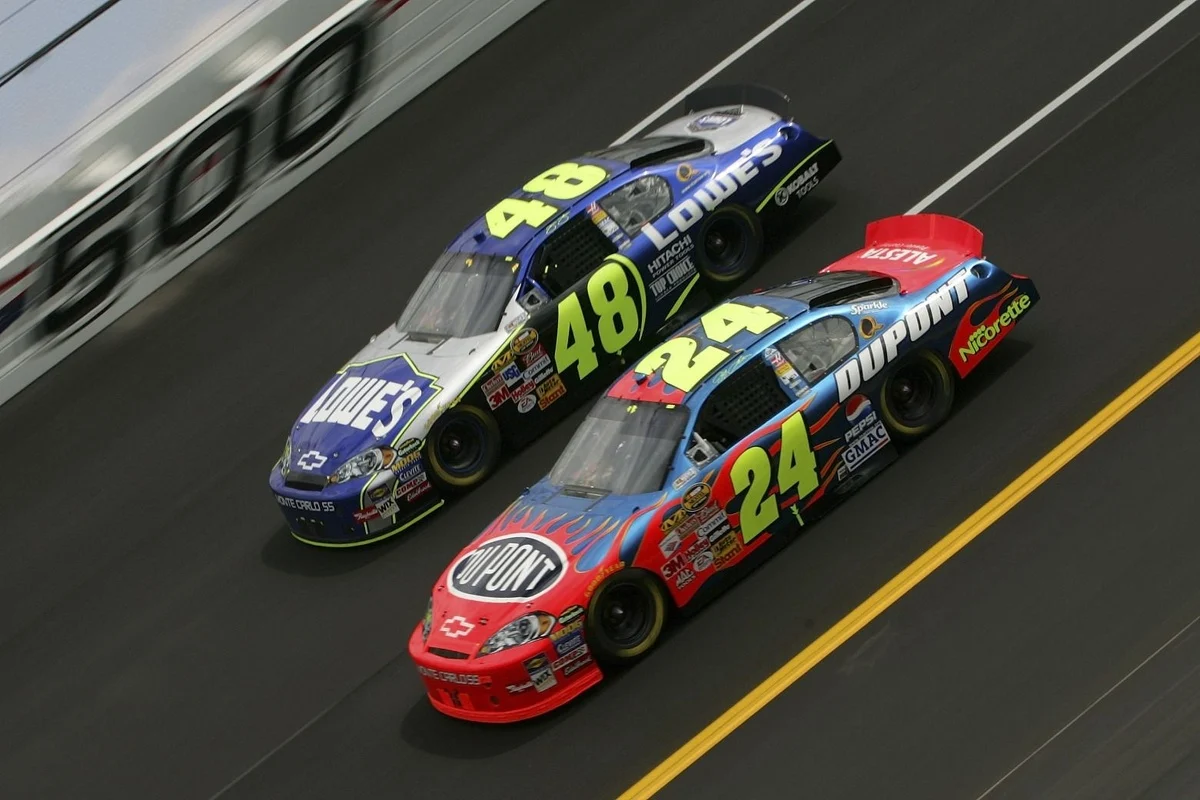
CHARLOTTE, N.C. — In the high-stakes, fast-paced world of NASCAR, where aesthetics often carry as much historical weight as sheet metal and horsepower, few visual motifs are as instantly recognizable as Hendrick Motorsports’ neon yellow car numbers. For decades, those vibrant digits served as the typographic heartbeat of stock car racing’s most dominant dynasty, gracing the doors of Chevrolets that swept championships, shattered records, and etched themselves into American racing lore.
Now, after years of a quiet, piecemeal phasing out, the organization that wrote the modern record books is pressing rewind.
Hendrick Motorsports has officially announced that beginning in the 2027 racing season, its entire stable of cars will return to the iconic neon yellow numbering scheme. The sweeping aesthetic overhaul will not be limited to the organization’s flagship NASCAR Cup Series entries—Kyle Larson’s No. 5, Chase Elliott’s No. 9, William Byron’s No. 24, and the No. 48 Chevrolet—but will also extend to the developmental ranks, prominently featuring on Corey Day’s entry in the NASCAR O’Reilly Auto Parts Series.
For longtime fans of the sport, the announcement acts as a potent wave of nostalgia, bridging the golden eras of Jeff Gordon and Jimmie Johnson with the current generation of championship contenders and future superstars.
Main Facts: The Return of a Championship Aesthetic
The decision to standardize neon yellow car numbers across the entire Hendrick Motorsports fleet represents a major branding unification for the 15-time Cup Series champions.
- The Scope: Every primary entry bearing the Hendrick banner—spanning both the elite Cup Series and the O’Reilly Auto Parts Series—will adopt the neon yellow treatment ahead of the 2027 campaign.
- The Lineup Affected: The change impacts Cup stars Kyle Larson (No. 5), Chase Elliott (No. 9), William Byron (No. 24), and the No. 48 entry (currently driven by Alex Bowman, with rising star Connor Zilisch slated to take over in 2028), alongside Corey Day’s No. 17 O’Reilly Auto Parts Series car.
- Historical Significance: Neon yellow numbers are deeply tied to the organization’s most prosperous epochs, having adorned the cars driven during an overwhelming majority of Hendrick’s 323 Cup Series victories and all 15 of its driver’s championships.
- Recent Precedent: In recent years, the color had been largely relegated to the sidelines, kept alive primarily by William Byron’s occasional use on the No. 24—including his high-profile Daytona 500 triumphs in 2024 and 2025.
Chronology: The Legacy and Evolution of the Neon Yellow Number
To understand the weight of the 2027 rebranding, one must trace the historical lineage of Hendrick Motorsports through the prism of its visual identity. Founded in 1984 by charismatic team owner Rick Hendrick, the organization spent its formative years establishing its footing before hitting a stratospheric level of competitiveness in the 1990s and 2000s.
The Gordon Era and the Birth of an Icon (1990s)
When a young, flamboyant Californian named Jeff Gordon climbed behind the wheel of Rick Hendrick’s newly minted No. 24 Chevrolet in 1993, he brought a dynamic energy to a sport that had long leaned traditional. Gordon’s Rainbow Warriors captured the imagination of a rapidly expanding national fanbase.

Central to that visual presentation was the neon yellow No. 24 stamped on the side of the car. Gordon drove that bright yellow number to four Cup Series titles (1995, 1997, 1998, and 2001), establishing a psychological footprint on the track. Competitors quickly learned that if they saw those vibrant yellow numbers filling their rearview mirrors, a pass was imminent.
The Jimmie Johnson Dynasty (2000s–2010s)
As Gordon’s career evolved, Hendrick Motorsports found its next generational anchor in Jimmie Johnson. Partnering with crew chief Chad Knaus, Johnson embarked on what remains the most statistically dominant run in modern NASCAR history.
Between 2006 and 2010, Johnson captured an unprecedented five consecutive Cup Series championships. Throughout this historic five-peat, Johnson’s Chevrolet prominently featured a neon yellow No. 48. The color became synonymous with championship excellence, appearing under the bright lights of Homestead-Miami Speedway year after year as confetti rained down on the Hendrick camp.
Beyond Gordon and Johnson, the neon yellow digits bore witness to countless milestones. It was the color on Terry Labonte’s car when he secured his final career Cup Series victory. It was the shade visible on the door when a fresh-faced Kyle Busch punched his ticket to victory lane for the very first time in the Cup Series. Chase Elliott also flew the flag proudly when he powered to his maiden Cup crown in 2020.
The Fading Out and Modern Resurgence (2020s)
Despite its storied history, the neon yellow numbers began to disappear in the latter half of the 2010s and early 2020s. As modern sponsorship models evolved, corporate partners frequently requested custom font styles, unique colorways, and integrated branding that clashed with the traditional bright yellow aesthetic.
The color was gradually phased out across most of the fleet, reduced to a legacy accent used sparingly. The primary torchbearer in recent years has been William Byron. Byron kept the tradition alive on select weekends with his No. 24—most notably steering the neon-numbered machine to victory in the prestigious Daytona 500 in both 2024 and 2025.
Now, rather than keeping the color as an occasional throwback or exclusive branding element for one car, Hendrick Motorsports has opted for a full-scale organizational revival.

Supporting Data: The Statistics of Supremacy
Hendrick Motorsports is not merely a successful racing team; it is the statistical benchmark against which all other modern NASCAR operations are measured. The return of the neon yellow numbers serves as a visual bridge to a record book that the organization virtually rewrote over the last four decades.
- All-Time Wins: Hendrick Motorsports has secured 323 Cup Series victories, the most in NASCAR history. The team’s most recent trip to victory lane came just last weekend at Gateway.
- Championship Dominance: The organization holds 15 Cup Series Championships, out-pacing all historical rivals.
- Jewel Event Mastery: Hendrick’s dominance is particularly pronounced in NASCAR’s crown jewel races:
- 10 Daytona 500 wins
- 12 Coca-Cola 600 wins
- 11 Brickyard 400 wins
- 12 Southern 500 wins
By uniting all of its current and future entries under the neon yellow banner for 2027, the organization is effectively wrapping its peerless statistical legacy in its most historically significant visual armor.
Official Responses and Strategic Horizon
While the visual shift is fundamentally rooted in heritage, it also coincides with a critical transitional period for the organization’s driver lineup. Hendrick Motorsports is actively orchestrating the handover from its current veteran core to its next generation of talent.
The announcement of the 2027 numbering standardization follows hot on the heels of major personnel news within the Hendrick camp. Earlier this season, the organization confirmed that Alex Bowman will retire from full-time NASCAR Cup Series competition following the conclusion of the 2027 season.
To fill the massive shoes left by Bowman’s eventual departure, Hendrick Motorsports has already locked down one of the most coveted prospects in motorsport: rising phenom Connor Zilisch. Zilisch has signed a multi-year deal with the organization, officially slated to take over the iconic No. 48 Chevrolet beginning in the 2028 season.
Industry insiders note that integrating the neon yellow numbers across the board in 2027 gives the organization a cohesive visual identity precisely as it navigates this foundational changing of the guard. When Zilisch steps into the No. 48 for his rookie Cup campaign in 2028, he will not only be inheriting one of the most successful car numbers in racing history, but he will also be sporting the exact shade of yellow that defined the team’s golden years.
Implications: What the Rebrand Means for Fans and the Paddock
The decision to bring back neon yellow numbers is already generating substantial buzz throughout the NASCAR garage and across fan communities on social media. In an era where sports marketing often leans heavily into sleek, minimalist, and corporate aesthetics, Hendrick’s move is a deliberate nod to visceral fan connection.

1. Enhanced Brand Recognition on Track
For spotters, media members, and fans in the grandstands, the return of uniform numbering accents aids immensely in on-track legibility. When cars are hurtling through turns at 190 miles per hour, high-contrast numbering like neon yellow provides instant visual separation—a psychological advantage that Hendrick teams exploited brilliantly during their championship runs of the 1990s and 2000s.
2. Merchandise and Collector Appeal
From a commercial standpoint, the standardized yellow numbers are expected to trigger a massive wave of merchandise sales. Die-cast collectors, apparel buyers, and loyalists of drivers like Larson, Elliott, Byron, and the incoming Zilisch will see a unified product line that ties directly into the historical aesthetics of Gordon and Johnson die-casts of yesteryear.
3. A Psychological Statement
Beyond branding and economics, the move is a subtle flex of historical confidence. By embracing the colors of its most dominant eras, Hendrick Motorsports is issuing a statement to the rest of the Cup Series garage: the glory days of the past are not merely memories to be looked back upon—they are the standard to which the current roster is held.
As the 2027 season approaches, the neon yellow numbers will once again become a permanent fixture of the NASCAR landscape. For the engineers, mechanics, and drivers at the Hendrick Motorsports campus in Concord, North Carolina, it is a reminder of who they are, where they came from, and the standard of excellence they are expected to uphold every single Sunday.

 Dwi Wanna
 Sagoh
Sagoh
 Nana Wu
 Lina Hope
 Jia Lissa
 Reynand Wu
 Basiran