
 Reynand Wu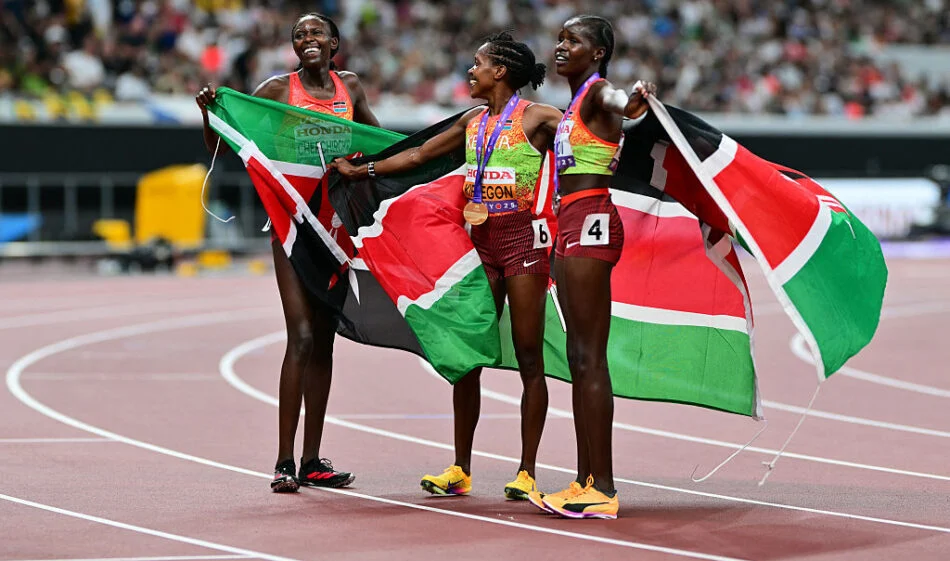
NAIROBI, KENYA — In a landmark decision that reshapes the global geography of track and field, World Athletics has confirmed that Nairobi will host the 2029 World Athletics Championships. The announcement, made at the 242nd World Athletics Council meeting in Budapest, marks a historic first for the African continent, which has never before staged the sport’s premier global showcase.
Alongside the historic assignment for Kenya, the Council awarded the 2031 World Athletics Championships to Munich, Germany, marking a triumphant return of the flagship event to the nation for the first time since Berlin hosted the unforgettable 2009 edition.
While the decision has been universally hailed as a long-overdue triumph for African athletics, it carries profound implications. It deals a bitter blow to London’s heavily financed, high-profile bid, while simultaneously thrusting Kenya into the global spotlight amid lingering questions regarding institutional governance, anti-doping compliance, and the unique physiological challenges of competing at high altitude.
Main Facts
The 242nd World Athletics Council meeting delivered a transformative blueprint for the next decade of elite track and field. The core outcomes of the bidding process are structured as follows:
- The 2029 Host: Nairobi, Kenya, securing the event in a competitive bidding process that also featured proposals from Rome and Munich.
- The 2031 Host: Munich, Germany, utilizing the historic Olympic Stadium to bring the championships back to German soil.
- The Venue: Events in Nairobi will center on the 48,000-capacity Kasarani Stadium, which is undergoing substantial reconstruction and modernization as part of Kenya’s infrastructure preparations for the 2027 Africa Cup of Nations.
- The Calendar Context: The decision fills out the future roadmap of World Athletics, following the upcoming championships in Beijing, China, scheduled for September 10–19, 2027. Both the 2029 and 2031 editions are slated for September, reinforcing the governing body’s strategy to position the world championships as the grand finale of the global outdoor season.
- The Defeated Bids: London’s ambitious bid—backed by up to £45 million in combined public funding from the Mayor of London and the UK Government—missed out on the 2029 hosting rights despite leveraging the proven capabilities of the London Stadium and the collaborative organizing force of Athletic Ventures.
Chronology: A Long Road to Africa
Kenya’s journey to securing the 2029 World Athletics Championships has been defined by incremental progress, near-misses, and a proven institutional capability to host major international competitions.
The Foundation of Experience
While Nairobi has never hosted the senior outdoor World Championships, the nation possesses a rich pedigree in staging international athletics events.
- 2007: Kenya hosted the World Cross Country Championships in Mombasa, marking the country’s debut as a global championship host.
- 2017: The capital city successfully staged the World Under-18 Championships at Kasarani Stadium, drawing massive, enthusiastic crowds that shocked international observers.
- 2021: Nairobi followed up with the successful hosting of the World Under-20 Championships, further proving its operational capacity despite logistical hurdles and pandemic-era restrictions.
- 2020–Present: The Kip Keino Classic, established in 2020 as part of the elite World Athletics Continental Tour Gold circuit, has consistently attracted world-class fields and delivered smooth operational execution.
The Near-Miss for 2025
Nairobi’s historic success in 2029 follows a narrow disappointment in the bidding cycle for the 2025 championships. During that evaluation, World Athletics ultimately awarded the event to Tokyo. Officials at the time cited concerns regarding the structural readiness, timeline, and modernization schedule of Nairobi’s primary sports infrastructure.
Taking that feedback constructively, Kenyan sports authorities, alongside governmental partners, accelerated structural overhaul plans. The ongoing redevelopment of Kasarani Stadium—accelerated by the nation’s co-hosting duties for the 2027 Africa Cup of Nations—satisfied World Athletics inspectors that the venue would be fully modernized well in advance of September 2029.
Supporting Data: Passion, Prowess, and Economics
The decision to award the championships to Nairobi was underpinned by compelling metrics demonstrating both unmatched sporting excellence and deep-rooted public engagement.
Sporting Dominance
Kenya remains an undisputed powerhouse in middle- and long-distance running. At the most recent World Athletics Championships in Tokyo, Kenya finished second overall on the global medal table, capturing seven gold medals and 11 total podium finishes.
Over the decades, Kenyan athletes have fundamentally shaped the sport. Icons such as Kip Keino, Paul Tergat, Tegla Loroupe, David Rudisha, Eliud Kipchoge, Vivian Cheruiyot, Hellen Obiri, and Faith Kipyegon have set world records, won multiple Olympic and world titles, and elevated global standards of excellence.
Fan Engagement and Market Research
World Athletics internal fan research provided a decisive statistical argument for the Kenyan bid. Data revealed that 68% of the Kenyan population rates their personal interest in athletics as "high." This dwarfs the global average of 39%, illustrating that Nairobi 2029 will be welcomed by one of the most passionate, knowledgeable, and engaged domestic audiences in the history of the sport.
The Economic Scale of the Rejected London Bid
Conversely, the data surrounding London’s defeated bid highlights the sheer scale of investment that was left on the table. Spearheaded by Athletic Ventures—a joint venture uniting UK Athletics, London Marathon Events, and the Great Run Company—the British bid projected a staggering £400 million in economic benefit for the UK economy. Backed by £45 million in public funds, the bid aimed to recreate the magic of the sold-out 2017 World Championships at the London Stadium, but ultimately fell short as the Council prioritized the historical imperative of taking the event to Africa.
Official Responses
The announcement elicited a wide range of emotions from global sports leaders, ranging from unbridled elation in East Africa to profound disappointment in the United Kingdom.
World Athletics President Sebastian Coe
Announcing the decision, World Athletics President Sebastian Coe emphasized the historical weight of the moment while acknowledging the fierce competition among the candidate cities.
"We were fortunate to have four outstanding bids for 2029 and 2031, and this was not an easy decision for the Council," Coe stated. "Nairobi presented a compelling and emotional bid, and taking the World Athletics Championships to Africa for the first time will be historic.
It was important that the World Athletics Championships should come to Africa when we had the right host, the right bid, and the right circumstances. Nairobi has demonstrated emphatically that this is their moment."
Praising Kenya’s cultural integration with the sport, Coe added: "Kenya is one of the great athletics nations. The sport is woven into the fabric of the country, and athletes such as Faith Kipyegon, Eliud Kipchoge, and Kip Keino have shaped the history of our sport."
UK Athletics and Athletic Ventures
Jack Buckner, CEO of UK Athletics and co-founder of Athletic Ventures, issued a statement reflecting the bitterness of the defeat while maintaining an outward-looking, cooperative stance:
"We are deeply disappointed that the 2029 World Athletics Championships will not be held in London. We believed we had an outstanding bid which would genuinely take the sport to new levels.
We would like to thank the Government, the Department for Digital, Culture, Media and Sport, the Mayor of London, and UK Sport for their fantastic support… The UK is an incredible host for major sports events, and the British public loves athletics. Although today’s announcement hasn’t gone our way, we will review and regroup. Our congratulations go to Nairobi, and we wish the organising committee all the best for a great event in 2029."
Implications and Challenges Ahead
While the historic awarding of the 2029 championships to Nairobi has been celebrated as a watershed moment for geographical equity in global sports, significant challenges lie ahead for the host nation.
1. The Doping Crisis and Institutional Integrity
The most pressing shadow over Kenyan athletics remains its systemic battle against doping. Despite tangible reforms and enhanced testing protocols, Kenya continues to grapple with compliance issues. More than 100 Kenyan athletes currently serve suspensions on the Athletics Integrity Unit’s (AIU) global list of ineligible persons.
Furthermore, World Athletics is conducting an ongoing investigation into alleged age-falsification practices involving more than 30 Kenyan competitors. Additionally, external pressures—including recent threats by the European Union to blacklist Kenya over broader money-laundering and financial governance concerns—raise questions regarding administrative transparency and the robust oversight required to manage a global sporting mega-event.
2. The Altitude Factor in Endurance Racing
From a purely athletic perspective, Nairobi presents a unique physiological variable. Kasarani Stadium sits at an elevation of 1,612 meters (5,289 feet) above sea level.
While this altitude is lower than specialized European training camps like Font-Romeu in the French Pyrenees (approx. 1,850m), it remains high enough to profoundly impact aerobic capacity. Distance runners from low-altitude nations will face brutal physiological demands, potentially altering race tactics, slowing times in endurance events, and favoring athletes accustomed to competing in thin air.
3. Munich 2031 and the European Circuit
For Germany, securing the 2031 championships represents a major organizational victory. Utilizing Munich’s iconic Olympic Stadium—which drew a rapturous crowd of 267,000 spectators across the athletics program during the 2022 European Championships—ensures that the event will return to a proven, passionate European market with world-class infrastructure already in place.
Conclusion
The decision to award the 2029 World Athletics Championships to Nairobi corrects a long-standing historical omission, bringing track and field’s flagship event to the continent that has produced many of its greatest champions. As Kenya begins the multi-year countdown to September 2029, the nation faces a monumental test: to prove that it can match its unrivaled athletic heritage with flawless organizational execution, institutional integrity, and financial transparency on the global stage.


 Neng Nana
 Pevita Pearce
 Dwi Wanna
 Nana Wu
 Lina Hope
 Jia Lissa

 Basiran