
 rifanmuazin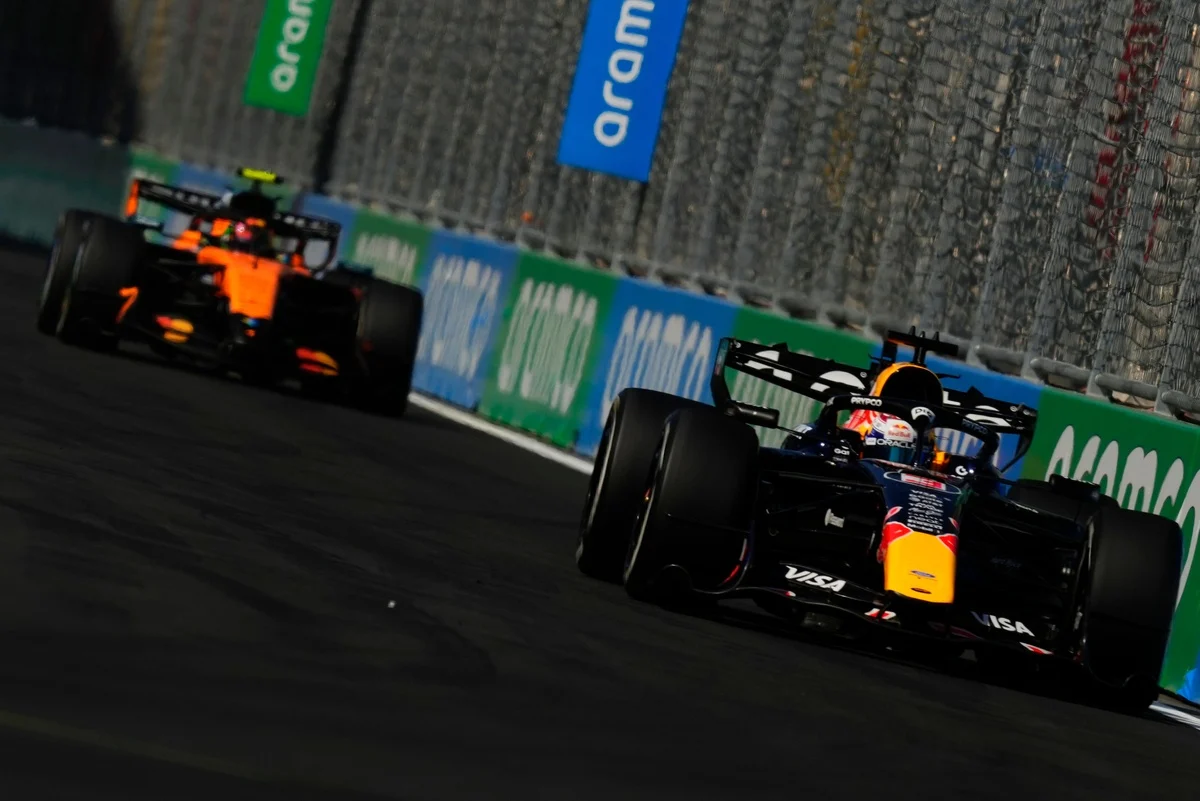
MADRID — In the high-stakes, micromillimeter world of modern Formula 1, races are rarely decided by a single variable. More often, they are unraveled by a delicate, compounding tapestry of operational errors, meteorological quirks, strategic misfortune, and architectural limitations.
For McLaren team principal Andrea Stella, the post-mortem of the 2026 Spanish Grand Prix at Madrid’s brand-new street circuit—affectionately and colloquially dubbed the "Madring"—was a study in frustration. Lando Norris, who dominated the early narrative of the weekend by securing a sensational pole position, ultimately saw his victory aspirations neutralized by a toxic cocktail of ill-timed neutralizations and a layout that critics are already condemning as a procession masquerading as a Grand Prix track.
Yet, in a startling defense of his team’s operational execution, Stella insisted that even a flawless race from the McLaren pit wall would not have changed the ultimate outcome. According to the Italian engineer, the circuit’s layout rendered overtaking practically impossible, robbing Norris of a chance to convert his undeniable race-pace advantage into a memorable triumph.
Main Facts: The Anatomy of a Missed Opportunity
The headlines coming out of Madrid will undoubtedly focus on the cruel hand dealt to Lando Norris by the racing gods, but the root causes of his defeat stretch far beyond a simple stroke of bad luck.
- The Pole Position Advantage: Norris converted his Saturday pace into a commanding start, converting pole position into a six-second cushion over the chasing pack within the opening 12 laps of the Grand Prix.
- The VSC Trap: A Virtual Safety Car (VSC) intervention arrived at the absolute worst possible juncture for the race leader. Because Norris had built such a substantial gap over his pursuers, he was too far up the road to dive into the pit lane before the VSC delta speeds locked in his disadvantage.
- The Costly Delay: When Norris finally made his stop, a sluggish seven-second tyre change compounded his woes, dropping him 16 seconds behind Kimi Antonelli and second-placed Max Verstappen.
- The Chase Without Reward: Displaying blistering pace, Norris clawed back the 16-second deficit by Lap 48, slotting directly onto the gearbox of the leaders. However, he remained permanently stymied, unable to find a single window to make a legitimate passing maneuver.
- An Historic Drought of Action: Sunday’s race featured a meager 10 overtaking moves across the entire field—the lowest figure recorded in the 2026 Formula 1 season to date, dipping even lower than the notoriously tight confines of the Monaco Grand Prix (which registered 11).
Chronology: Step-by-Step Downfall at the Madring
To fully understand how a commanding Sunday afternoon transformed into a bitter exercise in frustration, one must trace the timeline of the 2026 Spanish Grand Prix lap by lap.
Phase 1: The Early Flight (Laps 1–12)
When the red lights went out, Lando Norris executed a textbook launch from pole position. Unencumbered by dirty air, the McLaren MCL40 immediately began to stretch its legs. By the end of Lap 12, Norris had carved out an imposing six-second lead over the rest of the field. His car looked dialed-in, his tyres were managing their degradation profile cleanly, and the race appeared to be heading toward a routine, controlled victory for the Woking-based outfit.
Phase 2: The Virtual Safety Car Intervention (Lap 13)
The complexion of the race altered instantaneously with the deployment of a Virtual Safety Car. In modern F1 strategy, a VSC severely compresses the time lost during a normal pit stop relative to cars driving at reduced speeds on the circuit.
Because Norris had successfully engineered a six-second lead, he was trapped in a strategic paradox: he was too far ahead to react instantly to the pit lane entry before the VSC delta caught him out, forcing him to complete an entire high-speed lap at restricted pace while his rivals behind closed the gap, and subsequently pitting under less-than-optimal conditions.
Phase 3: The Operational Hiccup and the Chase (Laps 14–47)
To make matters worse for the championship contender, McLaren’s pit crew suffered a lingering, costly error during the tyre change. A sluggish seven-second stationary time bled precious seconds, depositing Norris back out onto the asphalt down in traffic, roughly 16 seconds adrift of race leader Kimi Antonelli and Max Verstappen.
What followed was a masterclass in driving efficiency from the young Briton. Unlocking an ominous pace advantage, Norris began eating into Antonelli and Verstappen’s advantage at a rate of several tenths per lap, setting up what the grandstands hoped would be a blockbuster final-third showdown.

Phase 4: The Brick Wall (Laps 48–End)
By Lap 48, the recovery mission was complete. Norris had bridged the 16-second chasm, planting his McLaren squarely within the DRS wake of the leading duopoly.
Yet, this is where the narrative ground to a sudden, grinding halt. Despite having a car visibly carrying superior traction and straight-line speed delta, Norris spent the remainder of the afternoon staring at the rear wing of his rivals. Lap after lap, corner after corner, the opportunity never materialized. The race finished in status quo, leaving Norris to cross the line frustrated and wondering what might have been.
Supporting Data: By the Numbers
A deep dive into the telemetry and post-race data sheets illuminates the underlying structural problems that plagued the inaugural Madrid Grand Prix weekend.
| Metric | Spanish GP (Madrid) | Monaco GP (Comparison) | Season Average (2026) |
|---|---|---|---|
| Total Overtakes | 10 | 11 | ~34 per race |
| Backmarker Passes | 4 (Bottas/Stroll) | 3 | Varies |
| Norris Initial Gap | 6.0 seconds (Lap 12) | N/A | N/A |
| VSC Pit Stop Delta | ~7 seconds stationary | N/A | ~2.5–3.0 seconds |
| Deficit Overcome | 16 seconds (Closed by Lap 48) | N/A | N/A |
As the data shows, the Madring managed the unprecedented feat of offering even fewer overtaking opportunities than the streets of the Principality—a circuit universally acknowledged as the hardest track on the calendar for wheel-to-wheel combat. Out of the 10 total passes recorded on Sunday, nearly half (four) involved backmarker shuffles featuring Valtteri Bottas and Lance Stroll tumbling down the order. For the cars fighting at the sharp end of the points-paying positions, passing was nothing short of a statistical anomaly.
Official Responses: Inside the McLaren Post-Race Debrief
Speaking to the media after the chequered flag, Andrea Stella was remarkably candid about his team’s responsibilities, while simultaneously shifting a significant portion of the blame toward the circuit architecture itself.
Addressing the team’s ongoing operational gremlins—specifically the botched seven-second stationary stop—Stella did not attempt to sugarcoat the situation.
"Definitely, we take note that there’s a lot of work to do in our operation," Stella admitted. "And it’s not the first time that we have a slow stop."
However, when pressed on whether that specific mistake cost Norris the victory, Stella offered a surprising counter-argument rooted in race-pace tracking and track position dynamics.
"Because probably Lando would have [come out] anyhow behind [George] Russell," Stella pointed out. "And even if not, it would have not been possible to overtake Verstappen and Antonelli. So, definitely… in terms of the race itself, [the slow stop] didn’t make a difference."
Turning his attention to the circuit layout, Stella expressed genuine dismay at the physical limitations of the Madring, specifically zeroing in on Turn 5—the circuit’s primary heavy-braking zone.

"When it comes to overtaking, it’s a shame that it’s so difficult," Stella lamented. "It just requires a large, large lap time difference to be able to overtake. I think what F1 will have to review is whether there are some modifications required at this circuit in order to introduce an overtaking possibility."
Highlighting the structural geometry of the track, Stella explained precisely why his driver’s superior speed went unrewarded:
"Because at the moment, the fact is that the straight may be long enough, but there’s absolutely no way that two cars can enter [Turn] 5 together. So it’s basically impossible [to] attempt an overtaking maneuver — which is a bit of a shame, because I think if overtaking was possible today, we would have [had] Lando regaining the lead, because the pace advantage was significant."
Implications: What the Madring Means for the Future of F1 Architecture
The architectural shortcomings exposed during the Spanish Grand Prix carry profound implications for Formula 1’s regulatory bodies, circuit designers, and team strategists alike.
1. Circuit Design and the "New Breed" of Street Tracks
Formula 1’s commercial push into metropolitan city centers has yielded massive financial dividends and vibrant fan engagement. However, venues like the Madring highlight the painful engineering trade-offs required to carve a Grand Prix circuit out of existing urban infrastructure. If Turn 5—designed as a heavy braking zone following a sweeping curve—is fundamentally too narrow to permit side-by-side racing, the FIA and circuit promoters will face mounting pressure to commission layout reconfigurations before future iterations of the event. Modern F1 cars, with their expansive aerodynamic footprints and ground-effect sensitivities, require wide, multi-line entry geometries to facilitate passing. Without them, races risk devolving into high-speed commuter tailbacks.
2. Operational Precision in the VSC Era
While Stella defended his pit crew by arguing that track characteristics superseded their mistakes, the reality for championship-contending teams is that margins are vanishingly thin. A seven-second stationary stop is an operational failure in an era where teams spend millions optimizing sub-two-second services. McLaren’s recurrent lapses in the pit lane remain an Achilles’ heel that could ultimately prove decisive in a tightly contested World Constructors’ and Drivers’ Championship battle. When luck deserts a team—such as being caught on the wrong side of a VSC delta—the pit wall and crew must operate with clockwork perfection to salvage what they can. In Madrid, McLaren failed that internal benchmark.
3. The Psychological Toll on Title Contenders
For Lando Norris, walking away from a weekend where he displayed race-winning speed with only a handful of points must sting. Modern Formula 1 championships are won not just by maximizing dominant weekends, but by minimizing the damage on days when operational volatility and external factors conspire against you. Knowing that he had the pace to sweep past Kimi Antonelli and Max Verstappen, yet being utterly powerless to deploy that speed due to a lack of physical road space, introduces a psychological toll.
As the Formula 1 circus packs its equipment and departs Madrid, the paddock’s collective gaze turns toward the remaining rounds of the 2026 season. Yet, the conversations in the motorhomes will linger long after the transporters leave: Formula 1 wanted a spectacular show in the heart of Spain, but Sunday afternoon served as a stark reminder that concrete canyons, no matter how glamorous, cannot force a race to happen where the geometry simply refuses to allow it.

 Lina Hope
 Basiran
 Dwi Wanna
 Nana Wu
 Jia Lissa
 Reynand Wu