
 Siti Muinah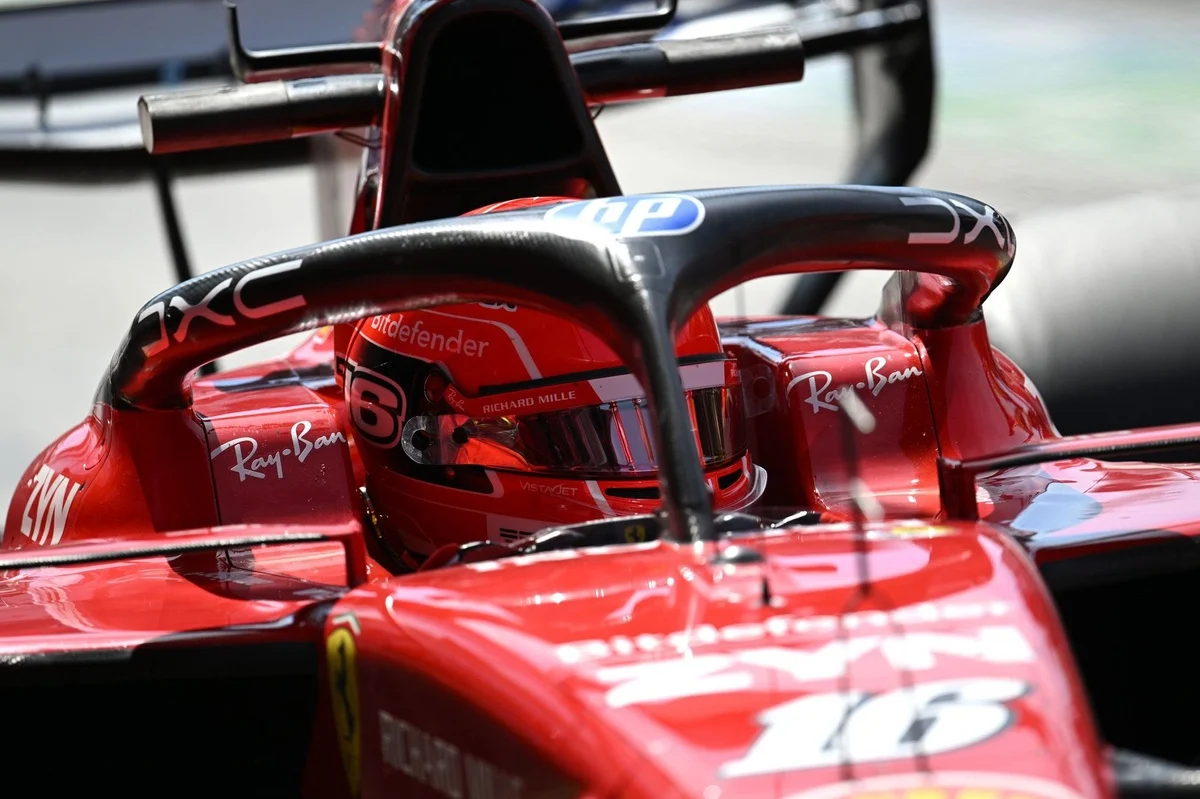
MADRID — In the high-stakes world of Formula 1, waving the white flag before the final checkered flag is an alien concept. Yet, as the calendar marches deeper into the season and the championship mathematical equations grow increasingly bleak for Scuderia Ferrari, team principal Frédéric Vasseur remains steadfast in his refusal to stall.
Despite a bruising Spanish Grand Prix that dealt yet another heavy blow to their championship aspirations—highlighted by a dramatic retirement for Lewis Hamilton and a subdued fourth-place finish for Charles Leclerc—Vasseur has confirmed that the Scuderia will maintain an aggressive development trajectory for the SF-26.
Far from shifting all internal design and engineering resources toward the horizon of upcoming regulatory cycles, Ferrari is doubling down. For Vasseur, the remainder of the season is not a write-off; it is a vital, ongoing laboratory where every upgrade, adjustment, and data point secured today serves as building blocks for tomorrow’s dominance.
Main Facts: The Anatomy of Ferrari’s Current Crisis
The numbers underlying Ferrari’s championship challenge paint a sobering picture for the Tifosi. Following the Spanish Grand Prix, the team finds itself staring up at a daunting deficit.
- The Drivers’ Standings: Seven-time world champion Lewis Hamilton suffered a painful retirement at Madrid due to persistent brake issues. Consequently, Hamilton sits a massive 101 points behind championship leader Kimi Antonelli.
- The Constructors’ Battle: Charles Leclerc managed to salvage a fourth-place finish, but it wasn’t nearly enough to offset Mercedes’ dominant weekend. Ferrari now trails the Silver Arrows by 145 points in the constructors’ standings.
- Resource Constraints: Under the strict parameters of Formula 1’s cost cap and aerodynamic testing restrictions (ATR), development budgets are finite. Furthermore, on the power unit front, Ferrari has already exhausted its allocation of two permitted ADUO engine upgrades for the season.
- The Strategic Shift: Despite these financial and regulatory guardrails—and despite common industry practices that typically see teams pivot their full design output months in advance toward future regulations—Vasseur insists that Ferrari’s design offices in Maranello will keep churning out updates for the SF-26.
Chronology: From Summer Struggles to the Spanish Grand Prix
To understand Ferrari’s current operational posture, one must trace the trajectory of their recent race weekends, which have exposed a recurring tactical weakness.
The Summer Break Turning Point
Entering the second half of the season, Ferrari’s technical team identified an acute performance bottleneck: Saturday single-lap pace. Across the four qualifying sessions contested since the summer break—including the sprint shootout at Zandvoort—neither Hamilton nor Leclerc has managed to secure a front-row start.
The Zandvoort Weekend
At the Dutch Grand Prix, the team displayed encouraging underlying race pace, but a failure to maximize their final qualifying runs left them stranded further down the grid than their raw speed warranted.
The Spanish Grand Prix at Madrid
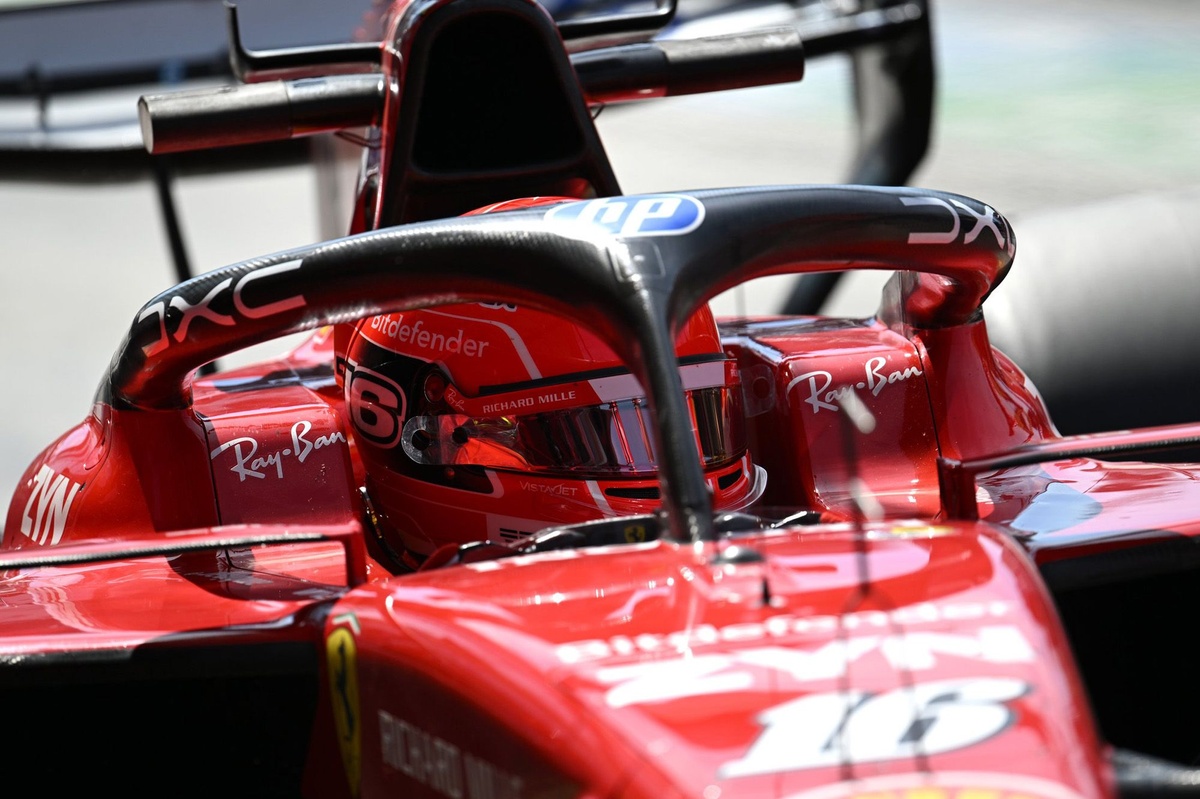
Arriving in Madrid with high hopes of bridging the gap to Mercedes and McLaren, Ferrari instead endured a weekend of frustration. Hamilton’s race was prematurely cut short by brake complications, compounding the psychological and points-scoring damage of his championship campaign. Meanwhile, Leclerc extracted the maximum from a compromised setup to cross the line fourth—solid points, but miles away from the podium’s top step where Antonelli continues to dictate terms.
Supporting Data: Qualifying Woes vs. Race Day Realities
A deep dive into the telemetry and timing sheets illuminates the exact nature of Ferrari’s aerodynamic and operational puzzle with the SF-26.
While race pace has frequently matched or even threatened the front-runners, Saturday afternoon has become the team’s Achilles’ heel:
- Average Qualifying Position: Hamilton and Leclerc boast a combined average qualifying position of fifth since the summer break.
- The Deficit to Pole: The SF-26 has faced an average deficit to pole position of just 0.198 seconds. Interestingly, this puts Ferrari ahead of Red Bull in pure single-lap speed metrics, while sitting fractionally behind the pacesetting packages fielded by McLaren and Mercedes.
- The Carry-Over Philosophy: When quizzed on the wisdom of developing a car so far behind in the standings, Vasseur pointed to the continuity of modern F1 regulations compared to previous years. "We are not in the situation of 12 months ago," Vasseur explained, referencing the massive regulatory overhaul that defined the previous technical cycle. "Today, what we will develop, we will be able to carry it over on next year’s project. We will continue to work, but perhaps on different things, different aspects. The development that we do now, 80% will be carried over."
Official Responses: Vasseur Refuses to Call "Game Over"
Faced with relentless media questioning regarding whether the championship battle against Kimi Antonelli and Mercedes is now "game over," Vasseur offered a masterclass in paddock diplomacy, flatly refusing to throw in the towel.
"Two or three weeks ago I told you that I will take race by race. I didn’t change," Vasseur insisted firmly.
Instead of brooding over the insurmountable points gap, the Frenchman prefers to isolate the team’s operational bottlenecks. He argues that the SF-26 has inherent speed; the challenge lies entirely in unlocking it seamlessly across all three phases of qualifying.
"This we need to improve, because I think when you have a look on the pace, during the race the pace is there," Vasseur admitted. "For sure we need to do a better job in quali.

"If you take Zandvoort and this one [Madrid], the profile of the event is a little bit the same for us. We had a decent pace in quali, but we didn’t put everything together on the last attempt, and race pace is OK.
"If I have to put the focus of the team on something today, it would be the evolution of the pace during the quali — more than the pace in quali, the evolution, the steps that you can do. We were there on run one Q3, the potential is there, we just have to adapt everything further on."
Implications: What This Means for Maranello’s Future
Vasseur’s uncompromising stance on continuing SF-26 development carries profound strategic implications for Scuderia Ferrari as they navigate the remainder of the season and look ahead.
1. Re-evaluating the Cost Cap Balance
By confirming an 80% carry-over rate for current developments into next year’s machinery, Vasseur has justified the expenditure under the watchful eye of the FIA financial regulations. Upgrading the SF-26 is no longer viewed as a sunk cost for a lost title fight; rather, it serves as an aggressive, early-stage research and development phase for the subsequent car. Maranello’s engineers are essentially testing next year’s aerodynamic concepts in real-world race conditions.
2. Mental Resilience and Team Culture
For drivers of the caliber of Lewis Hamilton and Charles Leclerc, morale can easily dip when championship mathematical probabilities plunge into single digits. By publicly committing resources to development, Vasseur sends an unmistakable message to his driver lineup and the factory back in Italy: the team hasn’t given up, and everyone is expected to push to the absolute limit until the final flag drops.
3. The Saturday Fix
Ultimately, Ferrari’s immediate future hinges on execution. The telemetry proves that the SF-26 possesses the raw ingredients to fight at the front. If Vasseur’s engineering and operational groups can cure their qualifying evolution bugs—ensuring that tyres, track position, and driver confidence align perfectly by Q3—Ferrari can transform their respectable points finishes into race victories, setting the ultimate foundation for a renewed championship assault in the cycles to come.

 Lina Hope
 Basiran
 Dwi Wanna
 Nana Wu
 Jia Lissa
 Reynand Wu