
 Asro
Asro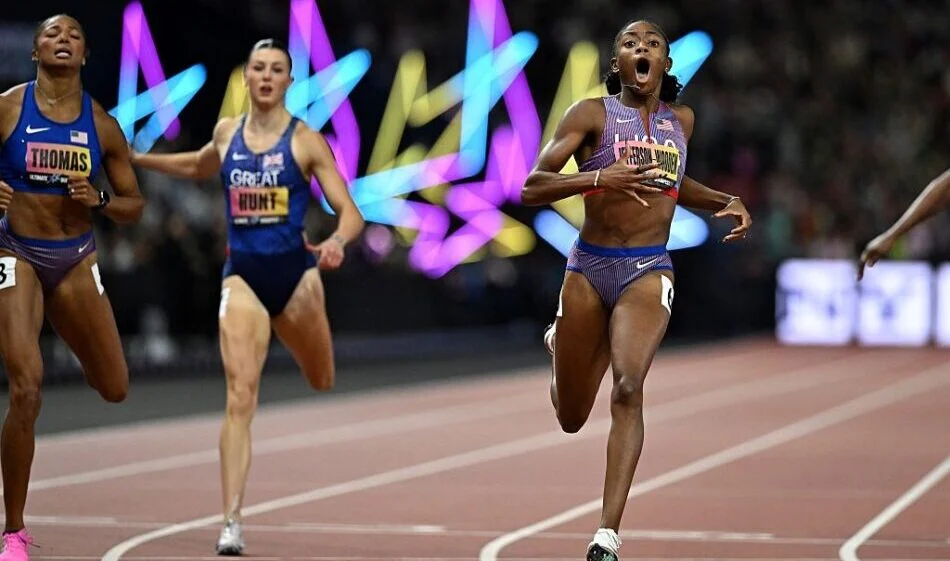
BUDAPEST — The Hungarian capital witnessed a closing night of track and field for the ages as the inaugural World Athletics Ultimate Championship drew to a breathless close. Beneath the imposing, soaring architecture of Budapest’s National Athletics Centre, a packed stadium roared through a masterclass of sprinting, high-flying theatrics, and tactical middle-distance disruption.
When the dust settled on a lucrative and high-stakes grand finale, American sprint royalty Melissa Jefferson-Wooden and Kenny Bednarek had etched their names into the record books by securing rare, commanding sprint doubles. They were joined in golden glory by seasoned veterans and surprise disruptors alike, as global athletics signaled a bold, high-octane evolution for the sport.
Main Facts: History Written on the Track and Field
The final session of the Ultimate Championship delivered precisely what its title promised: the absolute pinnacle of athletic performance, underscored by world-leading marks, substantial prize purses, and historic milestones.
The headline act belonged unquestionably to Melissa Jefferson-Wooden. Fresh off a blistering world-leading 10.62-second victory in the 100m just 24 hours prior, Jefferson-Wooden returned to the track to claim the 200m crown. Her weapon of choice? A breathtaking 21.47-second clocking into a slight headwind (-0.6m/s). The time not only secured the gold medal in the half-lap event but catapulted her to third on the world all-time list, cementing a sprint double that will be discussed for decades.
Matching her feat on the men’s side was compatriot Kenny Bednarek. The 27-year-old American, long familiar with the agony of global silver medals, put on a masterclass of pacing and power to capture the men’s 200m title in a world-leading 19.52 seconds. Bednarek’s victory capped an extraordinary weekend that netted him two titles and a cumulative $300,000 in prize money.
Field events were equally explosive. Italy’s charismatic high jumper Gianmarco Tamberi delivered on his pre-meet braggadocio, clearing a world-leading 2.37m with "showtime" literally penned on his forearm. Meanwhile, Sri Lanka’s Rumesh Pathirage tore up the record books with a massive 91.09m throw in the javelin—recording the first 90-meter throw ever achieved on Hungarian soil—while Ethiopia’s Likina Amebaw shattered tactical norms with a daring, long-range breakaway in the women’s 5000m.
Chronology of a Supercharged Final Night
The schedule for the final night was meticulously designed to build cascading waves of drama, moving from technical field brilliance to blistering relay and sprint showdowns.
Early Explosions: Sarr and Pathirage Set the Tone
The evening commenced with explosive authority in the field events. Senegalese Diamond League champion Saly Sarr effectively settled the women’s triple jump competition with her very first attempt. Her opening leap of 15.06m proved insurmountable, withstanding a late, third-round surge from Cuba’s Davisleydi Velazco (15.04m).
Almost simultaneously, the javelin runway played host to a historic breakthrough. Rumesh Pathirage, trailing early behind elite veterans like Germany’s Julian Weber and Grenada’s Anderson Peters, seized control in the third round with an 87.11m heave. He punctuated his victory and stunned the athletics world on his final attempt, launching the spear out to 91.09m—a milestone throw that rewrote Hungarian athletic history.
Tactical Shifts on the Oval: Amebaw’s Audacious Gamble
In an era of middle-distance racing defined by conservative pacing and dramatic, blanket finishes on the final lap, Ethiopia’s Likina Amebaw ripped up the tactical playbook. Passing the 3000m mark in 8:51.70, Amebaw opted against waiting for a kick. She launched a sustained, punishing long-range attack that steadily bled the energy from her rivals. By the bell lap, she held a commanding nine-second advantage, crossing the line in a Hungarian all-comers record of 14:30.36, ahead of Australia’s Jessica Hull (14:32.39).
The Sprint Showdowns: Jefferson-Wooden and Bednarek Shine
As the stadium lights intensified, the marquee sprint events took center stage. The much-anticipated women’s 200m showdown between Jefferson-Wooden and Olympic champion Gabby Thomas lived up to its billing. Thomas had won their semi-final in 21.88, but the world champion had saved her best for the ultimate test.
Blasting out of the blocks, Jefferson-Wooden wiped out Thomas’s stagger before the bend was even complete. Pumping her arms down the home straight, she pulled away decisively to clock 21.47. Thomas claimed silver in 21.77, with Kayla White rounding out an all-American podium in 21.93, and Britain’s Amy Hunt finishing fourth in a season’s best of 22.10.
Moments later, Kenny Bednarek mirrored the feat. Controlling the men’s 200m from the midway point, "Kung Fu Kenny" surged away from a stacked field featuring Olympic champion Letsile Tebogo (19.76) and Courtney Lindsey (19.79). Bednarek crossed in 19.52, leading an unprecedented race where the top five finishers all dipped under the 20-second barrier.
High-Flying Drama and Relay Finesse
Amidst the track events, Gianmarco Tamberi kept the crowd spellbound. The Italian entertainer cleared 2.33m and 2.35m on his first attempts, before securing the world lead at 2.37m on his second try, outdueling USA’s JuVaughn Harrison (2.30m).
The evening reached its crescendo with the mixed 4x400m relay. A stellar anchor leg by European U20 champion Charlotte Henrich—who split an astonishing 49.53 seconds—reeled in the Netherlands’ Myrte van der Schoot and secured a hard-fought silver for Great Britain in 3:09.40, trailing only a dominant American quartet anchored home by Aaliyah Butler in 3:08.32.
Supporting Data & Statistical Breakdown
The depth of competition in Budapest was highlighted by a cascade of world leads, personal bests, and historical markers:
- Women’s 200m:
- Melissa Jefferson-Wooden (USA) – 21.47 (-0.6) [WL, #3 All-Time]
- Gabby Thomas (USA) – 21.77
- Kayla White (USA) – 21.93
- Amy Hunt (GBR) – 22.10 (SB)
- Men’s 200m:
- Kenny Bednarek (USA) – 19.52 (-0.1) [WL]
- Letsile Tebogo (BOT) – 19.76 (SB)
- Courtney Lindsey (USA) – 19.79
(Note: Top five finishers all ran under 20 seconds).
- Women’s 5000m:
- Likina Amebaw (ETH) – 14:30.36 [Hungarian All-Comers Record]
- Jessica Hull (AUS) – 14:32.39 (PB)
- Fantaye Belayneh (ETH) – 14:32.62
- Men’s Javelin:
- Rumesh Pathirage (SRI) – 91.09m [First 90m throw in Hungary]
- Julian Weber (GER) – 85.89m
- Anderson Peters (GRN) – 86.18m
- Men’s High Jump:
- Gianmarco Tamberi (ITA) – 2.37m [WL]
- JuVaughn Harrison (USA) – 2.30m
- Erick Portillo (MEX) – 2.26m
- Mixed 4x400m Relay:
- USA (Aaliyah Butler et al.) – 3:08.32
- Great Britain & NI (Jefferies, John, Harries, Henrich) – 3:09.40
- Netherlands – 3:09.57
Official Responses and Athlete Reactions
The emotional resonance of the championships was reflected in the athletes’ post-race reflections, characterized by disbelief, gratitude, and fierce ambition.
A visibly stunned Melissa Jefferson-Wooden admitted she had not foreseen her historic time.
"I did not see 21.47 coming tonight!" she said. "I told myself that I need to be smart in the semi-final and save some energy. I never thought that people like Usain Bolt would watch my races and even have great reactions to my performances. He said to me earlier this week how proud he is of me for making it seem so easy… I was thinking I could run this fast in maybe two years, but not tonight. I really have no words."
Reflecting on her defeat, Gabby Thomas maintained an attitude of elite perspective:
"It was a very competitive race. To be disappointed with a second place on the global stage shows how far I have come."
Double-champion Kenny Bednarek, reflecting on his lucrative and successful campaign in Budapest, offered himself top marks:
"Oh my God, it has been a crazy few days. Performance-wise I give myself an A+ because of the couple of things I have been working on. This was the year where I focused on making progress, and coming home with two wins in Budapest is amazing."
For Gianmarco Tamberi, the performance was as much about theatrical connection with the fans as it was about physical execution:
"It was already predicted—showtime, you know! It’s not thanks to me, it’s thanks to the people who are there—my friends, my family, all the people here who support me. You were crazy, guys. You pushed me over my limits."
Sri Lankan javelin hero Rumesh Pathirage underscored the national significance of his historic throw:
"This was my one and only goal—to bring the trophy back to Sri Lanka. I faced a lot of challenges today, but I was still hoping to win and I’m proud I did it."
Implications for the Global Athletics Landscape
The conclusion of the Ultimate Championship in Budapest leaves an indelible footprint on the sport, carrying significant implications as athletes transition into the remainder of the global calendar, including upcoming fixtures like the World Athletics Running Championships in Copenhagen.
- A New Era of Short-Sprint Dominance: The sheer velocity displayed by Jefferson-Wooden (21.47) and Bednarek (19.52) signals that the benchmark times in the sprinting world are undergoing a rapid upward revision. Jefferson-Wooden’s ascension to third on the all-time list establishes her as the new standard-bearer in women’s sprinting, setting up tantalizing rivalries for future global championships.
- Tactical Evolution in Distance Running: Amebaw’s success in dismantling the field from long range may inspire a shift in how elite women approach tactical 5000m races. Relying on a final-lap kick is no longer the sole blueprint for victory when sustained, punishing tempos can crack even the world’s best distance runners.
- Commercial and Competitive Viability: The Ultimate Championship format—highlighted by heavy stakes, substantial financial incentives ($150,000 per win for athletes like Bednarek), and engaging presentation—has successfully proven that high-octane, end-of-season showdowns can extract peak physical performances from tired athletes while capturing global fan engagement.
As the athletes pack their bags and depart Budapest, the message from the track is unmistakable: the boundaries of human speed and endurance continue to stretch faster, higher, and further than ever before.

 Ammar Sabilarrohman
 Nila Kartika Wati
 Pevita Pearce
 Basiran
 rifanmuazin

 Nana
Nana