
 Siti Muinah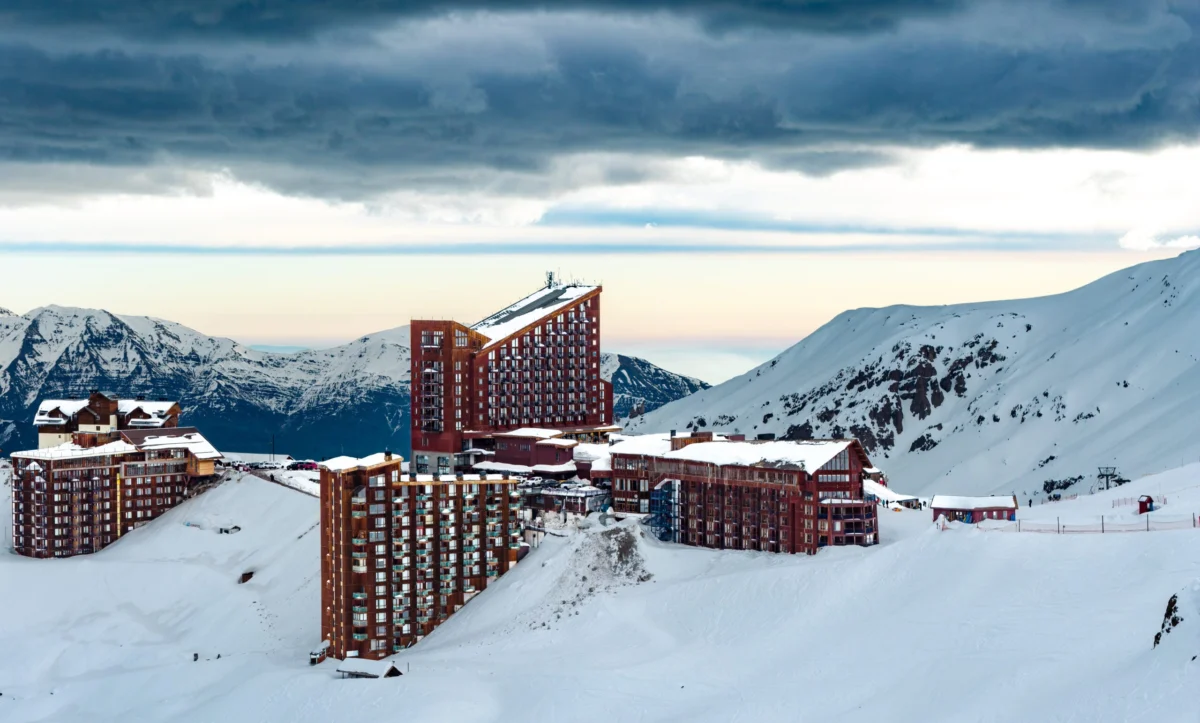
Santiago, Chile — Updated September 2026 — There I lay, sprawled across hard-packed snow, with an embarrassing amount of powder stuffed firmly up my jacket and my goggles knocked hopelessly askew. How, exactly, had I managed to wind up dangling miserably under the rope tow of a surface lift for the second time in a single morning? As a seasoned ski industry professional, the moment was flat-out humiliating. Toddlers—potentially still in diapers—glided past me with the effortless grace of Olympic veterans, barely sparing a glance at the crumpled heap of Gore-Tex and broken pride blocking the track.
To understand how I found myself taking an unscheduled, Jerry-style dirt nap beneath the high-altitude infrastructure of the Andes, we have to rewind to the meteorological anomaly making global headlines: South America’s historic, banner-year ski season.
Main Facts: A Once-in-a-Generation Snow Year in the Andes
South America is currently experiencing a historic, Utah-style, 900-inch-plus winter—a meteorological phenomenon that will undoubtedly be remembered by snow-sports enthusiasts for generations. While neighboring Chilean resorts like Portillo log staggering snow totals (with one regional resort recording a jaw-dropping 369 inches and extending its season into October), Valle Nevado has firmly stepped into the international spotlight.
Anchored by a brand-new luxury hotel debuting this season, Valle Nevado is capturing the attention of the global ski community. For travelers looking to escape the sweltering northern hemisphere summer, the timing couldn’t be more serendipitous.
Resort Snapshot: Valle Nevado by the Numbers
- Base Elevation: Just under 10,000 feet (approx. 3,000 meters)
- Summit Elevation: Just over 12,000 feet (approx. 3,650 meters)
- Vertical Drop: Approximately 2,600 feet
- Skiable Terrain: 2,200 acres across 44 official trails and 13 lifts (including a high-speed gondola, detachable chairs, and surface lifts)
- Terrain Breakdown: 14% beginner, 25% intermediate, 41% advanced, and 20% expert
- Pass Affiliations: Fully integrated into both the Ikon Pass and Mountain Collective
Unlike ski resorts in the United States, Chile utilizes a unique trail-rating system that includes a red triangle classification, functioning roughly equivalent to a "double-blue" intermediate run in North America. Tickets are routinely included in the baseline cost of on-site lodging, and passholders can stack benefits—offering up to 14 days on an Ikon Pass and four days on a Mountain Collective pass.
Chronology: From Humbling Beginnings to Golden Hour Magic
The Learning Curve
Two summers prior, I spent an unforgettable week in Portillo, an experience that set my personal gold standard for alpine majesty: cerulean blue skies, endless vistas, and cotton-candy golden hour sunsets. Naturally, my expectations for Valle Nevado were stratospheric. I just hadn’t anticipated that a significant portion of my opening day would be spent horizontal.
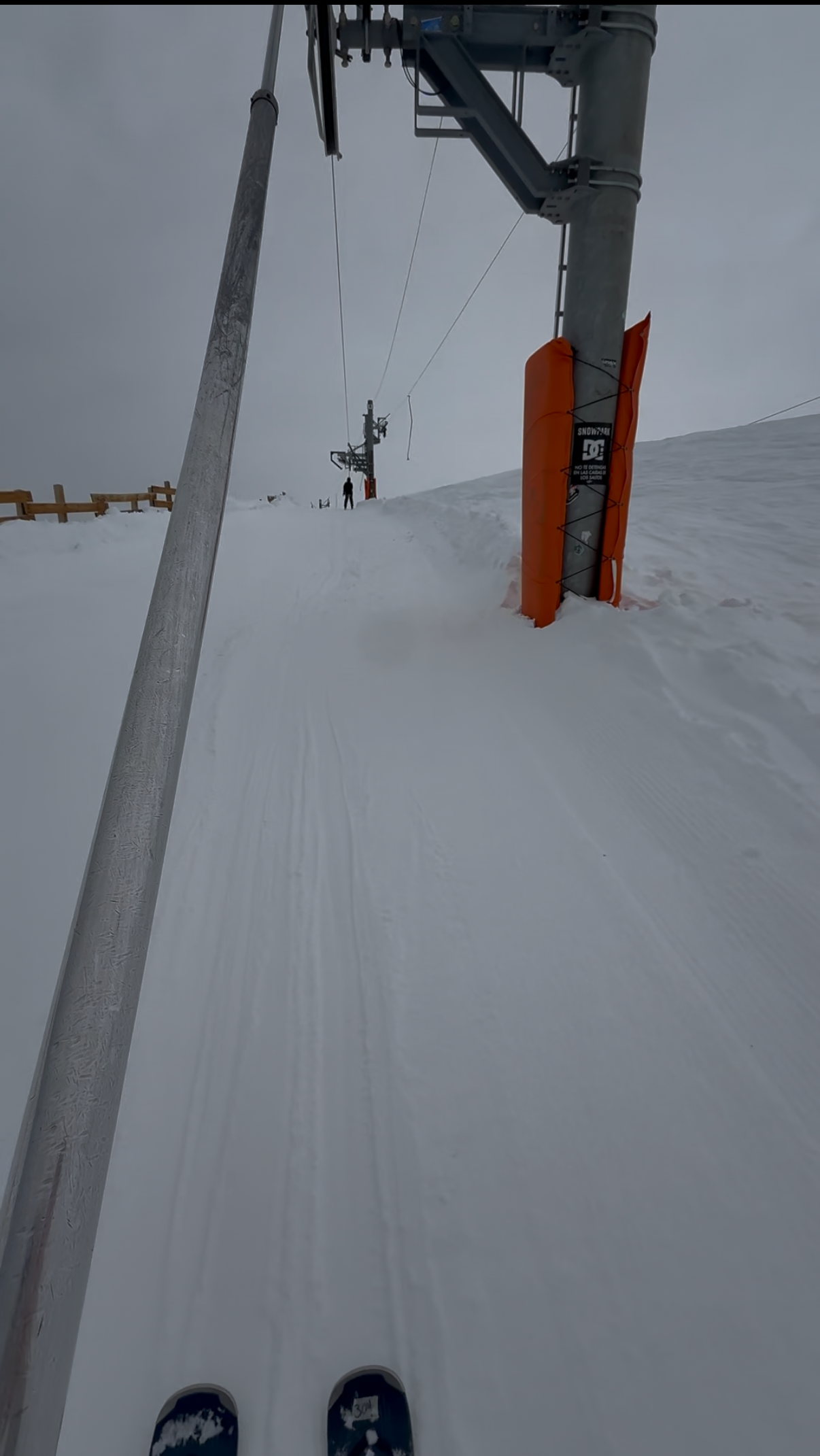
South American surface lifts come with a steep, aggressive learning curve. On my first few attempts, I fought the infrastructure. I held the T-bar or rope bar far too tightly, treating it like an adversarial bull ride. When the lift inevitably slowed or lurched along the steep track, I was bucked off rodeo-style.
After my second public tumble, a passing liftie kindly assured me with a smile that riding the lift was “easy.” Clearly not, I thought, dusting snow from my collar.
It wasn’t until my third attempt that muscle memory and physics aligned. The secret, entirely counterintuitive to my American ski reflexes, was maintaining a loose, relaxed grip. By standing with knees bent and smoothly squatting into a seated posture as the lift lurches forward, the physical battle ends.
High Winds and High-Altitude Elements
Once the transit logistics were conquered, the mountain delivered in spades. However, the high-altitude elements demand respect. Visiting in August, I quickly learned that the top of the mountain gets intensely windy. High-speed lifts like the Andes Express and Mirador experienced frequent slowdowns and operational pauses as gusts regularly blasted across the ridgelines at speeds reaching up to 60 mph.
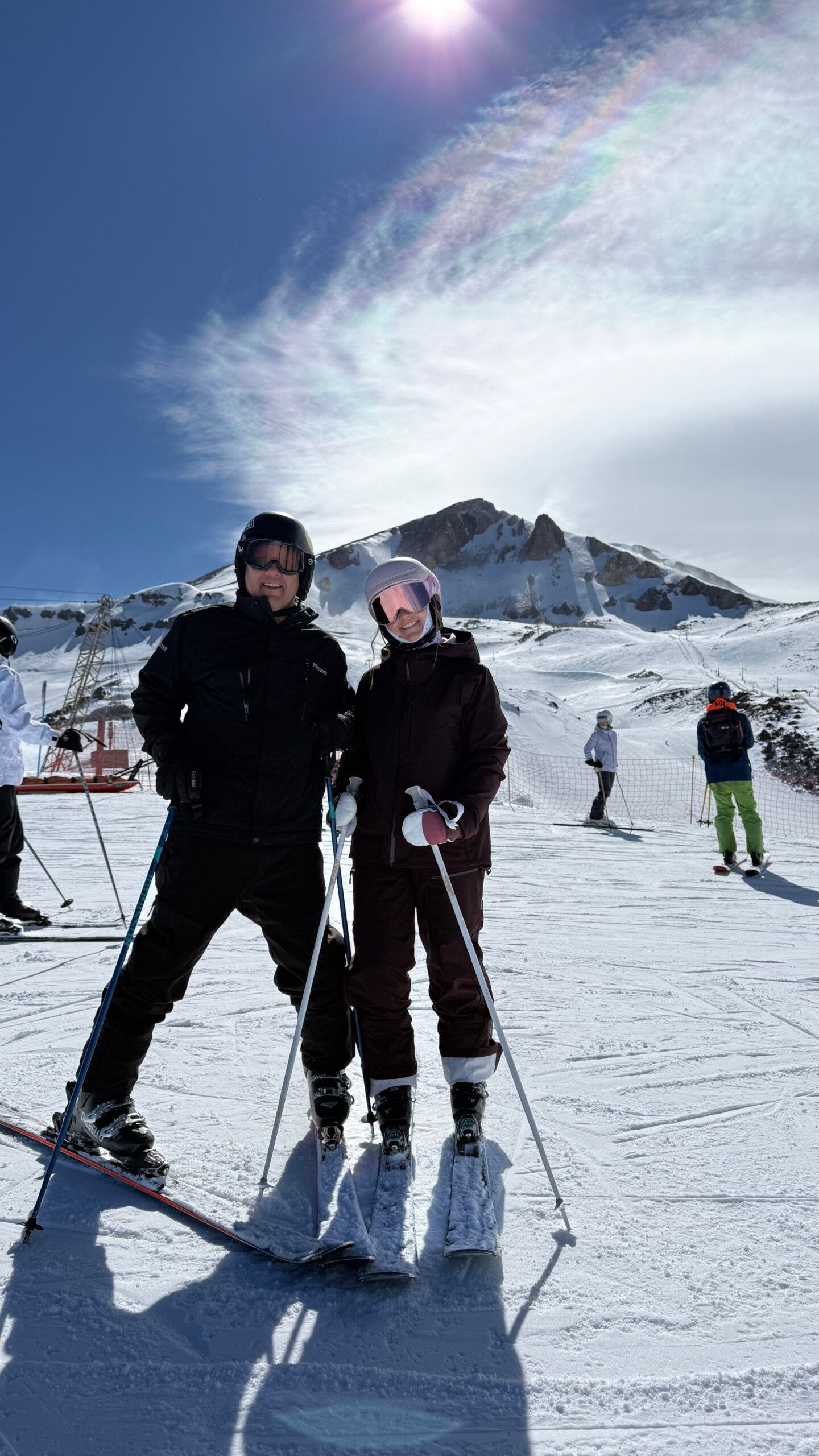
That might sound manageable on paper, but the reality was severe windburn. Despite my best efforts, I returned home sporting a bright red nose reminiscent of Rudolph the Red-Nosed Reindeer—a hue that lingered for a full week. Future visitors should take note: apply high-SPF sunscreen and Dermatone liberally, and pack balaclavas.
The Magic of the Southern Hemisphere
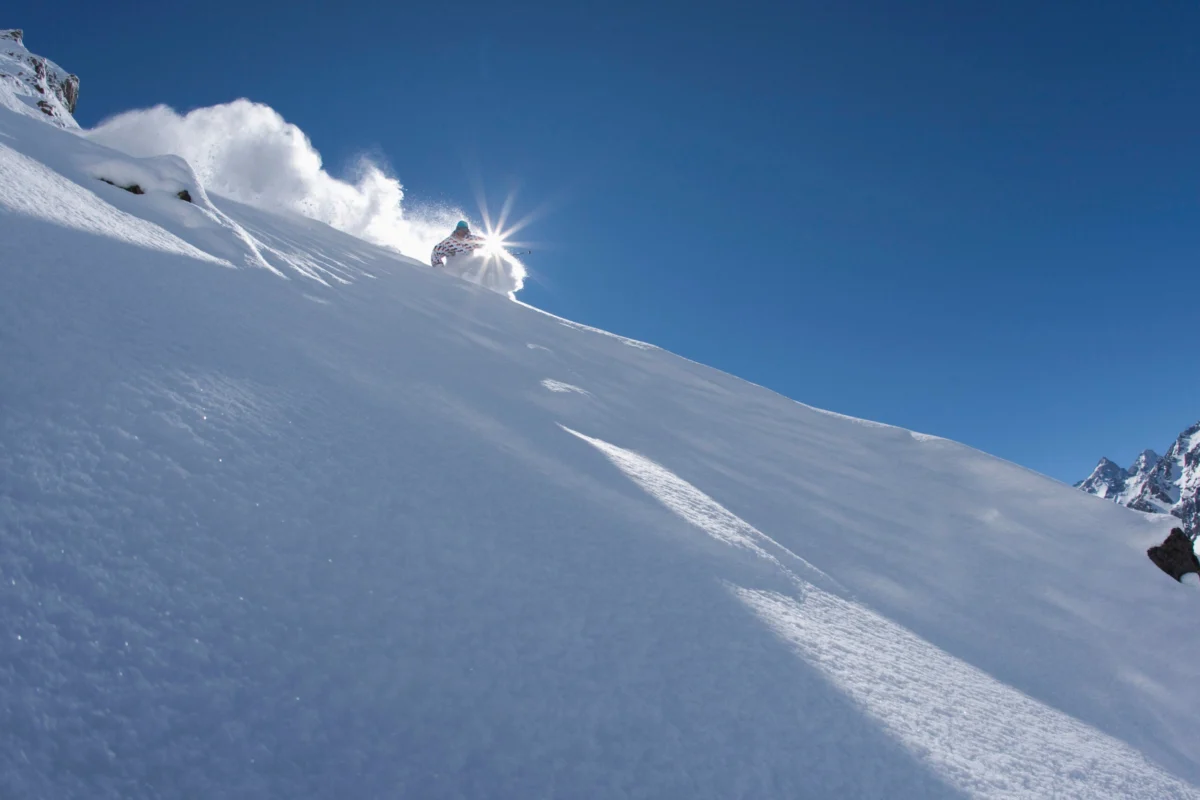
One of the most mind-bending aspects of skiing in the southern hemisphere is flipping your internal compass. Because Chile sits south of the equator, Valle Nevado’s south-facing slopes behave like north-facing slopes in the United States. This geographical quirk preserves cold, dry powder long after storm clouds have cleared. Furthermore, the days stretch long enough for lifts to spin until 5:00 PM, turning late-afternoon cruising into pure, golden-hour alchemy.
Supporting Data: Logistics, Accommodations, and Gastronomy
Getting There
Navigating the road to Valle Nevado requires local expertise. Located about an hour’s drive from Santiago, the resort is accessed via winding mountain roads flanked by strict vehicle checkpoints. Renting a car for independent driving is generally discouraged; once you arrive in the pedestrian-friendly village, a vehicle becomes a liability. Booking a professional shuttle service from Santiago’s airport is the gold standard, with transfers typically costing around $45 per ride.
Where to Stay
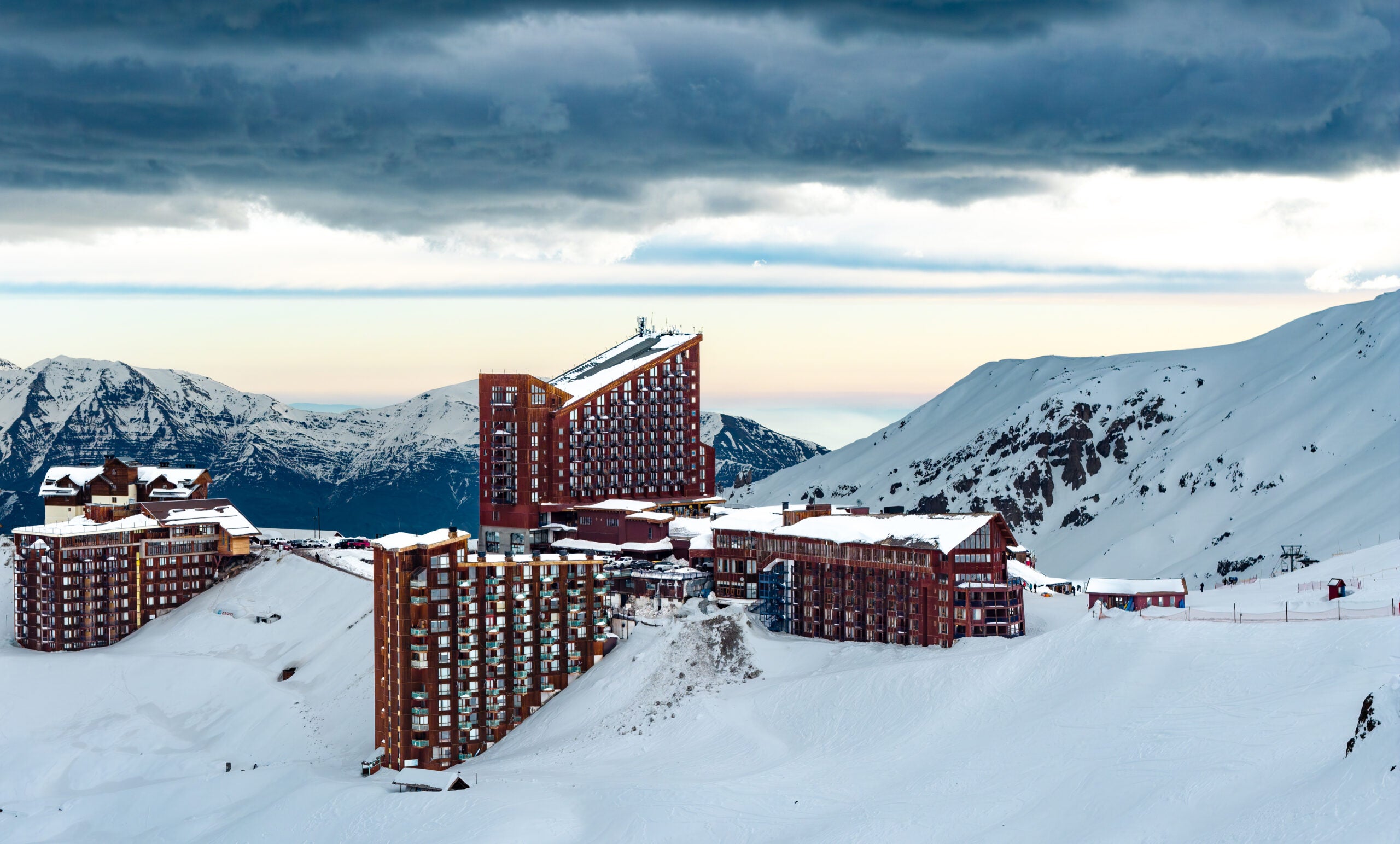
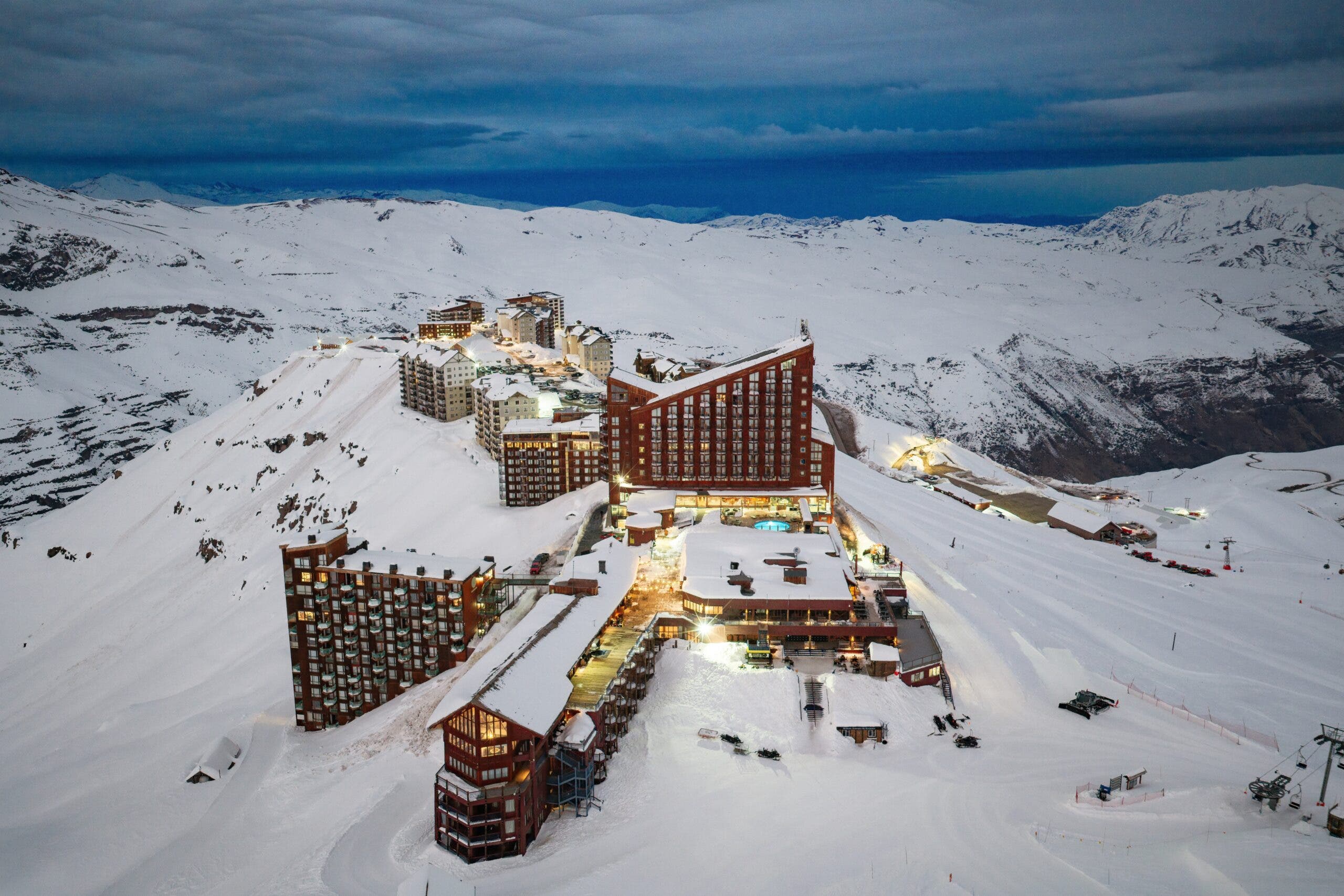
Valle Nevado operates less like a traditional mountain town and more like a self-contained alpine campus. More than 10 distinct multi-story buildings house hotels, restaurants, employee dorms, spas, gyms, and even a mini-market.
- Valle Nevado Hotel: The upscale, premier choice for traditional luxury.
- Hotel Tres Puntas: Geared toward larger groups, ski racing teams, and budget-conscious families.
- Aconcagua Ski Residences: Brand-new, spacious residences featuring fully stocked kitchens capable of accommodating up to seven guests.
Most accommodations include a dual-resort ski pass (covering both Valle Nevado and neighboring La Parva) along with breakfast and dinner. Nightly rates generally start around $316 per person and can scale past $1,000 during peak periods.
Dining and Aprés-Ski
Culinary offerings at Valle Nevado punch well above traditional ski-resort cafeteria fare. While five distinct restaurants are integrated into lodging packages, the crown jewel of the dining experience sits outdoors.
On sunny weekends, the outdoor deck of La Fourchette, the resort’s French restaurant, transforms into a traditional Chilean barbecue. Savoring wood-fired, smoke-kissed meats against a backdrop of snow-capped Andean peaks genuinely threatens to ruin every future ski-lodge lunch I ever experience elsewhere.
For aprés-ski, the cultural ritual centers around Chile’s national cocktail: the Pisco Sour. Chic venues like Bar Valle Nevado, Bar Puerto Del Sol, and Pub Tres Puntas serve up the citrusy, frothy drink to tired skiers reliving their vertical feats.
Official Responses and Resort Insights
According to resort management and staff representatives, Valle Nevado’s workforce—comprising approximately 1,200 seasonal and year-round employees—remains the backbone of the guest experience. Tourism boards in Chile have heavily promoted the 2026 season as a watershed moment for international ski travel, emphasizing infrastructural upgrades designed to handle the massive influx of Ikon and Mountain Collective passholders.
Resort officials consistently reiterate safety protocols regarding the high-alpine environment. Given the stark, tree-line-free terrain, navigation during whiteout conditions requires attention, and backcountry access demands respect for the formidable Andean geography.
Implications: Why Valle Nevado Belongs on Every Skier’s Bucket List
For skiers accustomed to the heavily treed, commercialized mega-resorts of North America, Valle Nevado offers a refreshing, wide-open paradigm shift. The terrain is largely bald and alpine, trading tree-skiing for sweeping, high-speed cruisers that hug the contours of the mountain. For adventurous souls looking to push beyond resort boundaries, the surrounding backcountry boasts an epic, untamed reputation.
Beyond the boundaries of Valle Nevado proper, the region invites expansive exploration. For a nominal fee of about $20 added to an existing Valle Nevado, Ikon, or Mountain Collective pass, skiers can access the interconnected slopes of neighboring La Parva (guests staying at the Aconcagua Ski Residences receive complimentary access). For those seeking motorized adventure, heli-skiing operations depart directly from the village via Valle Nevado Heliski.
Despite the initial bruised ego delivered by the local surface lifts and a fierce bout of windburn, Valle Nevado cemented its place as a must-return destination. Between the wood-fired Chilean barbecues, the ethereal golden-hour light shows cascading over the Andes, and the sheer volume of snow blanketing the southern hemisphere, this Chilean sanctuary offers an alpine experience unlike any other on Earth.

 Suro Senen
 Iffa Jayyana
 rifanmuazin
 Ali Ikhwan
 Dwi Wanna
 Raul Delapena Setiawan
 Laily UPN
 Ammar Sabilarrohman