
 Nila Kartika Wati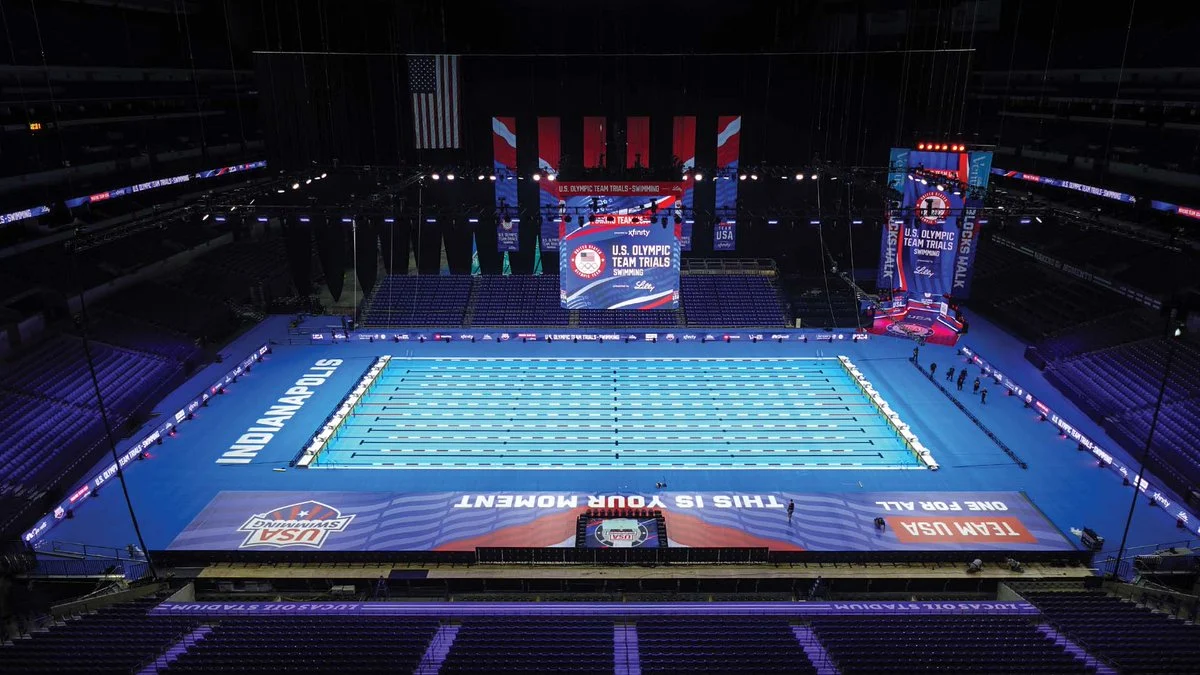
By Editorial Staff
The path to the 2028 Los Angeles Olympic Games has officially begun for the nation’s elite aquatic athletes. In a significant announcement on Tuesday morning, USA Swimming unveiled the schedule for the 2028 U.S. Olympic Swimming Trials, confirming that the high-stakes meet will once again return to the iconic Lucas Oil Stadium in Indianapolis.
While the venue remains consistent with the record-breaking 2024 selection, the scheduling represents a strategic pivot. The 2028 Trials are slated to run from June 9 through June 17, pushing the competition nearly a week earlier than the 2024 calendar. This adjustment is not merely a logistical tweak; it is a calculated response to athlete feedback, environmental concerns, and a desire to optimize the transition between the selection meet and the main event in Southern California.
The Strategic Shift: Why Timing Matters
The most immediate change for the 2028 edition is the calendar shift. By moving the meet to the June 9–17 window, USA Swimming is effectively avoiding the peak of the mid-June heat that plagued the 2024 Trials.
In 2024, participants, fans, and organizers faced significant challenges as Indianapolis experienced a brutal heatwave. Between June 15 and June 23, 2024, daily high temperatures soared, reaching an average of 89°F. The oppressive humidity and heat, while managed successfully by the indoor climate control of Lucas Oil Stadium, created a difficult atmosphere for athletes navigating the most stressful week of their careers.
By looking at historical weather data, the benefits of the earlier dates become clear. During the same June 9–17 window in 2024, the average high temperature in Indianapolis was a more temperate 83°F. This six-degree difference is expected to alleviate logistical strain on the city and improve the overall comfort of the thousands of fans traveling to the event.
Furthermore, the meet will maintain the nine-day format that proved highly successful in 2024. However, the schedule will shift from a Friday-to-Saturday cadence rather than the traditional Saturday-to-Sunday format used in previous cycles. This minor recalibration is designed to better align with broadcast requirements and athlete recovery protocols.
Chronology of the Road to Los Angeles
The 2028 Olympic cycle is unique in its geographic footprint. For the first time in recent memory, the U.S. Olympic Trials are being held on the same continent as the Olympic Games themselves. With the trials in Indianapolis and the Olympics in Los Angeles, the travel burden on athletes is significantly reduced compared to the long-haul flights required for the Tokyo or Paris Games.
The 2028 Timeline
- June 9, 2028: Opening day of the U.S. Olympic Swimming Trials (Indianapolis).
- June 17, 2028: Closing ceremony of the Trials; team roster finalized.
- July 22, 2028: First day of Olympic swimming competition in Los Angeles.
- 35-Day Buffer: The duration between the final race in Indy and the first heat in LA.
This 35-day gap is a critical component of the American preparation strategy. In 2024, the gap was 34 days. While a single day may seem negligible to a spectator, for a world-class swimmer, 24 hours represents an extra cycle of recovery, psychological recalibration, and fine-tuning of their "taper"—the period where athletes reduce training volume to reach peak performance.
Historical Context: Analyzing the Gap
To understand the significance of this schedule, one must look at the historical data regarding the time elapsed between the U.S. Trials and the Olympic Games. Since the year 2000, USA Swimming has navigated varying intervals of recovery.
| Year | Trials End Date | Olympic Start | Gap (Days) | Host Cities |
|---|---|---|---|---|
| 2028 | June 17 | July 22 | 35 | Indianapolis / LA |
| 2024 | June 23 | July 27 | 34 | Indianapolis / Paris |
| 2020 | June 20 | July 24 | 34 | Omaha / Tokyo |
| 2016 | July 3 | August 6 | 34 | Omaha / Rio |
| 2012 | July 2 | July 28 | 26 | Omaha / London |
| 2008 | July 6 | August 9 | 34 | Omaha / Beijing |
| 2004 | July 14 | August 14 | 31 | Long Beach / Athens |
| 2000 | Aug 16 | Sept 16 | 31 | Indianapolis / Sydney |
The data reveals that the 34-to-35-day window has become the "gold standard" for USA Swimming. In 2012, a shorter 26-day gap was met with mixed reviews from coaches, who argued it left insufficient time for athletes to recover from the physical and emotional exhaustion of the Trials before preparing for the intensity of the Olympic stage. By maintaining the 35-day buffer for 2028, USA Swimming is prioritizing the health and peak readiness of the team.
Implications for Athletes and Coaches
The decision to hold the 2028 Trials earlier is not merely about the weather; it is about the "Olympic calendar shift." The 2028 Los Angeles Games will see the swimming program return to the second week of the competition schedule. Because the LA Games are starting earlier in the summer than any other Games this century, the entire sporting calendar has been compressed.
For the athletes, this means the training cycle must be pulled forward. Coaches who traditionally plan their athletes’ "peak" for late July or early August will now need to adjust their macrocycles to ensure their swimmers are hitting world-class times by mid-June.
"The transition from Trials to the Games is the most critical phase of the four-year cycle," notes a high-performance consultant familiar with the USA Swimming program. "By moving the dates, USA Swimming is providing a consistent, predictable runway. Athletes who make the team in Indianapolis will have enough time to return to altitude camps or training bases, process the excitement of qualifying, and refocus for the ultimate goal in Los Angeles."
Furthermore, the reduced travel distance—only 2,080 miles between Indianapolis and Los Angeles—is a massive advantage. In 2024, athletes endured a 4,166-mile journey to Paris. In 2020, the trip to Tokyo spanned over 6,000 miles. Minimizing jet lag and travel fatigue will allow American swimmers to arrive in Los Angeles in a state of superior physical readiness.
Looking Ahead: What Fans Can Expect
While the dates are set, the broader details of the 2028 experience remain in development. USA Swimming has indicated that information regarding qualifying times, the specific competition schedule, broadcast rights, and ticket sales will be released in the coming months and years.
The use of Lucas Oil Stadium—a massive NFL venue converted into a temporary swimming arena—was widely praised in 2024 for its ability to house record-breaking crowds and provide an electrifying environment. By returning to this venue, USA Swimming is betting on the "Indianapolis Model" to continue building the sport’s profile in the United States.
As the swimming community turns its eyes toward 2028, the focus will undoubtedly shift to the next generation of talent. The earlier dates provide a definitive roadmap, allowing athletes to structure their college seasons, professional training camps, and personal lives around these nine days in June.
Ultimately, the 2028 U.S. Olympic Trials represent a fusion of tradition and innovation. By refining the schedule, addressing environmental variables, and optimizing the recovery window, USA Swimming is ensuring that when the starters’ pistols fire in Los Angeles, the American team will be the best-prepared squad in the world. For the fans, it means nine days of drama in the heart of the Midwest, serving as the perfect prelude to the grand spectacle of the Los Angeles Games.
With the framework now established, the countdown has officially begun. The water is waiting, and for the hopefuls aiming for the stars and stripes, the road to gold has never been clearer.


 Dwi Wanna
 Siti Muinah
 Nana Wu
 Lina Hope
 Jia Lissa
 Reynand Wu
 Basiran