
 Reynand Wu
By Motorsport News Desk
Updated for the 2026/2027 Formula 1 Season
Introduction: Defying Age and Redefining the Horizon
Formula 1 has long been a young man’s game, a high-velocity crucible where millisecond reactions dictate survival, and a driver’s physical peak is widely believed to wane by their mid-thirties. Yet, seven-time World Champion Lewis Hamilton has consistently defied conventional wisdom throughout his legendary career.
As Formula 1 officially locks in a landmark 10-year agreement with Rwanda to host a brand-new Grand Prix on a custom-designed circuit near Kigali—slated to join the world championship calendar in the early 2030s—attention has naturally turned to the sport’s most enduring icon. Hamilton, who has relentlessly campaigned for years for F1 to return to the African continent, was recently asked if he could picture himself on the starting grid in Kigali.
While he initially cracked a smile and joked about the length of the career extension required, the seven-time world champion quickly turned serious. Emphasizing that he is "built differently," Hamilton outlined the rigorous physical sacrifices, cognitive sharpness, and unwavering drive that make a foray into his 40s a legitimate possibility.
Beyond distant horizons in East Africa, Hamilton’s immediate focus remains firmly anchored in the present: optimizing his performance with Ferrari, locking down crucial constructors’ points, and utilizing the closing stages of the season as a technical testing ground for the future.
Main Facts: The Rwanda Milestone and Hamilton’s Longevity
The headline development triggering Hamilton’s latest remarks is Formula 1’s strategic expansion into East Africa.
- The Rwandan Grand Prix: F1 management confirmed a groundbreaking decade-long contract with Rwanda to host a race near the capital city of Kigali. The event is targeted for the early 2030s, marking a historic return of Formula 1 to the African continent for the first time since the 1993 South African Grand Prix at Kyalami.
- Hamilton’s Long-Standing Advocacy: For years, Hamilton has used his global platform to lobby F1 leadership, stakeholders, and team principals to bring a race back to Africa, frequently calling the absence of an African Grand Prix a glaring omission on a truly "world" championship calendar.
- Age-Defying Ambitions: Addressing whether he could realistically race in the 2030s, Hamilton noted that while competing at age 44 against 20-year-olds presents unknown hurdles, he has no doubt about his current competitive baseline. "At 41 I can compete with a 20-year-old. So time will tell whether I’m here in the 30s. We’ll see," Hamilton remarked.
- Immediate Team Goals: In the current drivers’ standings, Hamilton sits in a tight battle for third, just a single point behind Mercedes driver George Russell. However, the Briton has made it clear that individual positions outside of a championship fight hold little personal allure, shifting his operational priorities toward aiding Ferrari in the constructors’ standings.
Chronology: From Early Advocacy to the 2030s Horizon
To understand the weight of Hamilton’s recent comments, it is necessary to trace the timeline of his advocacy for an African Grand Prix alongside the trajectory of his career transition to Ferrari.
2021–2023: The Push for Africa
Throughout his record-breaking championship years with Mercedes, Lewis Hamilton frequently expressed a deep personal desire to race on the African continent. Noting that F1 prides itself on racing in every corner of the globe—from the Americas to Asia, Europe, and the Middle East—Hamilton emphasized that the sport’s identity felt incomplete without an African footprint. He engaged in private discussions with F1 CEO Stefano Domenicali and explored potential venues, keeping the conversation alive even when commercial or infrastructural roadblocks stalled official negotiations.
Early 2024–2025: The Ferrari Chapter and Adaptation
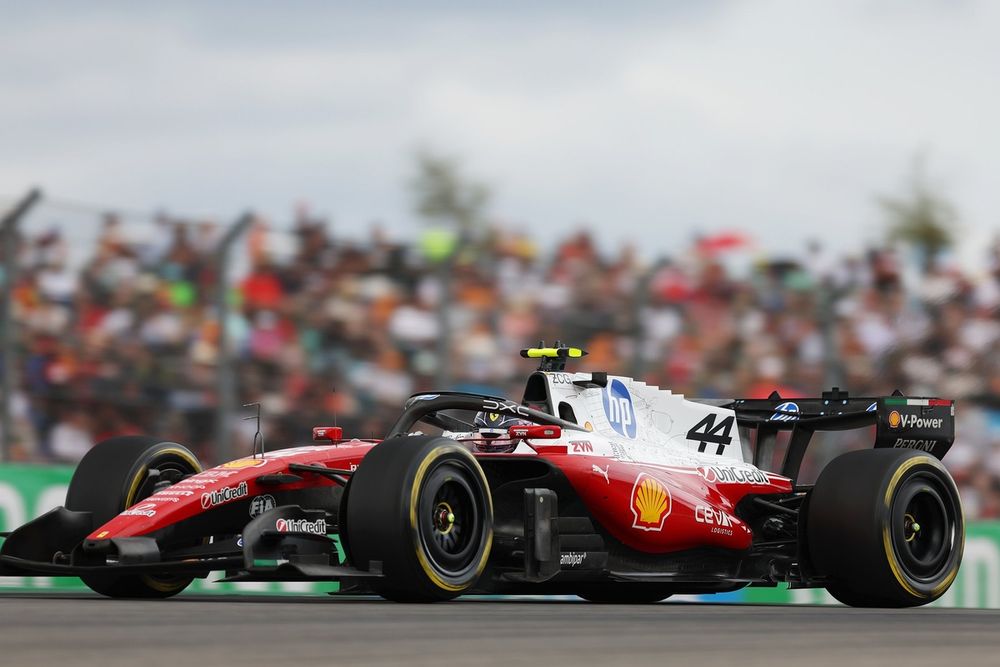
As Hamilton executed his blockbuster, headline-grabbing switch to Scuderia Ferrari, critics routinely scrutinized whether a veteran driver could successfully adapt to a new team culture, new power units, and evolving vehicle dynamics. Whispers regarding declining reflexes resurfaced during occasional qualifying struggles or tactical missteps. Yet, Hamilton consistently answered his doubters on the track. Despite setup hurdles—such as those that cost him a podium finish at the United States Grand Prix—his raw race pace and wheel-to-wheel combat continued to match, and often exceed, drivers more than a decade his junior.
Late 2025–Future Outlook: The Rwandan Announcement and Beyond
With F1’s announcement of the Kigali project for the early 2030s, the pieces of Hamilton’s long-held dream began to align. Although the timeline places the inaugural Rwandan Grand Prix well into the next decade, the confirmation galvanized Hamilton’s imagination. It prompted a profound evaluation of his physical maintenance, mental fortitude, and long-term commitment to the sport.
Supporting Data: Refuting the Myth of Declining Reflexes
One of the most persistent narratives in elite motorsport is the inevitable degradation of neurological and physical reaction times as an athlete crosses the threshold into their late thirties and forties. Hamilton, however, passionately rejects this notion, pointing to objective telemetry and race-day evidence.
"Of course, there are challenges up ahead that I can’t foresee that come with age," Hamilton admitted. "But along this way, along this journey, there have been so many preconceived ideas about the fact that your reaction time drops off."
To counter these assumptions, Hamilton pointed directly to his on-track performances:
"Did you see my reaction in the last race? My reaction’s faster than some of the youngest people here. So there are lots of tools that you can utilise to continue to keep yourself and mind sharp."
Modern Formula 1 drivers operate in an era of unprecedented sports science, neuro-cognitive training, and hyper-personalized diet and fitness regimens. Hamilton utilizes advanced reaction walls, visual tracking software, and intensive neck-loading simulators that allow him to maintain cognitive processing speeds that rival—and occasionally surpass—drivers in their early twenties.
Furthermore, Hamilton emphasized the sheer level of dedication required to sustain this edge:
"I guess as long as you’re willing to sacrifice everything, which I continue to if I am right now. I can’t say in four years whether I want to continue to do what I’m doing, but I love what I’m doing still now. I’m still all in and I will be for the foreseeable future."
Official Responses and Driver Perspective: Beyond Personal Standings
While media and fan discussions frequently obsess over intra-team rivalries and championship tables, Hamilton’s current mindset is focused on the macro-level development of Ferrari as an organization.
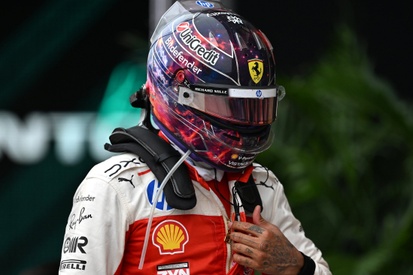
Currently sitting third in the drivers’ standings—nipping at the heels of Mercedes’ George Russell—Hamilton was candid about his indifference toward the battle for the runner-up spot in the drivers’ championship:
"I’m not going to say it doesn’t mean anything, but it’s not something I focus on. I think winning the championship is the only thing anybody must really care about."
Instead, his overarching objective for the final stretch of the season is helping Ferrari secure second place in the constructors’ championship—a substantial step forward from the team’s fourth-place finish the previous year. To achieve this, Hamilton is redirecting his bandwidth from purely chasing Sunday trophies to laying technical groundwork for future machinery.
"I’m really using these five races as a test bench for next year’s car," Hamilton explained. "Spending time speaking with our head of aerodynamics, talking about vehicle dynamics, where we can improve this car, how we can keep the goodness of the chassis, for example, which has been great this year."
This collaborative, analytical approach highlights a side of Hamilton’s tenure at Maranello that extends far beyond driving duties. His extensive championship-winning experience is being leveraged to guide Ferrari’s engineering department as they prepare for major regulatory shifts and car iterations.
Implications: What a 2030s Return Means for F1 and Hamilton’s Legacy
The intersection of Rwanda’s new Grand Prix and Lewis Hamilton’s career trajectory carries profound implications for the sport of Formula 1.
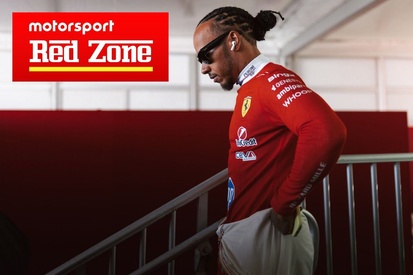
1. A Truly Global Championship
For decades, critics and fans alike pointed out the Eurocentric roots of Formula 1 and its slow adaptation to new global markets. While the Middle East and North America have secured multiple slots on the modern calendar, Sub-Saharan Africa had remained an untapped frontier since the demise of the South African GP. Locking in a 10-year deal with Rwanda not only fulfills a geopolitical and cultural milestone for Liberty Media and the FIA but finally realizes a personal crusade championed by F1’s most influential figure.
2. Redefining Athlete Longevity in Motorsport
Should Hamilton maintain his competitive viability into his early-to-mid forties, he will completely rewrite the modern paradigm of F1 retirement. Historically, drivers exited the sport by their late thirties due to burnout, declining safety margins, or performance attrition. Hamilton’s assertion that he is "built differently" serves as a challenge to future generations of drivers, demonstrating that absolute commitment, relentless self-care, and total lifestyle sacrifice can stretch a career across multiple decades and regulatory eras.
3. Preserving Dignity in Performance
Despite his willingness to test the limits of age, Hamilton remains acutely aware of the risk of staying too long past his prime. He has repeatedly stated that he refuses to become a driver whose pace, reflexes, and passion have noticeably deteriorated.
"I never want to overstay my welcome in the sense of still not having the performance," Hamilton reflected. "I don’t want to be walking—driving around with that really dropped off. My reactions dropped off, my drive’s dropped off, and my pace has dropped off, which everyone assumed last year. But I’ve proved everyone wrong with that and I will continue to try to do so."
Conclusion: The Journey Continues
As Formula 1 looks toward an exciting future that includes the shores of East Africa in the 2030s, Lewis Hamilton stands at a unique crossroads in his storied career. Whether he ultimately dons a race suit in Kigali remains one of the most compelling speculative questions in modern sport.
Yet, regardless of whether he is on the grid when the lights go out in Rwanda, Hamilton’s current mission is crystal clear. He is driving with a point to prove—not just against younger rivals, but against the very concept of aging in elite sports. With his sights set on perfecting Ferrari’s chassis, engineering the success of future seasons, and guarding his unmatched competitive edge, the seven-time world champion proves day in and day out that he is, indeed, built differently.

 Raul Delapena Setiawan
 Basiran

 Ali Ikhwan



 Neng Nana

 Lina Irawan