
 Asro
By [Your Name/Journalistic Staff]
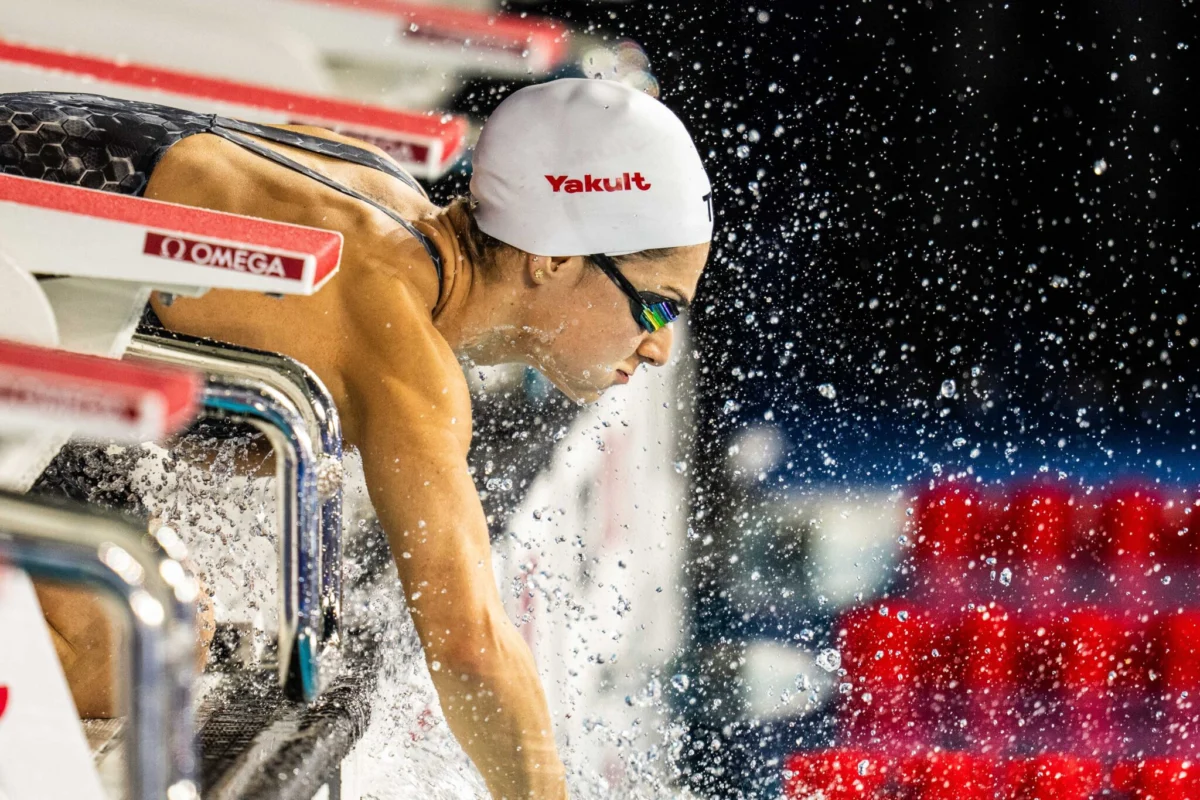
The International Swimming League (ISL) has officially ignited the engine of its highly anticipated December All-Star match, shifting the focus from individual national programs to a global exhibition of short-course mastery. In a move signaling the league’s intent to revitalize the high-octane, team-based format that defined the 2020 and 2021 seasons, officials announced today that French sprint sensation Beryl Gastaldello and Swedish butterfly specialist Louise Hansson will headline the initial roster for Team Europe.
This announcement represents a pivotal moment in the ISL’s strategic roadmap. As the swimming world pivots toward the 2026 Short Course World Championships, these two decorated athletes—both renowned for their tactical brilliance in the 25-meter pool—are expected to provide the foundational firepower necessary for Team Europe to challenge the established dominance of the American and Commonwealth contingents.
The Vanguard: Profiling Gastaldello and Hansson
The selection of Gastaldello and Hansson is far from arbitrary; it is a calculated recruitment of "short-course specialists." In the ISL’s unique format, where turn efficiency, underwater speed, and the ability to navigate multiple events in a single session are paramount, both women have proven themselves to be among the elite.
Louise Hansson: The Butterfly Virtuoso
Hansson, who was a cornerstone of the Toronto Titans during the league’s previous iteration, brings a level of consistency that few can match. Her ISL resume is defined by dominance in the 100-meter butterfly, an event in which she claimed victory in five of the seven matches she contested.
Her transition from the long-course European Championships back to the short-course rhythm has been seamless. While her recent European Championship outing saw her navigate a complex schedule—including an 11th-place finish in the 100 fly and an 8th-place finish in the 50 fly—her true potential remains unlocked in the 25-meter pool. At the 2025 Short Course European Championships, Hansson proved she is in peak form, securing a bronze medal in the 100 fly, alongside strong finishes in the 50 fly and 50 backstroke. With her sights set on the 2026 SC World Championships, the ISL All-Star match serves as the ultimate proving ground.
Beryl Gastaldello: The All-Around Powerhouse
If Hansson is the specialist, Gastaldello is the engine of versatility. Formerly a star for the LA Current, Gastaldello’s performance at the 2020 ISL Final remains a benchmark for the sport. Winning the 100-meter freestyle, 100-meter butterfly, and 100-meter individual medley in a single championship finale solidified her reputation as one of the most lethal point-scorers in the league.
Her recent trajectory confirms that she has lost none of that explosive speed. At the 2025 European Short Course Championships, Gastaldello delivered a masterclass in sprinting, taking silver in both the 50 and 100-meter freestyle, bronze in the 50 fly, and a highly competitive 4th in the 100 IM. Like Hansson, she is currently preparing for a major international campaign representing France at the 2026 SC World Championships, making her addition to Team Europe an immense tactical advantage for the squad.
Chronology of the All-Star Build-Up
The announcement of these two athletes brings the total count of confirmed All-Stars to 12. As the league works toward filling its 96-person roster—split evenly into four teams of 24 (12 men and 12 women)—the composition of the squads has been released in a staggered, high-stakes fashion.
- The Initial Waves: The American and Commonwealth teams were the first to receive significant attention, with the American roster currently boasting heavy hitters like Caeleb Dressel, Van Mathias, Ryan Murphy, and Regan Smith. The Commonwealth side has mirrored this intensity, securing signatures from Adam Peaty, Jordan Crooks, Josh Liendo, Pieter Coetze, Kylie Masse, and Abbie Wood.
- The European Shift: Today’s announcement breaks the silence for Team Europe, filling the first two slots on a roster that is expected to prioritize European depth and tactical versatility.
- The Intercontinental Void: Currently, the Intercontinental team remains the final frontier. With zero athletes yet announced, industry insiders speculate that this team will feature a mix of high-performing athletes from Asia, South America, and Africa, potentially serving as the "wild card" of the competition.
Supporting Data: Roster Comparison and Team Depth
The current structure of the teams suggests an impending clash of titans. Each squad is being built with a specific philosophy in mind:
| Team | Confirmed Athletes | Key Strengths |
|---|---|---|
| United States | Dressel, Mathias, Murphy, Smith | Sprint power, backstroke dominance, relay depth. |
| Commonwealth | Peaty, Crooks, Liendo, Coetze, Masse, Wood | Breaststroke strength, fly/sprint versatility. |
| Europe | Hansson, Gastaldello | Technical short-course efficiency, IM versatility. |
| Intercontinental | TBD | Predicted to favor global diversity and endurance specialists. |
The math is simple: with 12 roster spots per team still open (or in the case of the Intercontinental team, the full 24), the league is strategically rolling out names to maintain media momentum leading up to the December event.
Official Perspectives and Strategic Implications
While the league has not yet released a formal press conference schedule, the implications of this All-Star format are clear. By moving away from the club-based model that characterized the early years of the ISL and toward a continental team format, the league is attempting to foster a more accessible narrative for casual fans.
"The goal is to create rivalries that transcend individual clubs," said a league analyst familiar with the strategic planning. "When you put Gastaldello and Hansson on Team Europe, you are giving fans a clear banner to rally behind. It mimics the regional pride of international soccer or rugby, which is essential for growing the sport’s footprint."
From a competitive standpoint, the inclusion of these athletes signals that Team Europe will prioritize "point-density." In the ISL scoring system, where second-place finishes and "jackpot" points often decide the match, having athletes who can contest three or four events with high-tier results is more valuable than having one specialist who dominates a single discipline. Gastaldello’s ability to compete in the 100 IM and 100 freestyle—events that often run back-to-back—gives the European management a tactical luxury that few other teams possess.
Future Outlook: The Road to December
The lead-up to December will be defined by the final roster announcements and the subsequent training camps. With the 2026 SC World Championships looming early next year, the ISL All-Star match will serve as more than just an exhibition; it will be the most significant high-pressure environment for these athletes to test their training cycles against the world’s best.
For fans, the question remains: Can the Intercontinental team find a roster that balances the raw, established power of the American squad and the technical, tactical expertise of the European contingent? The coming weeks will reveal the remaining pieces of the puzzle. As it stands, the addition of Beryl Gastaldello and Louise Hansson has undoubtedly shifted the center of gravity in the pool, setting the stage for a December showdown that promises to be the fastest competition in the history of the sport.
Madeline Folsom is a sports contributor and competitive swimming analyst. A former collegiate swimmer at Grand Canyon University and California State University – Bakersfield, she focuses on the technical nuances of the sport and the evolving landscape of international aquatic competition.


 Suro Senen
 Laily UPN
 Asep Darmawan
 Jia Lissa

 Siti Muinah

 Neng Nana