
 Neng Nana

By: Editorial Desk (Reporting from Hobe Sound, Florida)
The traditional Thanksgiving weekend, once reserved for leftovers and sluggish afternoon naps, has been forcefully reclaimed by the juggernaut of modern sports broadcasting. On Friday morning, as the sun climbed over the Atlantic Fields Club in Florida, golf fans were treated to the second iteration of the newly revived Skins Game—an exhibition that served as a calculated, high-production opening act for Amazon Prime Video’s marathon of holiday sports programming.
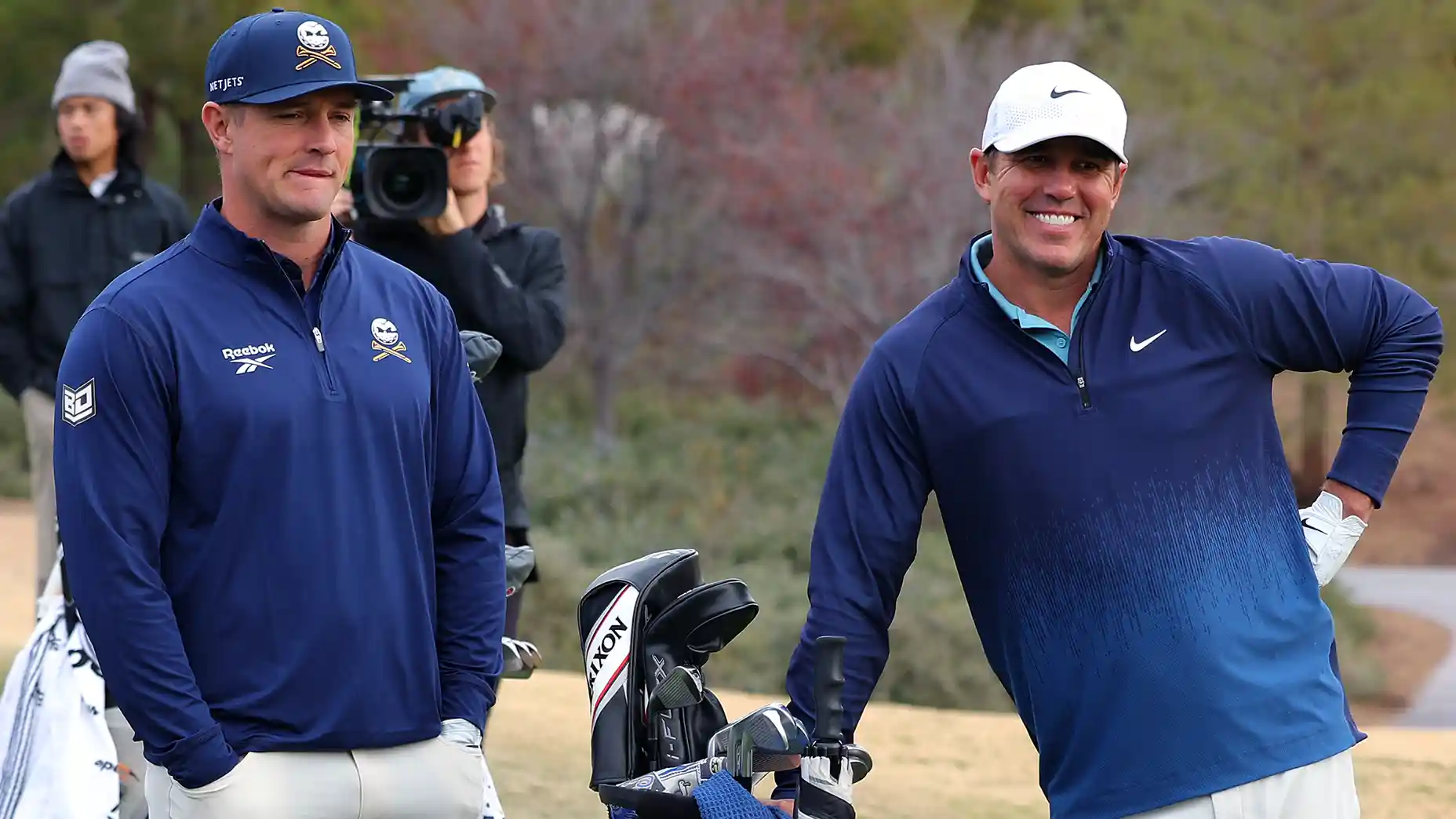
While the sport itself provided the spectacle, the real story was the mechanics of the event: a four-man showdown featuring Brooks Koepka, Justin Thomas, Wyndham Clark, and the rising phenom Jackson Koivun. In an era where streaming platforms are aggressively bidding to dismantle the traditional broadcast hegemony, the Skins Game is no longer just a golf match; it is a proof-of-concept for the future of interactive sports entertainment.
The Main Facts: A $2 Million Climax
The format, designed for maximum tension, centered on the accumulation of "skins" over 18 holes. However, as is the nature of the format, the earlier holes served largely as a prologue to the final, high-stakes shootout. Fierce Florida winds whipped across the Atlantic Fields layout, turning the par-4 18th into a defensive gauntlet. With birdie opportunities scarce and the wind wreaking havoc on approach shots, the prize money from earlier holes rolled over into a massive, winner-take-all pot for the final hole.
When the dust settled, the group faced a "closest-to-the-pin" tiebreaker from 118 yards out. It was here that 21-year-old Jackson Koivun—a player whose rapid ascent has become one of the most compelling narratives in professional golf—cemented his status. With a singular, clinical wedge shot, Koivun eclipsed a stellar effort from Brooks Koepka to walk away with a $2,375,000 payday. The result was not merely a victory for the young golfer; it was a statement of arrival.
A Chronological Breakdown of the Match
The event began at 8:00 a.m. CT, strategically placed in an "open runway" window where live sports competition was virtually nonexistent.
- The Early Holes: The initial holes were marked by a feeling-out process, with the players contending with the stiff, late-fall breeze. The nature of the Skins Game dictates that money carries over, and as players traded pars and bogeys, the anticipation for the 18th-hole jackpot intensified.
- The 18th-Hole Standoff: As the regulation play concluded without a winner for the final skins, the pressure shifted to the playoff scenario. Justin Thomas, the first to hit, airmailed the green, candidly admitting, "I can’t stress how much it sucks going first in this situation."
- The Climax: Wyndham Clark followed suit, missing the mark, before Brooks Koepka delivered a high-percentage shot to the center of the green, landing approximately 20 feet from the cup. "Safety first, boys," Koepka remarked, a veteran’s tactical play.
- The Winning Stroke: The pressure fell squarely on the shoulders of the youngest in the field. Koivun, unfazed by the veteran presence surrounding him, struck a wedge that landed mere inches inside Koepka’s mark. The broadcast erupted, and Justin Thomas was quick to offer a wry, modern-era congratulation: "Kid! Hey, NIL money!"
Supporting Data: Why Streaming Matters
The 2026 Skins Game is a critical data point in the shift toward streaming-exclusive sports. Amazon Prime’s strategy is clear: utilize high-profile, low-stakes exhibition golf to capture an audience that is otherwise dormant at 8:00 a.m. on a Friday.
The commercial integration was as aggressive as it was seamless. Throughout the broadcast, viewers were presented with non-Farmers insurance commercials and, more importantly, interactive, on-screen product purchasing options. This "t-commerce" (television commerce) model is the holy grail for advertisers. By allowing viewers to purchase gear or lifestyle products with a simple click on their remote, Amazon is effectively turning every minute of the broadcast into a revenue-generating asset.
When you consider that the broadcast reached a crescendo just minutes before transitioning into NFL pregame coverage, the strategy becomes evident: keep the viewer in the ecosystem. The Skins Game acts as the "top of the funnel" for a broader, sports-centric holiday experience.
Official Responses and Perspectives
The atmosphere surrounding the event was one of professional camaraderie mixed with the stark reality of the modern business of golf. Broadcaster Colt Knost offered a pragmatic assessment of the day, noting that while the players felt the pressure of the money, there was little room for sympathy in a game that paid out nearly half a million dollars to a third-place finisher.

"I don’t think we’re going to feel sorry for JT walking away with $475,000," Knost remarked during the closing moments. This comment highlighted the shift in the sport’s perception—these players are no longer just athletes competing for trophies; they are participants in a high-stakes entertainment vehicle where the paycheck is a primary objective.
For the players, the exhibition provided a rare opportunity to compete in a high-pressure environment without the grind of a four-day tournament. The consensus among the participants was that the format works, particularly because it offers a "quick-hit" spectacle that fits perfectly into the modern, truncated attention spans of streaming audiences.
The Implications: Is This the Future of Golf?
The success of the 2026 Skins Game raises significant questions about the future of the sport’s broadcast landscape.
1. The Decline of Traditional Windows
The event proved that live sports have value regardless of the time of day. By securing an early morning slot on Black Friday, the organizers effectively monopolized the attention of the sports-viewing public. This suggests that the PGA Tour and its partners may look to fill other "dead air" windows with similar exhibition-style events.
2. The Integration of Commerce
The most significant takeaway is the shift in how content is monetized. Traditional commercials are becoming obsolete in the face of integrated purchasing. If the PGA Tour’s upcoming broadcast deals follow this model, we are looking at a future where the line between "watching a game" and "shopping" becomes blurred to the point of extinction.
3. The Rise of the "Exhibition Star"
Young players like Jackson Koivun are perfectly positioned for this new era. They are comfortable in front of the camera, understand the value of the "brand," and are capable of performing under the unique pressures of exhibition golf. This event served as a perfect stage for Koivun to build his profile, proving that exhibitions are no longer just for the "old guard" of the sport; they are essential platforms for the next generation.
4. The Sustainability of the Model
Is the Skins Game sustainable? The answer likely lies in the bottom line. As long as the streaming metrics—viewership duration, click-through rates on products, and social media engagement—remain high, the investment from major tech partners is guaranteed. The "money game" is no longer just for the players; it is the fundamental business model for the future of sports media.
Conclusion
The 2026 Skins Game concluded not with a whimper, but with a calculated transition to the day’s NFL coverage. In those final two minutes and 13 seconds, the broadcast achieved exactly what it set out to do: hold an audience, sell products, and provide a high-energy narrative that justifies its existence in an increasingly crowded media landscape.
Whether or not the golf itself was "sharp" by tournament standards is secondary. In the modern era of streaming, availability and engagement are the true metrics of success. As we look toward future holiday seasons, it is safe to assume that the Skins Game—and the lucrative, interactive world it represents—will be a permanent fixture on your screen. The rules of the game may change, but if the money is right, the show will go on.


 rifanmuazin
 Azzam Bilal Chamdy

 Raul Delapena Setiawan
 Suro Senen

 Lina Irawan
 Nana Wu