
 Lina Irawan
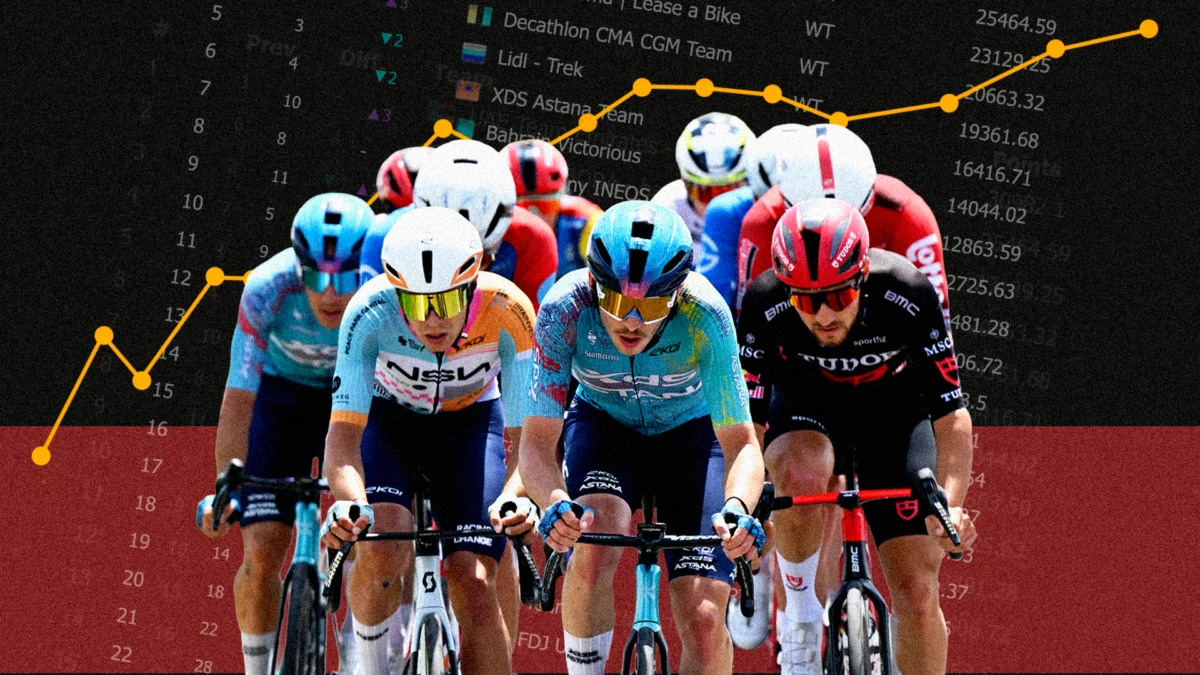
Professional cycling has always been a sport defined by romance, suffering, and the single-minded pursuit of glory on the road. From the legendary cobbled classics of Northern France to the punishing high-altitude mountain passes of the Grand Tours, the ultimate currency has traditionally been crossing the finish line first.
However, beneath the traditional veneer of mud, sweat, and tactical panache, a quiet revolution is taking place. In team buses, hotel conference rooms, and data labs across Europe, a new kind of race is being run—one fought not with legs and carbon-fiber frames, but with algorithms, statistical models, and risk management.
At the heart of this shift is the International Cycling Union’s (UCI) promotion and relegation system, underpinned by its complex points structure. Increasingly, data science is intersecting with pro cycling governance, forcing teams to confront a provocative question: Is it sometimes smarter not to aim for victory?
Main Facts: The Rise of Algorithmic Roster Management
Louis Van Gaelen cuts an unusual figure at the intersection of elite sports and academia. A keen cyclist and a PhD researcher in health and artificial intelligence at the University of Antwerp, Van Gaelen recently turned his analytical lens toward professional cycling as a side project.
At this year’s Science & Cycling Conference in Barcelona, he presented findings from a study titled ‘Roster optimisation for maximal UCI points.’ While the title lacks the poetic flair of a Grand Tour mountain stage, its implications struck a chord within the peloton.
"After my presentation in Barcelona, teams wanted to chat and compare their models with mine," Van Gaelen notes. "This is a growing field, whether it’s in search of points or simply improving performance as a whole."
Van Gaelen is far from alone. Across the WorldTour and ProTeam ranks, sporting directors are increasingly relying on data scientists to build predictive models. These models calculate rider acquisition costs, injury risks, race calendars, and expected UCI points yields. In a sport where financial survival is intrinsically linked to top-tier status, optimizing a roster for points rather than pure victories has evolved from a novel idea into an existential necessity.
Chronology: How the Points System Changed the Sport
To understand how professional cycling arrived at this analytical crossroads, it is necessary to examine the evolution of the UCI’s ranking and licensing system.
Pre-2005: The Fragmented Era
For much of its history, professional cycling operated on a fragmented calendar. While prestigious races like the Tour de France, Giro d’Italia, and Spring Classics held undeniable prestige, there was no comprehensive, binding ranking system that dictated the long-term survival of teams through a formal three-year licensing cycle. Teams existed primarily on sponsor visibility, and winning the biggest races was the sole metric of success.
2005–2018: The Birth and Maturation of the WorldTour
The introduction of the UCI ProTour (later rebranded as the WorldTour) in 2005 attempted to globalize and structure the sport. However, the early iterations of the points and licensing systems frequently drew criticism for being opaque and disconnected from sporting merit. Teams could secure top-tier status through financial guarantees and administrative compliance rather than on-road performance, leading to occasional disconnects between a team’s competitive output and its WorldTour credentials.
2019–2022: The Three-Year Cycle Stakes
The stakes were drastically raised when the UCI introduced a rigid promotion and relegation framework tied to a three-year sporting cycle (spanning 2023–2025). Suddenly, a team’s accumulated points over a rolling 36-month period were all that stood between remaining in the lucrative WorldTour—with guaranteed invitations to the sport’s biggest races—or slipping into the ProTeam ranks, where financial security is precarious and race participation depends on wildcard invitations.
2023–Present: The Datafication of the Peloton
As the current three-year cycle reaches its critical juncture, teams have fully weaponized data analytics. The scramble for points has shifted tactical behaviors on the road. Smaller and mid-tier WorldTour teams, terrified of relegation, can no longer afford the traditional "all-or-nothing" approach to stage racing. Instead, a complex calculus of point-scoring optimization has transformed how races are approached from January through October.
Supporting Data: The Economics of the UCI Rankings
To appreciate why teams are turning to algorithms like Van Gaelen’s, one must examine the stark economic realities of professional cycling.
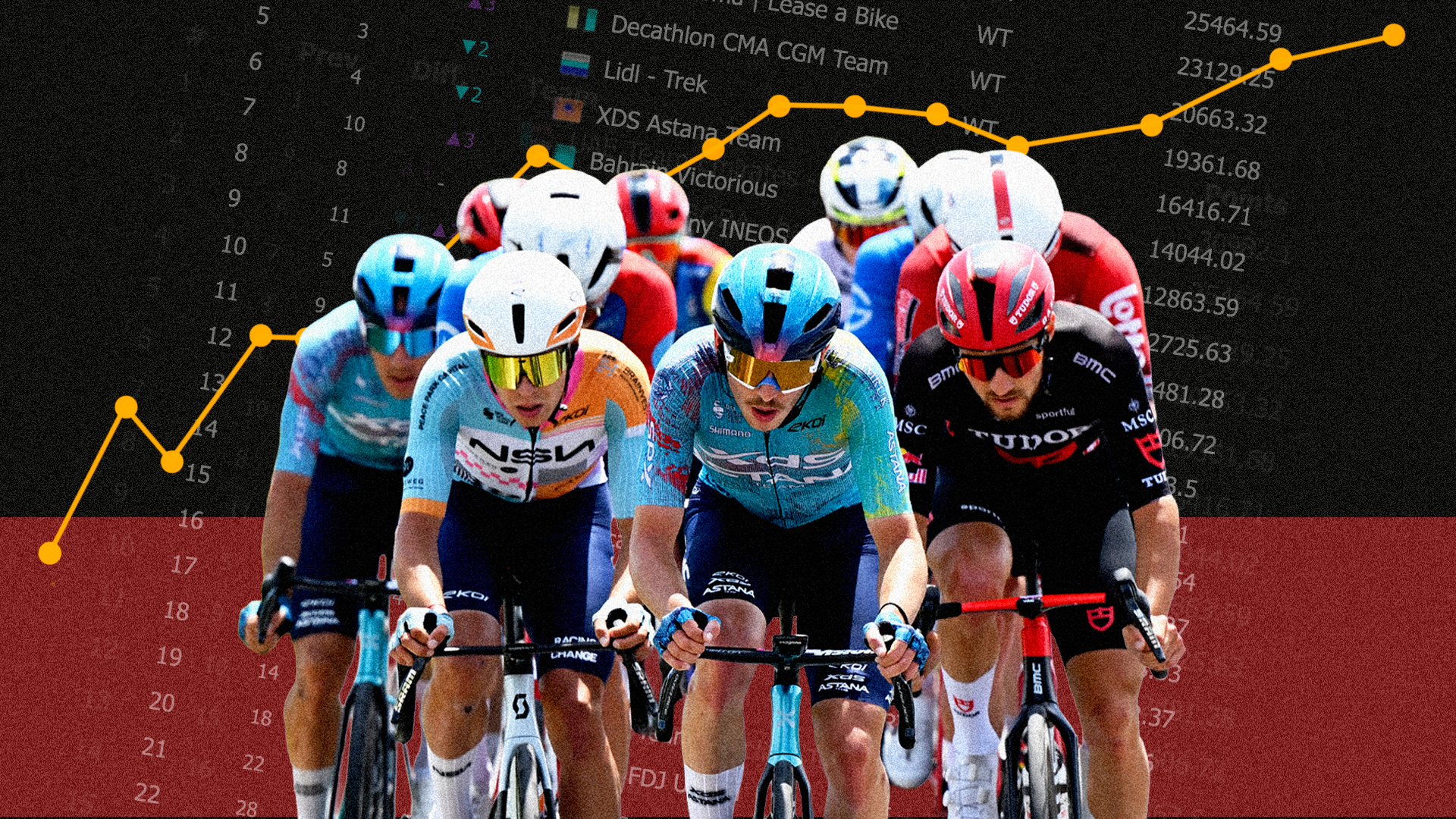
- The Relegation Cliff: Studies and team budgets indicate that dropping from the WorldTour to the ProTeam tier can result in a 30% to 50% reduction in sponsorship revenue. Title sponsors invest millions expecting global visibility, which is heavily concentrated in WorldTour-sanctioned events like the Tour de France.
- The Granularity of Points: UCI points are not just awarded for winning; they are distributed deep into the top 20 or even top 60 of various races, depending on their classification (Grand Tours vs. .1 or .Pro category races).
- The Cost-Benefit of Race Calendars: A data-driven roster optimization model might reveal that sending a climber to a minor Italian one-day race to secure a steady stream of top-10 finishes yields a better return on investment (in terms of points-per-euro of salary) than chasing stage wins against elite contenders in a WorldTour stage race where points drop off steeply after the podium.
- Rider Valuation: Transfer market dynamics have shifted. Riders who consistently score minor placings—often referred to in the peloton as "points collectors"—have seen their market value surge relative to mercurial talents who win spectacularly once a year but blank for the remaining months.
Official Responses: The Governance and the Peloton
The growing influence of data-driven points racing has not gone unnoticed by governing bodies, team managers, and riders.
The UCI’s Perspective
The UCI designed the promotion and relegation system to inject dynamism into the sport, ensuring that the top tier remains competitive and that complacency is punished. From the governing body’s standpoint, the system has succeeded in keeping races engaging deep into the autumn, as teams battle for crucial points right up until the final calendar events.
However, UCI officials have occasionally faced pressure to review how points are weighted. Critics argue that the current system inadvertently devalues the prestige of winning by placing disproportionate value on accumulation.
Team Managers Speak Out
Reactions from sports directors are mixed. Wealthier teams—such as UAE Team Emirates, Visma-Lease a Bike, and Soudal Quick-Step—possess the financial muscle to accumulate points across multiple fronts simultaneously, balancing Grand Tour ambitions with aggressive one-day racing.
For mid-tier and struggling squads, however, the tone is more pragmatic. "You can’t romanticize your way out of relegation," remarked one anonymous WorldTour sports director. "If finishing fifth in a smaller race guarantees our sponsors stability and keeps twenty staff members employed, that is the responsible path to take."
The Riders’ Dilemma
For the athletes, the datafication of racing introduces psychological and tactical friction. Cyclists are inherently competitors who dream of raising their arms in triumph on the Champs-Élysées. Being ordered by a sporting director—or an algorithmic model—to sit up in a breakaway, defend a minor overall placing, or sprint for ninth place rather than risking everything for a win can erode morale.
Implications: Is the Points System Damaging Pro Cycling?
As the cycling community evaluates the long-term impact of the current system, several critical questions emerge regarding the soul and future of the sport.
1. The Erosion of Tactical Aggression
Traditionally, cycling was celebrated for its unpredictability. Long-range breakaways, audacious descents, and kamikaze attacks were hallmarks of the sport. When teams calculate that a failed breakaway equals zero points—while a conservative defense of a 12th-place general classification finish guarantees a vital statistical yield—the racing inevitably alters. Fans and pundits have increasingly voiced frustration over "negative racing," where pelotons roll at a controlled pace, unwilling to animate the race for fear of expending energy that yields no guaranteed point return.
2. Calendar Distortion
The hunt for UCI points has distorted the racing calendar. Teams strategically target lower-tier races (.Pro and .1 events) where the competition field is weaker, allowing their top point-scorers to harvest maximum points against lesser opposition. Meanwhile, some historic races struggle to maintain prestige relevance if top riders skip them to chase points elsewhere.
3. The Psychological Toll on Athletes
Cycling is a sport of immense physical and mental sacrifice. When riders are treated purely as "point-producing assets" within an AI-driven roster optimization model, the human element risks being sidelined. The pressure to avoid crashes and injuries while accumulating minor points can lead to overly cautious riding, reducing the spectacle that draws fans to the sport in the first place.
4. The Path Forward: Balancing Art and Analytics
No one seriously expects professional cycling to turn back the clock. Data science, AI models like those researched by Louis Van Gaelen, and structural points systems are here to stay. The challenge for the UCI, race organizers, and team management is finding a regulatory balance.
If the points system can be recalibrated to heavily reward spectacular victories over risk-averse accumulation—perhaps by introducing higher multipliers for wins or restructuring race tier weightings—the sport can preserve its essential character without sacrificing financial fairness.
Until then, the algorithms will keep running, the spreadsheets will dictate winter transfers, and somewhere in the peloton, a rider will weigh the glory of an attack against the arithmetic certainty of a top-ten finish.


 Evan Lee Salim
 Layla Zulfa

 Laily UPN

 Dwi Wanna

 Nila Kartika Wati

 Pevita Pearce

 Azzam Bilal Chamdy