
 Nila Kartika Wati

When a Formula 1 team makes the high-stakes gamble of plucking a teenager straight from Formula 2 and dropping them into a top-tier factory seat, the initial contract is rarely structured like a blockbuster superstar deal. Prudence dictates that rookie agreements are heavily incentive-laden, prioritizing low baseline risk for the constructor while offering astronomical ceilings for the driver should they manage to conquer the motorsport summit early.
But what happens when that calculated gamble pays off in the most emphatic way imaginable—when the kid captures the drivers’ world championship in just his sophomore season? Suddenly, the original financial terms look drastically outdated. The rookie-scale retainer that once represented a fair entry point for unproven talent now borders on a bargain-basement discount for a reigning global motorsport king.
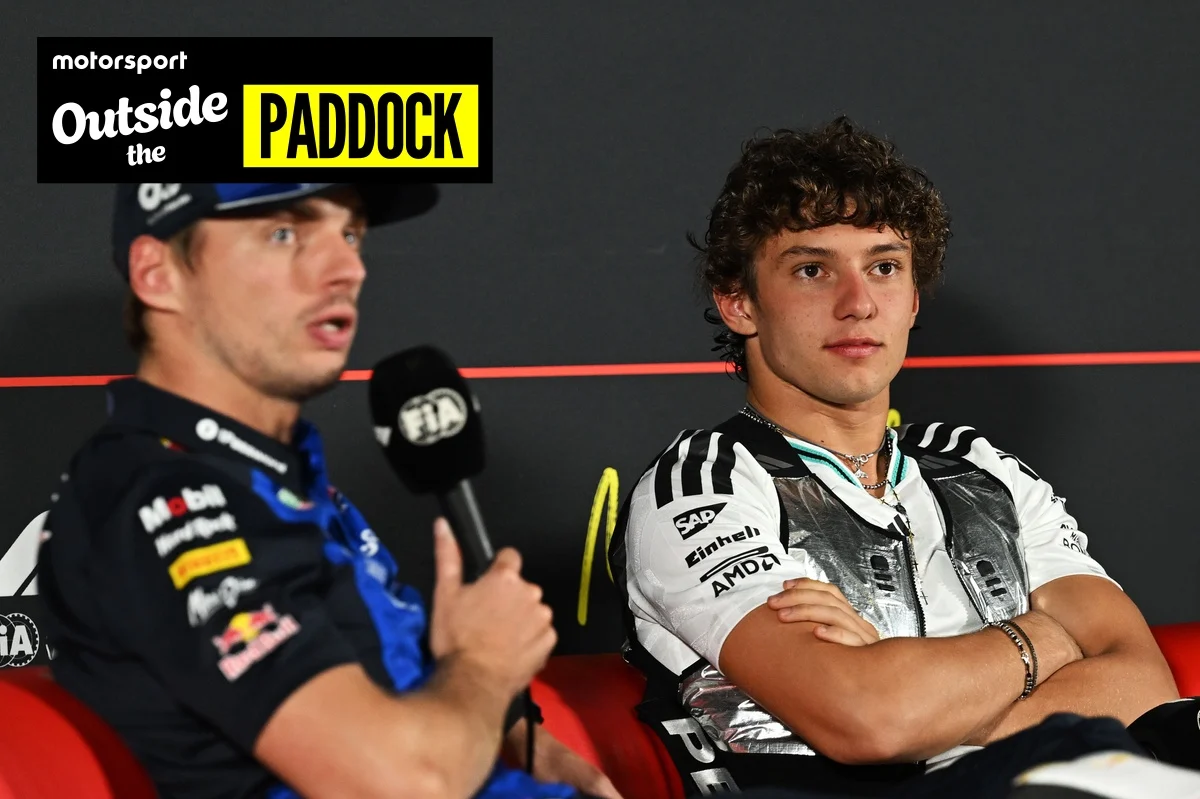
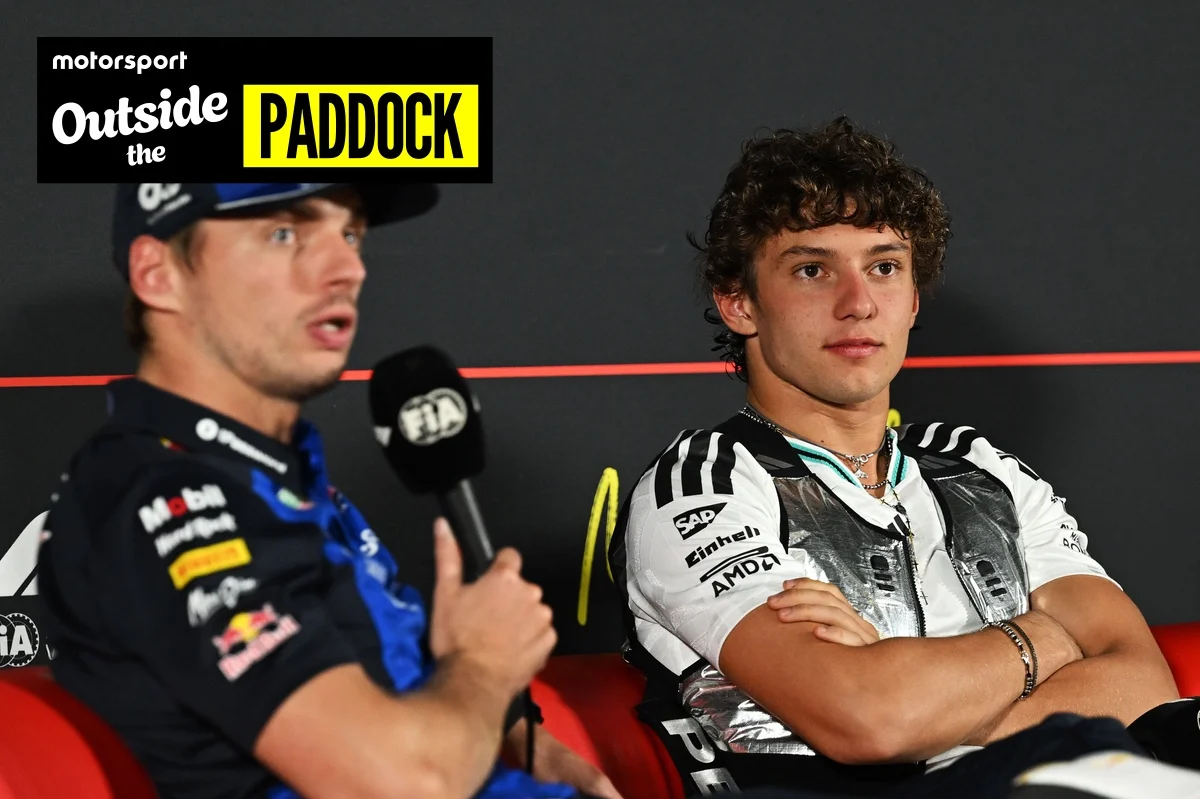
That is precisely the high-class financial dilemma currently playing out behind closed doors at Mercedes, centered around 20-year-old phenom Andrea Kimi Antonelli.
Main Facts: The Financial Disconnect at Brackley
The core of the issue is a stark contrast between Andrea Kimi Antonelli’s status as an elite Formula 1 World Champion and his current position on the Mercedes payroll.
While precise contract details in Formula 1 are traditionally guarded with corporate-level secrecy, recent investigative reporting from German publication BILD thrust the numbers into the public eye. According to BILD, Antonelli is currently operating on a modest base salary of approximately €4 million (roughly $4.6 million USD). Paddock estimators and independent trackers, such as F1Salaries, peg his baseline even lower, hovering closer to $3.4 million USD.
To put these figures into perspective, Antonelli’s base compensation is considered firmly "average" within the broader Formula 1 grid. More importantly, it is completely dwarfed by the massive retainer commanded by his teammate, British veteran George Russell, whose multi-year agreement yields upwards of $34 million annually.
Yet, despite operating on a fraction of his teammate’s guaranteed base pay, Antonelli achieved the ultimate objective in only his second year at the pinnacle of motorsport: he secured the 2026 Drivers’ World Championship. This triumph has instantly turned the Italian teenager into one of the most heavily scrutinized figures in the paddock, not just for his sublime racecraft, but for the glaring discrepancy between his talent and his bank account.
Chronology: From F2 Fast-Track to World Champion
To understand how Antonelli arrived at this crossroads, one must look back at the meteoric trajectory that brought him to the Silver Arrows.
- The Pre-F1 Hype: Long before his promotion, Antonelli was nurtured as the crown jewel of the Mercedes Junior Team. Skipping the traditional multi-year graduation through lower formulae, Mercedes team principal Toto Wolff fast-tracked the Bologna-born prodigy, bypassing the standard midfield acclimatization phase to place him directly into a championship-caliber machine.
- The 2025 Debut Season: Stepping into the shoes left vacant by Ferrari-bound legend Lewis Hamilton, Antonelli’s rookie campaign was a baptism of fire. While flashes of undeniable brilliance were evident, he experienced the inevitable growing pains associated with high-pressure, elite-tier racing.
- The 2026 Sophomore Surge: Armed with a year of premier-class data, enhanced physical conditioning, and a deeper technical understanding of modern ground-effect machinery, Antonelli unlocked a terrifying level of consistency in 2026. Battling seasoned veterans and capitalizing on every operational strength of the Mercedes package, he strung together podiums, pole positions, and critical race victories.
- The Championship Clinch: In a tense, season-long title fight, Antonelli held his nerve to claim the Drivers’ World Championship in his sophomore year, rewriting the modern era’s record books for youth and efficiency at the highest level.
- The Current Paddock Fallout: With the championship trophy safely in hand, media scrutiny immediately pivoted from his driving prowess to his contract. Paddock insiders began questioning how long Mercedes could justify paying a world champion a rookie-tier salary.
Supporting Data: Breaking Down F1 Compensation Structures
To fully grasp the magnitude of Antonelli’s situation, it is necessary to examine how modern Formula 1 driver compensation actually functions. An F1 contract is rarely a flat fee; rather, it is a complex financial ecosystem comprised of several distinct pillars:
- Base Retainer (The Guarantee): This is the fixed, guaranteed amount a driver receives simply for putting pen to paper and fulfilling their racing obligations, regardless of car performance or race results. For rookies, this number is low. For established superstars like Max Verstappen, Lewis Hamilton, or George Russell, it forms a generational fortune.
- Performance Bonuses (The Variable): This is where drivers like Antonelli claw back parity. Modern contracts are littered with performance triggers: points-scoring finishes, podium appearances, fastest laps, Grand Prix victories, and—most lucratively—clinching the World Constructors’ or Drivers’ Championship.
- Sponsorship and Personal Branding Rights: Elite drivers often retain a portion of their personal image rights, allowing them to secure lucrative external endorsements with global brands, watchmakers, fashion houses, and lifestyle companies.
- Team Bonuses: Constructors often distribute internal performance pools to mechanics and engineering staff when a championship is won, a culture of generosity that top-tier drivers frequently contribute to out of their own pockets.
Industry insiders note that while Antonelli’s €4 million base salary looks paltry next to Russell’s $34 million, his title-winning campaign undoubtedly triggered massive, multi-million-dollar performance bonuses. Consequently, Antonelli’s total take-home pay for the championship-winning year is likely significantly higher than his baseline suggests. However, bonuses are retrospective rewards for past glory; they do not establish a sustainable baseline for a reigning world champion moving forward.
Official Responses: Toto Wolff Addresses the Elephant in the Room
In a recent exclusive interview with BILD, Toto Wolff was pressed directly on the financial realities surrounding his young star. Confronted with the reports of Antonelli’s modest base salary, the Austrian team principal offered a characteristically measured, multi-layered response that both protected the team’s legal position and acknowledged the driver’s soaring market value.
First, Wolff was quick to shut down any wild paddock speculation regarding Antonelli’s immediate market availability or a premature exit from Brackley:

"Kimi has a contract for next year," Wolff bluntly confirmed, ensuring that rival outfits like Ferrari or Red Bull cannot poach the newly crowned champion in the short term.
However, when pushed on whether the financial terms of that existing agreement still made sense given Antonelli’s status as a world titleholder, Wolff did not shy away from the underlying premise that the Italian teenager is currently outperforming his paycheque.
"I won’t comment on the figures, but I can say this much: no one needs to worry about him financially," Wolff stated, hinting at the lucrative bonus structures embedded within the initial deal.
More importantly, Wolff offered a clear signal that Mercedes understands its ethical and competitive obligation to re-evaluate the partnership:
"Kimi and his family especially care about him sitting in a competitive car. At the same time, we know that we have a world champion who should also be rewarded."
These remarks are significant. They mark the first public acknowledgment from Mercedes senior management that a financial restructuring is not just a possibility, but an impending necessity.
Implications: What a New Deal Means for Mercedes and Antonelli
Wolff’s public comments carry profound implications for both the team and the driver as they look toward the future eras of Formula 1.
1. Securing the Franchise Cornerstone
Formula 1 is entering a hyper-competitive landscape where driver loyalty is increasingly transactional. With generational talents like Verstappen and emerging prodigies constantly evaluating their options based on power unit performance and aero regulations, Mercedes cannot afford to alienate its crown jewel. By signaling an openness to a lucrative contract renegotiation, Wolff is proactively cementing Antonelli’s loyalty to the Silver Arrows, effectively inoculating the team against future poaching attempts.
2. Shifting Internal Dynamics at Brackley
For years, George Russell has occupied the role of team leader, commanding a superstar salary commensurate with his experience and stature within the organization. With Antonelli now matching—and in some respects exceeding—Russell’s on-track achievements by capturing a world title, the internal dynamic shifts. While both drivers maintain a professional relationship, Antonelli can no longer be viewed as the "junior partner" in the garage. A revised financial package equalizes their psychological standing within the team.
3. Setting a Precedent for Rookie Management
Antonelli’s rapid ascent serves as a masterclass—and a cautionary tale—for how modern driver academies manage talent. Teams that lock young drivers into long, inflexible, low-base contracts run the risk of breeding resentment if the driver instantly outperforms the terms. Mercedes managed this risk well by integrating heavy performance incentives, but the necessity to pivot so quickly to a tier-one salary demonstrates that modern F1 talent can mature and win championships faster than traditional contract cycles anticipate.
Conclusion
Andrea Kimi Antonelli’s rise from a promising teenager in Formula 2 to a Formula 1 World Champion in the span of two years is one of the most remarkable storylines in modern motorsport history. While his bank account currently lags behind his world champion status, Toto Wolff’s recent admissions make one thing abundantly clear: the Silver Arrows are fully aware of their debt to the young Italian.
As Mercedes prepares for the upcoming racing calendar, the financial ledger at Brackley will inevitably be rewritten. Kimi Antonelli may have started his F1 career on a bargain-basement retainer, but his days of earning an "average" wage are officially numbered. The price of glory has arrived, and Toto Wolff and Mercedes appear more than ready to pay it.

 rifanmuazin
 Suro Senen
 Pevita Pearce

 Azzam Bilal Chamdy

 Evan Lee Salim