
 Nana Muazin
By Jessica Marksbury
November 5, 2026
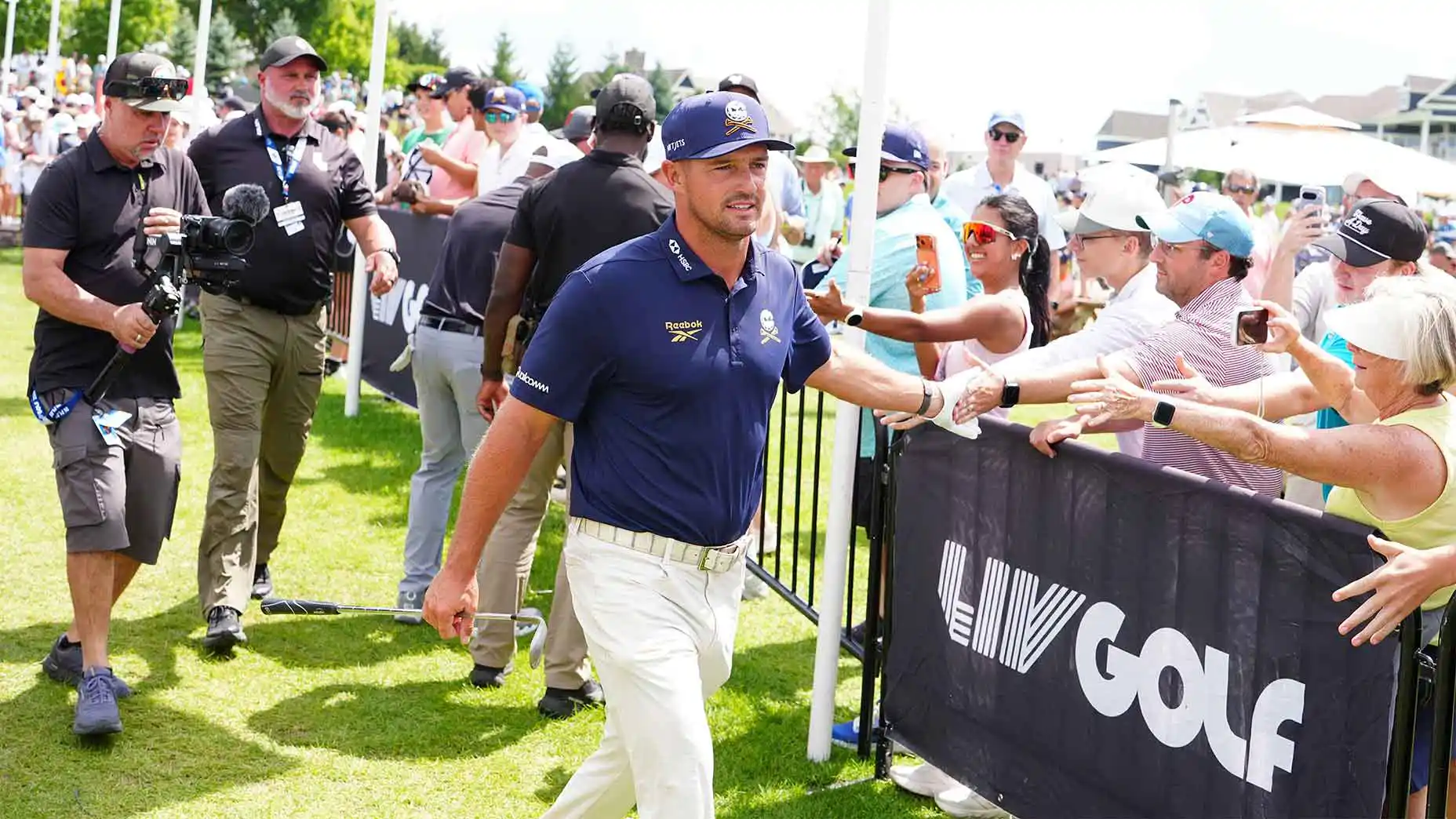
After five tumultuous seasons, 62 tournaments, and a staggering expenditure of more than $5 billion, the LIV Golf era has officially come to a close. What began as a disruptive challenge to the century-old status quo of professional golf has ended in bankruptcy and liquidation, leaving behind a sport that is permanently altered. While the league itself may be dissolving into the history books, its influence—most notably the normalization of massive, nine-figure purse structures—remains embedded in the fabric of the modern game.
As the golf world processes the news of LIV’s final collapse following the withdrawal of BC Partners’ funding, we reflect on the rise and fall of a league that shook the foundations of the sport.
The Catalyst: Why LIV Changed the Game
When LIV Golf burst onto the scene, it was met with skepticism, lawsuits, and intense moral debate. Yet, its impact was immediate. The PGA Tour, forced to defend its market share, pivoted rapidly to a "Signature Event" model, offering $20 million purses to retain top talent. Major championships followed suit, nearly doubling their prize pools since 2021 to ensure they remained the ultimate destination for the world’s best.
LIV forced the sport to confront the reality of its own economics. By treating professional golf as a high-octane, team-oriented product, it challenged the traditional Sunday-finish broadcast model. Though the league ultimately failed to achieve long-term commercial sustainability, it acted as a catalyst for a massive wealth transfer within the sport, forever changing the earnings potential of professional golfers.
A Timeline of the LIV Golf Era (2021–2026)
The history of LIV is a narrative of rapid expansion followed by a slow, strategic retreat.
The Foundation and Launch
- October 2021: Greg Norman is appointed CEO of LIV Golf Investments, backed by the immense capital of Saudi Arabia’s Public Investment Fund (PIF).
- March 2022: The league announces an eight-event inaugural series with a $225 million prize pool, signaling its intent to disrupt the global calendar.
- May 2022: Dustin Johnson signs for a reported $125 million, marking the first major "defection." He is followed by European stalwarts Sergio García, Lee Westwood, Ian Poulter, and Martin Kaymer.
- June 2022: Phil Mickelson headlines the first event in London. The field expands to include Bryson DeChambeau and Patrick Reed. By July, Brooks Koepka joins the roster.
The Peak of Influence
- August 2022: World No. 2 Cameron Smith headlines a wave of major winners joining the league, signaling that LIV could secure the current stars, not just those past their prime.
- March 2023: Brooks Koepka captures the PGA Championship, marking the first time an active LIV player claims a major title.
- June 2023: In a stunning reversal, PGA Tour Commissioner Jay Monahan and PIF Governor Yasir Al-Rumayyan announce a "framework agreement" to merge. The deal, however, fails to gain regulatory approval, leaving the two entities in a stalemate.
- December 2023: Jon Rahm signs with LIV in a massive move that sent shockwaves through the golf ecosystem.
The Decline
- January 2025: Scott O’Neil replaces Greg Norman as CEO, signaling a shift toward corporate restructuring and away from the combative "rebel" image.
- January 2026: Brooks Koepka leads a wave of players returning to the PGA Tour, signaling a loss of confidence in the league’s stability.
- April 2026: The PIF announces it will cease funding after the 2026 season. A Louisiana event is postponed, effectively signaling the beginning of the end.
- August–September 2026: LIV cancels its team championship and files for bankruptcy, entering a restructuring agreement with BC Partners.
- November 2026: With BC Partners withdrawing their support, the league moves toward final liquidation.
Supporting Data: The Cost of Disruption
The financial metrics of LIV Golf remain a subject of fascination for economists and sports historians. With over $5 billion in capital expenditure, the league attempted to buy its way to cultural relevance.
According to internal reports, the player acquisition costs alone accounted for roughly $2 billion of the spend. Beyond the guarantees, the operational overhead for staging 62 international events, including logistics for private travel, high-end hospitality, and broadcast production, proved insurmountable. While the PGA Tour’s purse increases (Signature Events) have been criticized as a "reactionary" cost, they represent a sustainable model compared to the subsidy-heavy structure that defined the LIV operation.
The Official Response: A Quiet Exit
The end of the LIV experiment has been remarkably quiet compared to its bombastic launch. In his final statements, CEO Scott O’Neil noted that the league had "achieved its objective of highlighting the need for innovation in professional golf," though he conceded that the "economic headwinds" proved too strong for a standalone model.

The PGA Tour has maintained a policy of integration for returning members, albeit with strict eligibility requirements. Commissioner Jay Monahan, speaking on the aftermath, emphasized that the Tour is "focused on the future of the game" and that the "fractured era" of the sport is effectively closed.
The Implications: What Remains?
As the dust settles, the golf world is left to answer the question: Was it worth it?
1. The End of the "Traditional" Calendar
The sport has moved toward a more consolidated, high-stakes schedule. The "Signature Event" model is here to stay, and the PGA Tour has successfully insulated itself from further hostile takeovers by tightening control over its top-tier talent.
2. The Player Exodus
Players who left for LIV now face a complex landscape. While some, like Jon Rahm and Bryson DeChambeau, successfully leveraged their LIV contracts to reach generational wealth, others find themselves in a precarious position. The "LIV 2.0" concept—a rumored smaller, independent tour—has been effectively killed by the DP World Tour’s bans on any player associated with the remnants of the Saudi-backed venture.
3. The Cultural Shift
The idea that golf is a team sport—a core tenet of LIV’s marketing—has not entirely disappeared. Several PGA Tour initiatives are looking at how to incorporate team-based elements into off-season events, proving that while the league failed, the ideas it introduced were not entirely discarded.
4. The Final Legacy
Perhaps the most lasting legacy of LIV Golf is the shift in power. Professional golfers now have unprecedented leverage, and the major championships have solidified their position as the ultimate, independent arbiters of greatness in the sport. The PIF’s involvement in golf, however, is not ending; it is merely shifting. Reports suggest that the Saudi fund will move toward sponsorship roles within existing golf infrastructure, rather than trying to build a rival entity from scratch.
As we look toward the 2027 season, the golf world is once again united, though the scars of the "Golf War" are still visible. The LIV era was a high-stakes gamble that fundamentally changed the economics of the sport. It forced the PGA Tour to modernize, forced the majors to pay up, and forever changed the way fans engage with the professional game.
The banners have been taken down, the bankruptcy filings are being processed, and the players are finding their way back to the traditional circuits. The experiment is over, but the game of golf will never be the same.


 Asro

 Siti Muinah
 rifanmuazin
 Iffa Jayyana


 Pevita Pearce