
 Suro Senen
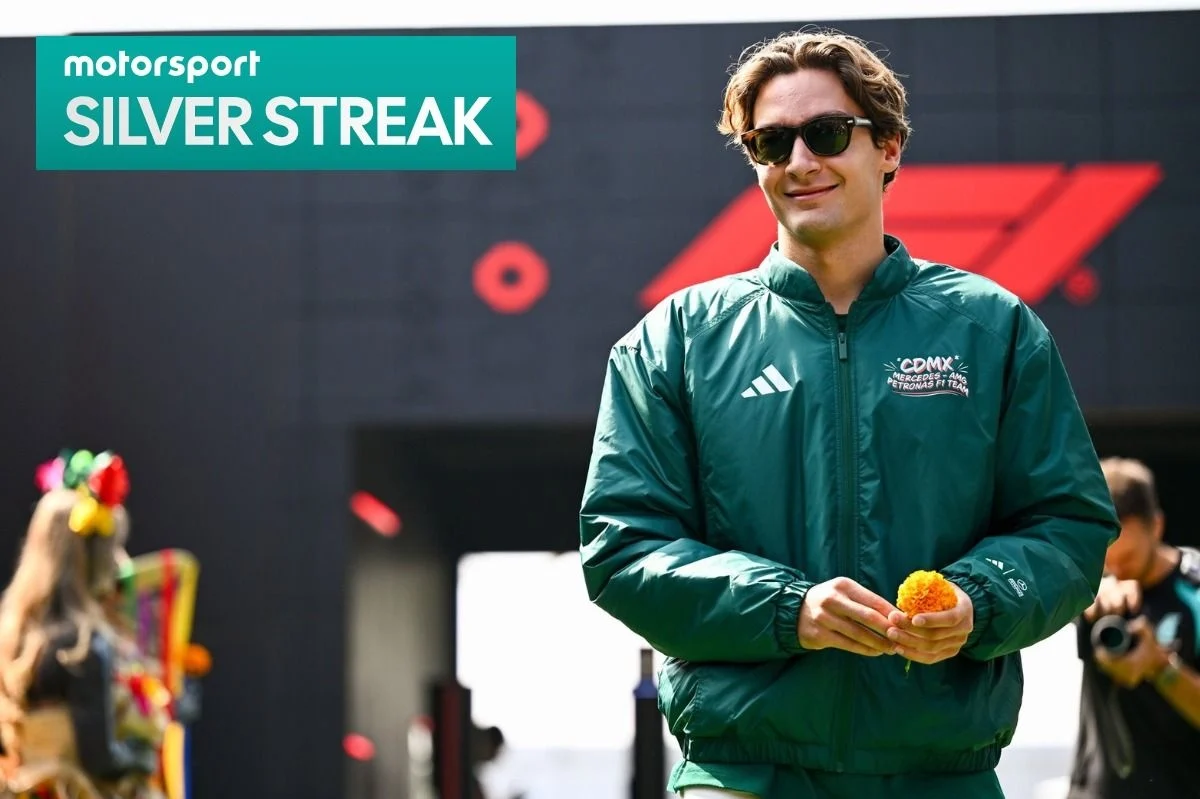
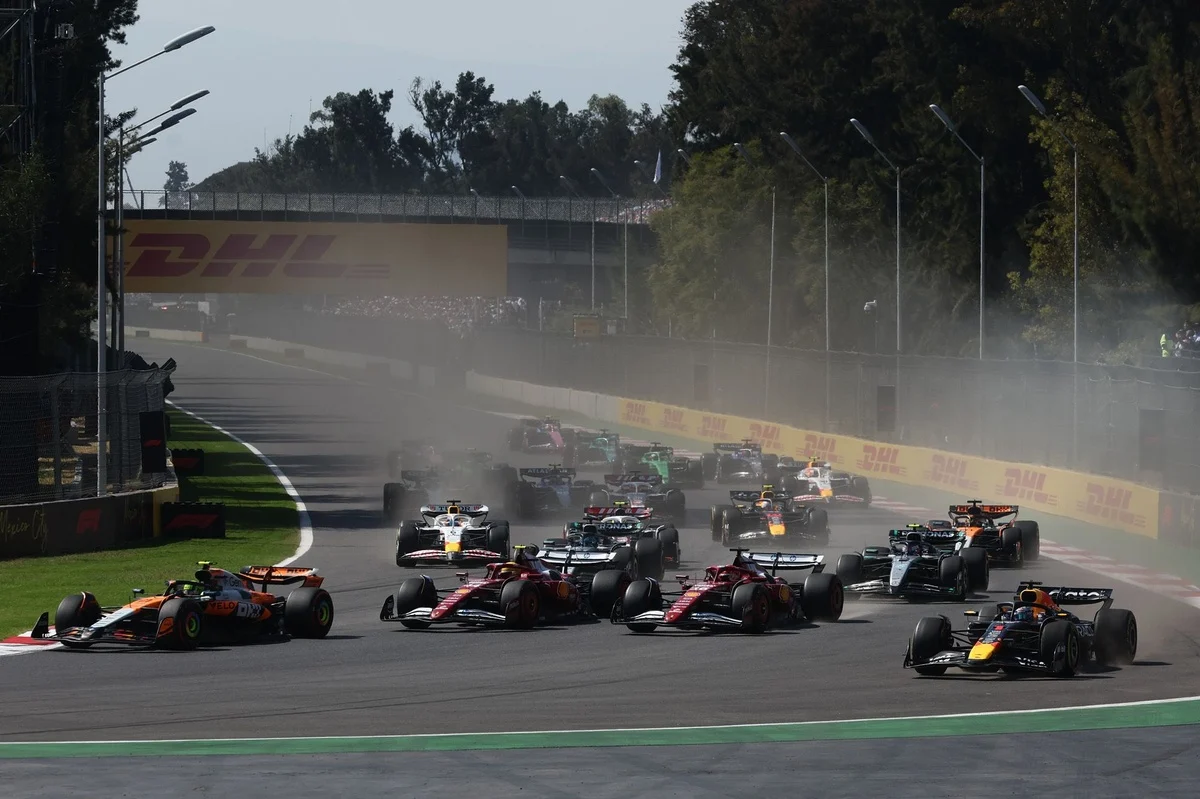
MEXICO CITY — As the Formula 1 paddock unpacks its equipment in the high altitude of the Autodromo Hermanos Rodriguez for the Mexico City Grand Prix, the championship narrative is heavily skewed toward one side of the Mercedes garage. While young phenom Kimi Antonelli stands on the precipice of clinching his maiden drivers’ world championship this weekend, his more experienced teammate, George Russell, finds himself reflecting on a turbulent, emotionally taxing, and ultimately defining campaign.
Despite sitting second in the drivers’ standings as the season enters its home stretch, Russell trails his teammate by a formidable 123 points. Yet, facing the media ahead of the Mexican Grand Prix weekend, the 28-year-old Briton radiated a mixture of humbling introspection and unwavering defiance.
Far from viewing his 2026 struggles as a career roadblock, Russell insists that this challenging year is merely a chapter in a much larger book. With his eyes fixed on longevity in the sport, the Mercedes stalwart boldly declared that he still has "a good 12 to 15 years left in the championship."
Main Facts: A Tale of Two Garages at Mercedes
The 2026 Formula 1 season has been a masterclass in contrasts within the German manufacturer’s pit box.
- The Title Challenger: In only his second season in Formula 1, Kimi Antonelli has put together a remarkably consistent campaign. The Italian teenager heads into the Mexico City GP weekend with a commanding 123-point lead over the rest of the field, needing only to secure a solid result to seal his first world title.
- The Veteran’s Rollercoaster: George Russell, contesting his eighth F1 season, began the year in phenomenal fashion by winning the season-opening Australian Grand Prix. However, his championship bid quickly unraveled due to a volatile mix of fluctuating performance and severe mechanical misfortune, including three costly retirements caused by reliability issues.
- The Standings: Despite the turbulence—which has seen him swing wildly from pole positions and dominant victories (such as his stellar drive in Baku) to frustrating midfield finishes—Russell still holds second place in the drivers’ standings.
- The Long-Term View: At 28 years old, Russell is rejecting any notion that his current deficit to Antonelli defines his trajectory. Drawing inspiration from modern F1 longevity—specifically noting Fernando Alonso (45) and Lewis Hamilton (41)—Russell believes his peak years are still very much ahead of him.
Chronology of a Volatile Season
To understand Russell’s current state of mind, one must examine the erratic rhythm of his 2026 campaign. It has been a season defined by abrupt shifts in momentum, where stellar highs have been immediately undercut by sudden lows.
The year started like a dream in Melbourne. Russell executed a flawless weekend, clinching the season opener and instantly establishing himself—and Mercedes—as early championship favorites. However, the internal dynamic within the team quickly shifted. While Antonelli found a metronomic groove, maximizing points week in and week out, Russell’s season turned into a jagged-edged puzzle.
Mechanical gremlins reared their ugly heads at inopportune moments. Three separate retirements due to power unit and reliability issues stripped the Briton of crucial points, halting any momentum he tried to build. Even when the car finished races, the results fluctuated wildly.
A case in point is the frantic autumn stretch: following a brilliant, dominant victory on the streets of Baku, Russell slumped to a disappointing ninth place at the Singapore Grand Prix. An even more grueling weekend followed in Austin, where he crossed the finish line in eighth. Between a DNF in Malaysia and struggles in the North American rounds, Russell has been forced to weather a relentless storm of competitive inconsistency.
Supporting Data and Performance Analysis
Statistically, Russell’s 2026 season is an anomaly in an otherwise upwardly mobile career. Entering the sport as a junior driver who dragged uncompetitive Williams machinery into Q2 and points-paying positions, Russell built a reputation for relentless consistency and supreme one-lap pace.
Upon moving to Mercedes, that reputation was cemented with a maiden win in Brazil (2022) and consistent podium finishes. Yet, the 2026 regulations and car characteristics have exposed a volatility that even Russell himself struggles to fully quantify.

"I’ve probably learned more about myself this year than I would have liked to, in all honesty," Russell confessed to reporters in Mexico City. "The highs and lows you go through in sport are immense. And that’s because we all care so much for what we’re doing."
Intriguingly, Russell pointed out a peculiar trend in his mental and competitive recovery cycles this year:
"I’ve generally bounced back really, really strong [from low points]. And then I had another bad race after the good one. So maybe it’s something I need to analyse as well, because I always perform best after my worst races… Maybe there’s something in it, but I’ve been racing more years of my life than I haven’t. And I’ve had more successful years than relative failures."
This statistical and emotional whiplash has forced Russell to adapt his internal metrics for success, shifting away from external comparisons and focusing entirely on self-mastery.
Official Responses and Driver Mentality
Speaking candidly in the media pen, Russell offered deep philosophical insights into the psychological burden of elite motorsport. Unlike team sports where athletes directly clash in physical arenas, Russell compared Formula 1 driving to the solitary mental strain of professional golf.
"We’re not boxers where you’re in a ring fighting directly against somebody else," Russell explained. "We are kind of fighting against ourselves, almost like a golfer in a way, a qualifying lap. You’re there by yourself. And it’s the work and preparation that you’ve done yourself that makes the difference to a good performance or not."
Rather than obsessing over how to bridge the 123-point gap to Antonelli on track, Russell revealed his introspective approach: "So I’m not directly looking at my number one competitor saying, ‘How am I going to beat this guy?’ It’s more I’m looking at myself in the mirror thinking, ‘What do I need to do to not have these poor performances?’"
This fierce accountability extends to his views on the championship table as a whole. For a driver who has tasted victory and harbors world championship ambitions, finishing as the runner-up offers zero consolation.
"For every driver on the grid, there’s only one position that matters and it’s P1," Russell stated firmly. "And to be best of the rest is not really something you dream of as a kid. As long as it’s not P1 in this sport, it’s kind of that or nothing, really."
Despite losing a championship fight—thus far—to a teammate in only his second year of F1 compared to Russell’s eight, the Briton’s public resilience has drawn widespread respect from the paddock. He refuses to let a single difficult year derail his career narrative.
"I remind myself, I’m 28 years old. I see Lewis still competing extremely well at 41 and Fernando at [45]," Russell noted, highlighting the shifting age paradigms in modern Formula 1. "Lewis won the majority of his titles in his 30s. And this year is absolutely not going to define my career as a whole. It’s not going to break me. If anything, it’s going to make me stronger."
Implications for the Future: Mercedes and Beyond
As the 2026 season hurtles toward its conclusion, the implications of Russell’s current campaign stretch far beyond the immediate battle in Mexico City.
- The Intra-Team Dynamic: With Kimi Antonelli poised to secure the drivers’ crown, Mercedes is officially entering a new era. Antonelli’s meteoric rise establishes him as the team’s present and future focal point. How Russell adapts to sharing a garage with a dominant, youthful world champion will dictate his leverage within the Silver Arrows—or potentially on the wider driver market—heading into the late 2020s.
- Mental Fortitude as a Weapon: Russell’s ability to publically process failure without defensive posturing is a hallmark of elite champions. By acknowledging his weaknesses this season, analyzing his post-disaster bounce-backs, and steeling himself for the long haul, Russell is proving that his resilience matches his raw speed.
- The 12-to-15-Year Horizon: By explicitly stating that he has "a good 12 to 15 years left," Russell is signaling to Mercedes, rival manufacturers, and the F1 community that he views himself as a fixture of the grid well into his early 40s. With regulation shifts on the horizon and a perpetually evolving driver market, experience combined with youthful resilience remains a potent currency.
For now, all eyes at the Autodromo Hermanos Rodriguez will be on Antonelli’s championship coronation. But beneath the surface, George Russell is quietly laying the foundations for his own resurgence—reminding everyone that in a sport as unforgiving as Formula 1, a single difficult year is merely a temporary setback on a very long road.

 Neng Nana
 Layla Zulfa
 Basiran
 Lina Hope
 Muslim

 Reynand Wu