
 Neng Nana
Published October 27, 2026
By The Fitness & Winter Sports Desk
As winter approaches and mountain towns prepare for the first major snowfall, skiers worldwide are tuning their gear, waxing their bases, and checking their season passes. Yet, while equipment maintenance is routine, physical preparation often begins and ends with basic lower-body exercises. For decades, traditional pre-season training regimens have focused heavily on the primary movers of the lower extremities: the quadriceps, the hamstrings, and the gluteus maximus.
However, orthopedic specialists and winter sports medical teams warn that this approach leaves a critical gap in a skier’s physical armor. According to top-tier sports medicine professionals, overlooking the smaller, stabilizing muscles of the lower body—most notably the gluteus medius—dramatically increases the risk of debilitating knee injuries, including torn anterior cruciate ligaments (ACLs).
To understand how a muscle located on the side of the hip can make or break a ski season, we look at the biomechanics of alpine skiing, expert recommendations from U.S. Ski Team physicians, and the holistic training methodologies required to stay safe on the slopes.
Main Facts: The Anatomy of a Ski Injury
The statistics surrounding alpine skiing injuries are well-documented, with anterior cruciate ligament (ACL) tears standing out as one of the most frequent and severe trauma incidents on the mountain. When a skier suffers an ACL tear, it is rarely the result of a direct blow to the knee. Instead, it is usually a non-contact or rotational injury triggered by poor biomechanical positioning under high velocity.
Enter the gluteus medius, a fan-shaped muscle situated on the outer surface of the pelvis. While it may not command the visual presence of the quadriceps or the sheer power of the glute max, its functional responsibilities are immense:
- Hip Abduction: It initiates the movement of bringing the leg outward away from the midline of the body.
- Knee Stabilization: It actively prevents the knee from collapsing inward—a dangerous biomechanical alignment known as valgus collapse.
- Single-Leg Balance: It provides the foundational stability required to balance dynamically on a single ski during high-speed turns.
Dr. Gregory Lichtman, an orthopedic surgeon practicing in Northern California and a dedicated physician for the U.S. Women’s Ski Team, emphasizes that the gluteus medius is arguably the most vital, yet most neglected, muscle for winter sports enthusiasts.
"Because ACL tears are among the most common ski injuries, we have to look closely at what controls the tibia and the knee joint under stress," Dr. Lichtman explains. "Unfortunately, even high-level athletes can present with a weak glute medius. Unlike major muscle groups that naturally pick up strength from daily activities like running or hill climbing, the glute medius requires targeted, intentional strengthening."
Chronology: The Evolution of Ski Conditioning and Injury Prevention
The Traditional Era of Dryland Training
For generations, "getting in shape for ski season" conjured images of wall sits, barbell squats, and long-distance running. While these exercises successfully build raw power and cardiovascular endurance, they fail to address frontal-plane stability. Traditional squats and leg presses move the body in a strictly sagittal plane (forward and backward), leaving the lateral stabilizers underdeveloped.
The Shift Toward Biomechanical Realism (Present Day)
Over the past decade, sports medicine practitioners working alongside elite winter athletes have shifted the paradigm toward functional, multi-planar training. Recognizing that alpine skiing places massive lateral, rotational, and eccentric forces on the joints, trainers have integrated targeted hip-stability exercises into official dryland protocols.
Dr. Lichtman and his peers now advocate for year-round cross-training. They argue that tapering off conditioning the moment the ski lifts start turning is a recipe for late-season fatigue and injury.
Supporting Data: Biomechanics, G-Forces, and Knee Valgus
To grasp why a strong outer hip protects the knee, one must examine what happens physically during an aggressive carving turn.
The Mechanics of an ACL Tear
When a skier loses their form and shifts their body weight backward—colloquially known as getting "into the back seat"—their center of mass moves away from the optimal position centered over the boots. In this compromised posture, if the knee caves inward (valgus collapse), the tibia undergoes internal rotation.
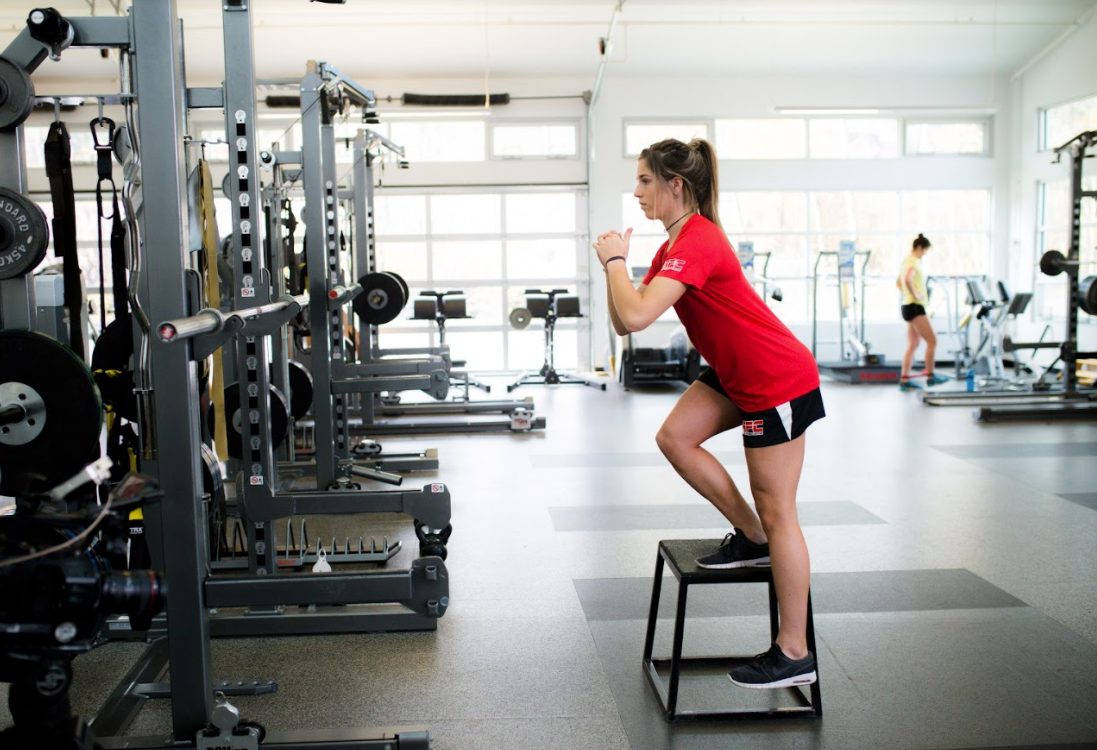
"That internal rotation combined with valgus collapse is where the classic ACL tear occurs," Dr. Lichtman warns.
Even when injuries do not reach the severity of a full ligament rupture, chronic knee valgus while skiing contributes heavily to patellofemoral pain syndrome—a persistent, painful inflammation around the front of the kneecap that ruins many vacations. By strengthening the gluteus medius, skiers create a muscular barrier that resists valgus collapse, stabilizing the knee joint under heavy loads.
Unleashing Performance Through Physics
Beyond injury prevention, a powerful gluteus medius unlocks a higher tier of athletic performance.
When a skier initiates a high-speed turn on steep terrain, the G-forces generated by the turn attempt to push the athlete down the mountain. To counteract this force and carve an aggressive arc, the skier must press firmly and confidently onto their downhill ski.
"A strong gluteus medius really allows you to stand on your downhill ski a little bit more aggressively and make a more powerful turn," notes Dr. Lichtman. Combined with a robust core and powerful quads, the glute medius forms an unyielding "pillar" on the outer hip, allowing the skier to absorb high G-forces without buckling.
Official Recommendations: How to Train the Gluteus Medius
Historically, physical therapists prescribed simple isolation movements to target the side hip—such as lying on one’s side with ankle weights and lifting the top leg upward (side-lying hip abduction). While effective for basic rehabilitation, Dr. Lichtman notes that this movement fails to replicate the complex, closed-chain kinetic demands of actual sports.
The Gold Standard: Monster Walks
Instead of isolated, lying movements, sports medicine experts recommend compound, functional exercises that activate the gluteus medius alongside neighboring muscle groups like the quads, hamstrings, core, and glute max.
The undisputed favorite among elite trainers is the "Monster Walk."
How to Perform Monster Walks:
- Setup: Place a looped resistance band around your legs. You can position the band either just above your knees (easier) or around the balls of your feet/ankles (more challenging).
- Stance: Stand with your feet shoulder-width apart, knees slightly bent in an athletic half-squat position, keeping tension on the band at all times.
- Movement: Step diagonally forward and outward with your right foot, followed by your left foot, maintaining a wide stance. Take several steps forward, and then reverse the motion, stepping diagonally backward.
- Variations: To prevent boredom and target different fibers of the hip complex, vary your angles. Step strictly side-to-side (lateral walks), or move forward and backward while keeping constant tension on the band.
Programming and Progression
- Frequency: Incorporate monster walks into your workout routine three days a week, ensuring at least one day of rest between sessions to allow muscle recovery and tissue remodeling.
- Timeline: Maintain this routine during both the pre-season dryland phase and throughout the active winter ski season.
- Progression: As the exercise begins to feel manageable, increase the challenge by swapping in a thicker, higher-resistance band.
Implications: A Holistic Approach to Winter Wellness
While a well-conditioned gluteus medius is an invaluable asset, medical professionals stress that it is only one piece of a broader injury-prevention puzzle.
The Trifecta: Core, Quads, and Endurance
Preventing a skier from getting "into the back seat" requires a comprehensive physical foundation.
- Strong Quads and Core: These muscles work in unison with the hips to keep the skier’s center of mass forward, preventing the structural breakdown that precedes most wipeouts.
- Cardiovascular and Muscular Endurance: Fatigue is one of the leading catalysts for catastrophic ski injuries.
"The goal is to be as fresh after lunch as you are after breakfast," Dr. Lichtman emphasizes. "Fatigue is definitely a risk factor for ACL tears. Fatigued skiers get into the back seat much more frequently and sustain injuries at a higher rate than those who are fresh."
Skiers who hit the slopes two to three days a week often fail to build sufficient sport-specific endurance from skiing alone. Therefore, structured cross-training that blends heavy strength training, lateral hip stability work, and cardiovascular endurance is non-negotiable for anyone looking to ski hard, pain-free, and injury-free all winter long.
As the snow begins to fall, the message from the medical community is clear: true mountain readiness goes beyond the gym squats and heavy leg presses. By devoting time to strengthen the often-ignored gluteus medius—and pairing it with robust core stability and full-body endurance—skiers can protect their joints, elevate their carving performance, and ensure they enjoy every single run from first chair to last call.

 Lina Hope
 Evan Lee Salim
 Reynand Wu
 Siti Muinah
 Ali Ikhwan