
 Nana Wu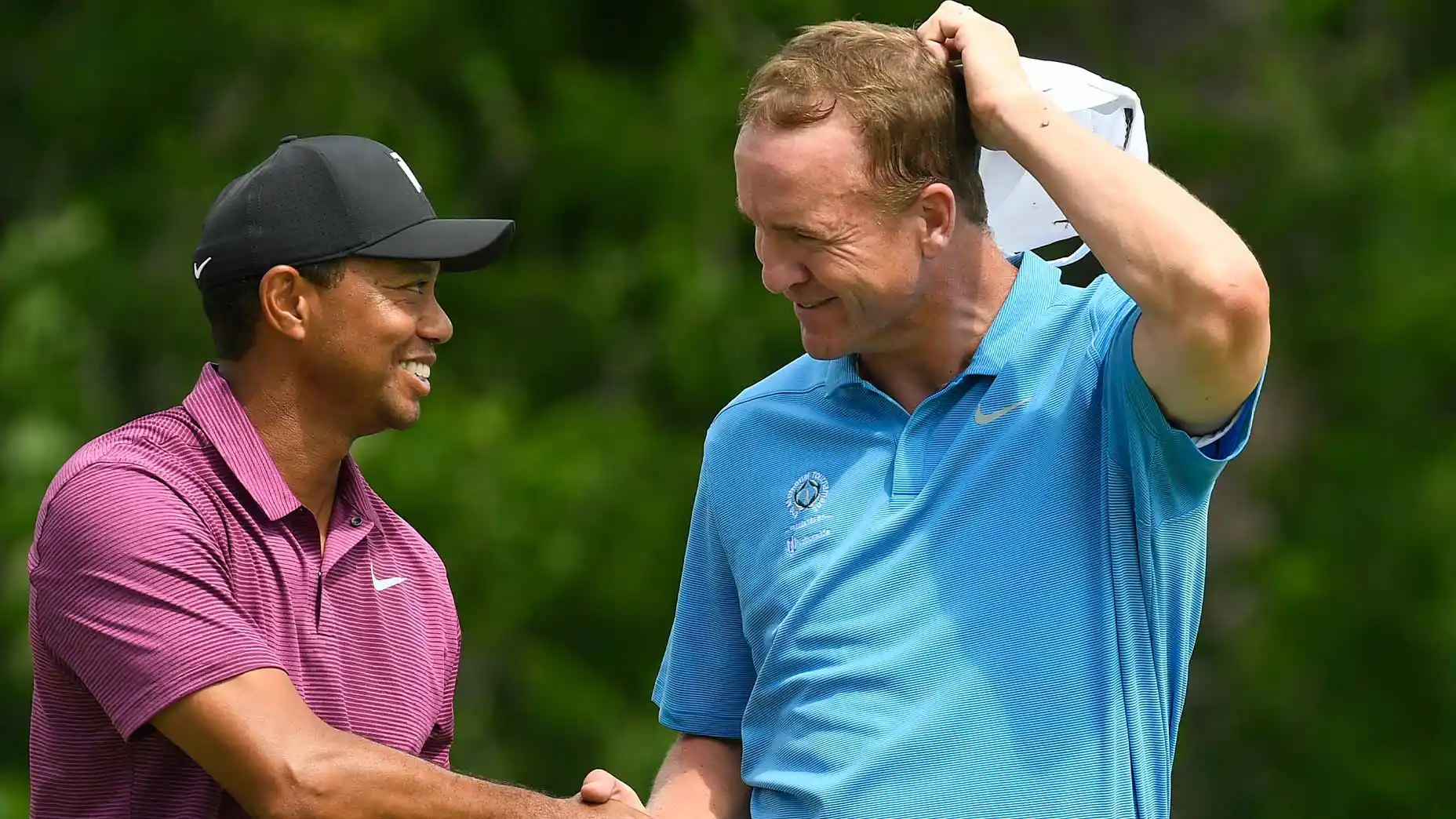
By Jessica Marksbury
September 21, 2026
With 15 major championships, 82 PGA Tour victories, and an aura that defined a generation of professional golf, Tiger Woods’ competitive prowess is already etched into the annals of sporting history. However, the true depth of that drive—the insatiable hunger to win that fueled his ascent to global stardom—was never confined to the roped-off arenas of Sunday afternoon major contention. It permeated every facet of his life, including the ostensibly relaxed atmosphere of pro-am events.
In a recent, expansive conversation with GOLF’s Michael Bamberger, Pro Football Hall of Fame quarterback and two-time Super Bowl champion Peyton Manning provided a vivid, firsthand account of this phenomenon. According to Manning, Woods’ "Big Cat" persona wasn’t just a brand; it was a psychological state that turned even the most casual round of golf into a high-stakes battlefield.
The Genesis of the Competitive Mindset: Main Facts
The core of the anecdote shared by Manning lies in a specific, telling encounter at the Bay Hill Club & Lodge. It serves as a microcosm of the mentality that propelled Woods to the top of the World Golf Rankings for a record-breaking 683 weeks.
The premise was simple: Manning and Woods were paired together during a pro-am. Despite the relaxed nature of such events—where pros often prioritize interaction with sponsors and amateurs over score—Woods found himself trailing. True to form, he refused to accept the deficit, turning a lighthearted round into a psychological game of chess.
For the casual observer, a pro-am is a networking opportunity. For Tiger Woods, it was another arena in which to assert dominance. When Woods proposed a $100 wager on the final stretch of the course, he wasn’t playing for the money; he was playing for the assertion of his superiority, even when the odds and the support systems were stacked against him.
A Chronology of a Comeback: The Bay Hill Incident
To understand the magnitude of Woods’ focus, one must look at the specific timeline of that afternoon at Bay Hill. As Manning recounted to Bamberger, the stage was set on the 13th hole.
The Challenge
Woods, trailing Manning by four holes, turned to the legendary quarterback and laid down the gauntlet: "All right, I’m 4 down to you. I’ll play you from here on in for 100 bucks."
At this point, Manning felt confident. He had the home-field advantage of sorts, bolstered by the presence of his caddie, a banker from the tournament’s sponsor. In a twist of professional courtesy, Woods’ longtime caddie, Steve Williams, had been assisting Manning with his reads, providing the kind of high-level guidance that usually separates the pros from the amateurs.
The Turning Point
The turning point occurred on the 13th green. Manning, lining up a 20-foot birdie putt, turned to Williams for his customary expertise. The exchange that followed perfectly encapsulates the clinical, often cold, nature of the Woods camp.
"I said, Stevie, what do you like? I think it’s going left," Manning recalled. "Deadpan. It’s going right? Deadpan. I’m gonna hit it straight, Stevie. Deadpan."

The atmosphere shifted instantly. Williams, acting on the silent authority of his "boss," cut off the lifeline. "Boss says y’all got a bet, no more help," Williams declared.
The Result
Suddenly, Manning was left to rely on his own intuition—and the input of "Banker Bob," who confessed to having no clue how to read the complex break of a Bay Hill green. The result, perhaps inevitably, was a total reversal of momentum. Woods utilized the psychological pressure, the sudden isolation of his opponent, and his own incomparable skill to claw back the lead.
"Who do you think won that match?" Manning asked rhetorically. "Tiger Woods. If that doesn’t tell you how competitive that guy is, I don’t know a better example."
Supporting Data: The Anatomy of a Winner
While the Bay Hill story is anecdotal, it aligns perfectly with the quantitative data surrounding Woods’ career. Throughout his prime, Woods maintained a statistical dominance that defied the normal variance of golf.
- Scoring Average: Woods held the PGA Tour record for lowest scoring average (Vardon Trophy) eight times between 1999 and 2009.
- The "Clutch" Factor: During the height of his career, Woods’ ability to perform under pressure—his "strokes gained" in high-pressure situations—was consistently higher than any of his contemporaries.
- Pro-Am Presence: Despite the rigorous travel and training schedule, Woods’ participation in pro-ams remained high throughout the early 2000s, often serving as a training ground for his mental conditioning.
The Manning interview occurred in the context of the Smith Cole, a prestigious invitational tournament chaired by Manning. Held at the historic Cherry Hills Country Club, the tournament brings together pro-member teams from iconic institutions like Cypress Point, Seminole, and Augusta National. The existence of such an event highlights the intersection of elite athletics and the "gentleman’s game," and Manning’s reverence for the game—and for Woods—remains a central pillar of his post-football career.
Official Responses and Perspectives
While Woods has not commented directly on this specific interaction, his former peers and caddies have long corroborated the "all-business" approach he brought to the course.
Steve Williams, in his own memoirs and interviews, has frequently noted that Woods’ intensity was the "secret sauce" to their partnership. It wasn’t about being mean-spirited; it was about the total elimination of variables that could lead to a loss. When Woods was "in the zone," the world outside the ropes—including the sponsors, the spectators, and even his playing partners—effectively ceased to exist.
Peyton Manning’s own transition from the gridiron to the golf course offers a unique perspective. As a quarterback who famously studied game film for hours and demanded perfection from his receivers, Manning recognizes the same "obsessive" quality in Woods. "It’s that internal clock," Manning noted during the interview. "When you see someone who refuses to lose, even in a meaningless wager, you’re seeing the DNA of a champion."
Implications: The Legacy of Intensity
What are the long-term implications of such intense competitive fire? For the sport of golf, the legacy of Woods is twofold.
- Elevated Standards: Woods didn’t just win; he forced the rest of the field to train harder, get fitter, and think more strategically. The "Tiger Effect" is directly responsible for the modern era of the athletic golfer.
- The Psychology of Winning: The anecdote provided by Manning reminds us that success at the highest level is not just a physical endeavor. It is a psychological one. The ability to switch from "social" mode to "killer" mode in a heartbeat—as seen at Bay Hill—is the hallmark of an athlete who understands that winning is a habit, not a destination.
As we look back on these stories in 2026, the legend of Tiger Woods continues to grow, not just through the trophy count, but through these intimate, humanizing glimpses into his character. Whether he is sinking a 20-footer to win a major or taking a hundred bucks off an NFL legend in a pro-am, the result is almost always the same.
For the next generation of golfers, the lesson is clear: If you want to be the best, you must treat every swing, every putt, and every opponent with the same level of respect and intensity. As Peyton Manning learned the hard way, when you’re standing on the green against Tiger Woods, there is no such thing as a casual round.

 Dwi Wanna
 Asro
Asro
 Ali Ikhwan
 Jia Lissa
 Neng Nana
 Iffa Jayyana
 Evan Lee Salim