
 Ammar Sabilarrohman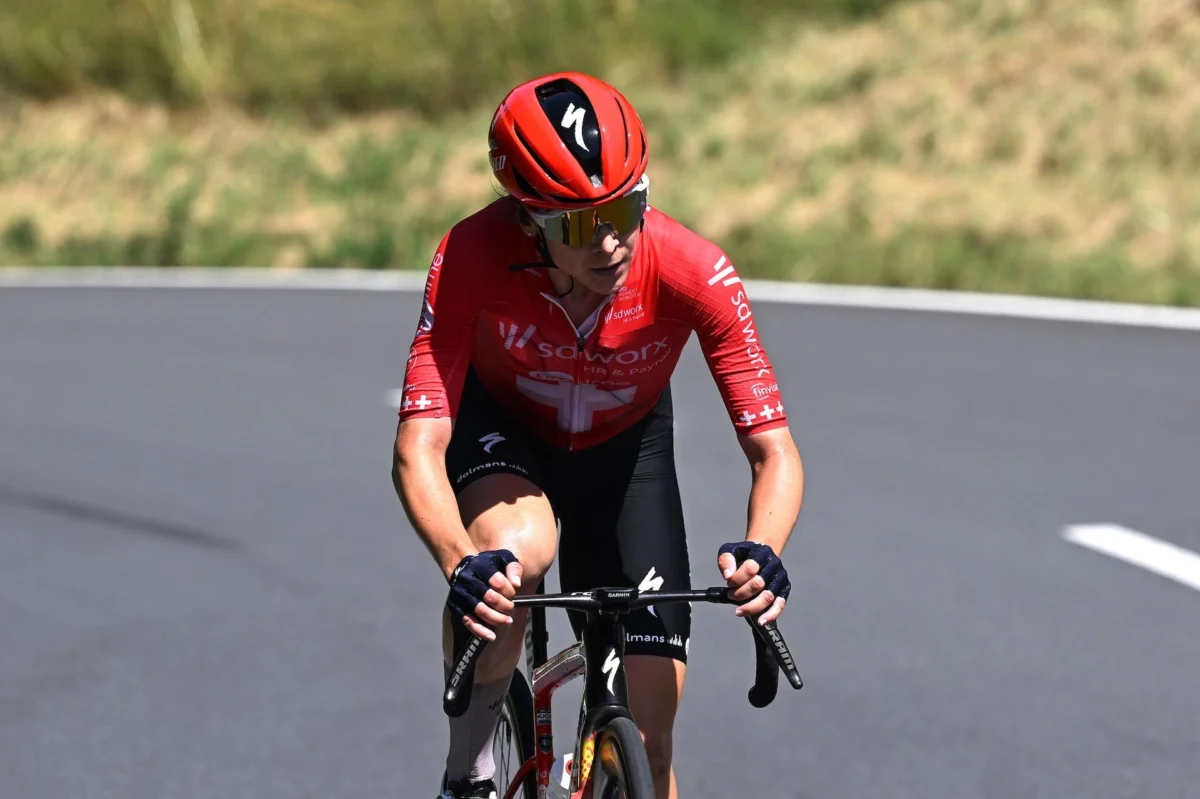
GATINEAU, Canada — In a thrilling display of tactical brilliance and pure, unadulterated grit, Switzerland’s reigning national road champion, Steffi Häberlin, captured the biggest victory of her professional career on Thursday. Racing as part of the Swiss national selection, Häberlin dismantled a major numerical advantage held by WorldTour powerhouse Liv AlUla Jayco, outmaneuvering their formidable trio in the decisive breakaway before launching a perfectly timed sprint to take the crown at the prestigious Tour de Gatineau.
Crossing the line ahead of Australian sprinter Georgia Baker—who was heavily favored given her team’s numerical supremacy—Häberlin etched her name into the history books. Rounding out the podium with an exceptional performance of her own was young Canadian sensation Ava Holmgren, who claimed third place racing for the Canadian U23 national squad.
The victory not only marks Häberlin’s breakout performance on the international stage but also stands as a testament to the unpredictable, high-octane nature of one-day UCI racing, where tactical savvy can routinely overcome sheer team depth.
Main Facts: The Podium and the Breakthrough
The opening leg of the Tour de Gatineau delivered high drama from the gun, culminating in an elite breakaway that would ultimately contest the victory on the streets of Gatineau.
- The Winner: Steffi Häberlin (Switzerland / Swiss National Team)
- Second Place: Georgia Baker (Australia / Liv AlUla Jayco)
- Third Place: Ava Holmgren (Canada / Canada U23)
- The Key Narrative: Häberlin outsmarted a three-rider tactical blockade from Liv AlUla Jayco, turning a severe disadvantage into a historic career milestone.
- Significance: This marks Häberlin’s first-ever international UCI victory, elevating her status from a dominant domestic rider in Switzerland to a recognized international threat.
The race unfolded under ideal early-autumn conditions, but the relatively benign weather did little to temper the aggressive racing. From the rolling hills of the Outaouais region to the technical finishing circuits, the peloton was constantly fractured by crosswinds, opportunistic attacks, and high-speed attrition.
Chronology: How the Race Was Won
To understand the magnitude of Häberlin’s victory, one must trace the tactical evolution of the race from the neutral roll-out to the final, heart-pounding meters of the finishing straight.
Phase One: Early Aggression and Peloton Splitting
From the drop of the starting flag, the pace was unrelenting. Teams with aspirations of avoiding a chaotic bunch sprint sought to animate the race early. Attacks flew off the front of the peloton within the opening twenty kilometers, testing the legs of the contenders and wearing down the domestiques.
While the early breakaways were reeled in by a vigilant peloton controlled largely by sprinters’ teams, the repeated efforts began to take a toll. Crosswinds on exposed sections of the course further catalyzed the selection, splintering the main field into smaller echelons. By the midway point of the race, the writing was on the wall: the winner would come from a reduced, highly aggressive group rather than a mass bunch sprint.
Phase Two: The Decisive Breakaway Forms
With roughly thirty kilometers remaining, the winning move of the day was forged. A flurry of counter-attacks on a short, punchy climb shed the remaining sprinters’ teams of their support riders and created a select front group.
Crucially, WorldTour powerhouse Liv AlUla Jayco played their cards brilliantly, managing to place three riders into this elite breakaway. For most observers, this signaled the end of the race for anyone outside the pink-and-blue jerseys. With a numerical majority of 3-to-1 against almost every other rider in the group, Liv AlUla Jayco held all the tactical aces. They could afford to launch alternating attacks, force their rivals to chase, and set up Georgia Baker—a world-class sprinter and track specialist—for an inevitable victory.
Phase Three: The Cat-and-Mouse Game
As the lead group approached the final ten kilometers, the psychological warfare began. The Liv AlUla Jayco riders initiated a series of probing attacks, attempting to draw out their breakaway companions and exhaust them before the line.
Häberlin, riding with the Swiss national team rather than her trade squad, found herself isolated against the numerical juggernaut. However, rather than panicking or burning through her energy stores trying to shut down every acceleration, the Swiss Champion relied on exceptional spatial awareness and tactical patience. She marked wheels closely, conserved her energy in the draft, and let the other riders shoulder the burden of closing down the initial surges.
Phase Four: The Final Kilometer and Sprint
Entering the final kilometer, the tension in the breakaway was palpable. Realizing that cooperation was necessary to hold off a charging, fragmented chase group from behind, the pace stabilized momentarily, setting the stage for a tactical sprint.
Liv AlUla Jayco attempted to orchestrate a lead-out for Georgia Baker, but the lack of a traditional sprint train on a chaotic finishing straight meant timing was everything. Recognizing a slight hesitation or miscommunication within the Australian squad, Häberlin seized the moment.
With a ferocious, perfectly timed acceleration, the Swiss rider jumped from behind Baker’s wheel. She caught the Liv AlUla Jayco riders slightly flat-footed, establishing an immediate bike-length gap. Baker frantically responded, digging deep to claw her way back, but it was too late. Häberlin crossed the line with her arms raised in disbelief and jubilation, securing the biggest win of her life. Baker settled for second, while Canada’s Ava Holmgren capped off an impressive display of youthful aggression to round out the podium in third.
Supporting Data and Statistical Context
While the human drama of the breakaway was captivating, the underlying metrics of the Tour de Gatineau highlight the grueling nature of the event and the impressive performance profile of the podium finishers.
- Average Speed: The race was contested at a blistering average speed, driven by the relentless crosswinds and aggressive tactics from the opening kilometer.
- Breakaway Duration: The decisive move spent nearly 30 kilometers off the front, requiring sustained high-power outputs and elite aerobic capacity to stave off the chasing peloton.
- Team Representation: Liv AlUla Jayco’s presence of three riders in the final move represented a 43% control of the breakaway group—a statistical advantage that makes Häberlin’s victory all the more statistically improbable.
- U23 Excellence: Ava Holmgren’s third-place finish highlights the rapid development of North American cycling talent, holding her own against seasoned WorldTour professionals in a high-stakes tactical final.
Official Responses and Post-Race Reactions
Emotions ran high at the finish line, with the magnitude of the upset taking time to fully sink in for the winner and her competitors.
An emotional Steffi Häberlin spoke candidly to reporters moments after catching her breath. Visibly moved by the accomplishment, she reflected on what the victory meant for her career trajectory and her gratitude toward the Swiss national setup:
"[It means] a lot," Häberlin said, a wide smile breaking across her face. “It was the first international race I have ever won. I said to the girls that I won nationals, so far, and I’m really grateful they gave me this opportunity to race here with the federation and to have such a nice race with these girls.”
Häberlin’s comments underscore the unique dynamic of national team selections, where riders from diverse trade teams are brought together under a unified banner to compete on the international calendar. For Häberlin, the support of her federation provided the platform she needed to shine on a global stage.
Meanwhile, representatives from Liv AlUla Jayco were left to ponder what might have been. Despite executing a textbook tactical setup by placing three riders in the critical move, the inability to seal the deal in the final meters served as a stark reminder that in cycling, tactical superiority on paper does not guarantee victory on the road. Georgia Baker, gracious in defeat, acknowledged the high level of competition and Häberlin’s astute final-kilometer execution.
For young Ava Holmgren, stepping onto the podium alongside established international names marked a major milestone in her blossoming career, signaling a bright future for Canadian cycling on the world stage.
Implications: What This Means for the Peloton
Steffi Häberlin’s stunning victory at the Tour de Gatineau carries significant ripples across the women’s professional cycling landscape.
1. Elevated Status for Steffi Häberlin
Until Thursday, Häberlin was primarily known within her home country as the dominant force wearing the red-and-white jersey of the Swiss National Champion. While domestic dominance is impressive, transitioning that success to the international UCI calendar is notoriously difficult. By defeating a WorldTour-caliber tactical block, Häberlin has undoubtedly caught the attention of professional team scouts and managers looking for aggressive, tactically astute riders who can read a race and deliver results under pressure.
2. A Warning on Numerical Superiority
For teams like Liv AlUla Jayco, the race serves as a valuable learning experience. Having a numerical majority in a breakaway is the ultimate tactical luxury, but converting that advantage requires flawless execution in the closing kilometer. When complacency or hesitation creeps in, opportunistic racers like Häberlin are more than capable of exploiting the smallest window to steal the glory.
3. Momentum for National Team Programs
Häberlin’s success highlights the vital role that national federations play in developing talent and providing exposure to riders who may not always get leadership opportunities within their commercial trade teams. By trusting Häberlin and giving her the tactical freedom to race for the win, the Swiss national setup was rewarded with a historic international triumph.
As the late-season calendar continues to unfold, all eyes will now turn to see how Häberlin capitalizes on this career-defining momentum—and whether she can translate her newfound international confidence into further success on the global stage.

 Lina Irawan
 Siti Muinah
 Suro Senen
 Iffa Jayyana
 Pevita Pearce

 Reynand Wu
 Lina Hope