
 Nana Wu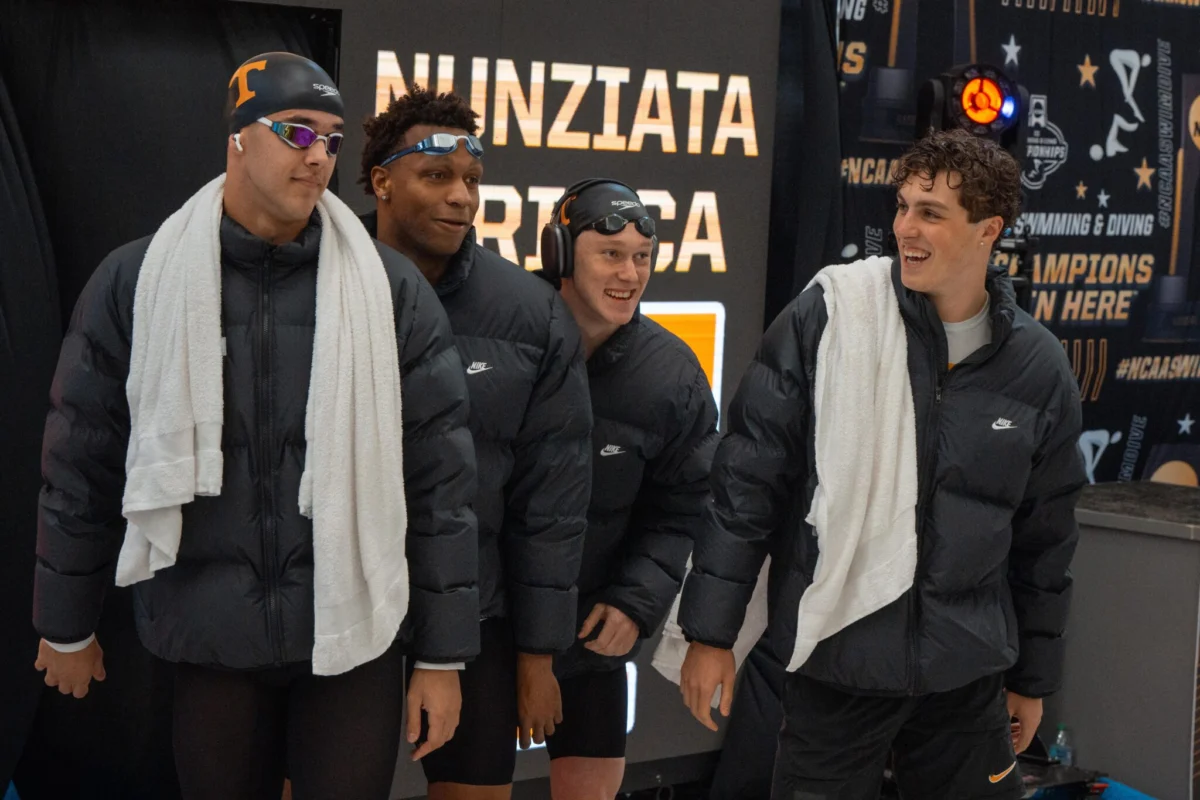
The NCAA swimming landscape is shifting, and few programs have demonstrated as dramatic a trajectory as the University of Tennessee men’s team. As the 2026-2027 season looms, the Volunteers find themselves anchored in the fifth spot of our national rankings—a testament to a program that has successfully moved beyond the "era of individual reliance" to become a balanced, formidable force on the national stage.
Following a 2026 campaign that saw the Vols defy expectations, the team is now tasked with a new challenge: maintaining their momentum in the wake of significant roster departures. With the graduation of sprint titan Gui Caribe and several other key contributors, the narrative in Knoxville has shifted from one of "unexpected success" to "sustained championship contention."
Main Facts: The New Look of the Vols
The Tennessee Volunteers enter the 2026-2027 season with a high-stakes roster adjustment. The loss of Gui Caribe—who accounted for 39 critical points at the 2026 NCAA Championships—leaves a void in the sprint freestyle and relay lineups. However, the coaching staff has been aggressive in the transfer portal and recruiting circuit to mitigate these losses.
Key Personnel Changes:
- Departures: Gui Caribe (39 NCAA points), Nick Simons (12 points), and qualifiers Owen Redfearn and Martin Espernberger.
- Strategic Additions: The program has bolstered its ranks with #14 ranked recruit Whitaker Steward (distance free/IM), #15 breaststroker Drew Eubanks, and a significant injection of international talent including Mantas Kauspedas (backstroke) and Pitt transfer Julian Koch.
The core of the team remains intact, featuring returning stars like Koby Bujak-Upton and Gabe Nunziata. The integration of these new pieces into a proven, high-performing relay structure will define whether Tennessee can hold its #5 ranking or potentially challenge for a podium finish.
A Chronological Perspective: From Underperformance to Elite Status
Historically, Tennessee was known for strong regular seasons that often evaporated under the bright lights of the NCAA Championships. The 2025 and 2026 seasons marked a paradigm shift.
In 2026, the Volunteers arrived at the NCAA meet with a psych sheet projection of 185.5 points—a respectable, yet modest, expectation. By the time the final touch was recorded, the Vols had tallied 272 total points. This 86.5-point "swing" represents the most significant improvement from psych sheet to actual performance for the program since 2018.
The chronology of their 2026 success was built on a balanced attack:
- Early Meet Momentum: The Vols outperformed expectations in the relays, securing 105 points compared to a projected 86.
- Individual Breakouts: Koby Bujak-Upton emerged as a national force, becoming the first Vol to break 1:30 in the 200 freestyle.
- Diving Stability: The Tennessee diving squad, led by Bennett Greene, provided a consistent baseline of 53 points, insulating the team against the variance inherent in swimming events.
Supporting Data: Grading the Disciplines
To understand the ceiling for the 2026-2027 season, we must look at the granular breakdown of the team’s strengths. Our grading criteria focus on returning points and potential impact from incoming talent.
Sprint Freestyle: The Challenge of Replacement
With a grade of 5/5 stars, the sprint group remains the engine of the program. Nikoli Blackman returns as the anchor, coming off a 2026 campaign where he placed 10th in the 50 free and 13th in the 100 free. The addition of Julian Koch—who finished 4th in the 100 free at the 2026 NCAAs—is the "plug-and-play" solution the program needed. If Koch replicates his 18.65 split from the 200 free relay, Tennessee’s relay speed will remain largely unaffected by Caribe’s departure.
Breaststroke and Butterfly: Depth as a Weapon
The breaststroke group (3/5 stars) is defined by the emergence of Gabe Nunziata. After his 2026 breakout, he is now a known quantity. The arrival of Drew Eubanks provides the internal competition necessary to push Nunziata toward the 1:50 barrier.
In the butterfly (3/5 stars), the focus is on the 100 fly. Julian Koch is a dual threat here, but the addition of McKendree transfer Vova Gavrysh adds a new dimension. While Gavrysh needs to bridge the gap to the elite 200 fly times (the current cutline is 1:40.77), his presence ensures that the Vols have cover in the longer butterfly event.
Diving: The Volunteer Advantage
The diving program is arguably the most consistent element of the team’s success (4/5 stars). Bennett Greene’s ability to qualify for "A" finals on all three boards is a luxury few programs enjoy. With Thomas Ciprick and Frazer Tavener providing depth, Tennessee is effectively guaranteed a heavy point cushion before the swimming finals even begin.
Relays: The "One-to-One" Swap
The 800 free relay is the most intriguing unit for 2026-27. With the addition of Vova Gavrysh, whose 1:32.40 200-free speed is a massive upgrade, the relay group is positioned to climb higher than their 16th-place finish in 2026. The 200 and 400 free relays will rely on the synergy between Blackman, Bujak-Upton, and the newcomer Koch.
Official Responses and Tactical Outlook
While the coaching staff has remained tight-lipped regarding specific training adjustments, the recruitment strategy speaks volumes. By prioritizing high-ceiling transfers like Koch and Gavrysh, Tennessee is signaling a move toward "instant impact" rather than relying solely on multi-year development.
The philosophy has shifted toward "NCAA-ready" athletes. This is a departure from the mid-2010s, where the team often had high-potential recruits who struggled to translate their speed into championship-caliber performances. The current culture, as evidenced by the 2026 psych-sheet-to-final results, is one of tactical discipline—swimming the race to score, not just to post a time.
Implications for the 2026-2027 Season
What does this mean for the SEC and the national landscape?
- The "Jordan Crooks" Legacy: Having survived their first season without the superstar, the team has proven they are not a one-man show. This builds psychological resilience.
- The 200 Free as a Signature Event: With Bujak-Upton established as a top-tier contender and the depth added by Gavrysh, Tennessee is staking a claim to the 200-yard distance as their "signature" event.
- Targeting the Top 4: To break into the top four—currently occupied by the likes of Texas, Florida, and Indiana—Tennessee must solve their IM deficiency (currently graded at 1/5 stars). If Jake McCoy or Vova Gavrysh can cut the time required to score in the 400 IM, the gap between the Vols and the top four will evaporate.
Conclusion
The Tennessee Volunteers are no longer a "surprise" program. They are a systematic, well-coached, and tactically sound team that has mastered the art of peaking at the right moment. While the loss of Gui Caribe is significant, the administration and coaching staff have navigated the off-season with surgical precision.
As we look toward the 2026-2027 NCAA Championships, the question is not whether Tennessee will be relevant, but whether their calculated risks in the transfer portal will provide the final margin needed to push them onto the podium. With 25.5 total stars and a renewed focus on relay depth, the path for the Vols is clear: refine the IM, maintain the diving standard, and trust that the next generation of Volunteers can match the intensity of the class that came before them. The rest of the NCAA is on notice.


 Asep Darmawan
 Dwi Wanna
 Suro Senen
 Iffa Jayyana
 Pevita Pearce

 Reynand Wu
 Lina Hope