
 Pevita Pearce
“A gentleman is never rude unintentionally, only by design.” The origin of this aphorism is lost to history, but it could easily serve as the opening line in an Elite Football Manager’s Guide to Press Conferences (Premier League edition). In the modern era of hyper-professionalised football, nothing occurs by accident. Every syllable uttered in front of a sponsor-laden backdrop is metered, stress-tested, and strategically deployed. A manager is rarely angry, genuinely concerned, or even disarmingly charming without a tactical objective. In the contemporary Premier League, the game is the ninety minutes on the pitch, but the game is also everything that spills out of the tunnel, the technical area, and the post-match press room.
The Performance of Integrity: Decoding the Arteta Method
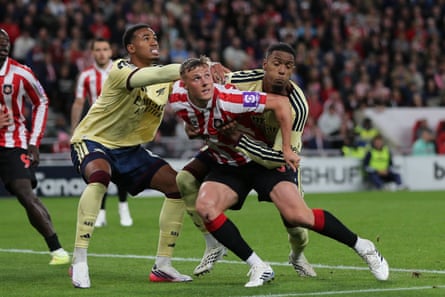
It was impossible to ignore this performative reality while observing Mikel Arteta’s reaction to the penalty awarded to Sunderland at the Stadium of Light. The decision, stemming from a perceived act of grappling on Dan Ballard by Ezri Konsa, provided the perfect canvas for Arteta’s particular brand of post-match discourse.
Arteta executed his response with the precision of a stage actor. He radiated a wounded, noble integrity, appearing as a disappointed junior headmaster lamenting the loss of the school minibus keys. He was not merely expressing frustration; he was performing the role of the guardian of the game’s sanctity. Yet, to take these displays at face value is to misunderstand the man. Arteta is not "very worried" in the existential sense; he is not "sad" or "really sad." He is not a man losing sleep over the moral decay of football.
We know Arteta to be a manager obsessed with the most granular of marginal gains. In an era where rowing coaches purportedly install bespoke fibreglass toilet seats to optimize an athlete’s twenty-minute “glute management” time, Arteta belongs to the school of micro-planning. If there is a way to gain an edge, he will find it, cultivate it, and institutionalise it. Consequently, his public statements are gamed, contingency-planned, and launched with specific, rational, tactical intent.

A Chronology of Conflict: From Sunderland to the Present
The incident at the Stadium of Light was, in many ways, the inevitable intersection of Arsenal’s tactical evolution and the current officiating climate.
- The Incident: During the match, Ezri Konsa was penalised for a challenge on Dan Ballard. Replays suggested that Ballard, with considerable tactical nous, had pulled Konsa down on top of him, essentially engineering the foul while simultaneously feigning shock.
- The Reaction: Arteta’s immediate post-match comments were a masterclass in lobbying. By highlighting the error—which was, by any objective standard, a poor decision—he effectively shifted the narrative from a narrow victory to a broader debate on refereeing standards.
- The Context: This follows a history of flashpoints, from the disputed penalty claim involving Bruno Guimarães at Aston Villa to the infamous VAR line error against Brentford in 2023.
- The Pattern: Arsenal, under Arteta, have become the masters of playing at the edge of the laws. They are not a "dirty" team in the traditional sense, but they are a team that understands that the rules are not static; they are levers that can be pulled, pushed, and critiqued to ensure that the marginal advantages remain in their favour.
Supporting Data: The Reality of Fouls and Cards
Is the Arsenal fanbase’s sense of victimhood supported by the data? The numbers suggest a more nuanced reality.
Arsenal have been awarded more fouls than any other team in the current season, a statistic that contradicts the narrative of a team being unfairly targeted by referees. Furthermore, when looking at the historical data:
- Fouls Against: Only six teams last season had more fouls awarded against them than Arsenal, a trend that remained consistent in the preceding year.
- Discipline: Arsenal maintained the fewest yellow cards in the league last season.
- Red Card Drought: The club has not received a single red card since a turbulent 2024-25 campaign, where they saw six dismissals.
These figures indicate that while the perception of conspiracy is rampant in the "online hive mind," the reality is that Arsenal are highly disciplined and exceptionally adept at navigating the referee’s threshold for punishment. However, the feeling of injustice persists, often rooted in high-profile individual errors rather than systemic bias.
The Crisis of Officiating: Are Referees Out of Their Depth?
The fundamental issue is not one of bias, but of capacity. Referees today are expected to process an overwhelming barrage of information in real-time, under conditions of extreme scrutiny.
The task has arguably outgrown the personnel. Most professional referees do not come from backgrounds that demand the high-pressure data processing seen in fields like military aviation or high-frequency trading. Less than a quarter of the current officiating cohort holds an academic degree, and while this is not an indictment of their intelligence, it is a statement on the changing nature of the role. The game has evolved into a complex, data-driven spectacle, yet the officiating structure remains rooted in a more analog era.
Moreover, there is a crisis of identity within the refereeing body. Referees have begun to view themselves as curators of the spectacle rather than impartial adjudicators. They have, in effect, become the "local government planning officers" of the pitch, attempting to decide which tactical styles are "in character" with the game. This over-interventionism has created a vacuum where referees attempt to control the aesthetics of football, leading to confusion and inconsistency.
Official Responses and Tactical Implications
Arteta’s decision to transition from a manager who rarely commented on officiating to one who is a heartfelt and targeted critic is a calculated strategic move. By "unloading" on the refereeing standards after the Sunderland match, he successfully:
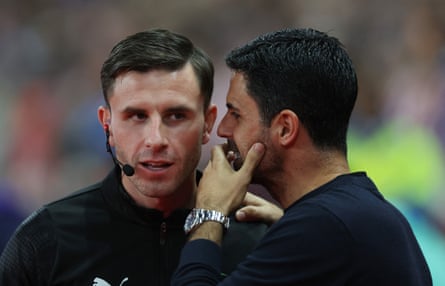
- Deflected Pressure: He drew attention away from the specific tactical struggles of the match.
- Pre-empted Future Calls: By setting a narrative that Arsenal are being refereed differently, he creates a psychological "buffer" for future decisions.
- Empowered the Fanbase: He mirrors the intensity of the supporters, creating a feedback loop where the club and the fans are united against a perceived external adversary.
The atmosphere at the Emirates Stadium has become a unique phenomenon in English football. It is an environment of "weaponised indignation," where every 50-50 challenge is treated as an affront to the club’s progress. While some might dismiss this as mere hysteria, it is, in fact, a reflection of the "middle-aged rule pedantry" that now defines the modern Premier League.
Conclusion: The New Cauldron of Hate
As the season progresses, we can expect the temperature of these debates to rise. Arsenal are not merely playing football; they are playing the political game that the sport has become. They are a team that has weaponised tactical awareness, and they are now weaponising the discourse surrounding the rules that govern that awareness.
Mikel Arteta’s mastery of the press conference is not a distraction from his footballing philosophy—it is an integral component of it. By identifying the referees’ struggle to keep pace with the game and highlighting those failures with surgical precision, he ensures that the conversation remains focused on the "injustice" done to his team.
The Sunderland match was a perfect storm: a clearly incorrect decision that provided the moral high ground, paired with a victory that ensured the impact was minimal. It was a significant win, not just for the three points, but for the continued consolidation of a narrative that serves Arsenal’s broader ambitions. In the theatre of the Premier League, where every margin matters, Arteta is playing the role of the aggrieved visionary to perfection—and for now, the script is working exactly as intended.

 Lina Hope
 Dwi Wanna
 Laily UPN
 Nana
Nana
 Evan Lee Salim
 Asro
Asro
 Ali Ikhwan