 Ammar Sabilarrohman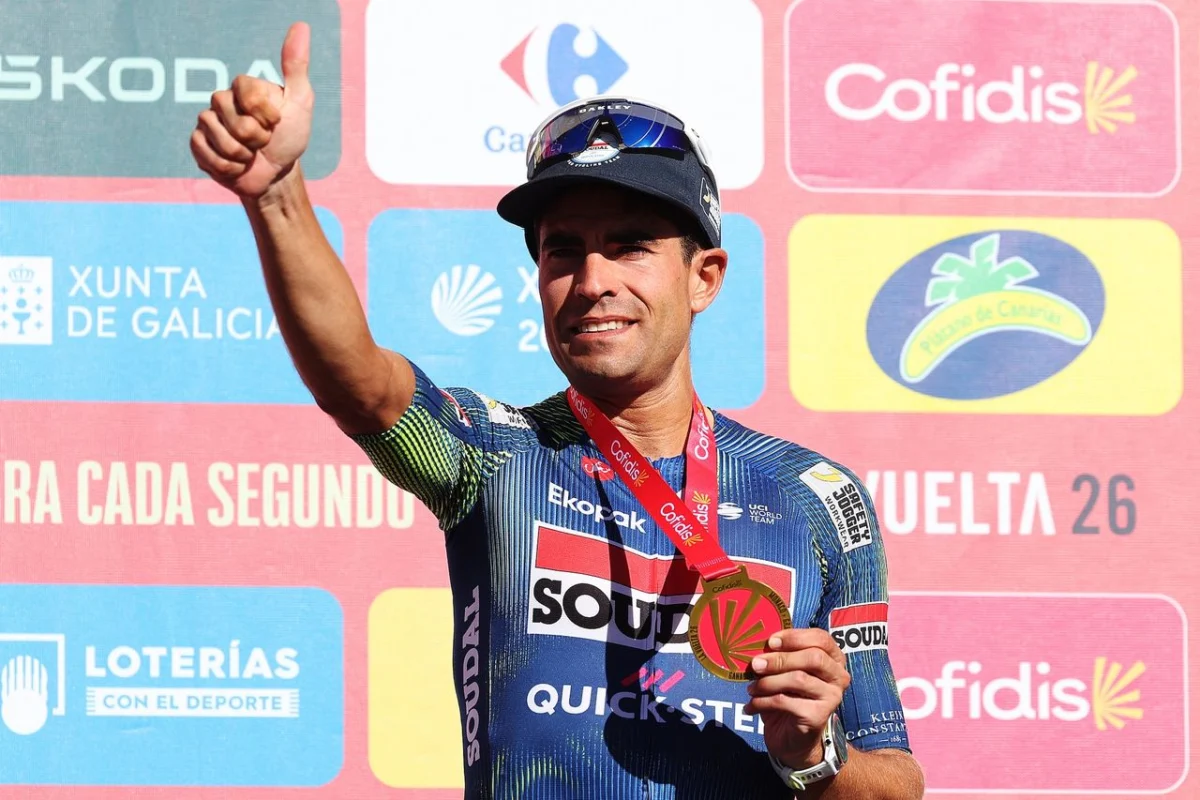
Main Facts
It is a statistical drought that has long puzzled cycling enthusiasts and weighed heavily on one of the peloton’s most beloved figures. For five agonizing years, Mikel Landa had not raised his arms in victory at the finish line of a professional bike race. Stretching back even further, a staggering eleven years had passed since the charismatic Basque climber last tasted success at the Grand Tour level, a memory tracing back to a stage win at the Vuelta a España.
Yet, cycling is a sport defined by redemption, and on Stage 20 of the 2026 Vuelta a España, the seemingly impossible became reality. On the most arduous, lung-shredding mountain stage of the race, Landa delivered a masterclass in climbing and tactical execution, soaring to a breathtaking solo victory atop the brutal Collado del Alguacil.
Crossing the finish line completely spent, the usually stoic 36-year-old was visibly overcome with emotion. Wiping away tears as he absorbed the magnitude of his achievement, Landa held a comfortable and more-than-sufficient 47-second advantage over his nearest pursuer, Tobias Johannessen of Uno-X Mobility. The victory was not merely a return to the top step of the podium; it was an emotional exorcism of years filled with near-misses, crashed ambitions, and the relentless doubts that shadow elite athletes in the twilight of their careers.
Chronology: The Road to Redemption on Stage 20
To understand the weight of Landa’s victory, one must look back at the anatomy of Stage 20—a relentless, high-altitude gauntlet designed to break even the most resilient Grand Tour contenders.
The Early Breakaway and Tactical Maneuvers
As the flag dropped for the penultimate stage of the 2026 Vuelta, the peloton knew the terrain would dictate absolute chaos. The stage profile was a jagged sawtooth of categorized climbs, culminating in the steep, unpaved-feeling slopes of the Collado del Alguacil. From the outset, the pace was blistering. Recognizing that the GC favourites would likely neutralize one another in the closing kilometers, Landa—sensing a rare alignment of form, opportunity, and instinct—marked the right moves to infiltrate the day’s primary breakaway.
For much of the stage, the escapees worked in a fragile harmony, knowing the elastic would inevitably snap once the gradient pitched upward into the double digits. Behind them, the red jersey group, led by race leader Enric Mas and his challengers, hovered within striking distance, keeping the pressure high.
The Decisive Move on the Collado del Alguacil
As the race hit the slopes of the final climb, the breakaway disintegrated under the sheer brutality of the pace. This was Landa’s moment. With the trademark smooth, effortless-looking climbing style that earned him the moniker "El Bandido" among his adoring fans, Landa launched an acceleration that left his remaining breakaway companions floundering.
Unlike many of his previous attacks throughout his career—which often saw him caught within sight of the line—this time, there was no hesitation. Landa drove his pedals with relentless cadence, widening the gap with every hairpin turn. Spectators lining the Andalusian roads roared in disbelief and adoration as the Basque veteran expanded his lead.
Crossing the Line and the Aftermath
Entering the final kilometre, the gradient eased marginally, but the emotional weight intensified. Landa looked over his shoulder, realized the victory was secure, and let out a visceral cry of relief. Crossing the line in absolute solitude, he buried his face in his hands.
Behind him, Tobias Johannessen fought valiantly to limit the damage, securing a commendable second place 47 seconds later, while Enric Mas successfully navigated the GC minefield to defend his red jersey. But the day belonged entirely to Landa. During the post-race press conference, the veteran climber struggled to speak, pausing frequently to wipe away tears as the collective relief of a half-decade-long drought finally settled over him.
Supporting Data: Breaking Down the Drought
To truly contextualize Landa’s performance on Stage 20, it is vital to examine the statistical reality of his career up to this point.
- The 5-Year Gap: Landa’s last professional victory prior to this stage came back in 2021. In the intervening years, he accumulated numerous podium finishes, top-five Grand Tour placings, and invaluable support roles for teammates, but the elusive top step of the podium always remained just out of reach.
- The 11-Year Grand Tour Wait: His previous Grand Tour stage win dated back more than a decade to the 2015 Vuelta a España. Over those eleven years, cycling evolved dramatically—generations of riders came and went, tactical approaches modernized, and sports science revolutionized training. Yet, Landa persevered, adapting his craft to remain competitive against riders a decade his junior.
- Stage 20 Dominance: On the Collado del Alguacil, Landa’s power metrics reflected a rider operating at the absolute peak of his physical capabilities. Defending off a charging chase group that included elite climbers and GC contenders, he maintained a 47-second buffer over an explosive rider like Tobias Johannessen over terrain that punishes even the tiniest drop in energy reserves.
Official Responses and Reactions
The cycling world erupted in praise following Landa’s triumph, with fellow professionals, team management, and the rider himself sharing raw, honest reflections on the momentous day.
Mikel Landa: "I Thought Maybe My Time Had Passed"
Speaking through tears at the post-stage press conference, Landa offered a rare glimpse into the psychological toll of a multi-year winless streak:
"When you go this long without winning, you start to question everything. You ask yourself if you still have what it takes, if the younger guys are simply too fast, if your body has reached its limit. There were days when I wondered if I would ever raise my arms in victory again. To pull this off today, on a stage this hard, in a race as prestigious as the Vuelta… it is difficult to put into words. This is for everyone who kept believing in me when I stopped believing in myself."
Tobias Johannessen: Paying Respect to a Legend
Runner-up on the stage, Uno-X Mobility’s Tobias Johannessen was quick to acknowledge that he was beaten by a superior rider on the day:
"On a climb like the Collado del Alguacil, there are no excuses. Landa was simply in a league of his own. When he went, we tried to organize a chase, but the speed he was generating was incredible. You cannot be anything other than happy for a guy like Mikel. He is a gentleman of the peloton, and seeing him win like that is good for cycling."
Team Management and the Basque Nation
Back at the team bus, sports directors highlighted the tactical brilliance and resilience required to pull off the victory. Across the Basque Country, social media channels lit up with celebrations. Known for their fierce and passionate support of cycling, Basque fans celebrated Landa’s win not just as a sporting achievement, but as a cultural victory for one of their most emblematic sporting sons.
Implications: What This Means for Landa’s Legacy
As the 2026 Vuelta a España draws to its conclusion, the broader implications of Mikel Landa’s Stage 20 masterclass extend far beyond the daily results sheet.
Cementing a Storied Legacy
Landa’s career has often been defined by nuance. He has worn the white jersey, finished on Grand Tour podiums at the Giro d’Italia and the Vuelta, and played pivotal domestique roles for some of the sport’s biggest names. However, critics occasionally pointed to his lack of a prolific victory count as a blemish on an otherwise stellar resume. This victory fundamentally alters that narrative. It proves that perseverance, class, and tactical maturity can shatter statistical barriers, cementing his status as one of the defining climbers of his generation.
A Psychological Boost for the Twilight of a Career
At 36 years old, athletes in professional cycling are routinely forced into retirement or relegated strictly to support roles. By proving he can still drop the best climbers in the world on a brutal mountain stage, Landa has rewritten his immediate future. Whether he chooses to target further victories next season or embrace a leadership-mentor hybrid role, he does so with the immense psychological freedom of a man who has officially broken his curse.
Ultimately, Stage 20 of the 2026 Vuelta a España will be remembered not just for the battle for the red jersey, but as the day Mikel Landa reminded the world why he has remained a fan favourite for well over a decade: through grit, grace, and an unbreakable refusal to give up.

 Ali Ikhwan
 Lina Irawan
 Laily UPN
 Nana
Nana
 Lina Hope
 Evan Lee Salim
 Asro
Asro