
 Asro
Asro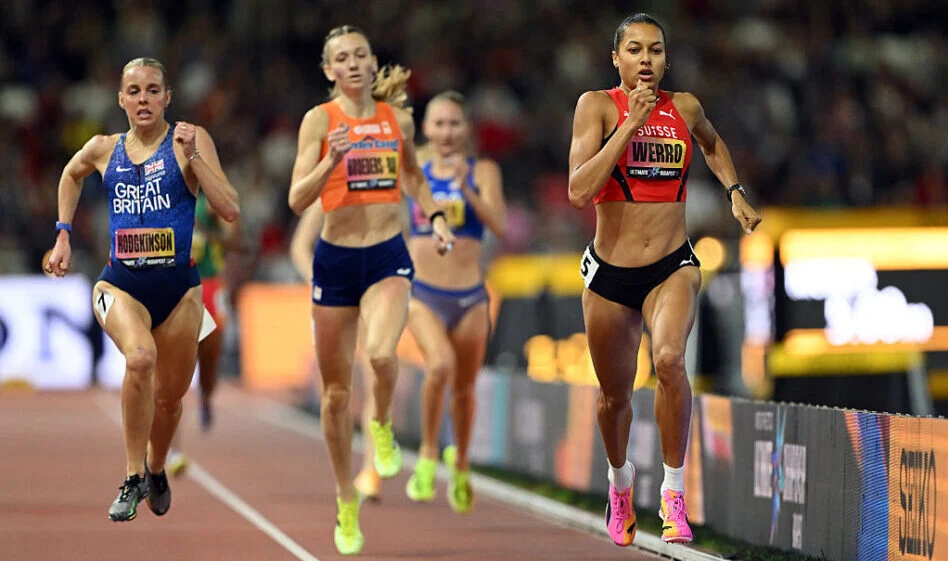
BUDAPEST — The World Athletics Ultimate Championship in Budapest served up a glittering showcase of middle-distance mastery, highlighted by Audrey Werro’s continued 800-metre dominance and a heart-pounding 1500m clash on Saturday (September 12, 2026). For the athletics world, the grand finale of the outdoor season offered everything: tactical brilliance, redemption stories, and confirmation of a burgeoning three-way rivalry that is rapidly defining an era.
Yet, perhaps the most arresting narrative of the weekend belonged to Great Britain’s Keely Hodgkinson. Less than a month after suffering a severe 4.5-centimetre hamstring tear during warm-ups at the European Championships in Birmingham, the Olympic champion summoned the grit of a true champion to secure a remarkable silver medal.
While Werro extended her untouchable outdoor winning streak, the stories forged on the track in Budapest went far beyond the medals themselves, pointing toward an electrifying future as athletes look ahead to the next Olympic cycle.
Main Facts: Triumphs and Grit on the Capital’s Track
The Ultimate Championship finale delivered high drama across the middle-distance events, with Budapest acting as the crucible for the sport’s finest tactical battles.
- The 800m Podium: Switzerland’s Audrey Werro captured gold with an authoritative run of 1:55.88, extending her undefeated outdoor run through 2026. Keely Hodgkinson claimed a stunning silver in 1:56.26, while converted 400m hurdles star Femke Broeders-Bol rounded out the podium with bronze in 1:56.74.
- The 1500m Thriller: Poland’s Klaudia Kazimierska capped a phenomenal late-season surge by capturing the 1500m title and a lucrative $150,000 prize, clocking 3:57.55. Britain’s Georgia Hunter Bell pushed her all the way to the line, securing a brilliant silver in 3:57.72.
- Hodgkinson’s Medical Defiance: Hodgkinson’s participation in Budapest was medically improbable. Her gutsy appearance on the start line came just weeks after she tore her hamstring by 4.5cm minutes before the Birmingham European final—a race she also ran through despite the trauma.
Chronology: How the Budapest Showdowns Unfolded
The Women’s 800m: Werro’s Tactical Masterclass
From the starter’s gun, the blueprint for the 800m final mirrored much of the 2026 season: Audrey Werro at the front, dictating the tempo. The Swiss runner led the field through the first lap in a controlled, slightly conservative 57.83 seconds.
Tracking her closely was Femke Broeders-Bol, with Hodgkinson running economically just a stride adrift, testing whether her surgically repaired and rehabbed hamstring could handle the sharp changes of pace.
As the race funneled into the final 200 metres, the leading trio compressed, igniting the crowd. But just as she has all summer, Werro found an extra, unanswerable gear. Driving powerfully through the home straight, she broke the hearts of her pursuers to cross comfortably in 1:55.88. Behind her, Hodgkinson unleashed a trademark closing surge, sweeping past Broeders-Bol in the dying metres to salvage a silver medal that felt as valuable as any gold.
The Women’s 1500m: A Home Straight Epic
Earlier in the session, the women’s 1500m unfolded into a masterclass of patience and positioning. France’s European indoor champion Agathe Guillemot took the field through the halfway mark, splitting 800m in 2:11.31 while Poland’s Klaudia Kazimierska and American contenders Emily Mackay and Nikki Hiltz stalked her shadow.
Britain’s Georgia Hunter Bell, adopting a wise tactical approach under the guidance of her coaching team, bided her time deep within the lead pack. As the bell rang for the final lap, Guillemot’s lead evaporated as the pack converged.
Kazimierska seized the initiative with 200 metres remaining. Hunter Bell reacted instantly, matching the Pole stride for stride around the final bend. With 100 metres to go, the Briton drew level, igniting a fierce, shoulder-to-shoulder sprint down the home straight. Ultimately, Kazimierska—buoyed by her recent world-leading Polish record in Brussels—found reserves of strength to edge clear, crossing in 3:57.55 to Hunter Bell’s 3:57.72.
Supporting Data: Statistical Dominance and Season-Long Trends
The 2026 middle-distance season has been defined by astronomical times and unprecedented consistency.
- Werro’s Historic Ascent: Audrey Werro’s outdoor campaign has established her as a generational talent. Her season’s best of 1:53.70, clocked earlier in the summer, sits just 0.42 seconds shy of Jarmila Kratochvílová’s ancient 43-year-old world record of 1:53.28. Werro now holds three of the five fastest 800m times in history.
- Hodgkinson’s Tale of Two Halves: Prior to her injury setback, Hodgkinson’s indoor season was immaculate. She set a world indoor record of 1:54.87 before capturing the World Indoor title in a championship record of 1:55.30.
- Kazimierska’s Meteoric Rise: Twelve months ago, Kazimierska was fighting for a top-eight finish, placing seventh at the World Championships. Her trajectory since then has been breathtaking: sixth at the World Indoors, a silver at the Europeans, a Diamond League final victory in Brussels (3:54.05), and now the Ultimate Championship crown.
Official Responses: In the Athletes’ Own Words
Speaking after her triumph, an ecstatic Audrey Werro reflected on a dream outdoor campaign.
"I think I have won every race I’ve had this year during the outdoor season," Werro said. "It is really crazy, but at the same time, it is something I have worked for, and now I am getting the result."
For Keely Hodgkinson, the silver medal was a testament to resilience over perfection. Having spent the weeks leading into Budapest training at reduced speeds, she was pragmatic and proud of her performance.
"I’m actually quite proud with how this race turned out," Hodgkinson admitted. "I wanted to win and it ended up pretty close. These are some amazing women, and we all push each other."
Femke Broeders-Bol, reflecting on her debut full season over two laps after swapping the 400m hurdles for middle-distance running, expressed relief and profound enjoyment regarding her transition under coach Laurent Meuwly.
"My season is done and now I can say that I really love this event," Broeders-Bol shared. "I’ve loved all of this year even more than I expected. This third place means a lot."
Meanwhile, 1500m champion Klaudia Kazimierska opened up about the psychological hurdle of transitioning from an underdog to the undisputed favorite.
"It was a completely new position for me to be the favourite in a race like that," Kazimierska noted. "The last 100m fighting against Georgia was thrilling… This year I also was building up mentally; I had a few races where I learned a lot—it was like mentally unlocking something in my head."
Implications: What Budapest Means for the Future of Middle-Distance Running
The World Athletics Ultimate Championship in Budapest did not merely close out the 2026 track calendar; it laid down the blueprint for the years to come.
- The 800m Arms Race: The rivalry between Werro, Hodgkinson, and Broeders-Bol has created an iron-sharpens-iron environment. With Werro knocking on the door of the world record and Hodgkinson expected to return to full health, the push toward breaking Kratochvílová’s 1983 milestone will dominate athletics headlines next season.
- The Versatility Blueprint: Broeders-Bol’s successful transition from a 400m hurdles world champion to a global 800m medalist proves that data-driven event switching can yield extraordinary results. Her presence adds a fascinating tactical dimension to an already stacked two-lap discipline.
- Mental Fortitude as the Ultimate Edge: Athletes like Kazimierska and Hunter Bell have demonstrated that physical conditioning is only half the battle. As the margins at the elite level grow razor-thin, psychological resilience—exemplified by Hodgkinson racing through a 4.5cm muscle tear and Kazimierska handling the burden of favoritism—will dictate who steps onto the highest tier of the podium.
As the athletes now step away for a well-deserved off-season, the athletics world is left with an intoxicating preview of what lies ahead: a fast, fierce, and fiercely competitive era where records are perpetually under siege.

 Lina Irawan
 Pevita Pearce
 rifanmuazin
 Ali Ikhwan
 Dwi Wanna
 Raul Delapena Setiawan
 Laily UPN
 Ammar Sabilarrohman