 Sagoh
Sagoh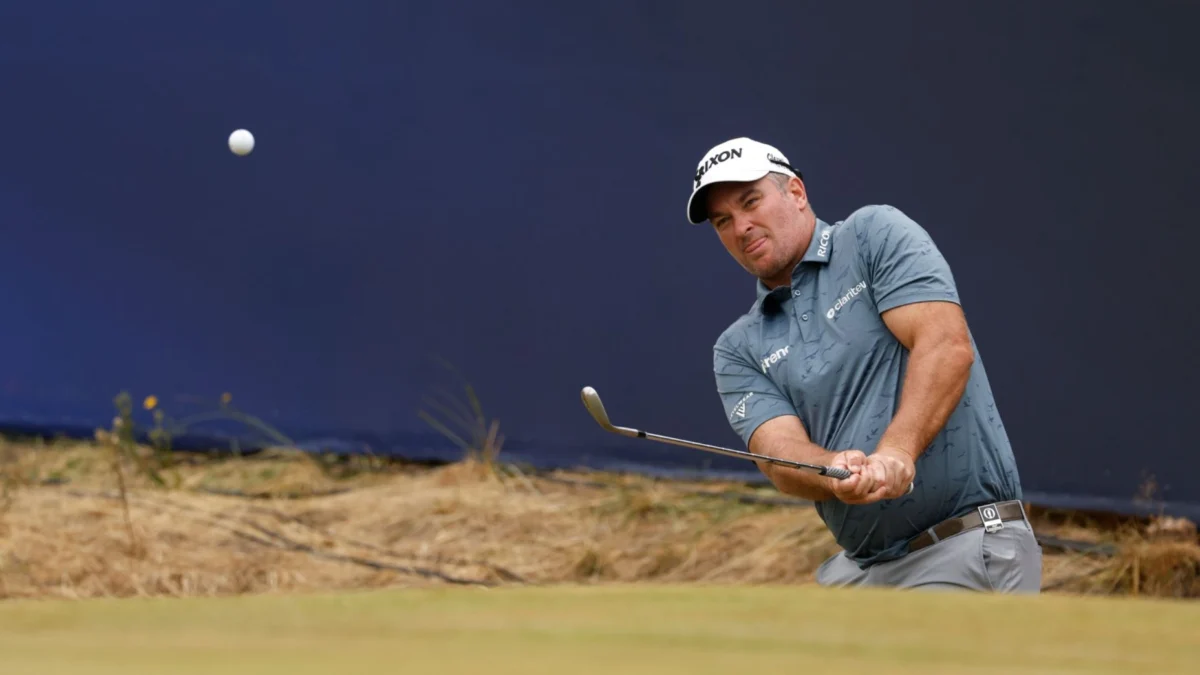
By Johnny Wunder
July 22, 2026
When championship conditions turn baked-out and firm, the knee-jerk reaction among amateur players is to instantly strip bounce off every wedge in the bag. Last week at Royal Birkdale, the legendary links layout demanded precisely this kind of attention. As the fairways hardened and the turf tightened, the Tour trucks were buzzing with requests for low-bounce wedge grinds—a classic "just in case" insurance policy against the dreaded thin shot.
However, the reality of elite-level wedge fitting is far more nuanced than simple ground hardness. While amateur logic suggests that tighter lies demand a lower leading edge to prevent the sole from skidding, the response from professional technicians is deeply personal. A wedge grind never functions in isolation. Static bounce—the number stamped on the sole—is merely a starting point. True performance is dictated by the interplay of a player’s delivery geometry, swing path, and wrist release.
To understand why the world’s best players select their specific setups, we must look beyond the turf and into the mechanics of three distinct players: Ryan Fox, Shane Lowry, and Nico Echavarria. Their choices at Royal Birkdale illustrate how physics, rather than just preference, drives equipment selection.

Main Facts: The Anatomy of Wedge Interaction
At its core, a wedge’s effectiveness is determined by dynamic bounce—how the clubhead meets the turf at the precise millisecond of impact. A steep attack angle with heavy forward shaft lean effectively converts a high-bounce wedge into a digging instrument. Conversely, a shallow delivery can make even a mid-bounce sole prone to skipping if the lie angle and release are not perfectly synced.
During the championship at Royal Birkdale, the field had to navigate firm, fast conditions that punished players who didn’t understand their own delivery. While the trend was toward lower bounce to combat the firm ground, the most successful players were those who stayed true to their natural mechanical tendencies. Whether a player is a "digger" or a "slider" determines whether a low-bounce wedge is a surgical tool or a liability.
Chronology: The Evolution of the "Firm Turf" Mindset
The shift in wedge philosophy at Royal Birkdale did not happen overnight. As the week progressed and the links firmed up under high winds and lack of rain, the urgency for technical adjustment increased.
- Early Week: Players arrived with their standard setups, testing the firmness of the primary rough and the surrounds of the greens. Initial feedback indicated that the turf was faster than standard tour stops.
- Mid-Week: As the crust hardened, the "low-bounce" requests began to flood the equipment trucks. Players feared that their standard soles would bounce off the hardpan, leading to bladed shots.
- The Adjustment Phase: Technicians began working one-on-one with players to measure attack angles. They realized that for players like Ryan Fox, dropping to low bounce was a mistake. By Thursday, the "grind-gurus" had finalized the setups based on individual biomechanics rather than general course conditions.
- The Weekend: By the final round, the winners had settled into their specific grinds. Those who resisted the urge to follow the "low-bounce" trend and stuck to their mechanical strengths found the most success in the closing holes.
Supporting Data: Three Distinct Philosophies
To dissect these choices, we examine the wedge setups of three different players who faced the same challenge at Royal Birkdale.

Ryan Fox: High Bounce Retention for Steep Turf Engagement
Ryan Fox represents a category of ball-striker that defies conventional wisdom. Fox is a heavy-striking player who drives the clubhead down hard into the turf. His delivery is characterized by substantial forward shaft lean and a steep angle of attack.
For a player with Fox’s profile, dropping to low-bounce grinds is a recipe for disaster. When a steep attack angle is paired with a sharp leading edge and minimal sole geometry, the clubhead drives directly into the soil without resistance. By staying in Mid-Bounce profiles across his 50°, 56°, and 60° setup, Fox maintains necessary ground clearance. The sole bounce acts as a "safety valve," allowing the clubhead to compress the ball against the tight turf and exit cleanly without stalling.
Shane Lowry: Upright Angles and Dynamic Touch
Shane Lowry’s wedge game is defined by precision and a unique delivery where he stands the shaft up during the backswing, delivering the club with a toe-down, upright orientation. Lowry opts for a 2.5-degree upright lie angle across all wedges, a departure from the Tour average.
Lowry recently transitioned to a 60° Low Bounce grind. As an elite short-game artist who relies on wrist manipulation and opening the face, Lowry creates his own dynamic bounce at impact. A wide sole or high static bounce would cause the trailing edge to strike the hard ground first, making the leading edge skip. His Low Bounce grind allows him to lay the face open while keeping the leading edge tight to the dirt, trusting his hands to supply the bounce dynamically.

Nico Echavarria: The Geometry of the Open Face
Nico Echavarria utilizes a more traditional setup (50°, 54°, and 58°) but adjusts them 1 degree flat to suit his shallow, inside-to-square delivery. His grind selection is a masterclass in versatility.
Echavarria maintains Mid-Bounce on his gap and sand wedges for stability on full shots, but his 58° lob wedge is a specialized Low Bounce tool. The reasoning is purely geometric: when Echavarria opens the face for delicate greenside shots, the trailing edge rotates downward, which naturally increases the effective bounce. By starting with a Low Bounce base, he ensures that when the face is opened on firm ground, the "effective" bounce doesn’t become unplayable. It’s a calculated, technical approach to maximizing the club’s utility.
Official Responses and Technical Insights
The technicians on the Tour trucks, such as those from Cleveland and Titleist, emphasize that the modern wedge is an instrument of extreme precision. The "RTZ" (Return to Zero) or similar custom grinds available to these players are not just about aesthetics; they are about material science.
The new Z-Alloy steel used in current tour wedges—softer, lighter, and more durable—allows for a "zero-compromise" design. By utilizing technologies like HydraZip and ZipCore, manufacturers can shift the center of gravity to optimize spin even when a player has to take a "shallow" cut at the ball on firm turf. As one lead technician noted, "We aren’t just fitting a wedge to the grass; we are fitting it to the player’s pulse and rhythm."

Implications: What Amateurs Can Learn
The biggest takeaway for the average golfer is the danger of "equipment envy." Watching a professional switch to a specific wedge grind on television can be misleading. A club that works for Shane Lowry on the firm links of Royal Birkdale might be completely unsuitable for a weekend player at their local club, even if the conditions appear similar.
The implications for club fitting are clear:
- Understand Your Delivery: Do you take a divot? Do you sweep the ball? If you are a digger, you need more bounce, not less, regardless of the firmness of the course.
- Lie Angle Matters: Many amateurs ignore lie angles in their wedges. If your clubs are too upright or too flat for your swing, you are fighting the geometry of the clubhead before you even make contact.
- The "Effective Bounce" Rule: Learn to open the face. If you are struggling with thin shots on firm turf, try opening the face slightly at address. This uses the bounce you already have rather than rushing to buy a "low-bounce" wedge that may not suit your full-swing needs.
As Royal Birkdale proved once again, the best players in the world aren’t just hitting golf shots; they are managing the physics of the turf. By understanding their own mechanics, they turn the most challenging conditions into an opportunity for creativity. For the rest of us, the lesson is simple: know your swing, respect your mechanics, and prioritize professional fitting over following the latest trends in the shop.


 Lina Hope
 Iffa Jayyana
 Neng Nana
 Nana Wu