 Asep Darmawan
By Staff Reports
November 28, 2026
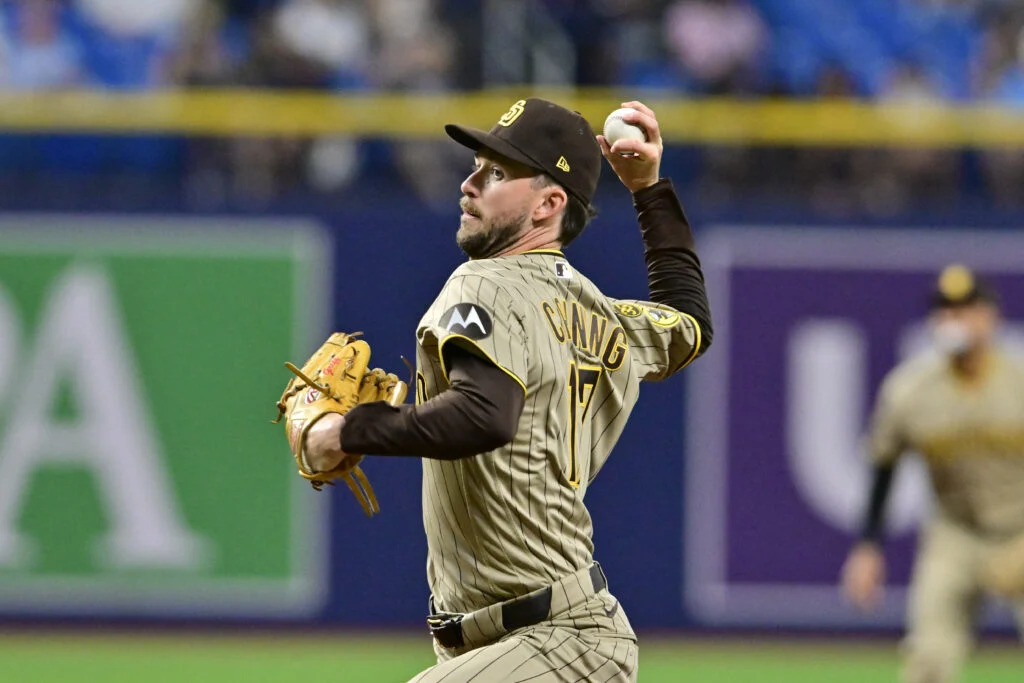
In a strategic move to reinforce their pitching depth, the St. Louis Cardinals have officially agreed to a one-year contract with free-agent right-handed pitcher Griffin Canning. The deal, which carries a guaranteed salary of $3.25 million, was first reported by ESPN’s Jeff Passan and confirmed by MLB.com’s Mark Feinsand. Represented by THE TEAM, the 30-year-old Canning arrives in St. Louis following a transitional 2026 campaign with the San Diego Padres.
The signing signals a clear intent from the Cardinals’ front office to prioritize versatile, high-upside arms as they look to build upon the momentum of a remarkably durable 2026 rotation. While the acquisition may not be the splashiest headline of the offseason, it represents a calculated gamble on a pitcher whose physical tools remain intact despite a challenging recovery from a significant lower-body injury.
The Terms of the Deal
The agreement provides Canning with a $3.25 million salary for the 2027 season, a figure that reflects both his recent struggles with efficiency and his proven ability to remain a viable major league contributor. For the Cardinals, the price point is relatively low-risk, providing them with a flexible roster piece who can serve as either a depth starter or a multi-inning relief option.
Canning, who turns 31 in the spring, enters a Cardinals organization known for its ability to refine veteran mechanics and maximize the output of mid-rotation arms. By securing him on a one-year pact, the front office maintains payroll flexibility while giving Canning a “prove-it” opportunity in a pitching-friendly environment.
Chronology of a Challenging 2026
To understand why Canning is available on a modest one-year deal, one must look at the turbulent trajectory of his 2026 season. His year was defined by a race against time and the physical demands of returning from a torn Achilles tendon.
The Recovery Phase
Canning spent the early weeks of the 2026 season sidelined, working through a rigorous rehabilitation program following surgery. The injury, a major hurdle for any athlete but particularly demanding for a pitcher reliant on leg drive for velocity, kept him off the mound until May.
Re-entering the Fray
When Canning finally made his season debut, the results were inconsistent. Through his first eight starts of the year, he struggled to find his rhythm, posting a 7.17 ERA. The Padres, seeking to mitigate the damage and protect their bullpen, attempted to utilize an “opener” strategy to bridge the gap to Canning. While this tactical adjustment led to marginal improvements, the overall command issues—specifically an elevated walk rate and a vulnerability to the long ball—persisted.
The Role Transition
As the season progressed, the Padres transitioned Canning into a traditional long-relief role. In this capacity, he appeared in 19 games, providing much-needed coverage for a San Diego bullpen that had been taxed by a long campaign. By the time the dust settled, Canning had logged 88 2/3 innings with a 5.68 ERA. Despite the final numbers, he proved he could handle a high-volume role, though he was ultimately left off the postseason roster for both the Wild Card and Divisional rounds.
Supporting Data: The Velocity Paradox
One of the most intriguing aspects of the Cardinals’ evaluation of Canning is the health of his "stuff." Despite the significant injury, Canning’s radar gun readings suggested that his physical recovery was a success.
Arsenal Metrics
Data from the 2026 season shows that Canning’s velocity actually trended upward. His four-seam fastball averaged 94.6 mph, a slight increase over his 2025 output. Furthermore, his slider and changeup saw a corresponding bump in velocity, suggesting that his lower-body mechanics were effectively generating force.
However, this increased velocity came with a trade-off. His curveball, usually a primary weapon, exhibited less movement than in previous seasons. Pitching analysts suggest that the uptick in overall arm speed may have altered the break on his breaking pitches, making them flatter and more hittable. For the Cardinals’ coaching staff, the task will be to help Canning reconcile this added velocity with the refined command and movement he needs to keep hitters off-balance.
Official Responses and Roster Context
The Cardinals enter the offseason coming off a 2026 season that was characterized by an unprecedented level of durability among their starting pitchers. The team’s starting staff was the envy of the league, with four pitchers—Michael McGreevy, Matthew Liberatore, Kyle Leahy, and Andre Pallante—each eclipsing the 29-start threshold.
The Changing of the Guard
The rotation was not without its shifts. The mid-season trade of Dustin May to the Milwaukee Brewers left a void that was quickly filled by internal prospect Quinn Mathews, who performed admirably down the stretch. Hunter Dobbins also saw action in the rotation when healthy, demonstrating the depth of the Cardinals’ developmental system.
The Cardinals’ management has been vocal about the need to maintain this durability. By adding Canning, they are essentially insulating themselves against the inevitable attrition of a 162-game season. Should one of the younger arms falter or should an injury occur, Canning provides an experienced safety net who has already proven he can pitch in various capacities.
Implications: What to Expect in 2027
The signing of Griffin Canning is a classic "depth-plus" move. It serves three distinct functions for the Cardinals:
- Insurance for the Rotation: With several young pitchers occupying spots in the rotation, the presence of a veteran like Canning ensures that the team is not forced to rush prospects if a starter goes down.
- Bullpen Versatility: Given his experience as a long reliever in San Diego, Canning could easily be deployed as a high-leverage "bridge" reliever or a spot starter, allowing the Cardinals to rest their high-leverage bullpen arms during lopsided games or mid-week doubleheaders.
- The "St. Louis Effect": The Cardinals have a storied history of revitalizing veteran pitchers who have fallen on hard times. By optimizing Canning’s pitch mix and focusing on his command rather than his velocity, the coaching staff may be able to squeeze significant value out of his $3.25 million salary.
The Road Ahead
While the fan base may be clamoring for high-profile acquisitions, the front office’s commitment to building a deep, resilient pitching staff is a hallmark of successful teams. The Cardinals are clearly betting that the 2026 version of Canning was a player hindered by injury rather than a player in decline.
As we look toward Spring Training, all eyes will be on how Canning integrates into the pitching staff. Will he reclaim a spot in the starting rotation, or will he emerge as a critical swingman in the bullpen? Regardless of the role, one thing is certain: the Cardinals have added a veteran arm with something to prove, and in the competitive landscape of the National League, that is rarely a bad investment.
As this story continues to develop, observers will be watching closely to see if the Cardinals make further additions to their pitching corps or if they feel the current rotation depth is sufficient to carry them into the 2027 postseason. For now, the addition of Griffin Canning stands as a testament to the club’s disciplined approach to roster construction.

 Suro Senen
 Neng Nana
 Layla Zulfa

 Reynand Wu
 Evan Lee Salim

 Azzam Bilal Chamdy