
 Azzam Bilal Chamdy
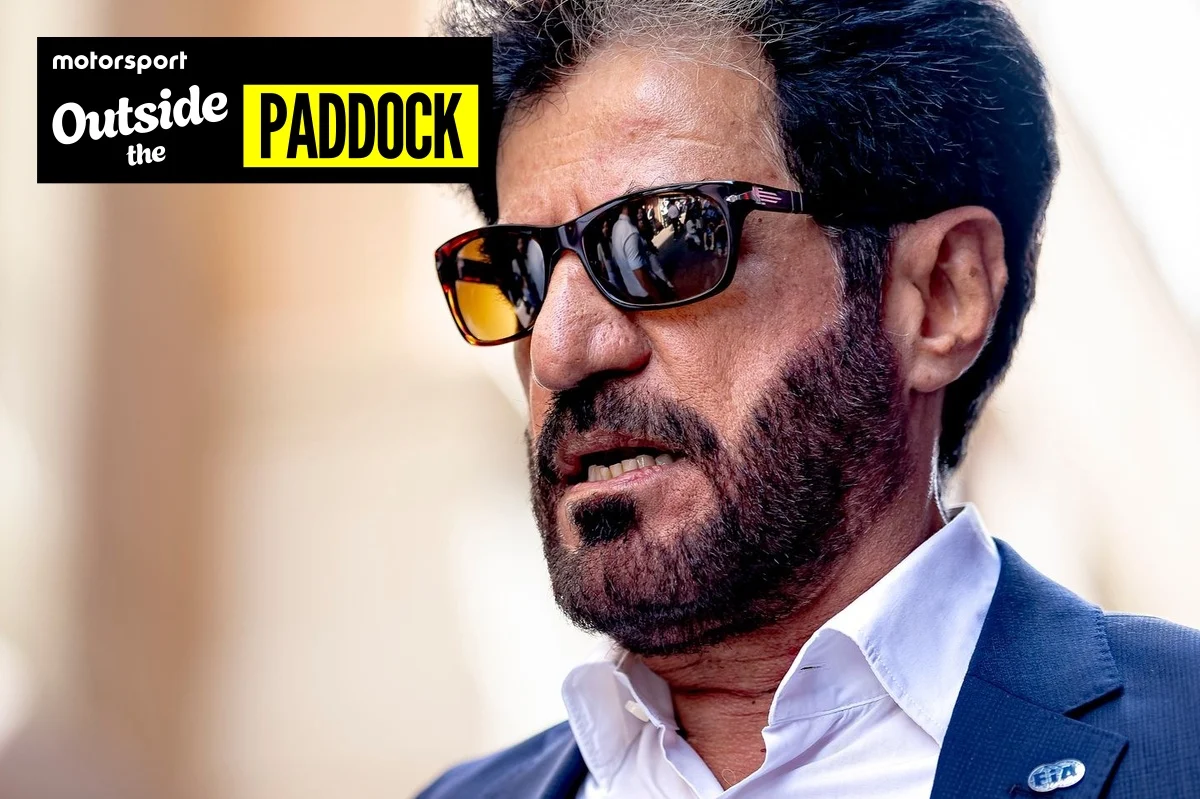
DOHA, Qatar — FIA President Mohammed Ben Sulayem has found himself at the center of a burgeoning controversy following an awkward and politically fraught exchange with Formula 1 drivers George Russell and Lando Norris. Caught on camera at the Losail International Circuit, the governing body’s chief asked the two prominent drivers to compare the safety and danger of visiting Qatar against that of Mexico and Brazil, triggering swift condemnation from fans, sharp criticism across social media, and raising renewed questions regarding the diplomatic and cultural sensitivities of motorsport’s ultimate leadership.
The incident underscores the delicate tightrope walk Formula 1 navigates as it balances commercial expansion, geopolitical instability, and the personal safety of its traveling circus. As the sport expands its global footprint into increasingly complex regions, comments from the sport’s highest-ranking official risk alienating competitors, fans, and host nations alike.
Main Facts
The controversy centers around a brief, unscripted interaction that occurred away from official press conferences but was captured clearly on video.
- The Incident: FIA President Mohammed Ben Sulayem approached Mercedes driver George Russell and McLaren driver Lando Norris and asked them directly: "Which is more dangerous, being here or in Mexico, or Brazil?"
- The Setting: The exchange took place on Saturday evening inside the paddock at the Losail International Circuit, immediately following a dramatic qualifying session for the Qatar Grand Prix where Russell claimed pole position, Kimi Antonelli secured second, and Norris took third.
- The Reaction: Neither driver answered the question. Footage shows Russell offering an awkward smile while raising a hand to his face, and Norris immediately looking down at the ground, turning away, and attempting to busy himself with a beverage.
- The Public Outcry: Video clips of the interaction spread rapidly across X (formerly Twitter), Reddit, and TikTok, sparking widespread accusations of hypocrisy, xenophobia, and poor diplomatic judgment from the head of the sport’s governing body.
- The Context: The remark was made against the backdrop of heightened geopolitical tensions in the Middle East, which had earlier cast doubt on whether the final rounds of the 2026 F1 season in Qatar and Abu Dhabi could proceed safely.
Chronology of Events
To understand how the controversy unfolded, it is necessary to trace the events of the weekend, the lead-up to the Qatar Grand Prix, and the cascading public reaction.
Saturday Evening: Qualifying and the Paddock Encounter
The day began as a sporting triumph for both Mercedes and McLaren. George Russell delivered a stunning lap under the lights at Losail to lock in pole position, with rising star Kimi Antonelli locking out the front row for Mercedes, and Lando Norris placing his McLaren third on the grid.
However, the celebratory mood shifted abruptly behind closed doors in the paddock. As drivers cooled down and interacted with media and officials, FIA President Mohammed Ben Sulayem approached Russell and Norris. Standing between the two young drivers, Ben Sulayem posed the provocative question regarding the relative danger of Qatar compared to Mexico and Brazil.
The Immediate Aftermath
Sensing the political minefield of the question, both drivers chose self-preservation through silence. Rather than taking the bait or validating a comparison between high-profile host nations, Russell and Norris deployed classic body language to deflect. Russell offered a tight, uncomfortable smile while hiding behind his hand, while Norris physically turned his head downward and focused entirely on a beverage in his hand. The tense silence stretched for several agonizing seconds before the interaction dissolved.
Digital Virality and Fan Backlash
Within hours, fan-captured footage and broadcast snippets made their way online. The internet reacted swiftly and critically.
On X, fans expressed disbelief that the president of the FIA would openly invite drivers to disparage other historic and well-established grand prix venues. One widely shared comment read: "The levels of hypocrisy and racism are crazy, he must be fired." Another user posted: "Unacceptable especially from the President of the FIA."
On Reddit’s primary Formula 1 community, users dissected the body language frame-by-frame. One upvoted comment noted: "Lando immediately turns away when he hears the question and George is trying to ignore it. It is hilariously obvious how uncomfortable they are." Another joked about Russell’s survival tactic: "George in his head, ‘Just smile.’"
Supporting Data: Geopolitical Realities and the 2026 Calendar
To fully grasp why Ben Sulayem’s question touched such a raw nerve, it is vital to examine the background of the 2026 Formula 1 calendar, the security challenges faced by the sport, and the historical safety concerns associated with various grand prix locations.
Middle Eastern Instability and Calendar Disruptions
Formula 1’s 2026 season has been uniquely fraught with logistical and security hurdles. The final two rounds of the championship—scheduled for Qatar and Abu Dhabi—faced months of intense scrutiny and uncertainty due to the ongoing and volatile conflicts in the Middle East.
Earlier in the year, the security situation forced significant calendar adjustments. Most notably, the Bahrain and Saudi Arabian Grands Prix, originally scheduled for early in the calendar, were cancelled in April following security assessments and regional escalations. To salvage part of the Middle Eastern leg, the Sepang International Circuit in Malaysia stepped in to host a substitute event for the Bahrain Grand Prix in October.
Furthermore, Formula 1 management and the FIA maintained stringent contingency plans. Reports circulated that if the security situation in the Gulf region deteriorated further, the season finale could be moved entirely to Europe, with Italy’s Imola circuit kept on standby as an emergency back-up venue.
Ultimately, security assessments cleared the way for the season to conclude as originally planned in Qatar and the United Arab Emirates, but the specter of regional risk remained fresh in the minds of everyone in the paddock.
Safety Context: Mexico, Brazil, and Qatar
Ben Sulayem’s comparison specifically invoked Mexico City and São Paulo—two cities renowned for their passionate, high-energy races, but also notorious within the F1 paddock for logistical and security challenges.
- Brazil (Interlagos): Over the years, the Brazilian Grand Prix has repeatedly made headlines due to security incidents outside the circuit. Team members, drivers, and media personnel have frequently been targeted by armed robberies, carjackings, and muggings while transiting between the track and hotels. In 2017, members of the Mercedes team were held at gunpoint in traffic after leaving the circuit, prompting widespread calls for heightened security.
- Mexico (Autódromo Hermanos Rodríguez): Similarly, the Mexico City Grand Prix presents logistical challenges due to massive crowds, chaotic local traffic, and occasional breaches of paddock security by overly enthusiastic fans or unauthorized personnel seeking access to drivers.
- Qatar (Losail International Circuit): In contrast, Qatar operates under heavily controlled, state-managed security frameworks where street crime targeting tourists is exceedingly rare. However, races in the Gulf region face international scrutiny regarding human rights records, geopolitical alignment, and regional stability, making any direct comparison politically sensitive.
By forcing drivers to weigh the street crime risks of Latin America against the geopolitical and security risks of the Middle East, the FIA president placed competitors in an impossible diplomatic dilemma.
Official Responses and Stakeholder Silence
As of Sunday afternoon, neither the FIA nor Mohammed Ben Sulayem’s office has issued a formal statement addressing the video or the ensuing public outcry.
Similarly, representatives for both George Russell (via Mercedes) and Lando Norris (via McLaren) have declined to comment publicly on the exchange. In modern Formula 1, drivers are heavily media-trained and acutely aware of the delicate power dynamics between themselves and the governing body. Publicly criticizing the FIA president—or validating comments that could offend host nations in Latin America or the Middle East—carries severe professional and political risks. By remaining silent in the moment and avoiding inflammatory remarks to the press, the drivers successfully sidestepped a major PR trap.
However, industry insiders note that the silence from the governing body is unlikely to quell the broader discussion. The incident adds to a growing list of controversial remarks and public clashes involving the current FIA administration, raising ongoing questions about communication protocols at the highest levels of motorsport governance.
Implications for Formula 1 and the FIA
The fallout from this paddock exchange extends far beyond a viral social media clip, highlighting several critical structural and diplomatic challenges facing Formula 1 and its governing body.
1. The Diplomatic Tightrope of Global Expansion
Formula 1 is currently enjoying a historic commercial boom, driven largely by its expansion into new global markets, particularly in the Middle East and the Americas. Races in Qatar, Saudi Arabia, Abu Dhabi, Mexico, and Brazil are immensely lucrative for both the commercial rights holder (Liberty Media) and the FIA.
However, each of these regions brings unique cultural, political, and security dynamics. When the president of the governing body makes flippant or comparative remarks about the "danger" of hosting events in these sovereign nations, it risks straining diplomatic ties between the sport and local promoters or government stakeholders. Host countries invest hundreds of millions of dollars to secure a place on the F1 calendar, expecting prestige and positive global exposure, not public commentary highlighting potential risks.
2. Leadership Perception and Accountability
Mohammed Ben Sulayem’s tenure as FIA president has frequently courted controversy, ranging from public spats with team principals and drivers over jewelry and swearing, to debates over the boundaries of political expression in the sport.
Incidents like the one at Losail fuel ongoing debates among fans and paddock insiders regarding the decorum and professionalism expected from the sport’s ultimate regulator. Critics argue that the FIA president must maintain absolute neutrality and diplomatic grace, avoiding casual remarks that can be easily misinterpreted or weaponized online. Conversely, supporters often view Ben Sulayem as a candid figure who speaks his mind, though even defenders have privately acknowledged that comparing the safety of different Grand Prix venues on camera was an avoidable misstep.
3. Driver Welfare and Neutrality
The interaction highlights the difficult position modern F1 drivers occupy. As global sports icons with massive digital platforms, they are increasingly expected to take stances on social and political issues. Yet, when caught in unscripted moments by senior officials, they are reminded that expressing the wrong opinion—or even acknowledging a politically sensitive reality—can land them in regulatory or diplomatic hot water. The instinctual retreat exhibited by Russell and Norris demonstrates a sophisticated understanding of media survival in a high-stakes environment.
Looking Ahead
As the 2026 Formula 1 season barrels toward its dramatic conclusion in Abu Dhabi, the paddock will undoubtedly move on to the on-track title battles. Yet, the viral moment in Qatar serves as a lingering reminder of the underlying tensions that accompany the sport’s global circus. Whether the FIA or Ben Sulayem will address the incident directly remains to be seen, but the digital footprint of the exchange ensures that questions regarding leadership, sensitivity, and the true cost of F1’s global expansion will continue to echo long the chequered flag falls.

 Neng Nana

 Nila Kartika Wati

 Siti Muinah
 Asro
 Asep Darmawan
 Jia Lissa