Dwi Wanna
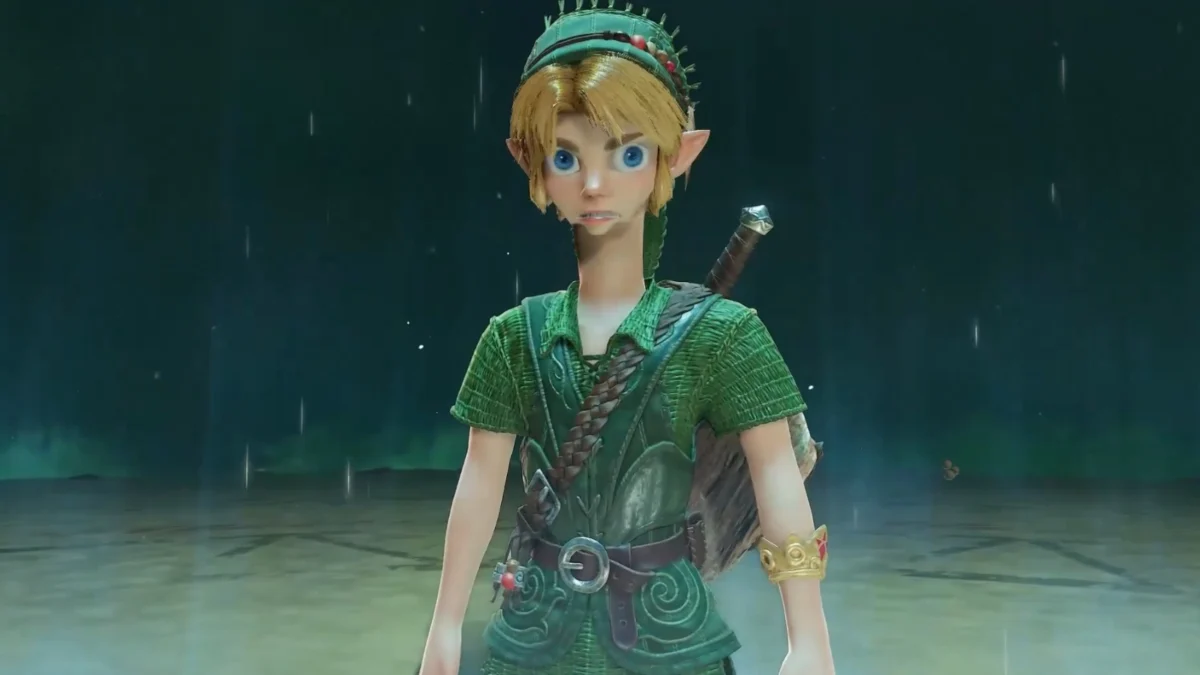
When Nintendo announced the release of The Legend of Zelda: Ocarina of Time for the Nintendo Switch 2, the gaming community braced itself for a nostalgic trip through one of the most beloved titles in history. Released on November 5, the remake was lauded for its visual overhaul, modernized quality-of-life features, and a highly anticipated addition: a dedicated jump button. While intended to provide players with smoother traversal and more fluid combat, the inclusion of this mechanic has inadvertently opened a Pandora’s Box. Within mere days of the game’s launch, the speedrunning community—an ecosystem built on the relentless pursuit of exploiting game logic—has effectively dismantled the remake’s structural integrity.
The Architecture of Chaos: Main Facts and Discovery
The core of the issue lies in "actor jumping," a discovery that has sent shockwaves through the Zelda speedrunning circuit. By manipulating the way the game engine handles Link’s physical interactions with "actors"—a term in game development referring to objects, enemies, or interactive platforms—players have found a way to bypass the game’s gravity constraints.
The technique, as documented by prominent speedrunners and reported across gaming outlets like Polygon and IGN, requires precise timing. By standing atop moving platforms—such as the Magic Bean flight paths or shifting gravestones—and pairing precise targeting with jump inputs while wielding items like the Hookshot, players can launch Link into the stratosphere. This isn’t merely a minor movement buff; it is a fundamental subversion of the game’s geometry.
The implications for "sequence breaking"—the act of completing game objectives in an order not intended by the developers—are immense. Players are no longer confined by the linear progression of the temples. By launching into the air, they can bypass entire geographical barriers, effectively skipping the Forest, Fire, and Water Temples to reach the Shadow Temple almost immediately after obtaining the Hookshot.
A Chronological Breakdown of the "Flight" Era
The timeline of this discovery is as rapid as the movement tech itself.
- November 5: The Legend of Zelda: Ocarina of Time remake officially hits the Switch 2 storefront.
- November 6: Initial reports emerge on social media platforms and Discord servers dedicated to speedrunning, noting "strange behavior" when interacting with moving environmental assets.
- November 7: The concept of "actor jumping" is formalized. Tutorials begin to circulate, demonstrating how to use the Hookshot and jump inputs to gain verticality.
- November 8: High-profile speedrunner ZFG demonstrates the capability to complete the Shadow Temple as Child Link. This discovery, while monumental, highlights the chaotic nature of these glitches, as the game’s forced transition to Adult Link results in severe visual distortions and broken game states.
- November 9 and Beyond: The community enters a phase of optimization, attempting to find ways to stabilize the "Child Link" transition to see if it can be integrated into a full "Any%" speedrun route.
The Mechanics of Disruption: Supporting Data
The technical brilliance—and absurdity—of these glitches cannot be overstated. Beyond the simple actor jump, players have discovered that by cycling through items mid-air, specifically toggling between a Deku Stick and the Megaton Hammer, they can maintain upward momentum indefinitely. This "infinite jump" state relies on the game’s engine failing to reset Link’s vertical velocity correctly during the item-swap animation.
To understand why this is happening, one must look at the remake’s engine. While the game boasts modern textures and dynamic lighting, it is built upon the foundational logic of the original 1998 code, now interpreted through the lens of modern hardware. The addition of a dedicated jump button creates a "physics hook" that the original game never had to account for. Because the developers wanted to maintain the "feel" of the classic while adding new maneuverability, the collision detection for Link’s jumping state interacts unpredictably with moving entities.
The data suggests that when Link is mid-jump, his "hitbox" and "velocity state" are in a volatile flux. By forcing an item change, the player can interrupt the game’s attempt to settle Link onto a surface, effectively "tricking" the engine into thinking he is still in a state of upward momentum.
Official Silence and the Developer Perspective
As of the time of writing, Nintendo has remained characteristically silent regarding the exploits. Historically, Nintendo has taken a pragmatic approach to speedrunning glitches. In titles like Breath of the Wild and Tears of the Kingdom, developers often turned a blind eye to movement exploits, recognizing that the speedrunning community serves as a vital pillar for a game’s long-term engagement and cultural relevance.
However, the Ocarina of Time remake presents a unique challenge. Because this is a remaster of a legendary title, the integrity of the "intended experience" is a significant concern for the publisher. Will Nintendo issue a "stability patch" that patches out these jumps, or will they allow the community to innovate? Industry analysts suggest that unless these glitches lead to game-crashing errors or data corruption, a patch is unlikely. For Nintendo, the publicity generated by viral clips of Link "flying" across Hyrule acts as a powerful marketing tool, keeping the game in the social media spotlight long after its initial launch week.
Implications: The Future of Speedrunning
The discovery of these glitches marks a turning point for the Ocarina of Time speedrunning community. For decades, the community has mastered the "original" game, with runners memorizing every pixel-perfect frame of the 1998 version. The remake has effectively reset the playing field.
The implications are two-fold:
- The "Any%" Revolution: We are witnessing the birth of a new category of competition. The current "roadblock"—the fact that beating the Shadow Temple as a child prevents the acquisition of the Fairy Bow and Light Arrows—is viewed not as a failure, but as a puzzle. The community is currently scouring the code for a way to "trick" the game into granting these items, which would theoretically allow for the fastest completion time in the history of the franchise.
- Narrative Distortion: Beyond the competitive aspect, there is the sheer absurdity of the visual experience. The community is delighting in the "cursed" imagery of a Child Link with the physics and model-scaling of an adult, or the game logic collapsing under the weight of an sequence-broken progression.
Ultimately, the speedrunning community has done what it always does: they have taken the boundaries set by the developers and treated them as mere suggestions. By giving Link a jump button, Nintendo invited the players to explore, but the players have instead chosen to ascend. As runners like ZFG and others continue to test the limits of this new Hyrule, one thing is certain: Ocarina of Time has been reborn not just as a game, but as a playground for the impossible. The journey from the Forest Temple to the final battle with Ganon has never been shorter, and it has certainly never been this chaotic. Whether through legitimate play or the gravity-defying exploits of the speedrunning elite, Link is once again the center of the gaming world—this time, with the ability to soar above the very world he was meant to save.


 Muslim

 Suro Senen

 Ammar Sabilarrohman

 Iffa Jayyana

 Laily UPN

 Sagoh