
 Ali Ikhwan
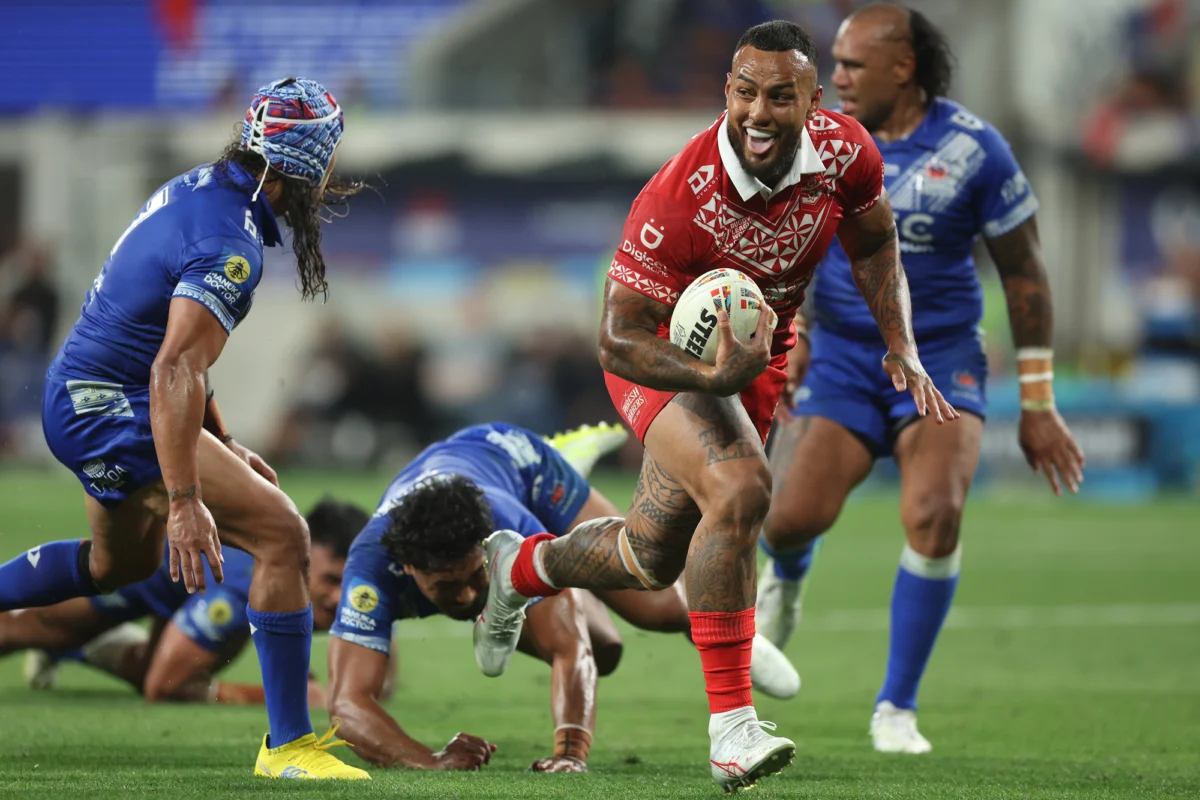
The 2026 Rugby League World Cup has reached its most critical juncture. After a grueling month of high-octane physicality, tactical brilliance, and underdog heroics, the tournament has successfully narrowed the field to the final four in both the men’s and women’s categories. With the grand finales scheduled for Sunday, November 15, in Brisbane, the global rugby league community is bracing for a climactic conclusion to what has been a monumental showcase of international sporting prowess.
Hosted across Australia, New Zealand, and Papua New Guinea, the tournament has successfully integrated three distinct disciplines—men’s, women’s, and wheelchair competitions—under a unified banner. Across 53 matches held throughout October and November, the competition has reaffirmed the growing depth of talent in the international game. As the dust settles on the pool stages, the focus shifts to the high-stakes atmosphere of knockout rugby, where there is no margin for error.
The State of Play: Semi-Finals and Championship Aspirations
The intensity of the knockout stages is palpable. In the women’s competition, the reigning champions, Australia, are set to face a dangerous Fiji side in Sydney on Sunday, while the other side of the bracket sees a trans-Tasman showdown as New Zealand prepares to host Samoa in Newcastle this Saturday.
The men’s draw mirrors this excitement. New Zealand and Tonga are locked in for a Saturday blockbuster in Newcastle, a fixture that promises to be one of the most physically punishing encounters of the tournament. On Sunday, Sydney will once again serve as the stage for a critical clash between the tournament heavyweights, Australia, and a resolute Samoan squad looking to cement their status as a tier-one superpower.
While the men’s and women’s brackets dominate the headlines, the wheelchair competition—an integral part of the 2026 World Cup—is currently in its third round of pool play. The results of these remaining matches will determine the pairings for the upcoming semi-finals, scheduled for early next week. England, the reigning wheelchair champions, continue to look strong, though the gap between them and the emerging nations has narrowed significantly this year, highlighting the massive strides made in global development programs.
Chronology of a Tournament: From Kick-off to Knockout
The 2026 World Cup began on October 15, with a flurry of activity that spanned three nations. The opening weeks were defined by the rapid-fire nature of the schedule, with matches occurring almost daily.
- Mid-October: The initial phase focused on establishing dominance. Australia’s men’s and women’s sides signaled their intent to defend their respective titles with emphatic victories, while Papua New Guinea’s hosting duties brought a unique, electric atmosphere to the tournament, particularly during the group stage fixtures in Port Moresby.
- Late October: As the fatigue of the tournament set in, the tactical landscape began to change. Teams were forced to rotate their squads to manage player welfare, allowing depth players to make their mark. This period saw the emergence of several breakout stars from Tier 2 nations, signaling a shift in the traditional hierarchy of the sport.
- November 1–3: The final round of group matches provided high-stakes drama, with several spots in the semi-finals determined by point differentials in the final minutes of play. The Tuesday, November 3, fixtures were particularly notable for the high level of technical execution, as teams refined their systems ahead of the knockout stage.
Tactical Evolution and Supporting Data
Analysts have noted a distinct evolution in the style of play during the 2026 edition. Compared to previous iterations, this tournament has seen a greater emphasis on ball-retention and "second-phase" play. Data indicates that the average number of offloads per game has increased by 14% compared to the 2021/2022 cycle, suggesting that coaching staffs are prioritizing expansive, fluid rugby over the rigid, set-play dominance of the past.
Defensive structures have also become more sophisticated. The "sliding" defensive line, designed to negate the threat of wide-ranging ball movement, has been the standard. However, the success of the Samoan and Tongan teams in breaking these lines suggests that the global game is rapidly catching up to the Australian-led tactical blueprint.
In the wheelchair division, the game speed has increased exponentially. The use of advanced carbon-fiber chair technology and the inclusion of more specialized training regimens have turned the tournament into a showcase of athleticism that is redefining the sport’s reputation as a high-intensity, elite-level discipline.
Official Responses and Tournament Governance
The International Rugby League (IRL) has praised the host nations for their seamless coordination. "The logistical challenge of hosting three tournaments simultaneously across three different countries cannot be overstated," said an IRL spokesperson. "The feedback from players and fans alike has been overwhelmingly positive. The atmosphere in Brisbane, Newcastle, and Port Moresby has been nothing short of electric."
Regarding the officiating, which is always a point of contention in international tournaments, the use of the "Bunker" system has been largely lauded for its consistency. While there have been minor controversies regarding interpretations of high-tackle protocols, the general consensus among the participating unions is that the standard of officiating has been the highest in the history of the sport.
Implications: The Future of Global Rugby League
The success of the 2026 World Cup holds significant implications for the future of the sport. Firstly, the financial success and the high viewership numbers—bolstered by accessible streaming services like 7plus in Australia and various international broadcasters—have proven that there is a global appetite for the game beyond the traditional heartlands.
Secondly, the performance of Pacific Island nations is likely to force a rethink of international funding models. With Samoa and Tonga consistently challenging the established order, the IRL is under increased pressure to provide these nations with more frequent, high-quality "Test" matches against Australia and New Zealand outside of the World Cup cycle.
Thirdly, the integration of the wheelchair tournament into the main event has been a commercial success. It has provided a blueprint for how future World Cups can be inclusive while maintaining the competitive integrity of the sport. Sponsors have noted the increased engagement, and there is already talk of expanding the tournament format for 2030 to include more participating nations.
How to Follow the Final Stretch
For those looking to catch the final, high-stakes matches, access is straightforward. In Australia, the 7plus platform remains the primary hub, offering free, high-definition streams of every remaining game. For those in New Zealand, ThreeNow is the go-to provider for the Kiwis’ campaign and the final knockouts.
International fans in the UK, Ireland, and the US can tune in via Premier Sports. However, for those traveling abroad or facing geo-blocking issues, the use of a Virtual Private Network (VPN) has become the standard solution. By utilizing a secure, high-speed connection—such as NordVPN—fans can mask their IP address to appear as if they are in their home country, ensuring they do not miss a single minute of the semi-finals or the crowning of the world champions.
Note: When using a VPN, ensure you are in compliance with the terms and conditions of your streaming service provider. VPNs should be used for privacy and security purposes, and users should respect the broadcast rights agreements that allow tournaments of this scale to be funded and produced.
As the Brisbane finals approach on November 15, the narrative is clear: the 2026 Rugby League World Cup has not only been a celebration of the sport’s past but a robust demonstration of its future. Whether it is the sheer power of the men’s game, the technical precision of the women’s competition, or the inspiring intensity of the wheelchair event, the world is watching as the champions of the next era are crowned.

 Siti Muinah
 Sagoh

 Nana Wu
 Jia Lissa
 rifanmuazin

 Ammar Sabilarrohman