
 Iffa Jayyana
By Connor Byrne
October 31, 2026
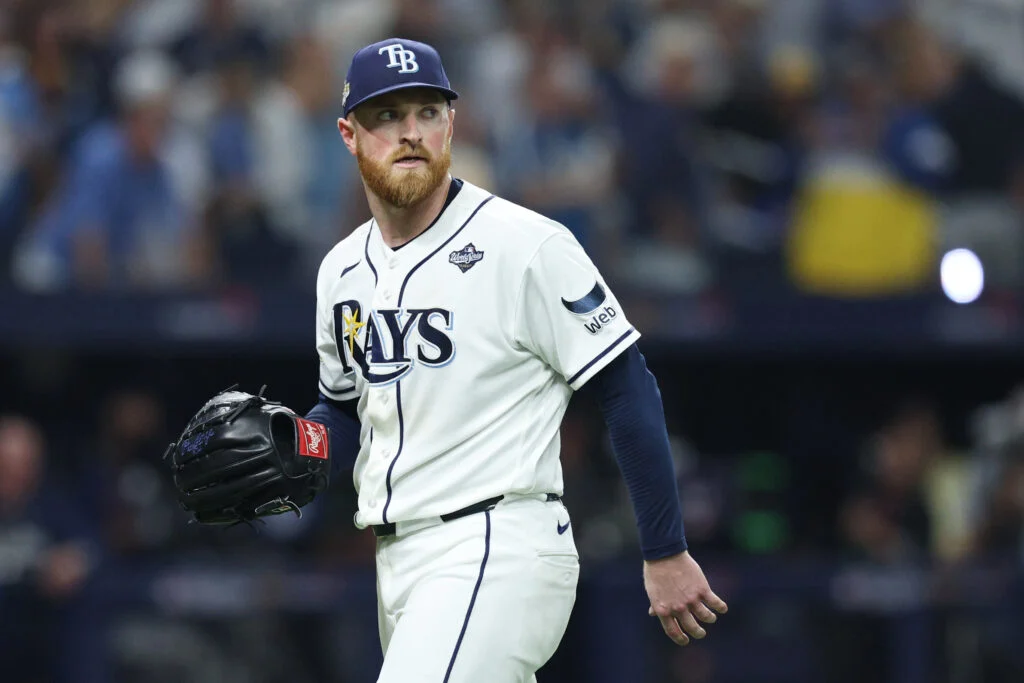
The Tampa Bay Rays have officially solidified the foundation of their starting rotation for the 2027 season, announcing on Saturday that the club has exercised the $20 million option for ace right-hander Drew Rasmussen. The move, which comes as little surprise to league observers and fans alike, ensures that one of the American League’s most dominant arms will remain in St. Petersburg as the organization looks to build upon a successful, albeit bittersweet, 2026 campaign.
Main Facts: A $20 Million Commitment to Consistency
The decision to retain Rasmussen for the 2027 season is the definition of a "slam-dunk" for the Tampa Bay front office. At a price tag of $20 million, the contract represents market value for a pitcher who has ascended into the upper echelon of Major League Baseball’s starting rotation.
Rasmussen, now 31, has evolved from a high-upside relief acquisition into the bedrock of the Rays’ pitching staff. Since arriving in Tampa Bay in May 2021 as part of the blockbuster trade that sent shortstop Willy Adames to the Milwaukee Brewers, Rasmussen has consistently outperformed expectations. In 133 total appearances—including 111 starts—he has logged 600 1/3 innings with a remarkable 2.73 ERA. The decision to pick up the option is not merely a reflection of his past success, but a strategic investment in a pitcher currently operating at the absolute peak of his physical and mechanical powers.
Chronology: The Evolution of an Ace
To understand the magnitude of this decision, one must look back at the trajectory of Rasmussen’s career. His tenure in Tampa Bay began in the shadow of a high-profile trade. When the Rays dealt Willy Adames, a fan favorite and cornerstone of the infield, the pressure on the return package—which included Rasmussen and infielder J.P. Feyereisen—was immense.
The Developmental Years (2021–2023)
Upon his arrival, the Rays’ pitching lab went to work on Rasmussen. Known for a high-octane fastball and a devastating cutter, Rasmussen was carefully managed through the 2021 and 2022 seasons. The coaching staff emphasized command and pitch efficiency, gradually stretching him out from a multi-inning leverage reliever into a bona fide starter. By 2023, he had fully integrated into the rotation, proving he could navigate lineups multiple times through the order with surgical precision.
The Breakout (2024–2025)
The last two seasons have seen a transformation in Rasmussen’s durability. He moved beyond the "opener" labels that often define the Rays’ pitching strategy, proving he could consistently provide 160-plus innings of high-quality baseball. His strikeout-to-walk ratios began to mirror those of perennial Cy Young contenders, signaling to the league that he was no longer just a "Rays project," but a genuine top-of-the-rotation threat.
The Zenith (2026)
The 2026 season served as his magnum opus. Achieving his second consecutive All-Star nod, Rasmussen set personal career highs in innings pitched (172) and maintained an elite 2.67 ERA. His ability to limit free passes—a rarity in the modern game—made him a nightmare for opposing hitters.
Supporting Data: By the Numbers
The metrics behind Rasmussen’s 2026 season paint the picture of a pitcher who has mastered the craft of modern pitching.
- Elite Efficiency: Rasmussen finished the season with a 4.8% walk rate, ranking second in all of Major League Baseball among starting pitchers, trailing only his teammate, Nick Martinez. This ability to avoid the "leadoff walk" proved vital for the Rays’ defensive efficiency.
- Strikeout Proficiency: While known for his ground-ball tendencies, Rasmussen’s 26% strikeout rate demonstrated an improved ability to generate swings and misses, particularly with his cutter-slider combination.
- League Rankings: Rasmussen ended the year ranked seventh in the majors in both ERA (2.67) and fWAR (5.0). These aren’t just All-Star numbers; they are the statistics of an ace who dictates the pace of the game.
- Postseason Dominance: Even when the calendar turned to October, Rasmussen did not falter. He logged 28 2/3 innings in the 2026 postseason with a 2.20 ERA, striking out 31 batters while issuing only five walks.
His performance in the postseason helped propel the Rays to their third pennant in franchise history. Despite the final outcome in the World Series, Rasmussen’s composure in high-leverage scenarios confirmed that he is a pitcher built for the brightest lights.
Official Responses and Organizational Outlook
While the Rays’ front office traditionally maintains a tight-lipped demeanor regarding contract negotiations, the announcement of the option being exercised was met with a clear sense of organizational stability.
"Drew has been a cornerstone of our success," said a source within the Rays’ baseball operations department. "His growth over the last five years is a testament to his work ethic and our pitching development philosophy. Exercising this option was a clear priority for us heading into the offseason."
The move also speaks to the Rays’ long-term strategy. By securing Rasmussen for 2027, they avoid the uncertainty of the free-agent market for at least one more season, allowing the front office to allocate resources toward bolstering other areas of the roster—specifically, the lineup that struggled at times during the 2026 World Series.
Implications: What Lies Ahead for Tampa Bay?
The retention of Rasmussen has immediate and long-term implications for the American League landscape.
1. The 2027 Rotation Hierarchy
With Rasmussen locked in, the Rays possess one of the most stable rotations in the American League. Alongside him, Nick Martinez and a burgeoning group of young arms provide a balanced mix of veteran savvy and high-upside youth. This depth allows the Rays to remain competitive in the AL East, a division known for its offensive firepower.
2. The "What If" of the 2026 World Series
It is impossible to discuss the future without acknowledging the past. Falling to the Milwaukee Brewers in five games during the 2026 World Series was a painful conclusion to a 98-win season. Rasmussen’s performance in Game 5—four runs allowed over 7 2/3 innings—was a microcosm of the team’s struggles to provide run support. The implication for 2027 is clear: the pitching staff is championship-caliber, but the front office will likely be aggressive in seeking offensive reinforcements to ensure their ace’s efforts are rewarded with more victories.
3. Market Valuation
At $20 million, Rasmussen is effectively a bargain. In a market where top-tier starters regularly command upwards of $30–$35 million annually, the Rays’ ability to retain a 5.0 fWAR pitcher at this price point is a competitive advantage. It provides the financial flexibility necessary to pursue high-impact hitters in free agency or via trade.
4. The Legacy of the Trade
Five years later, the trade that brought Rasmussen to Tampa Bay is being re-evaluated by historians of the game. While Willy Adames has remained a star, the Rays have successfully parlayed that transaction into years of elite pitching and multiple deep playoff runs. Rasmussen stands as the primary piece of that puzzle, and his continued presence ensures the "Adames trade" remains a resounding success for Tampa Bay.
Conclusion
As the 2026 offseason begins, the Tampa Bay Rays have checked off their most important task. By securing Drew Rasmussen, they have sent a signal to their fans, their players, and the rest of the league: the window for a championship is wide open. With a refined delivery, an elite command of the strike zone, and the experience of a World Series run behind him, Rasmussen is poised to lead the Rays back to the postseason in 2027.
The baseball world will continue to watch as the Rays navigate the remainder of the winter, but for now, the most significant piece of the puzzle is firmly in place. The ace is back, and with him, the standard for success in Tampa Bay remains as high as ever.

 Asro
 Pevita Pearce
 Jia Lissa

 Muslim
 Reynand Wu
 Azzam Bilal Chamdy