
 Ali Ikhwan
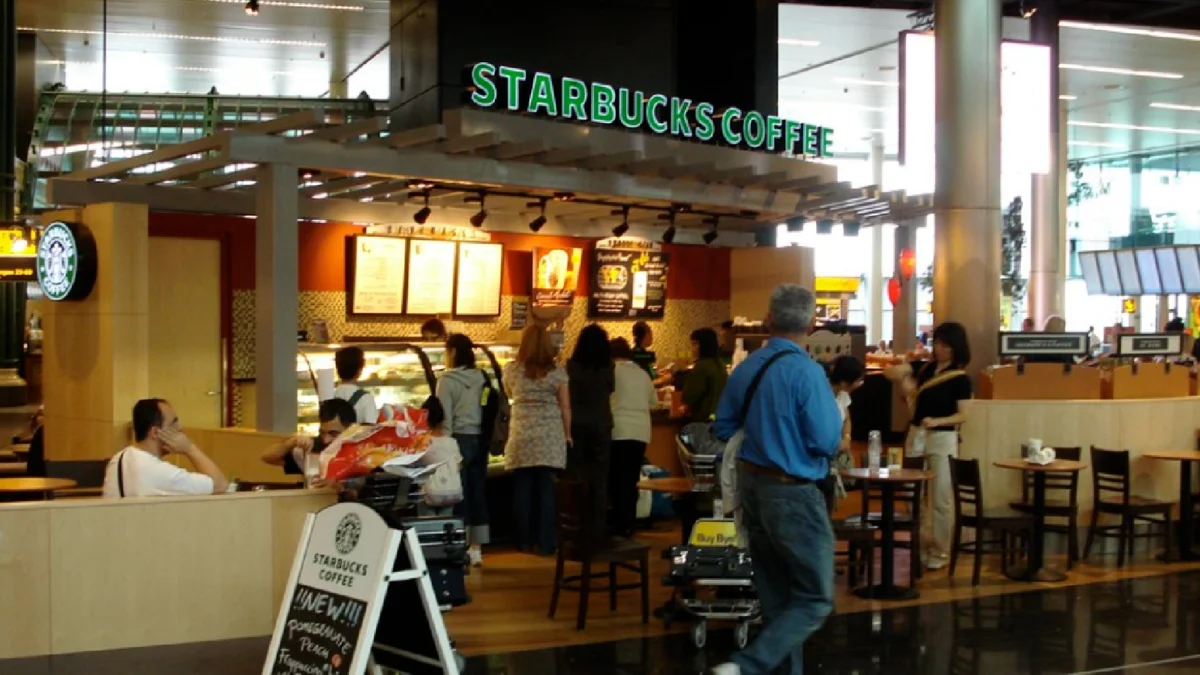
The ritual of the morning coffee run is undergoing a profound digital metamorphosis. Starbucks, the world’s largest coffeehouse chain, has officially signaled its intent to overhaul the customer experience through the aggressive integration of Artificial Intelligence. During a recent earnings call on October 29, CEO Brian Niccol unveiled a forward-looking strategy that promises to turn the static drive-thru menu board into a dynamic, personalized concierge, fundamentally altering how consumers interact with their local barista.
This pivot toward "hyper-personalization" is not merely an aesthetic upgrade; it represents a multi-year technological roadmap designed to increase throughput, reduce human error, and deepen brand loyalty through data-driven precision. As Starbucks prepares to roll out these features, the industry is watching closely to see if the coffee giant can successfully marry high-tech automation with its traditional focus on human connection.
The Core Vision: Personalization at the Point of Sale
At the heart of Starbucks’ new strategy is the ambition to recognize customers the moment they pull up to the drive-thru window. Under the current paradigm, a customer pulls up to a menu board, reads the same list of offerings as every other driver, and places an order that relies on the speed and accuracy of the employee taking it.
Starbucks envisions a future where the menu board acts as a personalized digital interface. Upon arrival, a "participating" customer’s vehicle—or, more likely, their mobile app’s Bluetooth or GPS signature—could trigger the screen to display a curated menu based on previous purchasing habits, time-of-day preferences, and seasonal favorites.
"We are exploring experiences that recognize participating customers as they arrive, present personalized digital menus, and make payment more effortless," Brian Niccol stated during the Q4 fiscal earnings call.
While the mechanics of this identification process remain under wraps, industry analysts suggest that the company will likely lean on the existing Starbucks Rewards ecosystem. By leveraging the data already stored within the mobile app, the chain can create a frictionless loop: the app recognizes the proximity, the menu board adjusts to offer your usual "grande oat milk latte," and payment is processed automatically, eliminating the need to fumble with a credit card or scan a barcode at the window.
Chronology of the Digital Transformation
Starbucks’ journey into AI is not a sudden pivot but the latest phase in a long-term digital transformation strategy.
- 2011-2015: The Mobile Foundation: Starbucks established its digital dominance early by introducing mobile payments and the Starbucks Rewards program, creating a massive data repository of consumer preferences.
- 2020-2022: Deep Brew Deployment: The company launched "Deep Brew," an AI engine designed to help store managers with inventory management, staffing, and personalized marketing emails.
- 2023: Early AI Testing: The company began experimenting with AI in internal operations, such as "Green Dot Assist," a tool that helps baristas navigate complex recipe queries and service standards in real-time.
- Late 2024: The Strategic Pivot: CEO Brian Niccol announces a broader, more aggressive AI roadmap during the October 29 earnings call, setting the stage for 2027 as a pivotal year for drive-thru automation.
- 2027 and Beyond: The projected timeline for the rollout of "background AI models" aimed at assisting baristas with order accuracy and the implementation of conversational, agentic AI within the mobile ordering experience.
Supporting Data: The Competitive Landscape
Starbucks is not operating in a vacuum. The race to automate the drive-thru is a primary theater of competition for major quick-service restaurants (QSRs). The economic imperative is clear: faster throughput directly correlates to higher sales, particularly during the high-pressure morning rush.
The Taco Bell Blueprint
Taco Bell has been at the forefront of digital menu innovation. By utilizing menu boards that can change their layout and visuals on a car-by-car basis, they have successfully tested the impact of "nudging" customers toward higher-margin items or bundling products based on real-time data. This dynamic pricing and suggestive selling model has proven effective in increasing the average ticket size.
McDonald’s ArchIQ
Perhaps the most direct competitor to the Starbucks model is McDonald’s "ArchIQ." This AI-powered chatbot system has been piloted in select locations to handle voice-activated ordering. By automating the initial intake of the order, the system can identify returning customers who have opted into the rewards program and suggest their "usual" order. This not only speeds up the transaction but significantly lowers the cognitive load on the employee, allowing them to focus on order preparation rather than data entry.

Official Responses and Strategic Rationale
The leadership at Starbucks has been careful to frame these technological advancements as tools to support—not replace—the human element. Brian Niccol’s messaging has consistently emphasized that the goal is to make the barista’s job easier, not to remove them from the equation.
"Our objective is to test, learn, and scale what works," Niccol explained. The rationale is twofold: operational efficiency and customer experience. By utilizing AI to handle the "grunt work" of order input, baristas can focus on the artistry of the beverage. Furthermore, the company’s internal "Green Dot Assist" tool serves as a prime example of how AI can act as a force multiplier for employees, ensuring that even new hires have access to the deep institutional knowledge required to maintain Starbucks’ quality standards.
The company is also leaning into "agentic" AI for its mobile app. This next generation of software will move beyond simple buttons and forms, allowing customers to interact with a conversational interface. Imagine a mobile app where you can simply type or speak, "I’m in a hurry, give me my usual order, but make it decaf today," and the AI executes the request instantly.
Implications for Privacy, Labor, and Industry Standards
While the prospect of a hyper-personalized, frictionless drive-thru is enticing for the average consumer, it brings with it a complex web of implications.
The Privacy Conundrum
The most significant hurdle for Starbucks will be consumer trust. In an era of heightened sensitivity regarding data collection, how will the company handle the "identification" of customers? If the system uses license plate recognition or geofencing, customers will demand transparency regarding what data is collected, how long it is stored, and whether it is shared with third-party advertisers. Starbucks has yet to release a detailed privacy whitepaper, but industry experts agree that a "privacy-first" approach will be essential to mass adoption.
The Labor Paradigm Shift
Labor unions and retail analysts are keeping a close watch on how these tools impact staffing. If AI makes the ordering process 30% more efficient, does that lead to fewer employees on the floor, or does it allow the store to handle 30% more volume with the same staff? Starbucks’ historical stance has been that technology is an enabler of service, not a substitute for it. However, the move toward "conversational" AI in the app suggests that the company is looking to reduce the human labor required for the entire order-to-payment cycle.
The "Standardization" Risk
There is also a philosophical concern regarding the loss of serendipity. If AI only suggests what a customer usually buys, does the customer stop exploring new menu items? Starbucks will need to balance the efficiency of "The Usual" with the creative marketing of seasonal, high-margin beverages to ensure their menu doesn’t become a closed loop.
Looking Ahead: The 2027 Horizon
As Starbucks prepares for its 2027 milestone, the company finds itself at a critical juncture. The integration of background AI models to assist with order accuracy is a practical, low-risk starting point. However, the leap to fully conversational drive-thru interactions and personalized, AI-driven visual menus represents a massive leap in technical complexity.
The success of these initiatives will ultimately depend on the "test and learn" philosophy championed by Niccol. The coffee chain has the advantage of a massive, loyal customer base and the capital to invest in proprietary AI. If they can successfully execute this transition, they will not only solidify their position as the dominant player in the global coffee market but also define the technological standards for the entire QSR industry for the next decade.
For now, the Starbucks drive-thru remains a human-led experience, but the digital landscape beneath the surface is shifting. The next time you pull up to that menu board, it might just know your name—and exactly how you like your coffee. Whether that becomes the future of hospitality or a cautionary tale of over-automation remains to be seen. What is certain, however, is that the era of the "smart" coffee shop has arrived.

 Ammar Sabilarrohman

 Lina Hope

 Raul Delapena Setiawan
 Neng Nana

 Jia Lissa

 Asep Darmawan